Complete Guide to Otome Mountain Park | History, Highlights, Access, and Event Information
“Otome Mountain Park,” located in the Takadanobaba area of Shinjuku Ward, Tokyo, is a valuable green space blessed with abundant nature and spring water while being in the heart of the city. This park, which harmonizes history continuing from the Edo period with natural environments passed down to the present day, has become a place of rest loved not only by local residents but also by many tourists. This article provides detailed explanations of all information you should know before visiting Otome Mountain Park, including its history, highlights, access methods, and event information.
What is Otome Mountain Park?
Otome Mountain Park is a ward-managed park located in Shinjuku Ward’s Ochiai Shimo, Nitoritsuki, and is a nature-rich urban park that makes use of precious slope greenery remaining on the Ochiai Cliff Line. The total area spans approximately 26,000 square meters, with spring-fed ponds, tree groves, and grassy plazas arranged throughout the park.
Spring water with excellent water quality, selected as one of “Tokyo’s 57 Famous Spring Waters,” continues to flow today, and firefly breeding is conducted utilizing this abundant water environment. Due to its serene atmosphere that makes you forget the hustle and bustle of the city center and the ability to enjoy nature’s changing seasons, it is cherished by many people as a place for strolling and refreshment.
History of Otome Mountain Park
Edo Period: The Shogun Family’s Forbidden Mountain
The name of Otome Mountain Park dates back to the Edo period. This area was used as a hunting ground for the Tokugawa shogun family for falconry and wild boar hunting, and entry by ordinary people was strictly prohibited. As a result, it became known as “Otome Mountain” (御留山) or “Prohibited Mountain,” which is the origin of the current park’s name.
The reason the shogun family chose this area as a hunting ground was that it was located on the Ochiai Cliff Line and blessed with abundant natural environment and spring water. It is evidence that precious nature was preserved even at that time.
Meiji Period and Beyond: Ownership by the Konoe and Soma Families
After the Meiji Restoration, this land, having finished its role as a shogun’s hunting ground, came to be managed by dividing the mountain north and south. The north side came to be owned by the Konoe family, and the south side by the Soma family, former lords of the Soma Nakamura domain.
In particular, the Soma family established a manor on the west side of the park during the Taisho period, and a stroll garden was built by Yasuhei Nagaoka, known as Japan’s first park designer. The design philosophy, ponds, and utilization methods of spring water in this garden have been inherited by the current park. The Soma family is a prominent clan famous for Soma Nomaoi, and its historical value is one of the park’s attractions.
1969 (Showa 44): Opening as a Park
In 1969 (Showa 44), Shinjuku Ward acquired this precious green space and developed it as a ward-managed park. The purpose was to preserve the natural environment of the Ochiai Cliff Line in Shinjuku Ward, which was rapidly urbanizing, and provide it as a place of rest for ward residents.
Since its opening, park operations emphasizing coexistence with nature have continued, including preservation of the spring water environment, maintenance of tree groves, and firefly breeding. As a place where one can experience the natural environment continuing from the Edo period while in the city center, it remains cherished by many people today.
Natural Environment of Otome Mountain Park
Ochiai Cliff Line and Geographic Characteristics
Otome Mountain Park is located on a sloped area called the “Ochiai Cliff Line,” formed by the Kanda River. With an elevation of approximately 33 meters, the undulating terrain is a major characteristic of the park. This cliff-line topography creates a unique landscape and ecosystem not found on flat ground.
The sloped woods are dense with deciduous trees such as Kunugi, Konara, and Keyaki, enveloped in deep greenery unthinkable for being in the city center. These tree groves are also important habitats for wild birds, and people who enjoy birdwatching visit.
Spring Water Selected as One of Tokyo’s 57 Famous Spring Waters
One of the greatest attractions of Otome Mountain Park is the clear spring water flowing from within the park. This spring water has been selected as one of “Tokyo’s 57 Famous Spring Waters” and is protected as a precious water source with excellent water quality.
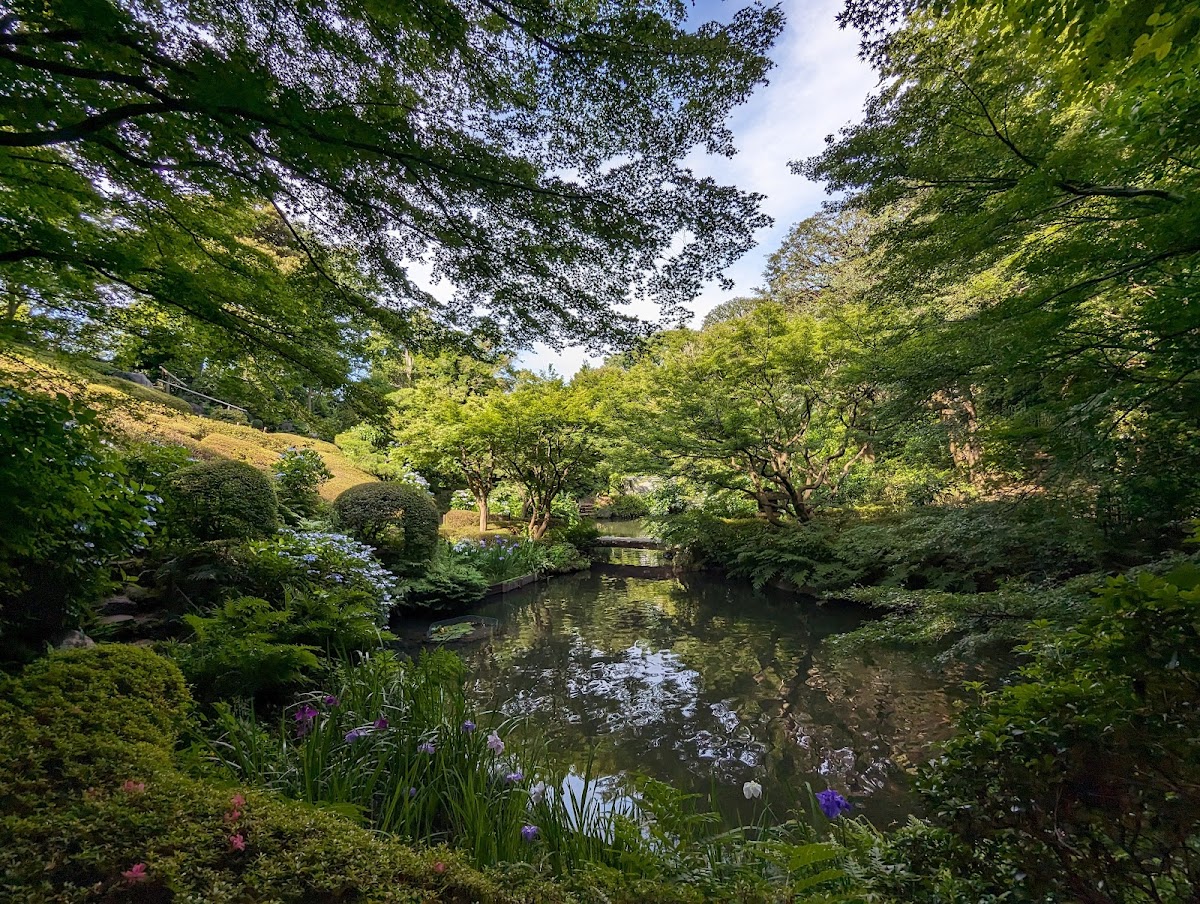
The spring water flows as a small stream through the park and runs into a pond. The water temperature is relatively stable throughout the year, feeling cold in summer and warm in winter. This stable water environment supports the habitation of diverse aquatic plants and organisms.
In the pond, carp swim, and turtles can be seen basking on rocks, providing healing to those who visit. There is an abundance of wetland plants, allowing observation of different plants depending on the season.
Plants Throughout the Four Seasons
Otome Mountain Park offers the opportunity to enjoy various plants throughout the year.
In spring, cherry blossoms and azaleas bloom in profusion, with the beauty of fresh greenery coloring the park. Especially during the cherry blossom season, local residents can be seen enjoying hanami.
In summer, the park is enveloped in deep green, and tree shade becomes a cool refuge. The sound of flowing spring water calls forth coolness, making visitors forget the heat of the city.
In autumn, the autumn leaves are spectacular, with the yellows and reds of deciduous trees coloring the slopes. A walk while treading on fallen leaves is truly special.
In winter, fallen leaves improve visibility, allowing one to clearly understand the topography and structure of the park. The park in winter, wrapped in silence, also has a profound charm.
Highlights of Otome Mountain Park
Firefly House and Firefly Viewing Events
One of the greatest highlights of Otome Mountain Park is the breeding and viewing of fireflies. In the park’s firefly house, Heike fireflies are cultivated using the clear spring water.
Every July, a “Firefly Viewing Event” is held, allowing visitors to enjoy the fantastical light of fireflies while in the city center. This event has become a popular event attracting not only local residents but also many tourists from afar.
Maintaining an environment where fireflies can thrive is evidence of water quality management and ecosystem conservation, representing the crystallization of park management efforts.
Remnants of the Stroll Garden
Elements of the stroll garden designed by Yasuhei Nagaoka during the Soma family era are inherited in the current park. Throughout the park, one can sense the aesthetics of Japanese gardens, including the walking paths centered around the pond, skillfully arranged stone arrangements, and vantage points.
The “changing scenery” that unfolds differently with each walk through the park is a characteristic of stroll gardens and becomes an attraction offering new discoveries with each visit.
Minna no Harakka (Everyone’s Meadow)
In one corner of the park, there is an open grassy plaza called “Minna no Harakka” (Everyone’s Meadow). This space allows children to run around and families to enjoy picnics.
In contrast to the serene atmosphere of the tree groves, this bright and open space is a thoughtful response to the needs of various users.
Wild Bird Observation Spot
Due to its abundant tree groves and waterside environment, many wild birds visit Otome Mountain Park. In addition to year-round residents such as Japanese white-eyes, great tits, and brown-eared bulbuls, migratory birds can be observed depending on the season.
Bringing binoculars will allow for more detailed bird watching. Early morning is when wild birds are particularly active, making it the ideal time for birdwatching.
Access to Otome Mountain Park
Access by Train
Multiple stations provide access to Otome Mountain Park.
From Takadanobaba Station
Approximately 7 minutes on foot from “Takadanobaba Station” on the JR Yamanote Line, Seibu Shinjuku Line, and Tokyo Metro Tozai Line. Exit from the Waseda Exit (West Exit), head west on Shin-Mejiro-dori, and enter on the north side. This is the most common access route.
From Mejiro Station
Approximately 10 minutes on foot from “Mejiro Station” on the JR Yamanote Line. Walk northwest from the station. This route passes through residential areas, allowing for a quiet stroll while accessing the park.
From Shiochiaki Station
Approximately 10 minutes on foot from “Shiochiaki Station” on the Seibu Shinjuku Line. This route heads south from the station.
Address
〒161-0033 Shinjuku Ward, Tokyo, 2-10 Ochiai Shimo
Access by Car and Parking
Otome Mountain Park has no dedicated parking lot. Use of public transportation is recommended. Those visiting by car will need to use nearby coin parking, though parking spaces are limited due to the residential area setting.
From an environmental conservation perspective, access via public transportation such as trains or buses is recommended.
Opening Hours and Facility Information
Opening Hours
Otome Mountain Park is basically open year-round, with admission possible 24 hours. However, due to limited lighting at night, daytime visits are recommended.
Admission Fee
Free admission. Everyone can use it freely.
Facilities
- Spring-fed Pond: A pond where spring water selected as one of Tokyo’s 57 Famous Spring Waters flows
- Firefly House: Heike firefly breeding facility (normally viewable from outside only)
- Tree Groves: Woods of deciduous trees such as Kunugi and Konara
- Minna no Harakka: Grassy plaza
- Walking Paths: Footpaths circulating through the park
- Benches: Rest benches installed at various locations
- Restrooms: Public restrooms in the park
Area
Spanning approximately 26,000 square meters (approximately 7,800 tsubo), it is a relatively large park within Shinjuku Ward.
Event Information
Firefly Viewing Event
Held every July, this is the largest event. From dusk to nighttime, Heike fireflies bred in the park are released, allowing visitors to enjoy their fantastical dance of light.
The date and time of the event vary depending on weather, temperature, and firefly emergence conditions, so it is recommended to check the Shinjuku Ward official website or park bulletin boards in advance. As a popular event, many visitors are expected.
Nature Observation Sessions
Nature observation sessions and environmental learning programs may be held irregularly. Visitors can deeply learn about the park’s nature while listening to expert explanations in activities such as plant observation, bird watching, and aquatic organism surveys.
Cleaning Activities and Volunteer Work
Cleaning activities and green space conservation activities are regularly conducted by local residents and volunteer organizations. The beautiful environment of the park is supported by the efforts of these local people.
Tourist Spots Around Otome Mountain Park
Mejiro Garden
A Japanese garden located near Mejiro Station where visitors can enjoy the beauty of a pond-and-stream stroll garden. It is an ideal spot to visit along with Otome Mountain Park.
Waseda University
Heading toward Waseda from Takadanobaba Station, you will find the historic Waseda University campus. Historic structures such as Okuma Hall and the university museum are also available for viewing.
Kanda River Stroll Path
Along the Kanda River, which formed the Ochiai Cliff Line, there is a stroll path lined with cherry blossoms. The cherry blossom season in spring is particularly beautiful and is recommended as a walking course from Otome Mountain Park.
Shinjuku Central Park
Extending toward Shinjuku Station, you will find Shinjuku Central Park, Shinjuku Ward’s largest park. It can also be visited together with the Tokyo Metropolitan Government Building observation deck.
Tips for Enjoying Otome Mountain Park
Recommended Visiting Times
- Spring (March–May): Cherry blossoms and fresh greenery are beautiful, and the weather is mild, making it ideal for strolling
- Summer (July): The season for the Firefly Viewing Event. Visiting for an evening breeze is also recommended
- Autumn (October–November): The autumn foliage is spectacular, and the carpet of fallen leaves adds a poetic touch
- Winter (December–February): The park enveloped in silence offers observation of nature in winter
Clothing and Items to Bring When Visiting
- Walking Shoes: Since the park has uneven terrain and some natural walking paths, sneakers are recommended
- Season-Appropriate Clothing: Tree groves are cool even in summer, and winds can be cold in winter
- Insect Repellent Spray: In summer, there are many insects such as mosquitoes, so insect prevention measures are advised
- Camera: For photographing nature and wild birds throughout the seasons
- Binoculars: Essential if you wish to enjoy birdwatching
Manners and Points of Caution
- Take Trash with You: There are no garbage receptacles in the park. Always take your trash with you
- Plant and Animal Collection Prohibited: To protect precious natural environments, collecting plants and capturing organisms are prohibited
- Pet Accompaniment: Pets may accompany you if leashed, but please be considerate of other users
- Be Mindful of Noise: Control loud voices and music use to maintain the quiet environment
- No Open Flames: The use of open flames such as barbecuing and fireworks is prohibited
- Spring Water Conservation: Be careful not to enter the pond or spring water or pollute the water
Summary of the Charm of Otome Mountain Park
Otome Mountain Park is a valuable space where history and nature harmonize, with a historical background as the Edo period shogun family’s forbidden mountain, developed as a garden by the Konoe and Soma families in the Meiji and Taisho periods, and cherished by many people as a ward-managed park since 1969.
Despite being in the city center, clear spring water selected as one of “Tokyo’s 57 Famous Spring Waters” flows, and diverse flora and fauna inhabit the tree groves with undulating terrain that takes advantage of the Ochiai Cliff Line’s topography. The summer firefly viewing event is particularly popular as a precious opportunity to experience nature’s mystery in the city.
The accessibility of just a 7-minute walk from Takadanobaba Station is also attractive, allowing casual visits for various purposes such as strolling, nature observation, and refreshment. With its changing appearance through the four seasons, the park offers new discoveries with each visit and serves as a healing oasis that makes visitors forget the city’s hustle and bustle.
When visiting Shinjuku Ward, why not visit Otome Mountain Park and experience the breath of nature and history continuing from the Edo period? See the charm of this park loved by local residents with your own eyes.
Inquiries About Otome Mountain Park
For detailed information and event details about Otome Mountain Park, please contact the following:
Shinjuku Ward Midori Civil Engineering Department Parks Division
Phone: 03-5273-3924 (Main Line)
Official Website: Shinjuku Ward Official Website
Event information and temporary changes to opening hours are updated regularly on the Shinjuku Ward official website and park bulletin boards, so it is recommended to check before your visit.