
Nikko-Ura Pond (Funabashi City, Chiba Prefecture) Complete Guide | History, Spring Water, and Access Information
Nikko-Ura Pond, located in Higashi-Nakayama, Funabashi City, Chiba Prefecture, is a precious spring-fed pond where the region’s history and culture come alive. From the legends of Nichiren the Holy Man to modern conservation efforts, we introduce the diverse aspects of this pond in detail.
What is Nikko-Ura Pond?
Nikko-Ura Pond is a reservoir pond fed by spring water located in Higashi-Nakayama 2-chome, Funabashi City, Chiba Prefecture. Its name is derived from a region that once faced the sea and was called “Nikko-Ura,” and it has also been known locally by the nicknames “Nikko-Fuji Pond” and “Tachibi Pond.”
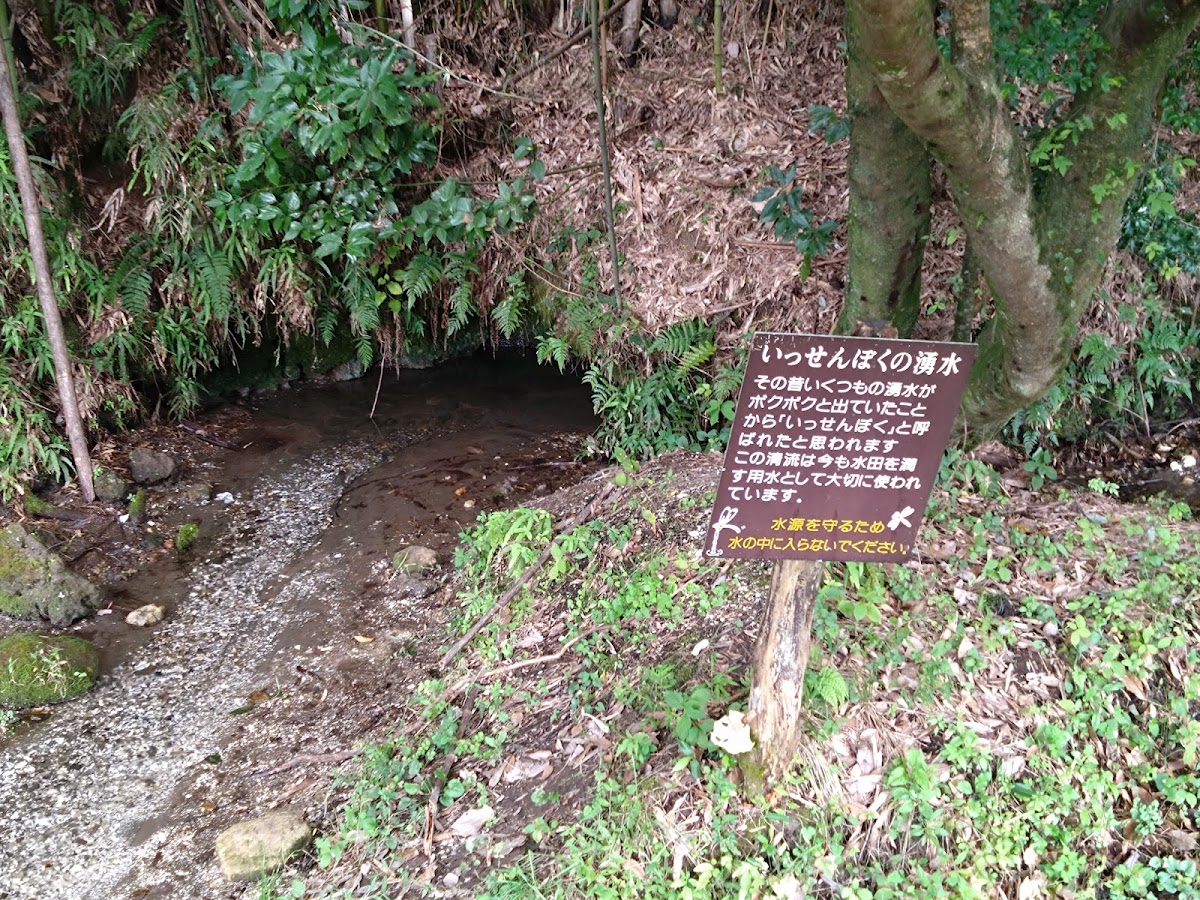
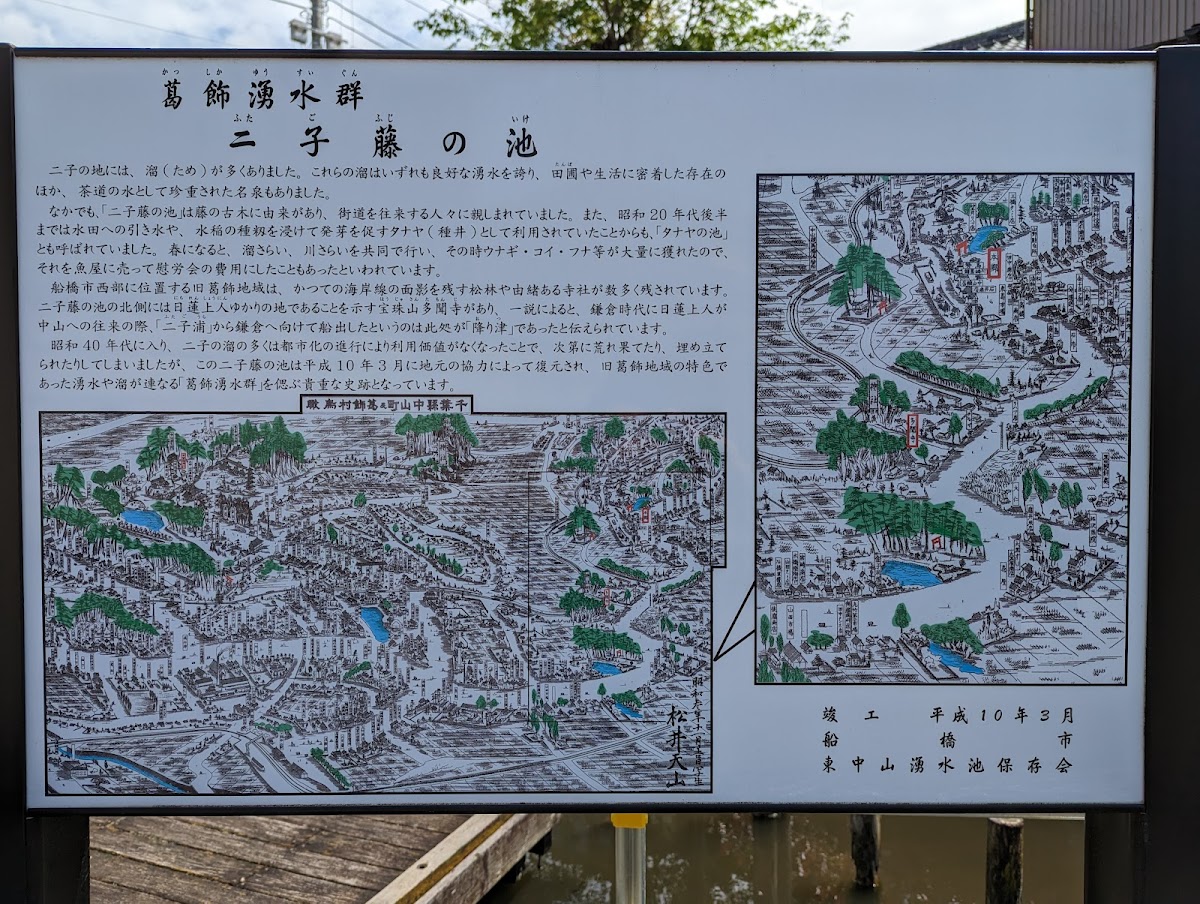
Today it is a small pond surrounded by residential areas, but it once played an important role as a source of irrigation water. Until the late 1950s, it was used for water delivery to rice paddies and as a “Tachibi (seed well)” where seed rice was soaked to promote germination. Since the Heisei period, it has continued to be preserved as a historical asset of the region and has become a place of relaxation for citizens.
Basic Information
- Location: Higashi-Nakayama 2-chome, Funabashi City, Chiba Prefecture
- Access: About 10-minute walk from JR Sobu Line “Shimosa-Nakayama Station” or Keisei Main Line “Keisei-Nakayama Station”
- Type of Pond: Spring-fed pond / Reservoir pond
- Management: Funabashi City
- Viewing: Free (exterior only)
History and Origins of Nikko-Ura Pond
The Origins of the Placename “Nikko-Ura”
The name of Nikko-Ura Pond derives from the fact that this area was once called “Nikko-Ura.” Although it is difficult to imagine today, this area once faced the sea and was a port region with active maritime traffic. While the terrain changed and land reclamation gradually made the area inland, the placename preserves those remnants.
The placename “Nikko” itself has various theories: one suggests it refers to geography or settlements that are aligned like twins, while another theory suggests it means an area where two communities merged. The area around Higashi-Nakayama in Funabashi City had been a place of active human traffic since ancient times, and because it was located along the Kamakura Highway, it flourished as a crucial transportation junction.
The Legend of Nichiren the Holy Man and Nikko-Ura Pond
Nikko-Ura Pond preserves a legend related to Nichiren the Holy Man, the founder of the Nichiren sect of Buddhism. During the Kamakura period, Nichiren the Holy Man was born in Awa Province (present-day southern Chiba Prefecture) and conducted missionary activities primarily in Kamakura.
According to tradition, when Nichiren the Holy Man traveled between Kamakura and Awa, it is said he departed by ship from Nikko-Ura. At that time, sea routes as well as land routes were important means of transportation, and various landing places existed along the Tokyo Bay coast. Nikko-Ura was one such departure point, and a local tradition remains that Nichiren the Holy Man drew water and rested at this location.
Based on this historical background, when the pond’s preservation and development were being discussed in the Heisei period, the name “Nikko-Ura Pond” was formally adopted through consultation between local residents and Funabashi City.
The Aspect of Nikko-Fuji Pond
Wisteria Ancient Trees and the Pond’s Relationship
Nikko-Ura Pond is also known by the nickname “Nikko-Fuji Pond.” This name derives from the fact that once there stood a splendid old wisteria tree at the pond’s edge. This wisteria tree served as a landmark for travelers passing along the highway and was also appreciated as a rest area.
When the wisteria flowers bloomed, it is said that beautiful purple flower clusters reflected in the water’s surface, creating a picturesque landscape. Unfortunately, the ancient wisteria tree has been lost today, but its image remains in the region’s collective memory, and it continues to be passed down through the appellation “Nikko-Fuji Pond.”
As a Famous Site Along the Highway
From the Edo period through the Meiji period, Nikko-Fuji Pond was known as one of the famous sites along the Kamakura Highway. Travelers quenched their thirst at this pond and took rest beneath the wisteria tree. Records indicate that the clarity of the spring water was highly regarded and was even treasured as water for the tea ceremony.
During that era, besides Nikko-Fuji Pond, multiple reservoirs existed in the Nikko area, all boasting high-quality spring water. These ponds supported not only as sources of irrigation water but also as sources of daily living water, sustaining the lives of local residents.
Tachibi Pond: History of Agricultural Use
Rice Paddies and the Pond’s Relationship
Until the late 1950s, Nikko-Ura Pond was also called “Tachibi Pond.” “Tachibi” is a regional dialectal term meaning “tanei (seed well)” and refers to a place where seed rice is soaked in water to promote germination.
In rice cultivation, soaking seed rice in water at appropriate temperatures is an important process for ensuring uniform germination and growing healthy seedlings. Spring-fed ponds maintain stable water temperatures and possess clean water quality, making them ideal conditions for use as a Tachibi. The spring water of Nikko-Ura Pond was particularly high quality and served as a precious agricultural resource for local farmers.
Use as Irrigation Water
Water was also delivered from Nikko-Ura Pond to rice paddies. The stable water supply from the spring water source functioned as a precious water resource that could ensure agricultural water even during drought periods. Records indicate that water channels from this pond were established in the surrounding rice paddy areas and that planned water management was implemented.
After the 1960s, with the progress of urbanization, the surrounding rice paddies were converted to residential land, and the pond’s role as a source of irrigation water gradually diminished. However, when discussing the agricultural history of the region, Nikko-Ura Pond remains an essential presence in its memory.
Characteristics of Spring Water and the Aquatic Environment
The Spring Water Region of Northwestern Chiba Prefecture
The area of northwestern Chiba Prefecture, including Higashi-Nakayama in Funabashi City, is located at the edge of the Shimosa Plateau, a region where many springs are visible at the boundary between the plateau and lowlands. Geologically, the structure is such that beneath the Kanto loam layer lies a low-permeability clay layer, and groundwater flows above this layer and discharges where the plateau edge meets the lowlands.
Nikko-Ura Pond is one such spring-fed pond formed by these topographic conditions. Once boasting abundant spring water discharge, it maintained a stable water source that never dried up throughout the year. Although the spring water volume has decreased due to the effects of urbanization today, groundwater discharge continues to occur, maintaining the pond’s water level.
Water Quality and Ecosystem
Spring-fed ponds generally have good water quality and serve as habitats for diverse organisms. Nikko-Ura Pond is no exception, and once supported a rich aquatic fauna. Freshwater fish such as killifish and loaches, aquatic insects such as dragonflies and diving beetles, and aquatic plants and algae formed the diverse pond ecosystem.
From the late Showa period through the early Heisei period, the pond’s environment temporarily deteriorated due to the effects of urbanization and illegal dumping of garbage. However, through the conservation activities of local residents described below, the environment has improved in recent years, and organisms are gradually returning.
Conservation Activities Since the Heisei Period
From Deterioration to Restoration
From the period of high economic growth through the bubble era, Nikko-Ura Pond was engulfed by the tide of urbanization, and the surrounding area transformed into residential land. The pond, having lost its role as a source of irrigation water, fell into neglect as maintenance ceased, and deterioration advanced through illegal dumping and overgrowth of weeds.
With the onset of the Heisei period, driven by concerns about losing this regional historical asset, local residents voluntarily initiated cleaning activities. Through regular grass cutting and trash collection, the pond’s environment gradually improved.
Cooperation with Funabashi City
The residents’ conservation activities eventually caught the attention of Funabashi City. Requests were submitted to the city from residents saying “we want to preserve this important pond indefinitely,” and the city, recognizing its historical and environmental value, initiated its own conservation efforts.
During the Heisei period, improvement work was carried out around the pond, including the installation of explanatory signage and the establishment of safety fencing. Furthermore, “Nikko-Ura Pond” was formally adopted as the official name, clarifying its position as a regional historical treasure.
Current Volunteer Activities
Volunteer activities by local residents continue today, with regular cleaning and environmental conservation being carried out. Through these steady efforts, Nikko-Ura Pond functions as a core existence of the local community.
It is also utilized as a venue for environmental education for children, and some local elementary schools conduct lessons using Nikko-Ura Pond as subject matter. Efforts to pass on this precious teaching material, where history and nature coexist, to the next generation are underway.
Nearby Attractions and Access
Relationship with Nakayama Hokke-ji Temple
Within walking distance of Nikko-Ura Pond is Nakayama Hokke-ji Temple, a head temple of the Nichiren sect of Buddhism. Known as a temple associated with Nichiren the Holy Man, it houses numerous cultural properties including those designated as National Important Cultural Properties.
The legend of Nichiren the Holy Man at Nikko-Ura Pond suggests a deep relationship with this temple. When visiting the temple, why not also stop by Nikko-Ura Pond and retrace the path walked by Nichiren the Holy Man?
How to Get There
By Train
- About 10-minute walk from the north exit of JR Sobu Line “Shimosa-Nakayama Station”
- About 10-minute walk from Keisei Main Line “Keisei-Nakayama Station”
By Car
- About 15 minutes from “Haraki IC” on the Keiyo Expressway
- There is no dedicated parking lot, so public transportation is recommended
Notes on Visiting
Nikko-Ura Pond is located in a residential neighborhood, and the surrounding area is a living space for local residents. Please note the following when visiting:
- View quietly without making noise
- Take all garbage with you
- Do not throw objects into the pond
- Do not trespass on private property
- When taking photographs, be considerate of the privacy of neighboring residents
Other Spring Water Spots in Chiba Prefecture
Spring Water in Funabashi City
Besides Nikko-Ura Pond, several other spring water sites remain within Funabashi City. Due to the topographic characteristics of the Shimosa Plateau, springs scattered at the plateau’s edge once served as important water sources supporting the region’s daily life and agriculture.
Representative Spring Water in Chiba Prefecture
In surveys conducted by the Ministry of the Environment for the “Heisei Famous Water Hundred Selections,” several representative spring water sites in Chiba Prefecture were selected. Although small in scale, Nikko-Ura Pond has been recognized as a precious water environment of the region due to its historical value and the conservation activities of local residents.
In northwestern Chiba Prefecture, wetland parks and nature observation facilities utilizing spring water are being developed, and efforts to conserve and utilize water environments are progressing.
The Future and Challenges of Nikko-Ura Pond
Toward Sustainable Conservation
The preservation of Nikko-Ura Pond requires continuous management and cooperation from local residents. As aging progresses, securing volunteers for conservation activities has become a challenge. The transmission of history to younger generations and the promotion of participation in conservation activities are important themes for the future.
Urbanization and Water Environment
Further urbanization of the surrounding area is expected, raising concerns about the reduction of groundwater recharge areas and the decline of spring water discharge. Funabashi City is promoting initiatives to preserve groundwater, such as encouraging the installation of rainwater infiltration facilities, but a broader perspective on water environment conservation is needed.
Reevaluation of Historical Value
Nikko-Ura Pond holds value from multiple aspects: the legend of Nichiren the Holy Man, agricultural history, and spring water environment. In the future, it is hoped that more detailed historical and environmental surveys will be conducted, clarifying its value and thus broadening recognition of the importance of its preservation.
Conclusion: Nikko-Ura Pond as a Local Treasure
Nikko-Ura Pond in Higashi-Nakayama, Funabashi City, Chiba Prefecture, despite being a small spring-fed pond, is a precious regional asset possessing multiple layers of history and stories: the legend of Nichiren the Holy Man, Edo-period highway culture, postwar agricultural history, and environmental conservation activities by citizens since the Heisei period.
As the alternate names “Nikko-Fuji Pond” and “Tachibi Pond” suggest, this pond has served different roles as times changed, yet has always remained close to the daily lives of local residents. In the modern era too, it continues to create new value as a place for learning history, experiencing nature, and nurturing community.
Preserving such small-scale spring-fed ponds in an era of urbanization is not easy. However, with the enthusiasm of local residents, support from local government, and understanding from visitors, Nikko-Ura Pond will surely be passed on to future generations.
Should you have the opportunity to visit Higashi-Nakayama in Funabashi, by all means stop by this small pond. You may be able to superimpose the landscape that Nichiren the Holy Man once gazed upon or the Showa-era scene of farmers preparing for rice planting onto the water’s surface quietly resting in the residential neighborhood. You will surely encounter Nikko-Ura Pond, a treasure where the region’s history and people’s livelihoods are concentrated.