Complete Guide to Nakanoya Spring in Hayano Seichi Park: A Hidden Natural Spot in Kawasaki City, Kanagawa Prefecture
Hayano Seichi Park, located in Aso Ward, Kawasaki City, Kanagawa Prefecture, is a precious area where a rich natural environment has been preserved despite its proximity to the city. Among its attractions, “Nakanoya Spring” (Nakanoya Yusui-chi) particularly deserves attention. This article provides detailed information about the charm of the spring area surrounding Nakanoya Pond in Hayano Seichi Park, its ecosystem, historical background, and access methods.
What is Hayano Seichi Park
Hayano Seichi Park is a comprehensive park that Kawasaki City began purchasing land for in 1971 (Showa 46) and has been developing since then. It encompasses a vast area consisting of a burial area of 12.9 hectares and a park area of 37.1 hectares, and is cherished by citizens as a place of relaxation where nature and landscape are in harmony.
Characteristics and History of the Park
The Hayano district is characterized by its distinctive yato (valley) topography, which has been used for agriculture since ancient times. Yato refers to valleys formed by erosion of hilly terrain. These areas were rich in spring water and suitable for paddy field cultivation. The ancestors of this region utilized these topographical features to create ponds that collected spring water, which was then used to irrigate fields and paddies.
The current Hayano Seichi Park is a rare type of facility in Japan where a burial ground and park are integrated while preserving such historical landscapes. Both natural environment conservation and park use are compatible, allowing visitors to enjoy nature through the changing seasons.
The Seven Ponds and the Position of Nakanoya Pond
Within the Hayano Seichi Park area, a group of historically significant ponds called the “Seven Ponds” are scattered throughout. These were created to collect the abundant spring water that emerges from the valleys and to use it as irrigation water for agriculture.
Composition of the Seven Ponds
The Seven Ponds consist of the following ponds:
- Kami Pond (Upper Pond)
- Goro Pond
- Hayashiga Pond
- Nakanoya Pond
- Tsutsumi-iri Pond
- Ryugani Pond
- Shimotani Pond
These ponds are arranged according to the yato topography and each nurtures its own ecosystem. Among them, Nakanoya Pond is particularly important as it is located at the deepest part of Hayano Seichi Park and is adjacent to a spring area.
Characteristics of Nakanoya Pond
Nakanoya Pond is a quiet pond situated at the farthest reaches of the Seichi Park. Fencing is installed around the pond for safe observation. At the edge of the pond’s fence, there is a sign saying “Nakanoya Spring ← 60m ahead,” from which you can access the spring area on foot.
The Appeal of Nakanoya Spring
The Mechanism of Spring Water
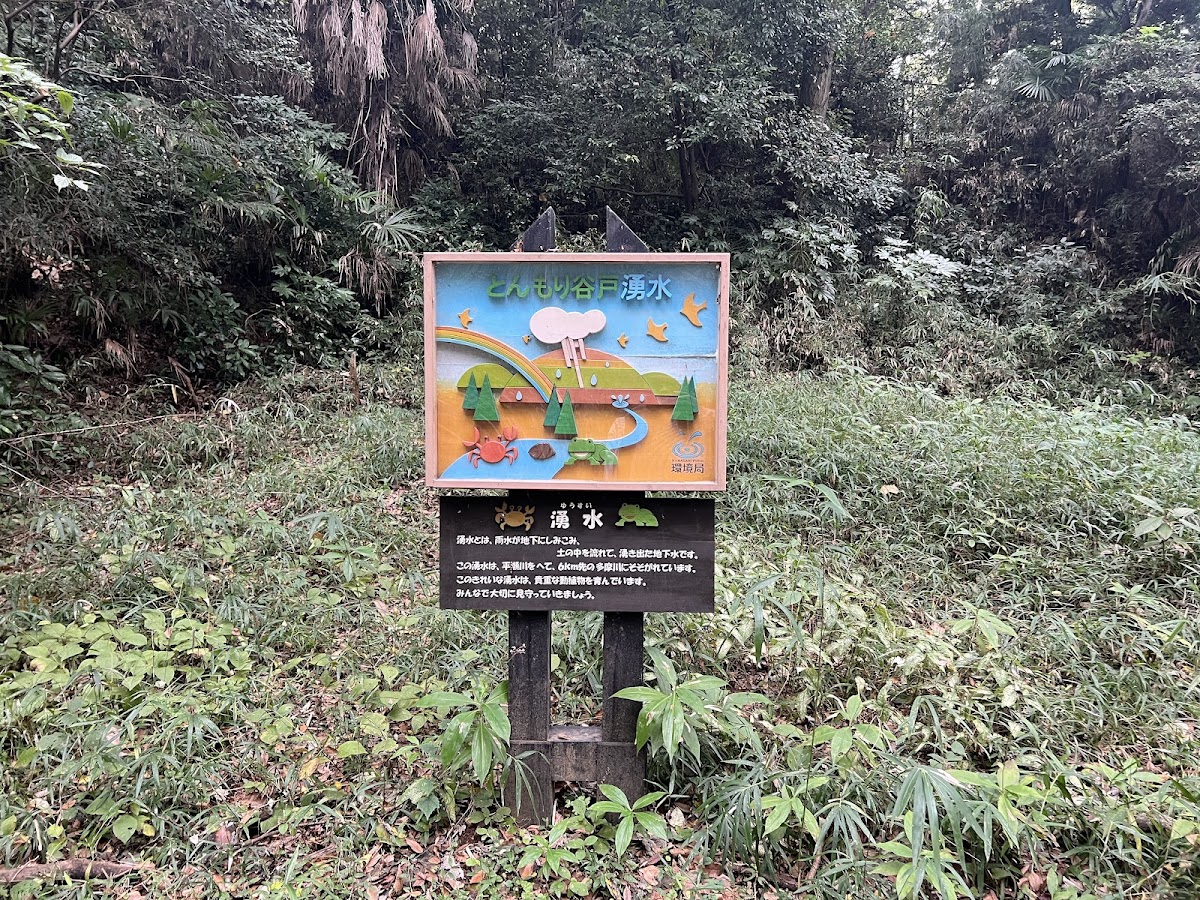
Spring water is groundwater formed when rainwater permeates underground, flows through the soil, and emerges at the surface. The yato topography of the Hayano district is structured so that rainwater that falls on the surrounding hilly terrain seeps into the ground and emerges at the bottom of the valley when it encounters an impermeable layer.
At Nakanoya Spring, this natural mechanism provides a stable volume of spring water throughout the year. The water temperature of the spring is relatively constant year-round, feeling cold in summer and warm in winter, which is a distinctive characteristic.
Clean Water Quality and Ecosystem
The water quality at Nakanoya Spring is excellent, and numerous organisms that can only live in clean water have been confirmed there. Representative examples include:
Sawagani (Japanese stream crab): A freshwater crab endemic to Japan, known as an indicator species of clear streams. At Nakanoya Spring, numerous sawagani can be observed under rocks and among aquatic plants.
Kawanina (Japanese freshwater snail): A type of spiral shell that inhabits clear streams and spring areas. It is also known as food for firefly larvae, and the abundance of kawanina is evidence that water quality is good.
The presence of these organisms indicates that the water quality at Nakanoya Spring meets environmental standards and is clean.
Vegetation Around the Spring Area
The area around the spring is a wetland environment where hygrophilous plants grow abundantly. A forest road is maintained through the wetland area from Goro Pond to Kami Pond, allowing visitors to enjoy observing flora and fauna while experiencing the scents of nature.
In spring, hygrophilous plants such as Skunk Cabbage and Japanese Iris bloom. In summer, dragonflies fly about the area. In autumn, trees with autumn foliage are reflected in the water surface, and in winter, you can enjoy frost pillars and frozen water surfaces—the area presents a different face in each season.
Environmental Conservation and the Importance of Spring Water
Representative Spring Water in Kanagawa Prefecture
Nakanoya Spring at Hayano Seichi Park is recognized as one of the “representative springs in Kanagawa Prefecture” selected by the Ministry of the Environment. While numerous springs exist throughout Kanagawa Prefecture, a spring area preserved in such good condition near an urban area is rare and precious.
Spring Water Conservation Efforts
Kawasaki City undertakes various initiatives to conserve the natural environment of Hayano Seichi Park:
- Vegetation management: Maintaining the original yato environment through the removal of invasive species and protection of native species
- Water quality monitoring: Regular water quality surveys to monitor the condition of the spring water
- Visitor awareness: Installation of information boards and organization of nature observation events for environmental education
- Access restrictions: Restricting access to certain wetland and spring areas to minimize impacts on the ecosystem
Through these efforts, Nakanoya Spring maintains a rich natural environment despite being near an urban area.
How to Enjoy Hayano Seichi Park
Points for Nature Observation
Hayano Seichi Park, including Nakanoya Spring, is an ideal spot for nature observation. By keeping the following points in mind, you can have a more fulfilling observation experience:
Best time to visit: Spring (April–May) is when hygrophilous plants bloom and new foliage is beautiful. Autumn (October–November) is when autumn foliage is at its peak, and the weather is suitable for observation.
Recommended items to bring:
- Binoculars (for birdwatching)
- Camera (a macro lens is useful for photographing insects and plants)
- Field guides (plants, insects, birds, etc.)
- Boots or waterproof shoes (for walking around wetland areas)
- Insect repellent spray (during summer)
Observation etiquette:
- Do not enter spring or wetland areas
- Do not capture animals or take them away
- Always take your trash with you
- Observe quietly without raising your voice
- Do not pick plants
Walking Courses
Multiple walking routes are available within Hayano Seichi Park. When visiting Nakanoya Spring, the following course is recommended:
Standard course (Approximately 1.5–2 hours)
- Head deeper along the forest road from the park entrance
- Observe the wetland area around Goro Pond
- Walk through the Kami Pond area
- Arrive at Nakanoya Pond
- Find the directional sign along the pond’s fence and access the spring area (60m ahead)
- Observe sawagani and kawanina at the spring
- Return along the same path or explore other ponds via an alternative route
The forest roads in the park are enveloped by the scents of nature, allowing you to walk slowly and enjoy forest bathing. You can fully appreciate the observation of flora and fauna while experiencing the yato topography and the wisdom of your predecessors.
Access Information
Access by Public Transportation
Access to Hayano Seichi Park is primarily by bus.
From Odakyu Line “Kakio Station”:
- Board the Kawasaki City Bus “bound for Hayano Seichi Park” from the north exit of Kakio Station
- Get off at the final stop “Hayano Seichi Park,” a short walk away
- Travel time: Approximately 15 minutes
As the number of buses is limited, it is recommended to check the timetable in advance. Particularly on weekends and holidays, the number of departures may differ.
Access by Car
Route from major roads:
- Approximately 20 minutes from the Yokohama Aoba IC on the Tomei Expressway
- Accessible via National Route 246
Parking is provided within the park, but it may become congested during grave-visiting seasons (Obon and equinoxes). Using public transportation is recommended when possible.
Combination with Nearby Areas
Hayano Seichi Park is located in a nature-rich area of Aso Ward, and there are other points of interest in the surrounding area:
- Aso Ward’s satoyama (rural mountain) area: The Hayano district surroundings retain traditional rural mountain landscapes suitable for walking
- Kurokawa district: Agricultural experience facilities and farm stands where local agricultural products can be purchased
- Area around Kakio Station: Cafes and restaurants are available for rest after a walk
Facility Information and Contact Information
Basic Information
Name: Hayano Seichi Park (Nakanoya Spring is located within the park)
Address: Hayano, Aso Ward, Kawasaki City, Kanagawa Prefecture
Opening hours: Open at all times (burial areas have time restrictions)
Admission: Free
Parking: Available (Free)
Contact Information
Hayano Seichi Park Administration Office
- Phone: 044-987-6120
- Official website: https://www.kanagawaparks.com/kawasakireien/hayano/
Kawasaki City Construction and Green Policy Bureau
- Contact point for inquiries regarding park development and natural conservation
- Information can be obtained from the Kawasaki City official website
Kawasaki/Aso Tourism Association
- Provides tourism information and seasonal event information
- Rich in tourism information for the area including Hayano Seichi Park
Precautions When Visiting
Safety Precautions
- Watch your step: Forest roads and areas around wetlands have slippery sections. Wear comfortable shoes
- Check the weather: After rain or shortly after rainfall, muddy areas increase. Check the weather forecast before visiting
- Heat illness prevention: In summer, bring a hat and beverages, and drink water frequently
- Insect bite prevention: Particularly in summer, mosquitoes and biting midges are numerous. Long sleeves and pants are recommended, as well as insect repellent spray
Cooperation with Environmental Conservation
- Do not pollute the spring water: Do not use soap or shampoo at the spring area
- Take trash with you: Trash cans are not provided in the park. Be sure to take all trash with you
- Protect wildlife: Do not catch animals or pick plants
- Do not enter restricted areas: Do not enter protected areas or dangerous locations
Nakanoya Spring Through the Four Seasons
Spring (March–May)
Spring is the most colorful season around the spring area. Hygrophilous plants bud and bloom all at once. Early spring flowers such as Skunk Cabbage and False Hellebore can be seen, and the beauty of new greenery is exceptional. Bird songs become active, making it an ideal season for birdwatching.
Summer (June–August)
Summer is when greenery is at its most intense. The coldness of the spring water is refreshing, and more visitors come to escape the heat. Many dragonflies fly about, and with luck, you might see fireflies. However, insects are numerous in this season, so insect repellent measures are essential.
Autumn (September–November)
Autumn is when autumn foliage is beautiful. The deciduous forest surrounding the valley changes color, and the sight of autumn leaves reflected in the spring water is spectacular. The temperature is also pleasant, making it ideal for extended walks. Additionally, nuts are abundant in autumn, making it an easy season to observe the activity of birds and small animals.
Winter (December–February)
Winter is a season when few visitors come and you can enjoy nature in quietness. Around the spring area, frost pillars form, and sometimes the water surface freezes. With fallen leaves, visibility improves, making it a suitable season for birdwatching. There is also an opportunity to observe wintering birds.
Environmental Education and Community Engagement
Use in School Education
Nakanoya Spring at Hayano Seichi Park is also utilized as a place for environmental education at local elementary and middle schools. Schools within Kawasaki City conduct programs during integrated learning time and science classes where students actually visit the spring area to conduct water quality surveys and observe living organisms.
By experiencing this precious natural environment near the city, children learn the importance of environmental conservation. By actually observing indicator organisms such as sawagani and kawanina, they deepen their understanding of the relationship between water quality and ecosystems.
Activities of Civic Organizations
Local environmental conservation groups and volunteer organizations engage in natural environment conservation activities at Hayano Seichi Park. Through regular cleanup activities, removal of invasive species, and organization of nature observation events, they maintain the park’s environment and conduct awareness activities for visitors.
Such citizen activities enable detailed environmental management that cannot be fully achieved by administration alone and contribute to the revitalization of community engagement.
Issues and Future Prospects in Spring Water Conservation
Contemporary Challenges
As urbanization progresses, the spring water environment in the Hayano district faces several challenges:
Decrease in water volume: Development in surrounding areas has reduced the underground infiltration of rainwater, leading to a declining trend in spring water volume.
Impact on water quality: Human activities in upstream areas may affect water quality.
Invasion of invasive species: Invasive species such as crayfish threaten the native ecosystem.
Visitor conduct issues: Inappropriate behavior by some visitors, such as littering and removing organisms, has become problematic.
Future Outlook
In response to these challenges, Kawasaki City and local organizations are pursuing the following measures:
- Installation of rainwater infiltration facilities: Installing facilities in surrounding areas to promote rainwater infiltration
- Strengthened monitoring system: Continuous surveys of water quality and species composition
- Enhancement of environmental education: Expansion of school education and public lectures
- Promotion of ecotourism: Promoting appropriate use while deepening understanding of environmental conservation
Through these efforts, it is hoped that the precious natural environment of Nakanoya Spring will be passed on to future generations.
Conclusion
Nakanoya Spring at Hayano Seichi Park is a precious natural environment that remains in the suburbs of Kawasaki City, Kanagawa Prefecture. Clear spring water, a rich ecosystem, and the historical landscape of the yato topography come together to provide visitors with a place of healing and learning.
Located at the back of Nakanoya Pond, one of the Seven Ponds, this spring area is an environment where clean-water organisms such as sawagani and kawanina live, and where hygrophilous plants grow abundantly. With public transportation access available, you can easily visit from Kakio Station via bus.
Hayano Seichi Park’s Nakanoya Spring can be enjoyed for various purposes including nature observation, forest bathing, and environmental learning. This location, which presents different faces through the four seasons, is a precious spot where you can escape the hustle and bustle of the city and connect with nature.
When visiting, remember to care for the environment and follow proper etiquette so that this beautiful natural environment can be preserved for the future. By all means, visit Nakanoya Spring at Hayano Seichi Park and experience firsthand the charm of the abundant nature that remains in the suburbs of the city.