Complete Guide to Yamato Water Source (Kanagawa Prefecture) | History of the Hikiji River Source and Izumi Forest
The Yamato Water Source located in Kamikamigashiyanagi, Yamato City, Kanagawa Prefecture, serves as the source of the Hikiji River, which spans 21.3 kilometers in total length, and is an important facility supporting the region’s water environment. Once a historic water source that supported Yamato City’s tap water supply, it currently functions as an emergency water source managed by the Kanagawa Prefecture Enterprise Bureau. This article provides detailed explanations of the history, current status, and surrounding environment of the Yamato Water Source.
Overview of Yamato Water Source
The Yamato Water Source is a water source facility located in the yato (valley) topography of Kamikamigashiyanagi, Yamato City, Kanagawa Prefecture. Situated in the central part of the Sagami Plateau, in a section of the diluvial plateau, it is known as a precious water source utilizing natural spring water.
Basic Information
- Location: Kamikamigashiyanagi, Yamato City, Kanagawa Prefecture
- Administrator: Kanagawa Prefecture Enterprise Bureau
- Water System: Hikiji River system (Class II river)
- Nearest Station: “Sagami-Otsuka Station” or “Tsuruma Station” on the Odakyu Enoshima Line
- Access: Near National Route 246 Bypass
The Yamato Water Source is located within “Izumi Forest,” a vast natural park spanning approximately 42 hectares, and forms the core of the water source area, including the Daike (large pond) and Koike (small pond), which are the sources of the Hikiji River.
Role as Source of the Hikiji River
The Yamato Water Source holds an extremely important position as the source point of the Hikiji River. The Hikiji River originates in Kamikamigashiyanagi, Yamato City, flows into Sagami Bay at Kugenuma, Fujisawa City, and is a Class II river with a total length of 21.3 kilometers and a drainage basin area of 67 square kilometers.
Flow Basin Characteristics of the Hikiji River
The Hikiji River collects water that has emerged from the central part of the Sagami Plateau and, while eroding the diluvial plateau, forms a valley floor plain and flows southward. The upper section up to Kanagawa Prefectural Route 45 (Maruko Nakayama Chigasaki Line) is a 4.46-kilometer quasi-public river section managed by Yamato City, while the lower section is managed by Kanagawa Prefecture as a Class II river.
The water emerging from the Yamato Water Source becomes the main Hikiji River flow after passing through the Daike and Koike within Izumi Forest, flows through Yamato City and Fujisawa City, and reaches Sagami Bay. This water source can be said to be a fundamental entity supporting the entire water environment of the Hikiji River basin.
History of Yamato Water Source
Construction of Kamikamigashiyanagi Water Purification Plant
In the 1960s, Japan entered a period of rapid economic growth, and the population of Yamato City increased dramatically. Accordingly, securing tap water became an urgent matter, and in order to utilize this abundant spring water, the “Kamikamigashiyanagi Water Purification Plant” was constructed at the Yamato Water Source.
This purification plant functioned as an important tap water supply source for Yamato City and became critical infrastructure supporting residents’ lives. At that time, the clear source water of the Hikiji River was utilized directly as drinking water for city residents.
Suspension of Operation as Tap Water
Around Heisei 4 (1992), the Kamikamigashiyanagi Water Purification Plant suspended its operation as a tap water supply. This was due to the development of larger-scale purification facilities and the progress of integrated regional water distribution networks. Currently, Yamato City’s tap water is primarily supplied from Ayase Water Purification Plant and delivered to households via distribution reservoirs within the city.
Current Role: Emergency Water Source
Even after the suspension of operation, the Yamato Water Source has been carefully managed by the Kanagawa Prefecture Enterprise Bureau. It is currently positioned as an emergency tap water facility, maintaining its function as a backup water source in cases of disaster or disruption to water supply.
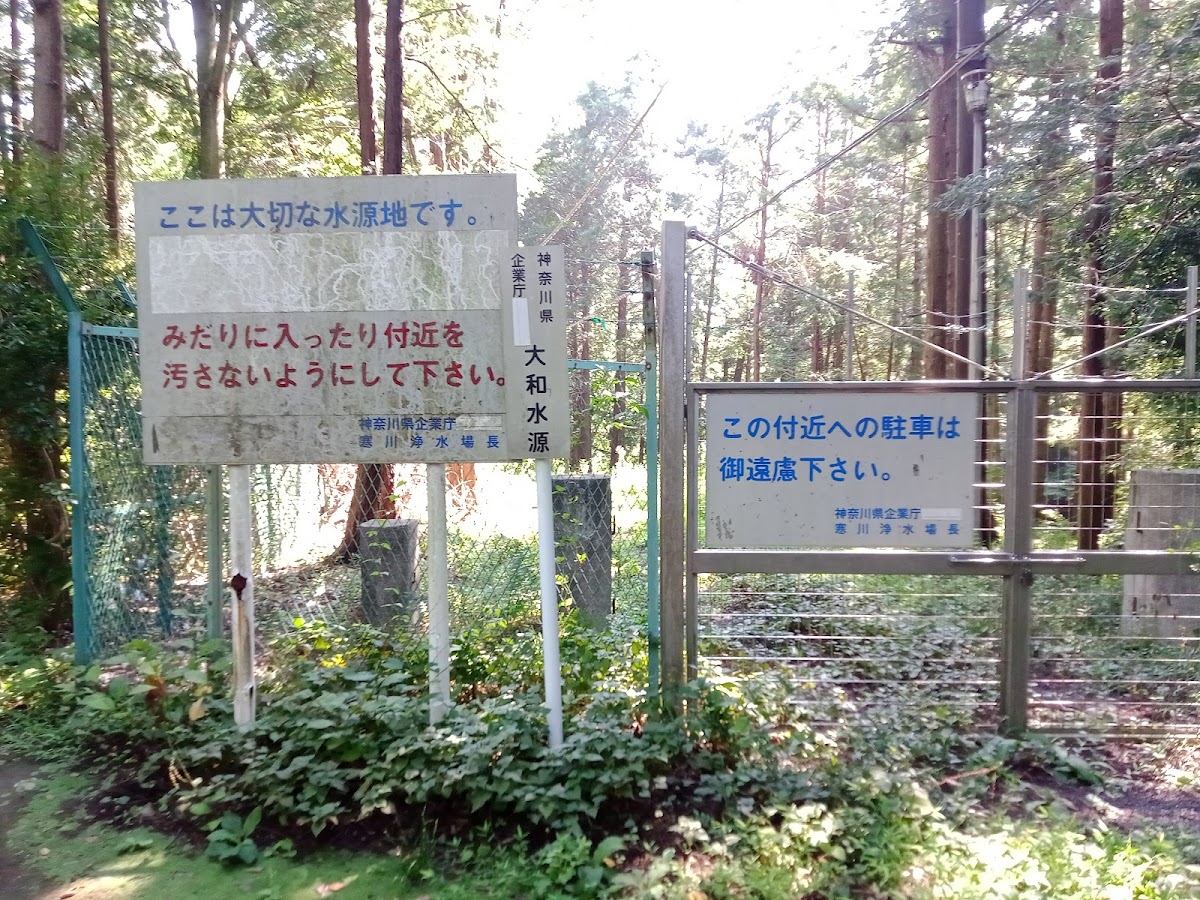
For this reason, access to the water source area is restricted to the general public, and management for water quality preservation and facility protection continues.
Relationship with Izumi Forest
The Yamato Water Source is located as the core component of a natural park called “Izumi Forest.” Izumi Forest is an urban park covering approximately 42 hectares centered on the Hikiji River water source and is a water and nature conservation area representative of Yamato City.
Characteristics of Izumi Forest
Izumi Forest has a spring-fed pond that is the source of the Hikiji River, with a rich natural environment preserved. The park features wooden walkways and trails, allowing diverse natural experiences such as bird watching, plant observation, and interaction with aquatic creatures.
- Shirakashi no Ie: Natural observation center and exhibition facility
- Kyodo Minka-en: Two traditional folk houses, designated as municipal important tangible cultural assets, relocated and restored
- Water Mill: Traditional water mill utilizing the flow of the Hikiji River
- Wetland Plant Garden: Area for observing wetland plants
Adjacent “Fureai no Mori” (Interaction Forest)
Adjacent to Izumi Forest is “Fureai no Mori,” and together they form an integrated green space. The Hikiji River flows through these forests, providing a valuable environment where one can observe the transition from water source to river up close.
Natural Environment of the Water Source Area
The area surrounding the Yamato Water Source is a valuable preserved natural environment within the increasingly urbanized Yamato City. Satellite photographs confirm that residential areas press right up to the edge of the densely forested water source, but the water source itself is strictly protected.
Characteristics of Yato Topography
The Yamato Water Source is located in a landform called yato (valley). A yato is a valley-shaped topography created by erosion of hills and features abundant spring water and easily formed wetland environments. This topography supports the stable water source of the Hikiji River.
Ecosystem Preservation
Diverse flora and fauna inhabit the water source area. Water-adapted aquatic plants, wetland plants, insects that feed on them, and wild birds maintain a rich ecosystem.
In Izumi Forest, birds such as kingfisher, varied tit, and Japanese white-eye can be observed, and fireflies have also been confirmed to inhabit the area, demonstrating that a favorable natural environment is maintained despite proximity to the city.
Access and Viewing Information
Transportation Access
By Train:
- Approximately 15-minute walk from “Sagami-Otsuka Station” on the Odakyu Enoshima Line
- Approximately 20-minute walk from “Tsuruma Station” on the Odakyu Enoshima Line
By Bus:
- Yamato City Community Bus “Yamaton GO” available
- Kanagawa Chuo Kotsu Bus “Izumi Forest” bus stop
By Car:
- Near “Kamikamigashiyanagi Intersection” on National Route 246 Bypass
- Izumi Forest parking lot available (paid)
Precautions When Visiting
The interior of the Yamato Water Source facility is not open to the general public for water quality preservation and facility management purposes. However, the natural environment surrounding the water source can be observed from the trails in Izumi Forest.
The source section of the Hikiji River remains restricted due to its use as tap water until 1992. When visiting, use designated trails and avoid entering restricted areas.
Nearby Attractions
Izumi Forest Natural Observation Center “Shirakashi no Ie”
A facility where you can learn about Izumi Forest’s nature and the Hikiji River ecosystem. Exhibition corners provide detailed introductions to the water source’s history and surrounding flora and fauna.
Yamato City Kyodo Minka-en (Folk House Garden)
Within approximately 3,700 square meters of the Izumi Forest area where the Hikiji River’s water source is located, two folk houses (designated as municipal important tangible cultural assets) representative of the city have been relocated and restored. Through Edo to Meiji Period farmhouse architecture, you can learn about the region’s history.
Hikiji River Trails
Maintained trails continue along the Hikiji River extending downstream from the water source. You can enjoy seasonal natural changes while observing changes in the river’s flow.
Relationship with Yamato Distribution Reservoir
On the western hilltop area of the Yamato Water Source, a “Yamato Distribution Reservoir,” an underground-type water distribution reservoir, is buried. However, the water supplied to this distribution reservoir is not from the spring water emerging nearby, but from Ayase Water Purification Plant located approximately 7 kilometers to the south.
The Yamato Distribution Reservoir supplies tap water to approximately one-third of households in Yamato City and is designated as a disaster water storage reservoir. Although the Yamato Water Source and Yamato Distribution Reservoir are geographically close, they are currently operated as separate systems in the tap water infrastructure.
Water Source Conservation Efforts
Management by Kanagawa Prefecture Enterprise Bureau
The Kanagawa Prefecture Enterprise Bureau strictly manages the Yamato Water Source as an emergency water source. Regular water quality testing, facility maintenance and inspection, and surrounding environmental conservation activities are continuously conducted.
Collaboration with Local Community
Local environmental conservation organizations such as “Hikiji River Water and Green Group” conduct environmental conservation activities in the Hikiji River basin. Through cleanup activities around the water source area, nature observation meetings, and environmental education programs, activities are conducted to communicate the importance of the water source to residents.
Balancing Urbanization and Water Source Conservation
Yamato City is a region undergoing rapid urbanization from its location approximately 40 kilometers from central Tokyo. With residential areas pressing right up to the water source area, conserving this precious water source environment while developing is a significant challenge.
The efforts to develop Izumi Forest as a park and preserve water source environment while serving as a place for residents to enjoy, can be said to be a model case of coexistence between city and nature.
Water Environment of the Hikiji River Basin
The Hikiji River, beginning from the Yamato Water Source, faces various challenges as an urban river as it flows through Yamato City and Fujisawa City.
History of Water Quality Improvement
During the period of rapid economic growth, water quality of the Hikiji River deteriorated significantly due to basin urbanization. Inflow of domestic sewage and factory wastewater placed the river environment in a serious condition.
However, with the progress of sewage system development, strengthening of factory wastewater regulations, and cleanup activities by residents, water quality has gradually improved. Currently, aquatic life is returning to the upper reaches, and improvements are evident.
Flood Control Measures
In the Hikiji River basin, decreased water retention capacity due to urbanization has increased flood risk during heavy rainfall. Accordingly, comprehensive flood control measures have been implemented, including river improvements, adjustment pond construction, and rainwater infiltration facility installation.
The preservation of the Yamato Water Source as the water source is an important factor affecting the entire water environment of the lower basin.
Seasonal Attractions
Spring (March-May)
Cherry blossoms bloom in Izumi Forest, and new greenery is beautiful. Trees around the water source also bud, and bird activity becomes active.
Early Summer (Late May-June)
Hydrangeas reach peak bloom in Izumi Forest. During the rainy season, water volume from the water source becomes abundant, and Hikiji River water levels increase.
Summer (July-August)
Cool shade and water-side trails make this an ideal season for walking. With luck, firefly observation is possible.
Autumn (September-November)
Fall foliage is beautiful, and bird species increase. Under clear autumn air, you can fully enjoy the natural surroundings of the water source area.
Winter (December-February)
With fallen leaves, visibility improves, making this an ideal season for bird watching. The arrival of wintering birds can be expected.
Conclusion
The Yamato Water Source (Kanagawa Prefecture) is an important facility supporting the region’s water environment as the source of the Hikiji River. With a history of supporting Yamato City’s tap water until 1992, it currently functions as an emergency water source managed by the Kanagawa Prefecture Enterprise Bureau.
Despite advancing urbanization, it is preserved as Izumi Forest, a natural park, and serves as a place of recreation for residents while maintaining precious water source environment. As the starting point of the 21.3-kilometer flow from the Hikiji River’s source to Sagami Bay, the Yamato Water Source will continue to play an important role.
While access to the water source itself is restricted, the rich natural surroundings can be observed from trails in Izumi Forest. Why not visit the source of the Hikiji River and contemplate the coexistence of city and nature?