Toggyokusen (Ibaraki Prefecture) Complete Guide | History, Highlights, and Access Information for the Famous Water of Kairakuen
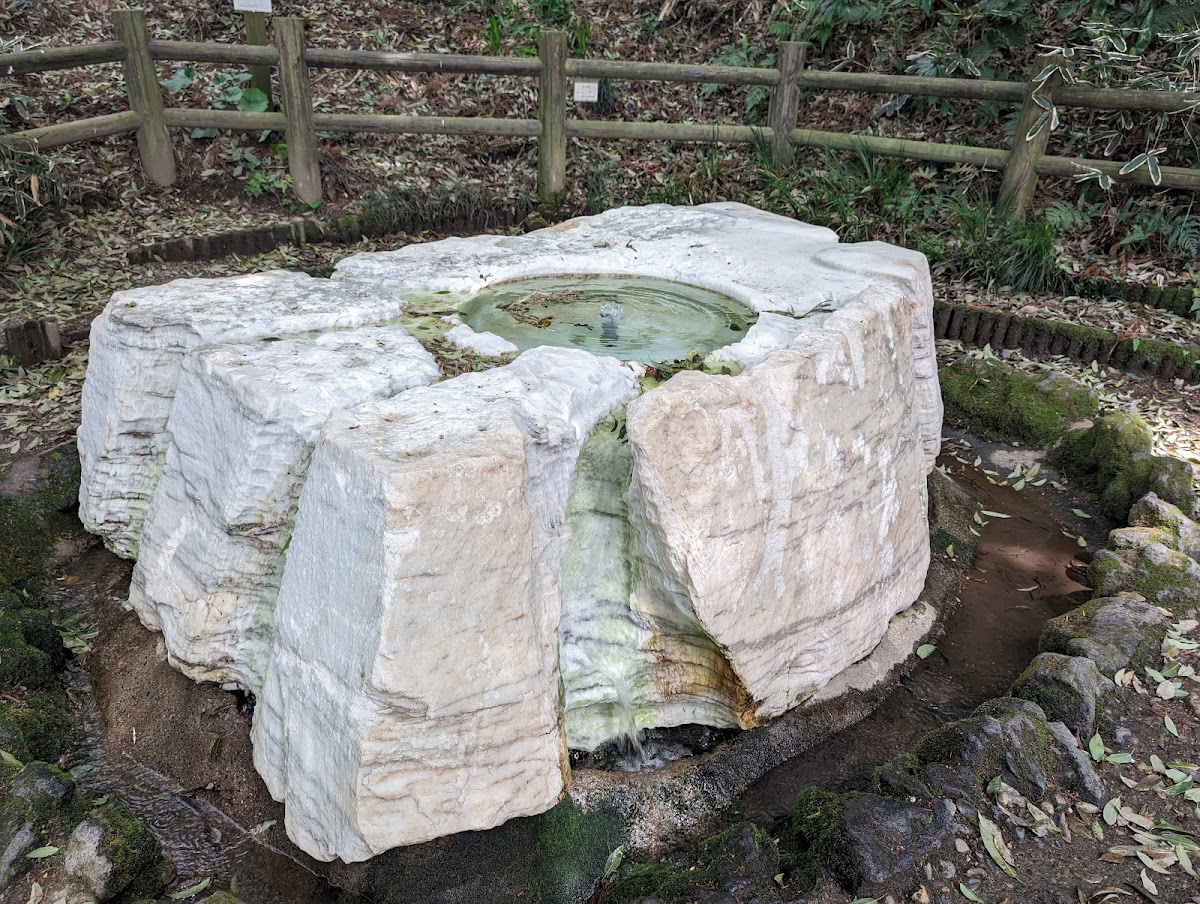
Toggyokusen (吐玉泉), located within Kairakuen in Mito City, Ibaraki Prefecture, is a beautiful spring where clear water flows from a white marble well. Created by Tokugawa Nariaki, the ninth daimyo of the Mito Domain, in the late Edo period, this spring is far more than just a natural spring—it continues to captivate many people today as a cultural asset imbued with profound philosophy and advanced technology.
This article comprehensively introduces information about this famous water, from its historical background and construction techniques to its current state and highlights for visitors.
Toggyokusen Explained | Basic Information and Overview
Toggyokusen is a natural spring located within Kairakuen at 1-chome 3-3 Tokiwa-cho, Mito City, Ibaraki Prefecture. Situated at a location reached by descending stairs from the Taro Cedar (Taro Sugi) within the garden, clear water continuously flows from a beautiful white well.
Origin and Meaning of the Name
The name “Toggyokusen” was given by Tokugawa Nariaki himself. This name carries two meanings.
One refers to how even in summer the cold, clear water flows ceaselessly like a jewel. The other reflects Nariaki’s profound philosophy that this spring should become a source from which Confucian ideals and teachings flow forth. Nariaki positioned Toggyokusen not merely as a place of natural spring water, but as a culturally significant space with spiritual meaning.
Location and Positional Relationship
Toggyokusen is positioned in the central part of Kairakuen, along the route toward Kobuntei. By descending stone stairs from near the Taro Cedar, a large tree within the garden, one reaches this spring in a quiet, tree-surrounded location. The placement skillfully utilizes the topography of Kairakuen and serves as one of the important landmarks in garden tours.
Tokugawa Nariaki and the History of Toggyokusen
The Construction of Kairakuen and Toggyokusen
Kairakuen, created by Tokugawa Nariaki in 1842 (Tenpô 13), is one of Japan’s representative gardens. As part of his domain reforms, Nariaki established Kairakuen as a place of enjoyment (kaigyoku) to be shared with his people.
The construction of Toggyokusen was an important project during Kairakuen’s development. This area was naturally rich in spring water, and water once said to cure intractable diseases had long flowed here. Nariaki collected multiple springs from the surrounding area and devised a structure that skillfully utilized the topography’s elevation differences to cause water to gush forth.
Purpose of Supplying Water for Tea Ceremony
One of Toggyokusen’s primary purposes was to supply water for tea ceremonies in the tea room “Karouan” (何陋庵) within Kobuntei. Nariaki valued the way of tea and desired that high-quality water be used in the tea ceremony.
At a location several meters away, a collection basin was buried, and water was conducted from it via a water pipe (bamboo conduit) to be discharged from Toggyokusen—representing advanced technology for the time. This method created a system maintaining stable water volume and quality.
Legend of Eyesight Cure
The water of Toggyokusen was traditionally known as water that cured eye diseases. The spring water in this area was said to have efficacy against intractable diseases, with effects especially noted for eye ailments.
Before Kairakuen’s construction, the water in this location was used by local people, and Toggyokusen was developed as a continuation of this tradition. However, drinking and eye-washing are now prohibited, and it is preserved for observation purposes only.
Characteristics of the Spring Stone and Construction Technique
Use of Kansui Stone (Marble)
The most distinctive feature of Toggyokusen is the beautiful white well. This well is made of what is called “kansui stone,” a type of marble. Kansui stone was a specialty product of the Mito Domain, quarried from Mayumi Mountain in Hitachiota City, Ibaraki Prefecture.
The sight of clear water flowing from a white marble well is visually extremely beautiful and serves as an important ornamental feature in the garden’s landscape. Nariaki fully considered the aesthetic effects of the garden design when deciding to place this white spring stone.
The Current Spring Stone
The spring stone currently visible was installed in 1987 (Showa 62). The original spring stone deteriorated after long years of use, so it was replaced using marble from the same Mayumi Mountain in Hitachiota City.
In the replacement work, research was conducted into Edo-period construction methods, with efforts made to recreate the appearance as closely as possible to the original. Through the white beautiful stone material and precise craftsmanship, the image of that era has been revived in the present day.
Special Construction Method and Water System
Toggyokusen employs a special construction method. A collection basin is set underground, and the spring water gathered there is conducted through a bamboo water pipe to flow from the marble well.
By utilizing the topography’s elevation differences, water gushes forth through natural water pressure without requiring pump-driven power. This technology represents the achievements of advanced Edo-period civil engineering, and it is remarkable that it continues to function today.
Water Quality and Characteristics of Toggyokusen
Taste and Temperature of the Water
The water flowing from Toggyokusen is known for being cold and delicious. It remains cold even in summer, and has no particular taste, making it easy to drink (though drinking is now prohibited).
The water temperature remains nearly constant throughout the year, maintaining the stable temperature characteristic of groundwater. That cold water flows even in midsummer suggests that it was once a place where visitors to Kairakuen would quench their thirst.
Water Volume and Water Quality
Toggyokusen has abundant water flow, with stable discharge continuing throughout the year. This stability demonstrates the richness of the surrounding geology and groundwater veins.
Regarding water quality, high transparency and clarity are characteristic features. True to the expression “water as clear as a jewel,” clean water flows ceaselessly. However, by modern sanitary standards, it cannot be used for drinking or eye-washing.
The Relationship Between Kairakuen and Toggyokusen
Role in Garden Composition
Toggyokusen plays an important role in Kairakuen’s garden composition. In Japanese gardening, water is an essential element, and Toggyokusen was designed not merely as a water source but as a space with visual and spiritual significance.
Positioned among large trees such as the Taro Cedar, its location at the bottom of descended stone stairs creates a sense of discovery for visitors. It serves as an important point where visitors pause during their garden tour to listen quietly to the sound of water.
Connection with Kobuntei
Toggyokusen is closely connected to Kobuntei’s tea room “Karouan.” Water pipes were established to conduct this spring’s water to serve the tea ceremony.
Water is an extremely important element in tea ceremony. Using high-quality water is an essential condition for serving excellent tea. The background to Nariaki’s dedication to constructing Toggyokusen likely lay in his deep understanding of tea culture and his desire to entertain guests.
Toggyokusen Today | Highlights and Precautions
Points of Observation
Toggyokusen is currently preserved for observation. The main highlights are as follows:
White marble well: The beautiful well made from kansui stone from Mayumi Mountain in Hitachiota City contrasts wonderfully with the clear water.
Continuous spring flow: Clear water that flows stably throughout the year conveys the wonder of Edo-period technology to the present.
Surrounding natural environment: The quiet setting surrounded by large trees including the Taro Cedar is a healing space that makes one forget the hustle and bustle of the city.
Stone stairs and layout: The placement that utilizes topographical elevation differences and the effect of stone stairs descending to reveal the spring embodies Japanese garden aesthetics.
Usage Notes and Precautions
Drinking prohibited: Currently, drinking the water from Toggyokusen is not permitted. Drinking is prohibited for sanitary management reasons.
Eye-washing prohibited: Though once believed to cure eye diseases, washing one’s eyes with the water is now also prohibited.
Cooperation in protection: This is a facility protected as a cultural property. Avoid touching the well or contaminating the water.
Photography: Photography is permitted, but care should be taken not to disturb other visitors.
Access to Kairakuen and Visit Information
How to Access Kairakuen
By train
- From JR Joban Line “Mito Station” north exit, take an Ibaraki Kotsu bus heading “toward Kairakuen” for approximately 20 minutes to “Kairakuen/Tokiwa Shrine” stop
- From JR Joban Line “Kairakuen Station” (temporarily opened only during plum blossom festival), approximately 3 minutes walk to the east gate
By car
- Approximately 20 minutes from “Mito IC” on the Joban Expressway
- Approximately 20 minutes from “Ibaraki-cho East IC” on the Kita Kanto Expressway
- Parking: Paid parking lots available around Kairakuen (congestion expected during plum blossom festival)
Opening Hours and Admission
Opening hours
- Kairakuen Main Garden: Mid-February to September 30: 6:00-19:00; October 1 to mid-February: 7:00-18:00
- Kobuntei: 9:00-17:00 (until 16:30 from October 1 to February 19)
Admission
- Kairakuen Main Garden: Free (Kobuntei is paid: Adults ¥200, students ¥100)
Best Times to Visit
Plum blossom season (late February to mid-March): The busiest season at Kairakuen. Approximately 100 varieties of 3,000 plum trees bloom magnificently, and the “Mito Plum Blossom Festival” is held. Toggyokusen attracts many tourists.
Fresh greenery season (April-May): After the plum blossoms end, new foliage becomes beautiful. Relatively few visitors allow for leisurely observation of Toggyokusen.
Autumn foliage season (November): Trees throughout the garden change color, and the area around Toggyokusen is beautifully wrapped in fall foliage.
Winter (December-February): Though cold, few visitors allow quiet viewing. Observing water flowing even in winter allows one to sense the strength of the spring.
Nearby Attractions and Tourist Spots
Other Famous Sites Within Kairakuen
Kobuntei: A two-story, three-story wooden structure designed by Nariaki. It contains the tea room “Karouan,” which used Toggyokusen’s water for tea ceremonies.
Taro Cedar: The large cedar near Toggyokusen, approximately 800 years old and a symbol of Kairakuen.
Plum grove: Approximately 100 varieties of 3,000 plum trees create a magnificent landscape in early spring.
Moso bamboo grove: The garden’s bamboo forest creates a quiet atmosphere and is developed as a walking path.
Tourist Spots in Mito City
Kodo Hall: The domain school of the Mito clan and Japan’s largest clan school building. A must-see destination with Kairakuen.
Tokiwa Shrine: A shrine adjacent to Kairakuen enshrining Tokugawa Mitsukuni (Mito Komon) and Tokugawa Nariaki.
Mito Art Museum: A beautiful contemporary cultural facility. It features a concert hall, theater, and art museum.
Senbako Lake: A lake spreading south of Kairakuen. The surrounding area is developed as a park suitable for walking and jogging.
Cultural Value and Preservation of Toggyokusen
Historical and Cultural Significance
Toggyokusen is a precious cultural asset conveying late-Edo-period garden technology and philosophy to the present. It possesses multilayered value beyond mere spring water observation:
Historical significance in technology: The water-conducting technique utilizing topography and the water collection/distribution system demonstrate the sophistication of Edo-period civil engineering.
Philosophical significance: Named to embody Confucian ideals, it was designed as a space with educational meaning.
Aesthetic significance in garden design: As a water feature in Japanese gardens, it provides visual and auditory beauty.
Regional cultural significance: Using local kansui stone (marble), it reflects Mito Domain culture and industry.
Preservation Activities and Challenges
Toggyokusen is managed for preservation by Ibaraki Prefecture and Mito City. Regular cleaning and water quality management are conducted, and the condition of the spring stone is monitored.
The spring stone replacement in 1987 (Showa 62) was an important undertaking for long-term preservation. Regular maintenance and necessary restoration work are planned for the future.
Current concerns include fluctuations in groundwater levels and potential impacts on water quality and volume from surrounding development. Comprehensive preservation of the surrounding environment is necessary for sustainable conservation.
Toggyokusen and Japan’s Famous Water Culture
Culture of Spring Water in Japan
Japan, blessed with abundant precipitation and distinctive topography, has natural springs throughout the country. Since ancient times, spring water has been intimately connected with people’s lives as drinking water, agricultural water, and objects of faith.
Toggyokusen is important as a particular example of Japanese spring water culture in connection with garden culture. It is distinctive in being developed as a space with aesthetic and spiritual value, not merely as a practical water source.
Tea Ceremony and the Relationship with Water
In tea ceremony, “water” is an extremely important element. There is the saying “tea is eighty percent water,” meaning that good tea cannot be made without good water.
That Toggyokusen supplied water to Kobuntei’s tea room demonstrates Nariaki’s deep understanding of tea ceremony. Cold, clear spring water enhanced the taste of tea and was an important element for entertaining guests.
Eye Disease and Folk Beliefs About Water
The belief that Toggyokusen cured eye diseases is an example of “sacred water” beliefs found throughout Japan. The belief that clear spring water possesses special power, separate from scientific basis, has served as a source of spiritual comfort for people.
Though drinking and eye-washing are now prohibited, this legend is an important element of Toggyokusen’s historical background.
Conclusion | Experience the Charm of Toggyokusen
Toggyokusen is a historically significant spring water spot within Kairakuen in Mito City, Ibaraki Prefecture. Created by Tokugawa Nariaki, this spring remains a cultural asset that captivates many people today as the culmination of Edo-period technology and philosophy.
The clear water continuously flowing from a white marble well is not only visually beautiful but also conveys the history of Japanese garden culture, tea ceremony culture, and spring water beliefs to the present day. When visiting Kairakuen, be sure to visit Toggyokusen in addition to the plum blossoms and Kobuntei.
The time spent listening quietly to the sound of flowing water while contemplating that people of the Edo period once viewed the same water in this same place becomes a precious experience away from the busy modern day.
Toggyokusen is a living cultural heritage connecting past and present. Understanding its value and preserving it carefully is our responsibility.