Takao Road and Mashiki Pond Spring Water Group Complete Guide | Visiting the Top 100 Water Sources in Kokubunji City, Tokyo
Located in Kokubunji City, Tokyo, the “Takao Road and Mashiki Pond Spring Water Group” is a precious spot where you can enjoy abundant nature and clear spring water despite being only about 30 minutes from the city center. This area, designated as one of the “Heisei’s Top 100 Water Sources” by the Ministry of the Environment, is characterized by water gushing from the Kokubunji Cliff Line on the Musashino Plateau and a historic walking path originating from falcon hunting in the Edo period.
This article provides comprehensive information you should know before visiting, including the highlights of Takao Road and Mashiki Pond Spring Water Group, historical background, ways to enjoy each season, access methods, and surrounding tourist attractions.
What is Takao Road and Mashiki Pond Spring Water Group?
A Precious Spring Water Source Selected for the Top 100 Water Sources
Takao Road and Mashiki Pond Spring Water Group was designated as one of the “Heisei’s Top 100 Water Sources” by the Ministry of the Environment in June 2008 (Heisei 20). Only two locations in Tokyo were honored with this distinction: Takao Road and Mashiki Pond Spring Water Group and Ochiai River and Minamizawa Spring Water Group (Higashikurume City).
The groundwater gushing from the Kokubunji Cliff Line (Hake) of the Musashino Plateau amounts to approximately 5,000 tons per day, with a stable water temperature of around 15°C year-round. This spring water becomes one of the source streams of the Nogawa River and flows into the Tamagawa River system.
The Mechanism of Spring Water and Geological Features
The Kokubunji Cliff Line is a cliff with a height difference of approximately 10 to 20 meters, formed at the boundary between the Musashino Plateau and the Tamagawa Terrace. Many springs can be seen along this cliff line.
When rainwater permeates the Kanto loam layer of the Musashino Plateau and reaches the impermeable Kazusa Group below, it flows horizontally and gushes out from the cliff line’s slope. This natural filtration system creates clear spring water.
Along the Kokubunji Cliff Line, in addition to the Mashiki Pond Spring Water Group, multiple spring water points are scattered, forming the “Kokubunji Cliff Line Spring Water Group,” which serves as a precious water resource for the region.
History and Origin of Takao Road
Edo Period Falcon Hunting Culture
The name “Takao Road” comes from the fact that it was a falcon hunting ground for the Owari Tokugawa clan during the Edo period. At that time, this area was designated as the Otakaba (falcon hunting ground) of the Owari Tokugawa clan, and the path maintained for falcon hunting remains to this day.
Falcon hunting was an accomplishment of the samurai and an important event for the shogun’s family and daimyo clans. The abundant natural environment around Kokubunji was highly valued as a suitable place for falcon hunting.
Preservation Activities Since the Modern Era
After the Meiji period, the culture of falcon hunting declined, but this road and spring water have been carefully preserved by local residents. During the period of rapid economic growth, the wave of urbanization swept in, but through cooperation between Kokubunji City and civic organizations, efforts were made to conserve the natural environment, and the beautiful landscape is maintained today.
In 1973 (Showa 48), Mashiki Pond Spring Water was selected as one of Tokyo’s “57 Famous Springs,” and continuous conservation activities have been carried out since then.
The Legend and Origin of Mashiki Pond
The Legend of Tamazukuri Komachi
A legend about “Tamazukuri Komachi,” a beautiful woman from the Heian period, remains at Mashiki Pond.
According to the legend, Tamazukuri Komachi, who was a woman of incomparable beauty, began to suffer from an illness of unknown cause at some point. Despite visiting renowned physicians throughout the country, the illness did not heal, and she was at her wit’s end when a divine revelation came to her in a dream: “If you purify yourself with the sacred water of Kokubunji in Musashi, your illness will be cured.”
When Komachi visited Kokubunji and purified herself with the water from this pond for 21 days, her illness was completely healed, and she regained her original beautiful appearance. The name “Mashiki Pond” is said to have been given based on this legend.
Spring Water as an Object of Faith
A small shrine is still enshrined at the shore of Mashiki Pond, suggesting that it has long been an object of faith. The pure image inherent in the spring water combined with the legend of healing illness became a spiritual anchor for local people.
Highlights of Takao Road and Mashiki Pond Spring Water Group
Walking Along Takao Road
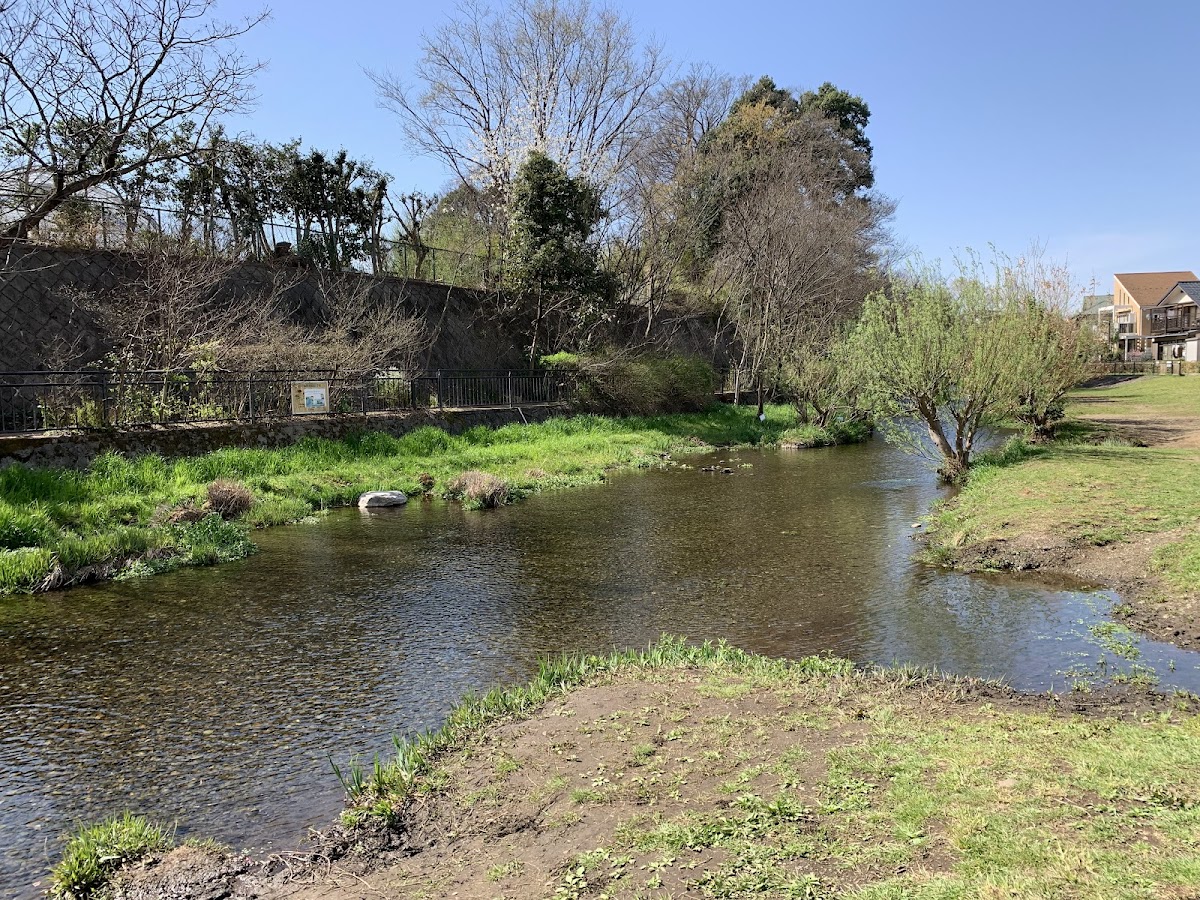
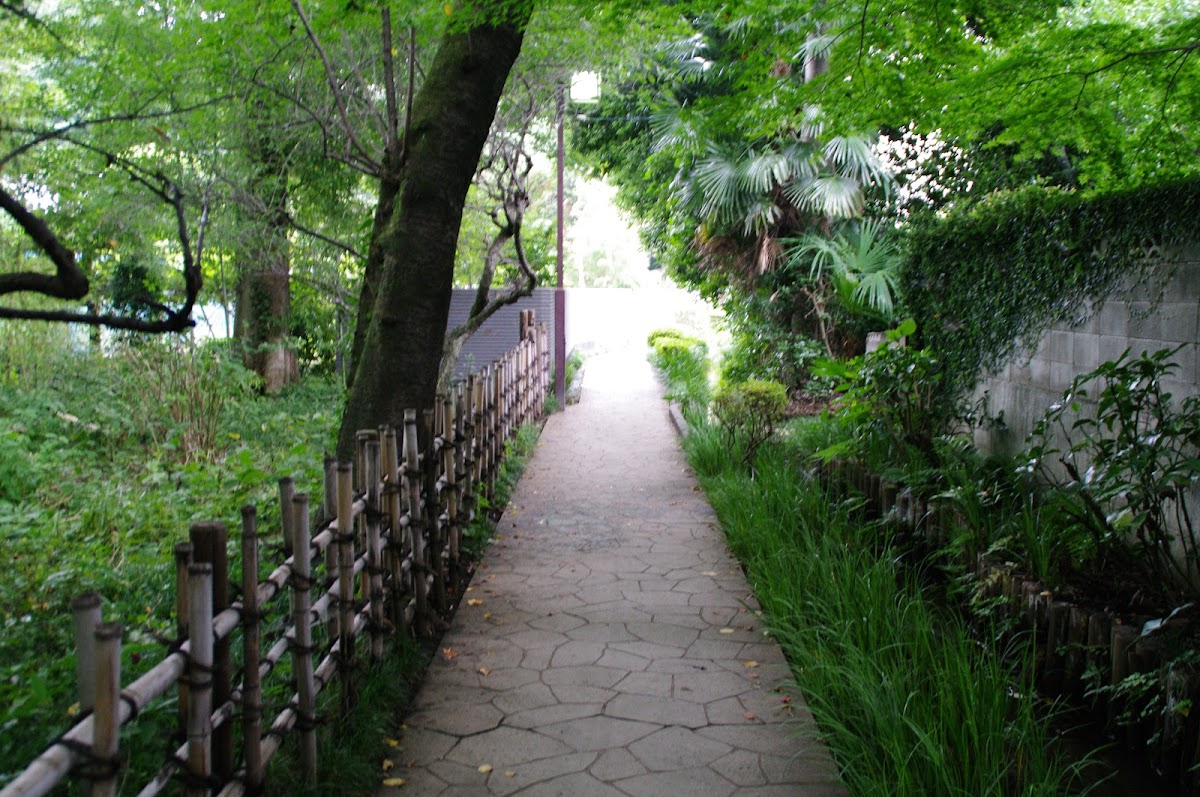
Takao Road is a verdant walking path approximately 350 meters long. Water channels using spring water flow on both sides of the road, and visitors can enjoy a leisurely stroll while listening to the murmur of the clear stream.
Aquatic organisms such as fireflies, Japanese giant salamanders, and killifish inhabit the waterways, and a rich ecosystem is maintained despite being in an urban area. During early summer, you may see the graceful flight of Genji fireflies, and protection activities are carried out by the local “Kokubunji City Firefly Association.”
Trees such as zelkova, Japanese chinkapin oak, and oak shade the walking path. Benches are also installed, allowing visitors to rest comfortably while enjoying nature.
Mashiki Pond Spring Water
Mashiki Pond is formed by water gushing from the slope of the Kokubunji Cliff Line. It is so clear that you can see the sand at the bottom of the pond moving.
The area around the pond is surrounded by trees, creating a mystical atmosphere. The amount of spring water varies depending on the season and precipitation, but it never dries up year-round.
Near the pond, informational signs explaining the mechanism of spring water are installed, allowing visitors to deepen their geological understanding.
Connection with Musashi Kokubunji Park
On the north side of Takao Road is the adjacent Musashi Kokubunji Park. This park was developed from the site of a former railroad academy and features a vast lawn plaza, a circular plaza, and a bird forest.
By combining a walk along Takao Road with a visit to the park, you can leisurely enjoy nature over half a day to a full day.
Natural Observation of the Kokubunji Cliff Line
The Kokubunji Cliff Line is an important landform for understanding the topography of the Musashino Plateau. Along the cliff line, many plants that prefer humid environments, such as ferns and mosses, can be seen.
It is also known as a birdwatching spot, and you may encounter kingfishers, pied wagtails, and golden eagles. Bringing binoculars will enhance your experience.
Charms of Each Season
Spring (March–May)
In spring, cherry blossoms and azaleas bloom, and Takao Road is enveloped in a vibrant atmosphere. The beauty of fresh greenery is also exceptional, and the way the green of young leaves reflects on the water’s surface is like a painting.
From late April to May, it is the breeding season for wild birds, and their songs become more lively.
Summer (June–August)
From early June, you can witness the fantastical sight of fireflies fluttering about. The “Firefly Appreciation Event” hosted by the Kokubunji City Firefly Association may also be held.
Even in the height of summer, thanks to the spring water, it remains cool, serving as a refuge from the urban heat. The water’s low temperature makes the waterside particularly refreshing.
Autumn (September–November)
In autumn, broadleaf trees such as zelkova and oak change color, and you can enjoy beautiful fall foliage. The sight of fallen leaves floating on the water’s surface has a certain charm.
As temperatures drop, water vapor rising from the spring water can sometimes be seen, adding to the mystical atmosphere.
Winter (December–February)
Even in winter, the spring water does not freeze, maintaining a water temperature of approximately 15°C. Takao Road in the clear winter air, wrapped in silence, has its own special appeal.
Winter is an ideal season for birdwatching, as the lack of foliage provides a better line of sight, making it easier to spot birds.
Access Methods and Surrounding Information
Access by Train
From “Kokubunji Station” (JR Chuo Line, Seibu Kokubunji Line, Seibu Tamagawa Line)
- About 15 minutes on foot from the South Exit
- Bus is also available from the station (Bun Bus “Hiyoshi-cho Route” to “Mashiki no Ike Spring Water” stop)
From “Nishi-Kokubunji Station” (JR Musashino Line)
- About 20 minutes on foot
Access from the city center is excellent; it takes about 20 minutes from Shinjuku Station to Kokubunji Station on the Chuo Line Express.
Access by Car and Parking
There is no dedicated parking lot for Takao Road, but there are several coin parking facilities in the surrounding area. However, since the number of spaces is limited, public transportation is recommended.
Musashi Kokubunji Park has paid parking lots (First and Second Parking Lots), which you can use and walk from there.
Hours of Operation and Fees
Takao Road is a public path and is open 24 hours. There is no admission fee. However, since there is limited lighting at night, daytime visits are recommended.
Surrounding Tourist Attractions
Musashi Kokubunji Temple Ruins
The ruins of the Musashi Kokubunji Temple, which was founded during the Nara period, located about 5 minutes on foot from Takao Road. It is designated as a National Historic Site, and the remains of the seven-story pagoda foundation and main hall can be seen.
The adjacent “Musashi Kokubunji Temple Ruins Museum” displays excavated items and restoration models, allowing visitors to learn about ancient Musashi (free admission).
Kokubunji Yakushi Hall
The main hall of Musashi Kokubunji, where a wooden statue of Yakushi Nyorai (Important Cultural Property) is enshrined (normally not open to the public). In the precincts, there is a giant zelkova tree several hundred years old that evokes a sense of history.
Tonogaya-to Garden
A garden designated as a National Scenic Beauty, located about 2 minutes on foot from the south exit of Kokubunji Station. It is a strolling garden with a spring and pond that takes advantage of the topography of the cliff line, and you can enjoy beautiful scenery in all seasons. Admission is 150 yen for adults.
It is recommended to enjoy the beauty of the garden in combination with a visit to Takao Road.
Cafes and Restaurants
Around Takao Road, there are cafes in renovated old houses and restaurants using local ingredients scattered throughout. After your walk, you can enjoy a leisurely meal or rest.
Precautions and Etiquette When Visiting
Protection of the Natural Environment
Takao Road and Mashiki Pond Spring Water Group is a place where precious natural environments are preserved. Please follow the following etiquette:
- Always take any trash with you
- Do not pick plants
- Do not catch or take away living creatures
- Do not pollute the spring water (washing clothes or cars is strictly prohibited)
- Do not go beyond designated walking paths
Photography Etiquette
While you may want to capture the beautiful scenery in photographs, please note the following:
- When using a tripod, be considerate so as not to obstruct pedestrian traffic
- Do not trespass on private property without permission
- Be considerate of other visitors’ privacy
Safety Precautions
- Be careful on rainy days or after rain, as the walking path may be slippery
- Take insect repellent measures in summer
- Keep a close eye on small children near the water
Regional Conservation Activities and Citizen Participation
Kokubunji City’s Initiatives
Kokubunji City enacted the “Kokubunji City Spring Water and Clear Stream Conservation Ordinance” and is working to preserve spring water. Regular water quality surveys and conservation of the cliff line’s green areas are conducted.
Additionally, the “Kokubunji City Environmental Town-making Corporation” takes the lead in spring water conservation activities and environmental education.
Activities of Civic Groups
The “Kokubunji City Firefly Association” conducts stream cleaning, firefly larva breeding and care, and observation meetings to protect firefly habitats.
Multiple civic organizations, such as the “Association to Protect the Kokubunji Cliff Line,” cooperate to implement greenery conservation activities along the cliff line and invasive species control.
How to Participate as a Volunteer
Regular events where citizens can participate, such as cleaning activities and nature observation meetings, are held. Information can be found on the Kokubunji City official website and the Kokubunji City Environmental Town-making Corporation website.
By participating in activities to protect the region’s nature, you can develop a deeper understanding of the value of Takao Road and Mashiki Pond Spring Water Group.
The Future of Takao Road and Mashiki Pond Spring Water Group
Climate Change and Its Impact on Spring Water
In recent years, concerns have been raised about changes in precipitation patterns due to climate change. Since spring water depends on groundwater, long-term changes in precipitation could affect the volume of spring water.
Kokubunji City conducts continuous monitoring and is working to preserve spring water.
Harmony with Urban Development
As urbanization progresses on the Musashino Plateau, the conservation of green areas and spring water remains an important issue. Kokubunji City aims to achieve sustainable urban development while balancing development and conservation.
Various measures are being implemented, such as designating cliff line green areas as conservation zones and promoting the installation of rainwater infiltration facilities.
Utilization as a Tourism Resource
With its designation as one of the Top 100 Water Sources, Takao Road and Mashiki Pond Spring Water Group has become an important tourism resource for Kokubunji City. In the future, through appropriate information dissemination and receptiveness improvements, the challenge will be to welcome more visitors while protecting the natural environment.
Efforts to achieve both environmental education and tourism from an ecotourism perspective are anticipated.
Conclusion
Takao Road and Mashiki Pond Spring Water Group is a precious spot where you can enjoy abundant nature and clear spring water despite being close to Tokyo’s city center. The historic walking path originating from Edo period falcon hunting and Mashiki Pond, with its Heian period legend, provide visitors with healing and inspiration.
This area, designated as one of the Ministry of the Environment’s “Heisei’s Top 100 Water Sources,” has been carefully preserved through the cooperation of local residents, civic organizations, and the administration. When visiting, it is important to follow good manners and have the awareness to pass this precious natural environment on to future generations.
Seasonal beauty, a rich ecosystem, history and legends, and the warmth of local people—Takao Road and Mashiki Pond Spring Water Group is filled with many attractions. Why not visit this urban oasis and refresh both your body and mind?