A Complete Guide to Dōmei Spring (Hadano City, Kanagawa Prefecture) | Thorough Explanation of Access, Water Quality, and History
“Dōmei Spring” located in Hirasawa, Hadano City, Kanagawa Prefecture, is known as a natural flowing well that springs from 30 meters underground. As one of the “Hadano Basin Spring Group” selected as one of Japan’s Top 100 Waters, it has become a popular water collection site visited not only by local residents but also by many people from distant areas.
This article comprehensively provides information you should know before visiting the site, including the historical background of Dōmei Spring, characteristics of its water quality, specific access methods, and information about nearby springs.
What is Dōmei Spring? Basic Information and Characteristics
Origin of the Name and Historical Background
The name “Dōmei Spring” is derived from the “Dōmei spring water” that once existed in this area. As residential development progressed, the original spring location became unknown, but to pass on its name to future generations, the newly established well was named “Dōmei Spring.”
Hadano City is known as the only region in Kanagawa Prefecture with basin topography and is blessed with abundant groundwater. Water flowing from the Tanzawa Mountains is stored underground in the basin and appears as spring water at the surface in various places throughout the city. Dōmei Spring can be said to be one of the blessings created by the water environment unique to the Hadano Basin.
Role as a Groundwater Monitoring Well
A major characteristic of Dōmei Spring is that it is a well originally excavated for groundwater monitoring that has been opened to the public. Hadano City has installed monitoring wells throughout the city for the purpose of groundwater quality preservation and monitoring.
As a result of continuous water quality surveys conducted at this well, improvements in groundwater quality were confirmed, and it was found that the water met drinking water quality standards. The city then maintained the monitoring function while installing water intake equipment for public use and began operation in its current form.
Mechanism as a Natural Flowing Well
Dōmei Spring is a well with water naturally flowing from 30 meters underground (some sources indicate 20 meters). “Natural flowing” refers to the phenomenon in which water flows to the surface naturally due to underground water pressure alone, without using mechanical power such as pumps.
This natural flowing is possible due to the special geological structure of the Hadano Basin. Groundwater flows from the surrounding mountains toward the basin, and as pressure is applied to the aquifer sandwiched between impermeable layers, water naturally gushes out when a well is dug. Since there is no need to pump the water up, it is an environmentally friendly water site that does not consume electricity.
Water Quality and Safety of Dōmei Spring
Drinking Water Quality Standards
Through continuous water quality monitoring by Hadano City, the water of Dōmei Spring has been confirmed to be suitable for drinking. Water pumped from deep underground has undergone natural filtration through soil and is generally said to have high purity.
However, as natural spring water, water quality may fluctuate due to weather and changes in surrounding environment. Users are advised to pay attention to the following points:
- Avoid using during rainy weather or immediately after rainfall due to risk of surface water contamination
- Boiling the water before consumption can enhance safety further
- Check periodic water quality test results (verify Hadano City’s official information)
Characteristics and Taste of Groundwater
Water naturally flowing from 30 meters underground contains an appropriate amount of minerals. The geology of the Hadano Basin consists of volcanic rock and sedimentary rock from the Tanzawa Mountains, and minerals dissolve into the water as it passes through these rocks.
Many users report evaluations such as “smooth and easy to drink” and “has no off-flavors and is suitable for cooking.” The hardness is presumed to be relatively low, soft water type, and can be said to be water quality suited to Japanese tastes.
Access Methods to Dōmei Spring
Location and Nearest Station
Address: Hirasawa, Hadano City, Kanagawa Prefecture
Installation Location: Within Dōmei Kita Juvenile Park
The nearest station is “Hadano Station” on the Odakyu Odawara Line. It is within walking distance from the south exit of Hadano Station and is located in a residential area.
Access by Train and on Foot
It is approximately 15-20 minutes on foot from the south exit of Hadano Station on the Odakyu Odawara Line. Head south from the station toward the Hirasawa residential area. Since there are few directional signs along the way, it is recommended to use a smartphone map application.
Access by Car and Parking Information
By car, it is approximately 15 minutes from the “Hadano Nakai IC” of the Tōmei Expressway. However, Dōmei Kita Juvenile Park has no dedicated parking lot.
The juvenile park is located in the middle of a residential area and is a small park adjacent to the north side of a condominium. Street parking should be avoided as it causes inconvenience to nearby residents. The following methods are possible:
- Park at a coin parking around Hadano Station and visit on foot
- For short water collection, have a companion wait in the car
- Consider using public transportation
Remember to be considerate of nearby residents and follow proper etiquette.
Overview of Dōmei Kita Juvenile Park Facilities
Park Size and Equipment
Dōmei Kita Juvenile Park is a small juvenile park in a corner of a residential area. It is adjacent to a condominium’s north parking area, and facilities such as play equipment are minimal.
Within the park, there is water intake equipment for “Dōmei Spring” set up as a drinking fountain, and water can be freely collected from the faucet. Resting facilities such as benches are limited, making it unsuitable for extended stays.
Etiquette and Precautions When Using
Since Dōmei Spring is located in a residential area, it is important to observe the following etiquette:
- Pay Attention to Noise: Avoid loud conversations and car idling
- Take Litter Home: There are no trash cans in the park, so take everything with you
- Maintain Cleanliness of Water Facility: After use, clean the surrounding area and be considerate of the next users
- Avoid Long Occupation: Be considerate to other users with a spirit of sharing
- Child Safety: Do not interfere with the park’s original purpose as a playground for children
Hadano Basin Spring Group and Japan’s Top 100 Waters
Water Environment of Hadano Basin
Hadano City has Kanagawa Prefecture’s only basin topography and is surrounded by the Tanzawa Mountains. This unique topography nurtures abundant groundwater.
Rain falling on the Tanzawa Mountains, which has high annual precipitation, flows through the underground of the mountains and into the Hadano Basin. Beneath the basin, highly permeable sand and gravel layers alternate with impermeable clay layers, and this geological structure functions as a natural underground water storage layer.
Japan’s Top 100 Waters: “Hadano Basin Spring Group”
In 1985 (Showa 60), the Ministry of the Environment (then the Environmental Agency) selected “Japan’s Top 100 Waters.” From Hadano City, multiple springs scattered throughout the city were selected collectively as the “Hadano Basin Spring Group.”
Dōmei Spring is positioned as one of this spring group, and the following springs are included:
- Kōbō’s Clear Water: One of the most famous springs in Hadano City
- Goma-yashiki Water: Clear water flowing from a historic temple
- Shirasasa Spring: A spring known for its abundant water volume
- Maimai Spring: A spring named after the snail (maimai)
- Inoakekami Water: Holy water flowing at a shrine
These springs are valuable water resources for Hadano City and are deeply connected to the region’s history and culture.
Nearby Springs and Water Collection Spots
Maimai Spring
A nearby water collection spot to Dōmei Spring. This is also located in a residential area and is beloved by local residents. It is said to have been named after the place where snails (maimai) were abundant.
Shirasasa Spring
One of the springs with the most abundant water volume in Hadano City. It is developed as a spring park and features a water collection area as well as walking trails. It is larger in scale than Dōmei Spring and parking is relatively easier to secure, making it also recommended for those visiting Hadano’s springs for the first time.
Kōbō’s Clear Water
A historic spring with legends related to Kōbō Daishi. It is within walking distance from Hadano Station and can be visited together with Dōmei Spring. Known locally as “Kōbō Water,” it has been used as domestic water since ancient times.
Kozuka River Spring
Water that flows along the Kozuka River, which once played an important role as agricultural water. Currently having abundant water volume, water can be collected while enjoying the sound of the stream.
Practical Guide to Water Collection
Equipment to Bring
To make water collection comfortable, prepare the following equipment:
- Water Containers: Plastic bottles, water cans, specialized water collection containers, etc.
- Funnel: Convenient if the container opening is small
- Towel: For water splashing and wiping containers
- Cart or Carry: For transporting large quantities
- Gloves: Water is cold in winter
Water Storage Methods and Shelf Life
Points for safely storing collected water:
- Container Cleanliness: Thoroughly wash and dry containers beforehand
- Avoid Direct Sunlight: Store in a cool, dark place
- Consume Early: 2-3 days in refrigerated storage, ideally same-day use at room temperature
- Boiling Recommended: Boiling before consumption makes it safer
Water Volume and Congestion Status
Since Dōmei Spring is a natural flowing well, the water volume is more stable compared to wells pumped by machinery. However, since the number of faucets is limited, congestion may occur on weekends and holidays.
Weekday mornings and evenings tend to be relatively quiet. If you want to collect a large amount of water, choose a time to avoid congestion.
Dōmei Spring in Four Seasons and Surrounding Environment
Spring Visits
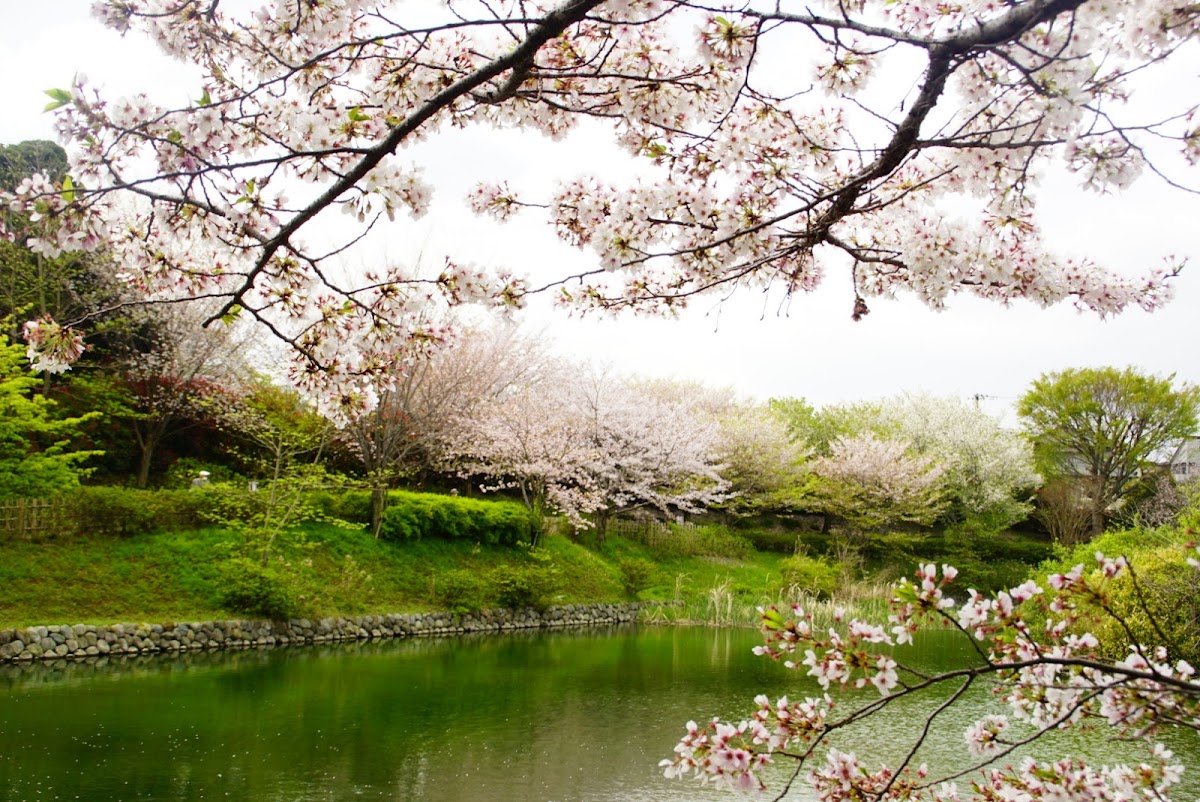
Spring (March-May) is a season with pleasant temperatures suitable for water collection. Cherry blossoms bloom in the surrounding residential area, and fresh green is beautiful during this period. However, there may be congestion during holidays such as Golden Week.
Summer Visits
Summer (June-August) is when the coldness of groundwater feels pleasant. Even on hot days, water gushing from 30 meters underground has stable water temperature year-round and feels crisp. You may even want to take a sip during water collection as a heat stroke preventative measure.
During the rainy season, it is recommended to choose days when fair weather has continued, considering the effects of rainfall.
Autumn Visits
Autumn (September-November) is also a season well-suited for water collection alongside spring. As temperatures begin to drop, working with cold water becomes less troublesome. During the autumn foliage season, combining visits with other spring spots in Hadano City or the Tanzawa area is also recommended.
Winter Visits
Winter (December-February) makes water feel extremely cold. Bringing gloves makes the work easier. However, groundwater is not greatly affected by outside temperature, so freezing rarely occurs in winter.
This is also a period with fewer users, making it suitable for those who want to collect water leisurely.
Hadano City’s Water Environment Conservation Efforts
Groundwater Conservation Ordinance
Hadano City has enacted its own ordinance to conserve valuable groundwater resources. It regulates excessive groundwater pumping and promotes water source recharge (efforts to increase groundwater) to achieve sustainable water use.
Protection of Water Source Forest
The forests of the Tanzawa Mountains are important water source forests that nurture the groundwater of the Hadano Basin. The city continues efforts to support forest conservation and maintain a healthy water cycle.
Citizen-Participated Conservation Activities
Conservation activities involving citizens such as spring cleaning activities and water quality surveys conducted with participation of community residents are also being carried out. We who use Dōmei Spring also have a responsibility to pass on this valuable water resource to future generations.
Frequently Asked Questions (FAQ)
Q1: Can the water from Dōmei Spring really be drunk?
A: Hadano City’s water quality tests have confirmed that it is suitable for drinking. However, as natural spring water, boiling before consumption is recommended. Also, judgment appropriate to the situation is necessary, such as avoiding use during rainy weather or immediately after rainfall.
Q2: Is there parking?
A: Dōmei Kita Juvenile Park has no dedicated parking lot. Since it is located in a residential area, street parking causes inconvenience to nearby residents. It is recommended to use coin parking around Hadano Station or visit by public transportation.
Q3: Is there a charge for water collection?
A: It is free to use. However, understanding that it is a valuable groundwater resource, make an effort to collect only the amount needed.
Q4: Can water be collected 24 hours a day?
A: Basically, it is available 24 hours, but since it is located in a residential area, visits early in the morning or at night should be avoided out of consideration for nearby residents. Daytime visits during daylight hours are recommended.
Q5: Does water flow even in winter?
A: Since it is a natural flowing well from 30 meters underground, water flows stably during winter. Groundwater is not greatly affected by outside temperature, and there is little risk of freezing.
Q6: How many plastic bottles worth of water can be collected?
A: Since it is a natural flowing well, water volume is stable, but consideration for sharing with other users is necessary. When collecting a large amount at once, choose a time when not congested and be careful not to make others wait for long periods.
Summary: The Value of Visiting Dōmei Spring
Dōmei Spring is a valuable groundwater resource that Hadano City takes pride in. Inheriting the name of the former “Dōmei spring water,” the clear water naturally flowing from 30 meters underground is cherished by many people as one of the “Hadano Basin Spring Group” selected as Japan’s Top 100 Waters.
Despite being located in an unexpectedly small juvenile park in a residential area, it can be said to be an existence symbolizing the abundant water environment of the Hadano Basin. While access has some inconveniences, that is also the unique charm of a spring rooted in the community.
When visiting Hadano City, try visiting not only Dōmei Spring but also nearby spring spots. By learning about the history and characteristics of each spring, your understanding of this region’s water culture will deepen.
To protect this valuable groundwater resource and pass it on to future generations, it is important to use it with proper etiquette and maintain awareness of environmental conservation. If the water collection experience at Dōmei Spring becomes an opportunity to appreciate the blessings of water and consider the importance of environmental conservation, it would be wonderful.