Tsushima Spring Water (Fukui Prefecture Obama City) Complete Guide | Access and Charm of a Coastal Spring Water Spot
Tsushima Spring Water (Tsushima Meisui) located in Obama City, Fukui Prefecture, is a rare naturally flowing spring water found near the coast throughout Japan. Due to its unique location right beside a boat dock facing the fishing port, it has been cherished since ancient times as drinking water for sailors on voyages, and today serves as domestic water for local residents and a water-drawing spot for visitors.
This article provides detailed explanations of Tsushima Spring Water’s historical background, specific access methods, precautions for drawing water, and notable spring water spots scattered throughout the surrounding Wakasa region.
Tsushima Spring Water | Precious Naturally Flowing Water Near the Sea
Basic Information about Tsushima Spring Water
Tsushima Spring Water is a spring water site located in Obama Tsushima, Obama City, Fukui Prefecture. Near the mouth of the Minami River that flows into Obama Bay, clear water naturally springs forth at a location merely tens of meters from the coastline.
Location: Obama Tsushima, Obama City, Fukui Prefecture
Water Quality: Natural spring water from natural flow
Available Hours: 24 hours (water flows constantly)
Parking: None (limited roadside parking spaces)
Management: Self-management by local residents
Although located near the coast where seawater easily mixes, fresh spring water naturally flows here—a geologically fascinating location. This water, filtered through the ground, is high-quality, and has long been known locally as “delicious water.”
History and Cultural Background
Tsushima Spring Water has a long history, serving as an important water source for the region since the Edo period. Particularly noteworthy is its deep connection with sailors.
Role as Voyage Drinking Water
Obama has long flourished as an important port town on the Japan Sea side. Sailors are said to have drawn water from Tsushima Spring Water before embarking on long voyages, loading it onto their ships. In an era when technology to desalinate seawater did not exist, securing drinking water during voyages was a matter of life and death. Tsushima Spring Water, providing high-quality fresh water right beside the sea, was truly a precious resource.
Center of Community
Today, Tsushima Spring Water holds significance beyond being merely a water-drawing location. With local residents jointly managing it and conducting water area cleaning and surrounding maintenance, it functions as a “social gathering place centered on water.” The sight of residents exchanging information and seasonal greetings while drawing water continues unchanged today.
Characteristics of Tsushima Spring Water | Differences from Other Spring Waters
Rarity of Spring Water Near the Coast
The greatest characteristic of Tsushima Spring Water is its location springing forth near the coast facing a fishing port. Generally, spring water near coasts is easily affected by seawater, making fresh water springs rare.
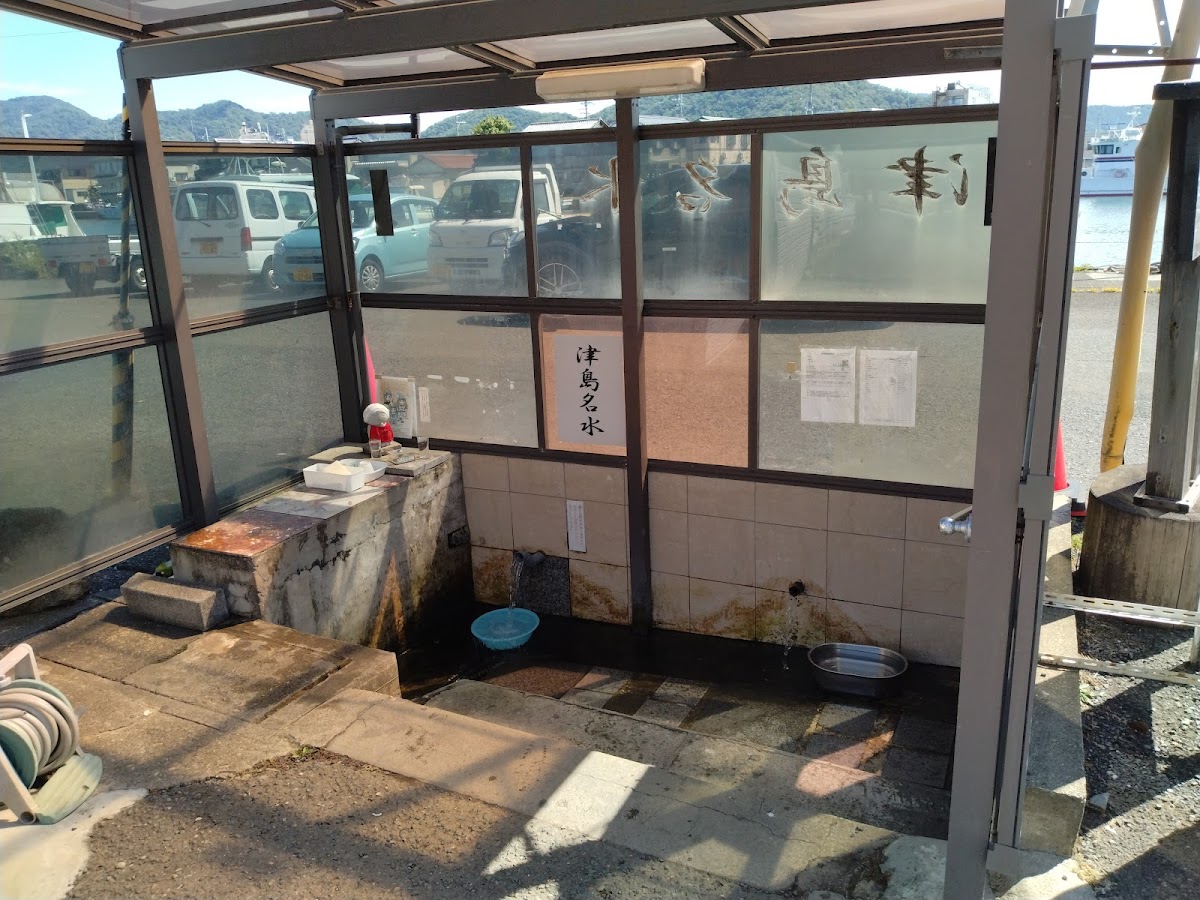
Right before Tsushima Spring Water lies a boat dock with numerous fishing boats moored. The sight of clear fresh water springing forth amid the scent of the tide creates an atmosphere entirely different from spring waters found in inland mountain regions.
“Unjo Spring Water (Unjo Meisui)” in the same Obama City is similarly located near a fishing port, but Tsushima Spring Water is more closely adjacent to the boat dock, making its connection to fishing particularly characteristic.
Charm of Naturally Flowing Spring Water
Tsushima Spring Water is naturally flowing spring water. Unlike well water pumped up, it naturally springs to the earth’s surface due to underground water pressure. This naturally flowing phenomenon indicates that abundant water veins exist underground with an appropriately structured geology.
Naturally flowing water generally maintains stable water quality, with little seasonal fluctuation in water temperature or volume. Tsushima Spring Water is no exception, maintaining a stable water volume year-round.
Homey Atmosphere
Those who visit Tsushima Spring Water unanimously mention its “homey atmosphere.” Small statues of Jizō are enshrined at the water site, with visitors having placed tea cups and flowers as offerings.
Such small decorations and offerings represent local residents and visitors expressing gratitude for the water. Unlike large-scale developed tourist destination spring waters, the unpretentious character of a water site so intimately connected with local life soothes the hearts of those who visit.
Access Methods and Water-Drawing Points
Access to Tsushima Spring Water
By Car
- Approximately 40 minutes from “Tsuruga IC” on the Hokuriku Expressway via National Route 27
- Approximately 10 minutes from “Obama IC” on the Maizuru-Wakasa Expressway
- Approximately 5 minutes by car from Obama city center
Caution: There is no dedicated parking lot. Only limited roadside parking space near the water site is available. To avoid bothering nearby residents, keep roadside parking minimal and move promptly after drawing water.
By Public Transportation
- Approximately 20-minute walk from “Obama Station” on the JR Obama Line
- Approximately 5 minutes by taxi from Obama Station
By foot, the route along the coastline from Obama city center is easiest to navigate. Proceeding through narrow roads heading seaward from National Route 27, you’ll find the water site near the boat dock.
Actual Water Drawing
Water Drawing Available Hours
Tsushima Spring Water flows constantly 24 hours, allowing water drawing anytime. However, during times when locals come to draw water such as early morning or evening, exercise the spirit of yielding to others.
Items to Bring
- Clean containers (plastic bottles, polybarrels, etc.)
- Towel (for wiping spills)
- Funnel or hose if needed
Water-Drawing Etiquette
- Do not dirty the water site surroundings
- Avoid occupying the space for extended periods
- Show consideration for other users when drawing large quantities
- Always take trash with you
- Maintain gratitude for local residents’ management
Water Quality and Drinking
Tsushima Spring Water has a track record of being consumed by local residents for many years, with many evaluating it as “delicious water.” However, as results from regular water quality testing by public institutions are not publicly announced, drinking is at one’s own risk.
Pay particular attention to the following points:
- When drinking for the first time, try a small amount
- Those with weakened immunity, infants, and elderly should boil before use
- When storing long-term, refrigerate and use promptly
- Refrain from drinking if there is unusual odor or cloudiness
- Spring water generally resists influences from domestic wastewater and pesticides as deep groundwater, but water quality may temporarily change after rainfall
Points of Interest Around Tsushima Spring Water
Obama Fishing Port and Seascape
Obama’s fishing port spreads immediately before Tsushima Spring Water. Numerous fishing boats are moored, and in early morning you can see fishermen preparing for departure.
Obama Bay is part of Wakasa Bay, with the complex coastline characteristic of ria-type coasts creating beautiful scenery. Drawing water while enjoying the view—or relaxing while gazing at the sea after drawing water—is one of the pleasures of visiting Tsushima Spring Water.
Tourist Attractions in Obama City
Obama City, where Tsushima Spring Water is located, is called “Nara by the Sea” with numerous temples and shrines scattered throughout this historical town.
Main Tourist Attractions:
- Obama Nishi-gumi (Important Traditional Townscape Preservation District): District where Edo period townscape remains
- Wakasa Kokubunji Temple: Ancient temple founded in the Nara period
- Meitsūji Temple: Famous temple with national treasure main hall and three-story pagoda
- Sodomon: Scenic spot of Wakasa Bay, can be toured by sightseeing boat
- Otsukikuni Wakasa Obama Food Culture Museum: Facility to learn about Wakasa food culture
Drawing water at Tsushima Spring Water and then visiting these tourist attractions is also recommended.
Wakasa Spring Water Tour | Spots to Visit Together with Tsushima Spring Water
Fukui Prefecture, particularly the Wakasa region, is expressed by the four-character idiom “Etsuzan Jakusui” (Echizen mountains, Wakasa water), a region blessed with abundant mountains and clear water. Beyond Tsushima Spring Water, numerous other spring water spots exist, allowing for the enjoyment of a spring water tour.
“Unjō Spring Water” in Obama City
Spring water near the fishing port of Obama City like Tsushima Spring Water. Named “Unjō Spring Water” because it existed below Obama Castle (Kumohama Castle).
Characteristics: Like Tsushima Spring Water, naturally flowing water near the coast managed by local residents. The two spring waters are approximately 10 minutes apart by car, with many visiting both.
Location: Obama Kashitori, Obama City, Fukui Prefecture
Access: Approximately 15-minute walk from Obama Station
“Uriawari Waterfall” in Wakasa Town
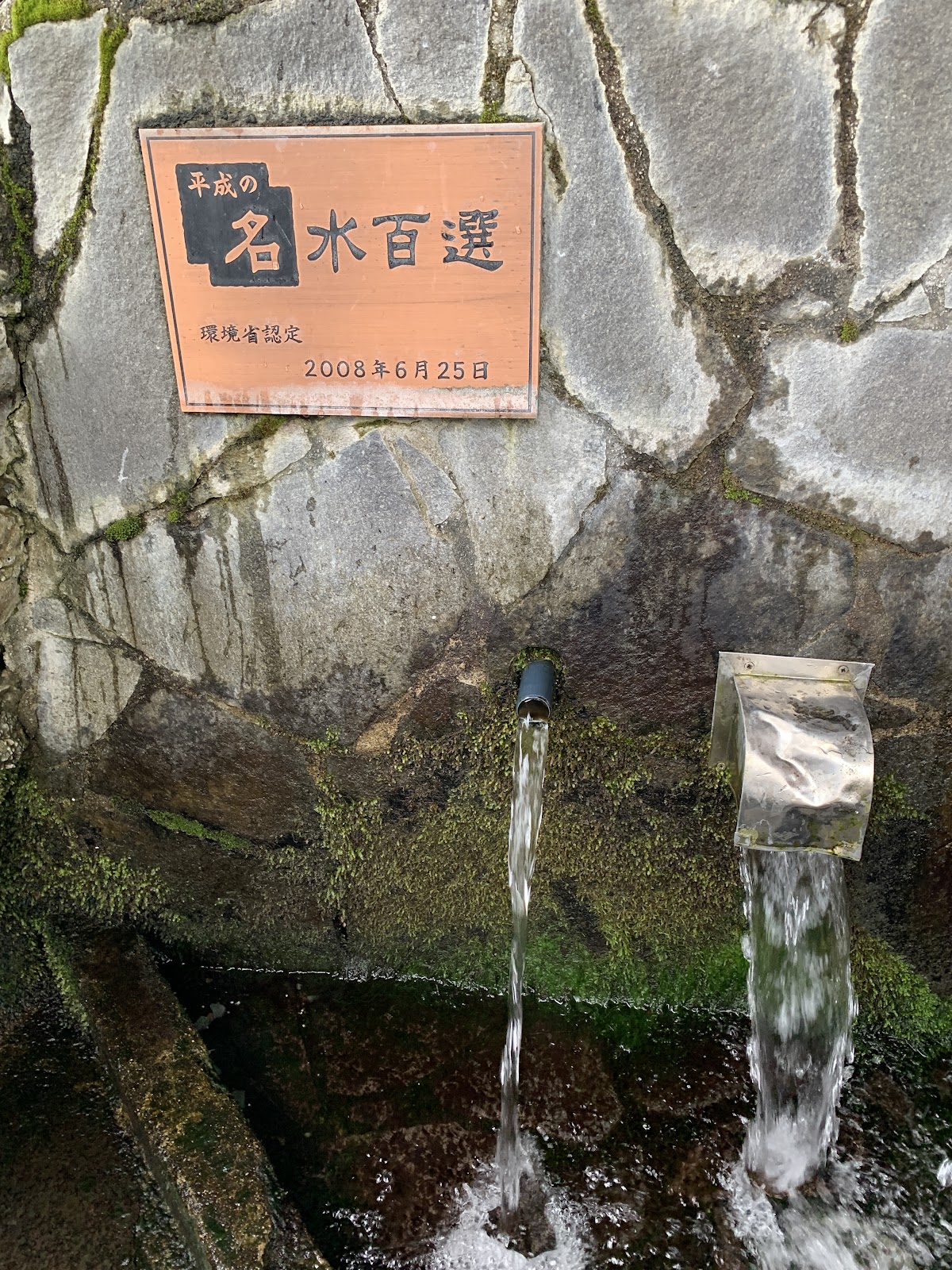
The representative spring water of the Wakasa region, also selected for “Japan’s 100 Best Waters.” The name Uriawari Waterfall derives from a legend that the water temperature was so low in summer that melons immersed in it would freeze and split.
Characteristics: In a mystical atmosphere surrounded by forest, crystalline water springs forth. With year-round water temperature of approximately 12 degrees Celsius, you can enjoy pleasantly cool water even in summer. The water-drawing site is well-equipped, making it a popular spot visited by many.
Location: Tentokuji, Mikatagamicho, Mikata-kamicho, Wakasa Town, Fukui Prefecture
Access: Approximately 10 minutes by car from JR Kamichu Station, parking available
Hours: 9:00-17:30 (until 17:00 in winter)
Closed: Irregular
“Hinomizu Spring Water” in Tsuruga City
Spring water in Tsuruga city center, named after the place name “Hinomizu.” Despite its urban location, it boasts abundant water volume and is utilized as domestic water for local residents.
Characteristics: Easily accessible location allows casual stops during Tsuruga sightseeing. The water site is well-maintained, making it easy to draw water.
Location: Hinomizucho, Tsuruga City, Fukui Prefecture
Access: Approximately 15-minute walk from JR Tsuruga Station
“Kaeriyama Kannon Enmeidaijō Water” in Tsuruga City
Sacred water at the grounds of Kaeriyama Kannon temple. Since ancient times it has been worshipped as “life-extending water.”
Characteristics: Having the character of temple sacred water, it also holds religious significance. You can draw water while calming your mind in the quiet temple grounds.
Location: Kaeriyama, Tsuruga City, Fukui Prefecture
Access: Approximately 20 minutes by car from JR Tsuruga Station
Model Course for Spring Water Tour
Wakasa Spring Water Tour One-Day Course:
- Morning: “Hinomizu Spring Water” in Tsuruga City → “Kaeriyama Kannon Enmeidaijō Water”
- Lunch: “Uriawari Waterfall” in Wakasa Town (lunch nearby)
- Afternoon: “Unjō Spring Water” in Obama City → “Tsushima Spring Water” → Obama city sightseeing
This course allows efficient touring of representative spring water spots in the Wakasa region. Travel time between each spot is approximately 20-40 minutes.
Precautions When Visiting Tsushima Spring Water
Consideration for Local Residents
Tsushima Spring Water is not a tourist facility but a water site that local residents use daily and manage voluntarily. Pay particular attention to the following points.
Mind the Noise: As it is near residential areas, be mindful of loud conversation and car engine noise.
Parking Etiquette: With no dedicated parking lot, keep roadside parking brief and ensure it doesn’t obstruct traffic.
Cooperation in Cleaning: Not only refrain from leaving trash at the water site and surroundings, but be prepared to cooperate in simple cleaning if possible.
Seasonal Characteristics
Spring (March-May): Mild climate ideal for water drawing. During cherry blossom season, you can also enjoy cherry blossoms in Obama city.
Summer (June-August): Cold spring water tastes particularly delicious this season. However, being near the coast means strong sunlight, requiring heat stroke precautions.
Autumn (September-November): Comfortable climate, and Wakasa Bay’s seafood is delicious this season. You can enjoy food tourism along with the spring water tour.
Winter (December-February): Overcast and snowy days increase due to Japan Sea climate. Caution regarding road surface freezing is necessary, but the contrast between the rough winter Japan Sea and the spring water is striking.
Safety Precautions
Mind Your Footing: The water site surroundings become wet and slippery. Particular caution is needed in rainy or winter conditions.
Be Aware of the Nearby Sea: Tsushima Spring Water is right near the coastline. Especially with small children, be careful of dangers such as falling into the sea.
Weather Changes: Japan Sea coast weather changes easily, so it’s recommended to check weather forecasts before visiting, particularly in winter.
Fukui Prefecture’s Spring Water Culture and “Etsuzan Jakusui”
Fukui Prefecture and Its Relationship with Spring Water
Fukui Prefecture is expressed by the four-character idiom “Etsuzan Jakusui” (Echizen mountains, Wakasa water), representing a region blessed with abundant mountains and water. This phrase means “Echizen’s mountains, Wakasa’s water,” symbolizing Fukui Prefecture’s rich nature.
The prefecture has over 120 springs and wells, from which Fukui Prefecture has certified particularly excellent water as “Fukui’s Delicious Water” (the program ended in September 2023). Tsushima Spring Water was among those certified.
Spring Water Nurturing Food Culture
The abundant water of the Wakasa region has supported the region’s food culture.
Wakasa Marine Products: Fish and shellfish caught in Wakasa Bay were presented to the imperial court as “Miketsukuni” (land of imperial food supply) in ancient times. The famous “Saba Kaido” (mackerel road) transported fresh fish to Kyoto.
Obama Traditional Cuisine: Cuisine culture has developed utilizing abundant water and marine products. Notably “Obama Chanpon,” “grilled mackerel,” and “Wakasa gji” are known.
Sake Brewing: Fukui Prefecture is known as a sake production region, with sake brewing using spring water being conducted.
Culture of Treasuring Water
Spring waters like Tsushima Spring Water, managed voluntarily by local residents, exist in large numbers throughout Fukui Prefecture. This represents not merely utilizing water resources, but a culture of treasuring water and passing it down to future generations.
Water site cleaning, surrounding maintenance, water quality monitoring—local communities cooperate to protect spring waters. Visitors are expected to pay respect to such community efforts and use the sites while following proper etiquette.
Conclusion | Reaffirming the Charm of Tsushima Spring Water
Tsushima Spring Water is a precious naturally flowing spring that gushes forth near the fishing port of Obama City, Fukui Prefecture, in a unique location. It possesses multifaceted charm: the geologically fascinating aspect of obtaining clear fresh water right beside the sea; the history of being used by sailors and local residents since ancient times; and the contemporary social significance of functioning as a community center.
Compared to large-scale developed tourist destination spring waters, its greatest charm lies in being a water site intimately connected with local daily life. The homey atmosphere created by cute Jizō statues and tea cups placed by visitors soothes the hearts of those who visit.
The Wakasa region contains many other spring water spots beyond Tsushima Spring Water, allowing for enjoyment of a spring water tour. Along with abundant nature, historically significant temples and shrines, and delicious seafood, enjoy the charms of Wakasa together with the spring water.
When visiting Tsushima Spring Water, remember consideration for local residents and proper etiquette, and use the site with gratitude for water. Doing so will ensure this precious spring water is passed down to future generations.