Complete Guide to Midorigaoka Cemetery Spring Water Area (Kanagawa Prefecture): Nature and History of Blocks 101 and 111
Midorigaoka Cemetery, located in Takatsu Ward, Kawasaki City, Kanagawa Prefecture, is not merely a cemetery facility but a special place with precious natural environment and spring water areas. This spring water site, included in the “Representative Spring Waters” selected by the Ministry of the Environment, is preserved as an invaluable natural resource in increasingly urbanized Kawasaki City. This article provides detailed explanations of the two spring water areas within Midorigaoka Cemetery, covering their characteristics, history, access methods, and surrounding environment.
Overview and Geographic Location of Midorigaoka Cemetery
Basic Information and Location
Midorigaoka Cemetery is a municipal cemetery located in Shimosakunobe, Takatsu Ward, Kawasaki City, Kanagawa Prefecture. It is situated on hilly terrain extending from Tsudayama Station to Kushi Station on the JR Nambu Line, at the eastern end of the Tama Hills, blessed with abundant natural surroundings.
Location: 1344 Shimosakunobe, Takatsu Ward, Kawasaki City
Access: Approximately 10 minutes walk from JR Nambu Line Kushi Station, approximately 15 minutes walk from Tsudayama Station
Position in the Tama Hills
The Tama Hills, where Midorigaoka Cemetery is located, is a hilly area spanning Tokyo and Kanagawa prefectures, long known as a region blessed with abundant spring water. The geology of this area is characterized by the Kanto loam layer, volcanic ash soil that has high water-retention capacity, creating an environment conducive to spring water generation.
Numerous horizontal cave tombs from the mid to late Kofun period have been discovered in the vicinity of the cemetery, indicating historical background of human habitation in this area since ancient times. While much of the surrounding area has been developed as residential land except for the eastern portion, the area within Midorigaoka Cemetery is preserved as precious green space.
Characteristics of Midorigaoka Cemetery Spring Water Area (Block 101)
Development Background and Overview
Midorigaoka Cemetery Spring Water Area (Block 101) was developed by Kawasaki City in fiscal year 2008 (Heisei 20). Located in the northwestern part of the cemetery, in the valley on the west side of Block 101, it preserves a natural spring water environment utilizing the valley topography.
Facility Characteristics
The most distinctive feature of this spring water area is the unique landscape where spring water flows from bamboo tubes. The water effect utilizing bamboo tubes incorporates traditional Japanese garden techniques, providing healing through both visual and acoustic experiences to visitors.
Main Features:
- Pleasant sound of spring water falling from bamboo tubes
- Hands-on water interaction space
- Natural landscape utilizing valley topography
- Quiet environment harmonized with surrounding greenery
Usage and Highlights
The spring water area in Block 101 is developed as a restful space where visitors to the cemetery can casually stop by. Those visiting graves can stop by, calm their minds while listening to the sound of spring water. While water volume fluctuates seasonally and with rainfall, spring water can be observed throughout the year.
Characteristics of Midorigaoka Cemetery Spring Water Area (Block 111)
Development Background and Overview
Midorigaoka Cemetery Spring Water Area (Block 111) was developed in fiscal year 2011 (Heisei 23), making it a newer spring water area than Block 101. Also located in the northwestern part of the cemetery, it is installed in Block 111.
Pond and Bird Sanctuary
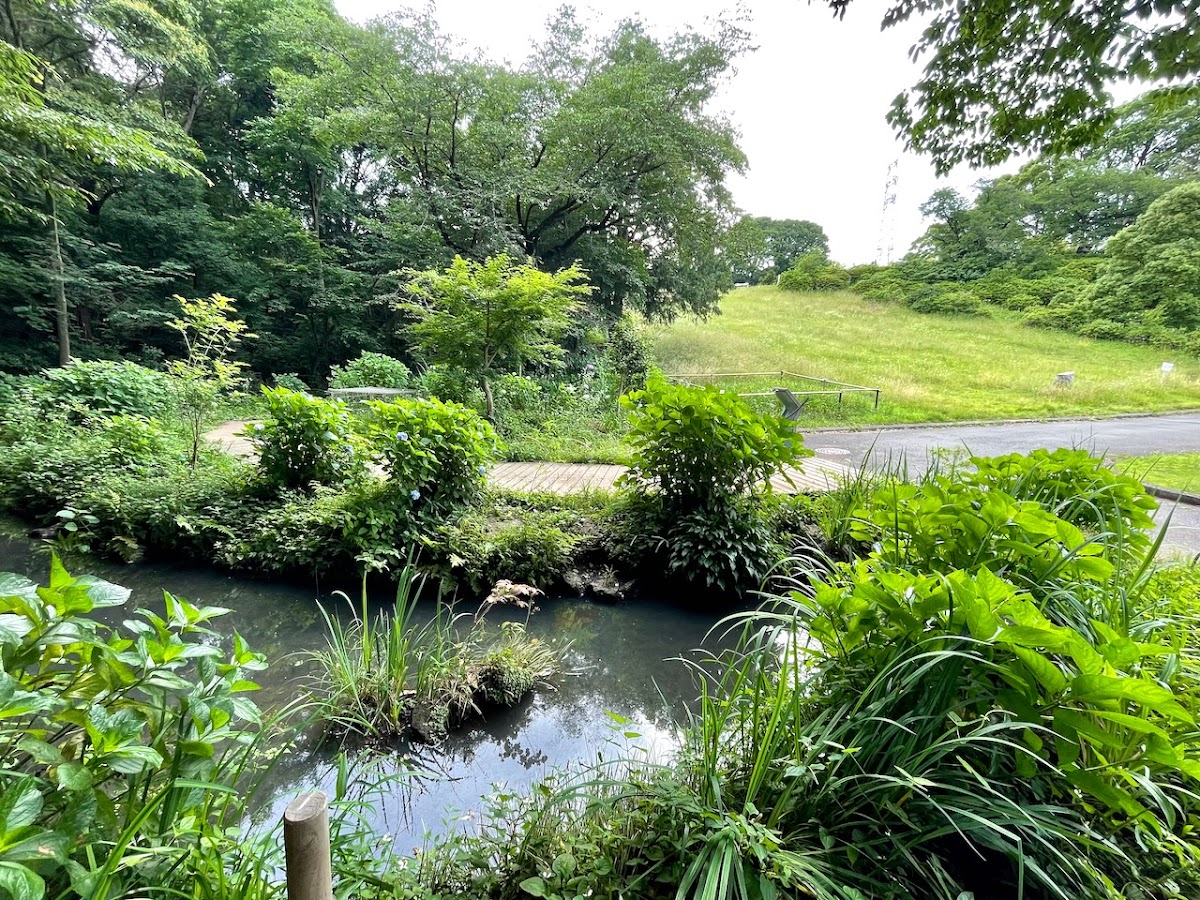
The spring water area in Block 111 possesses different characteristics than Block 101. Spring water from the valley naturally accumulates and forms a pond, functioning as a bird-watching spot where water birds such as ducks visit.
Main Features:
- Natural pond formed by accumulated spring water
- Sanctuary for water birds like ducks
- Wood deck installed for walking around the pond
- Seasonal nature observation possible
Wood Deck and Walking Paths
The spring water area in Block 111 is equipped with a wood deck around the pond, allowing visitors to walk around while observing nature. This wood deck is designed to protect wetland environments while enabling people to enjoy nature.
The spring water area, displaying different faces with each season—new green in spring, green shade in summer, autumn leaves in fall, and water birds in winter—is popular as a site for nature observation and photography.
Natural Environment and Ecosystem of Spring Water Areas
Spring Water Mechanism
The spring water at Midorigaoka Cemetery is a natural phenomenon produced by the topography and geology of the Tama Hills. Rainwater falling on the hilly terrain permeates the Kanto loam layer and moves along the slope when reaching the impermeable layer below. In valleys called “yato,” this groundwater emerges at the surface, becoming spring water.
Both spring water areas in Midorigaoka Cemetery are located in valley topography, with spring water maintained by this natural mechanism. Water volume fluctuates with rainfall and seasons, but never dries up throughout the year.
Creatures Living Here
Diverse organisms, now precious in urban areas, inhabit the spring water areas and their surroundings.
Aquatic Life:
- Dragonfly nymphs
- Aquatic insects
- Small fish species
Birds:
- Duck species (especially in winter)
- Heron species
- Kingfisher (observed)
- Forest-dwelling small birds
Plants:
- Wetland vegetation
- Ferns
- Mosses
- Surrounding trees (cherry, oak, Japanese oak, etc.)
These creatures live within an ecosystem combining the rich water environment provided by spring water areas and surrounding green spaces.
Kawasaki City’s Spring Water Conservation Efforts
Water and Green Exploration Squad Project
Kawasaki City is advancing efforts to regenerate the valleys within Midorigaoka Cemetery into forests with high water retention and abundant wildlife. The “Takatsu Water and Green Exploration Squad,” a citizen-participation project, implements valley environmental improvements through cooperation between NPO Tsurumi River Basin Networking and Takatsu Ward Office.
In February 2018 (Heisei 30), thinning work was conducted at the valley bottom, improving light environment and vegetation diversity. Through such continuous conservation activities, the spring water area environment is maintained and improved.
Ministry of the Environment-Selected “Representative Spring Waters”
The spring water area at Midorigaoka Cemetery is included among “Representative Spring Waters of Kanagawa Prefecture” selected by the Ministry of the Environment. This selection comprehensively evaluates spring water volume, water quality, surrounding environment, and conservation status, indicating that Midorigaoka Cemetery’s spring water area is an especially important water resource within Kanagawa Prefecture.
In rapidly urbanizing Kawasaki City, the preservation of such natural spring water environments holds precious significance as biodiversity conservation, mitigation of heat island phenomena, and educational venues for residents.
History and Development of Midorigaoka Cemetery
Cemetery Establishment
Midorigaoka Cemetery is a municipal cemetery that has developed alongside Kawasaki City. Planning advanced from the early Showa period, and it was developed as a final resting place for the predecessors who built Kawasaki City.
From the cemetery’s initial establishment, design utilized the natural topography of the Tama Hills, with undulating terrain and abundant greenery as characteristics. Several hundred cherry trees are planted throughout the cemetery, making it known as a notable cherry blossom viewing spot in spring.
History of Spring Water Area Development
Spring water area development is a relatively recent undertaking. Beginning with the development of Block 101’s spring water area in fiscal year 2008, Block 111’s spring water area was developed in fiscal year 2011.
These developments aim not merely to preserve spring water but to provide opportunities for cemetery visitors to interact with nature and create spaces where they can find peace of mind.
Historical Background of the Surrounding Area
Kofun Period Archaeological Sites
Numerous horizontal cave tombs from the mid to late Kofun period (6th-7th centuries) have been discovered in hills on the opposite side of the JR Nambu Line from Midorigaoka Cemetery. These tombs are important archaeological evidence indicating this area has been a human habitation site since ancient times.
Horizontal cave tombs were burial chambers created by digging horizontal caves into hillsides, thought to be tombs of influential figures and powerful clans of the time. Excavated artifacts suggest this area was connected to ancient transportation routes and settlements.
Place Name Origin and History
The place name “Shimosakunobe” suggests agriculture has been practiced in this area since ancient times. “Sakunobe” is said to represent land where fields extend, suggesting the possibility of rice paddy cultivation utilizing valley topography.
Spring water was a precious water source for such agriculture, supporting the lives of local people. The remaining spring water areas today are remnants of this region’s historical water usage.
Access and Visitation Information
Public Transportation Access
Nearest Stations:
- JR Nambu Line “Kushi Station,” approximately 10 minutes walk
- JR Nambu Line “Tsudayama Station,” approximately 15 minutes walk
Access from Kushi Station is most convenient. Heading northwest from the station and passing through residential areas leads to the cemetery entrance.
Access by Car
The cemetery has parking facilities. However, during cherry blossom season in spring and Equinox and Bon holidays, congestion is expected, making public transportation recommended.
Access from Major Roads:
- Via Route 246 and Fuchu Street
- Approximately 20 minutes from “Keihin Kawasaki IC” on the Third Keihin Expressway
Notes When Visiting
Since Midorigaoka Cemetery is a cemetery facility, please note the following when visiting.
- Maintain quiet and show consideration for grave visitors
- Take all trash with you
- Do not disturb the spring water area ecosystem (do not catch creatures, do not collect plants)
- Avoid dangerous activities on the pond and wood deck
- Smoke only in designated areas
Best Seasons for Visiting
Spring water areas are open to visitors year-round, with different appeals by season.
Spring (March-May): The cemetery becomes vibrant during cherry blossom bloom; contrast between new green and spring water is beautiful
Summer (June-August): Deep green foliage, refreshing spring water breeze pleasant. Suitable for observing aquatic insects like dragonflies
Autumn (September-November): Beautiful combination of autumn leaves and spring water; migratory birds expected to arrive
Winter (December-February): Optimal for observing winter birds like ducks. Clear air and high water transparency
Nearby Attractions and Facilities
Ikuta Green Space
Approximately 3 km northwest of Midorigaoka Cemetery is Ikuta Green Space, Kawasaki City’s largest park. On its vast 179-hectare grounds, natural environments including deciduous forests, spring water, and valleys are preserved, allowing visitors to experience similar Tama Hills nature as found in the Midorigaoka Cemetery spring water areas.
Within Ikuta Green Space are cultural facilities including the Kawasaki Museum of Science (planetarium), Okamoto Taro Museum, and Japanese Folk Houses Museum, allowing simultaneous enjoyment of nature and culture.
Kushi Cylindrical Water Distributor
The Kushi Cylindrical Water Distributor, located approximately 10 minutes walk from Kushi Station, is an agricultural water distribution facility constructed in 1941 (Showa 16). The sight of water flowing radially from the cylindrical structure is beautiful and is designated as a registered tangible cultural property.
Visiting this together with Midorigaoka Cemetery’s spring water areas allows deeper understanding of this region’s water history and culture.
Tsudayama Cemetery (Alternative Name)
Midorigaoka Cemetery is sometimes called “Tsudayama Cemetery” from its nearest station name. The cemetery contains general burial plots, joint-burial burial plots, and “Midorigaoka Columbarium” for temporarily storing cremated remains.
Conservation and Future Prospects of Spring Water Areas
Sustainable Conservation Activities
Preserving Midorigaoka Cemetery’s spring water areas for future generations requires continuous environmental management and citizen participation. Kawasaki City and civic organizations cooperate in implementing activities including:
- Regular water quality surveys
- Appropriate management of surrounding trees (thinning, undergrowth cutting, etc.)
- Prevention of non-native species invasion
- Environmental education program implementation
- Citizen-participation observation meetings and cleanup activities
Response to Climate Change
Recent climate change raises concerns about changes in rainfall patterns and increasing extreme weather phenomena. Since spring water volume depends on rainfall, these changes could affect spring water environments.
Kawasaki City intends to monitor spring water long-term through observation stations, understand climate change impacts, and review conservation strategies as needed.
Value of Spring Water in Urban Areas
As urbanization progresses, the value of spring water areas like Midorigaoka Cemetery increasingly grows. Spring water areas possess the following multifaceted functions.
- Biodiversity Conservation: Habitat for diverse organisms
- Environmental Education: Place for children to learn about nature
- Spiritual Healing: Providing mental peace for urban residents
- Disaster Prevention Function: Role as high water-retention green space
- Cultural Value: Inheriting regional history and nature
Conclusion: Appeal of Midorigaoka Cemetery Spring Water Areas
The two spring water areas (Blocks 101 and 111) within Midorigaoka Cemetery are precious natural resources in Takatsu Ward, Kawasaki City. Developed in fiscal years 2008 and 2011 respectively, these spring water areas, while possessing different characteristics, commonly provide visitors with the blessings of nature and peace of mind.
The spring water flowing from bamboo tubes in Block 101 creates a space where nature can be felt through sight and sound, while the pond and wood deck in Block 111 function as bird-watching and nature exploration areas. These spring water areas have also been selected as “Representative Spring Waters” by the Ministry of the Environment, with their value publicly recognized.
Located at the eastern end of the Tama Hills with history extending to the Kofun period, the spring water area in this region is not merely a natural environment but an important entity connecting regional history, culture, and future. Conservation activities through cooperation between Kawasaki City and residents constitute important efforts in inheriting this precious nature to future generations.
The accessibility—approximately 10 minutes walk from JR Nambu Line Kushi Station—is also an attraction. Within the quiet cemetery environment, visitors can interact with spring water, now precious in urban areas, and feel the workings of nature. Midorigaoka Cemetery Spring Water Area can be said to be a treasure not only for Kawasaki residents but for all of Kanagawa Prefecture.
Whether visiting for grave maintenance or nature observation, please visit Midorigaoka Cemetery’s spring water areas. The sound of water flowing from bamboo tubes, the sight of water birds gathering at the pond, seasonal changes in plants—a special place offering rich natural experiences while remaining in the city awaits you there.