
Yagizo River Spring Group Ibaraki Prefecture | Charm and Detailed Guide of the Yagizo Five Waters Selected as One of Japan’s Hundred Fine Waters
The Yagizo River Spring Group, located in Daigo Town, Kuji District, Ibaraki Prefecture, is one of the “Hundred Fine Waters” selected by the Ministry of the Environment in 1985 (Showa 60). The clear, pure water that gushes forth from around the 8th station of Mount Yagizo (elevation 1,022m), Ibaraki Prefecture’s highest peak, has long been known as the “Yagizo Five Waters,” said to have been named by Tokugawa Mitsukuni (Mito Komon), and has become a precious natural resource representative of Ibaraki Prefecture.
This article comprehensively introduces information you should know before visiting, including the detailed characteristics of the Yagizo River Spring Group, information about each spring location, access methods, and surrounding tourist spots.
About the Yagizo River Spring Group
The Yagizo River Spring Group is located on the southern slopes of the Yagizo Mountain system, which spans across three prefectures: Ibaraki, Tochigi, and Fukushima. Mount Yagizo is Ibaraki Prefecture’s highest peak and is a rich forest area covered with deciduous broadleaf trees such as beech and oak. This forest acts as a natural filter, allowing rainwater that falls to gradually permeate into the ground over many years and emerge as clear spring water at the surface.
Water flowing from the Yagizo River Spring Group becomes the source of the Yagizo River, merges with the Kuji River, and flows into the Pacific Ocean. This water system is included in the Okuokuji Prefectural Natural Park area, where rich natural environments are maintained.
Background of Selection as One of the Hundred Fine Waters
The Hundred Fine Waters, selected by the Ministry of the Environment in 1985, was established with the purpose of introducing excellent water environments throughout the country and raising awareness about the importance of water quality conservation. The Yagizo River Spring Group was selected as one of two fine waters from Ibaraki Prefecture, evaluated for its clear water quality, rich natural environment, and historical and cultural value.
The Yagizo Five Waters Named by Tokugawa Mitsukuni
The greatest characteristic of the Yagizo River Spring Group is that five springs called the “Yagizo Five Waters” are scattered throughout the area. These are said to have been named by Tokugawa Mitsukuni (1628-1701), the 2nd domain lord of the Mito Domain. Records indicate that Mitsukuni visited this area during his inspection of the domain and particularly appreciated the taste of “Kinsei Water.”
Kinsei Water (きんしょうすい)
The most famous of the Yagizo Five Waters and said to have been especially favored by Tokugawa Mitsukuni. It is located near the 8th station of Mount Yagizo at an elevation of about 850m and is the most easily accessible spring, attracting many visitors.
The water temperature is cold at around 6-11 degrees Celsius year-round, with a hardness of 5.5-8.1 mg/L, making it soft water. It has a mellow taste and is easy to drink, making it suitable for brewing tea and coffee. The area around Kinsei Water is equipped with a parking lot and information signs, and visitors carrying plastic bottles and containers to collect water are constantly seen.
Ginsei Water (ぎんしょうすい)
A spring said to have been named along with Kinsei Water based on yin-yang five elements theory. It is located some distance from Kinsei Water in a somewhat less accessible place, but its water quality is no inferior to that of Kinsei Water.
Tetsusui Water (てっすい)
A spring containing trace amounts of iron, as its name suggests. The iron contained in the water turns reddish-brown when exposed to air, and the surrounding rocks and soil are characterized by this discoloration. Water containing iron has long been consumed for health benefits.
Shiragamizu Water (しらがみず)
A spring with crystal clarity and high transparency that appears to glow white, from which it is said to derive its name. Among the Yagizo Five Waters, it is located at a relatively high elevation.
Ryumomizu Water (りゅうもうすい)
It is said to have been named after the way it flows out like the whiskers of a dragon. The water discharge is somewhat less than other springs, but it has a mystical atmosphere.
Water Quality Characteristics of the Yagizo River Spring Group
The water from the Yagizo River Spring Group is regularly tested for water quality according to surveys conducted by Ibaraki Prefecture. The main characteristics are as follows:
Characteristics of Soft Water
With an average hardness of 5.5-8.1 mg/L, it is extremely soft water. Considering that the average hardness of Japan’s tap water is around 50 mg/L, this is exceptionally soft water. Soft water has the following characteristics:
- Smooth taste that is easy to drink
- Brings out the umami components in Japanese tea and dashi
- Soap and detergent lather easily
- Low mineral content places less burden on the body
Low Water Temperature
The water temperature is kept consistently cool at around 6-11 degrees Celsius year-round. This indicates that the spring water emerges from deep underground and is unaffected by external temperature changes, maintaining stable water temperature. Even in summer it remains cold, acting like a natural refrigerator.
pH Value and Water Quality
The pH value is nearly neutral to slightly acidic, showing ideal values for natural spring water. Passing through natural deciduous broadleaf forests of beech and oak provides natural filtration, maintaining clean water quality.
Access Methods to the Yagizo River Spring Group
Here is a detailed explanation of access to the Yagizo River Spring Group, particularly Kinsei Water.
Access by Car
The most common access method
- Approximately 60km from “Naka IC” on the Joban Expressway, about 90 minutes by car
- Approximately 50km from “Yataï IC” on the Tohoku Expressway, about 70 minutes by car
- Head north on Prefectural Route 28 (Daigo-Nasu Line) from National Route 118
- Travel approximately 6km on forest road from Mount Yagizo trailhead
There is a parking space near Kinsei Water that can accommodate approximately 10 vehicles. However, some sections of the forest road are unpaved, and there are places with narrow roads, so careful driving is necessary. Especially during rainy weather or winter, road conditions deteriorate, and the use of four-wheel-drive vehicles is recommended.
Access by Public Transportation
Direct access by public transportation is difficult. The nearest stations are “Shimono-Miya Station” or “Hitachi-Daigo Station” on the JR Suigun Line, but from there a taxi is necessary to reach the Mount Yagizo trailhead. Furthermore, from the trailhead to Kinsei Water takes approximately 2-3 hours on foot.
Access by Hiking
Mount Yagizo is also popular as a hiking spot, with multiple hiking trails established.
Main Hiking Courses
- Nichirin-ji Course: The most common course, taking approximately 2 hours from the trailhead to the summit, passing through Kinsei Water.
- Yagizo Mountain Forest Bathing Trail: A course descending from the summit toward Kinsei Water, suitable for nature observation.
- Forest Road Course: For those without great physical confidence, allowing access to Kinsei Water by walking the forest road.
When hiking, prepare appropriate equipment (hiking boots, rain gear, drinking water, maps, etc.) and check the weather before departing.
Natural Environment Around the Yagizo River Spring Group
The Yagizo Mountain system, where the Yagizo River Spring Group is located, has been recognized as a Geosite in the Ibaraki Northern Geopark, and its precious natural environment is maintained.
Vegetation and Forest Environment
The forests on Mount Yagizo are natural forests centered on deciduous broadleaf trees such as beech, mizunara oak, and konara oak. Because of its high elevation, the vegetation of the cool temperate zone that cannot be seen in lowlands is visible. Spring brings fresh greenery, summer offers deep green, autumn showcases autumn colors, and you can enjoy the beautiful scenery of each season.
The beech primeval forest is particularly rare within Ibaraki Prefecture, and this forest acts as a natural dam, storing rainwater and allowing it to slowly permeate underground, creating clear spring water.
Rare Biota
Precious organisms that can only inhabit clear streams have been confirmed in the area around the Yagizo River Spring Group.
Epiophlebia niponica (Primitive Dragonfly)
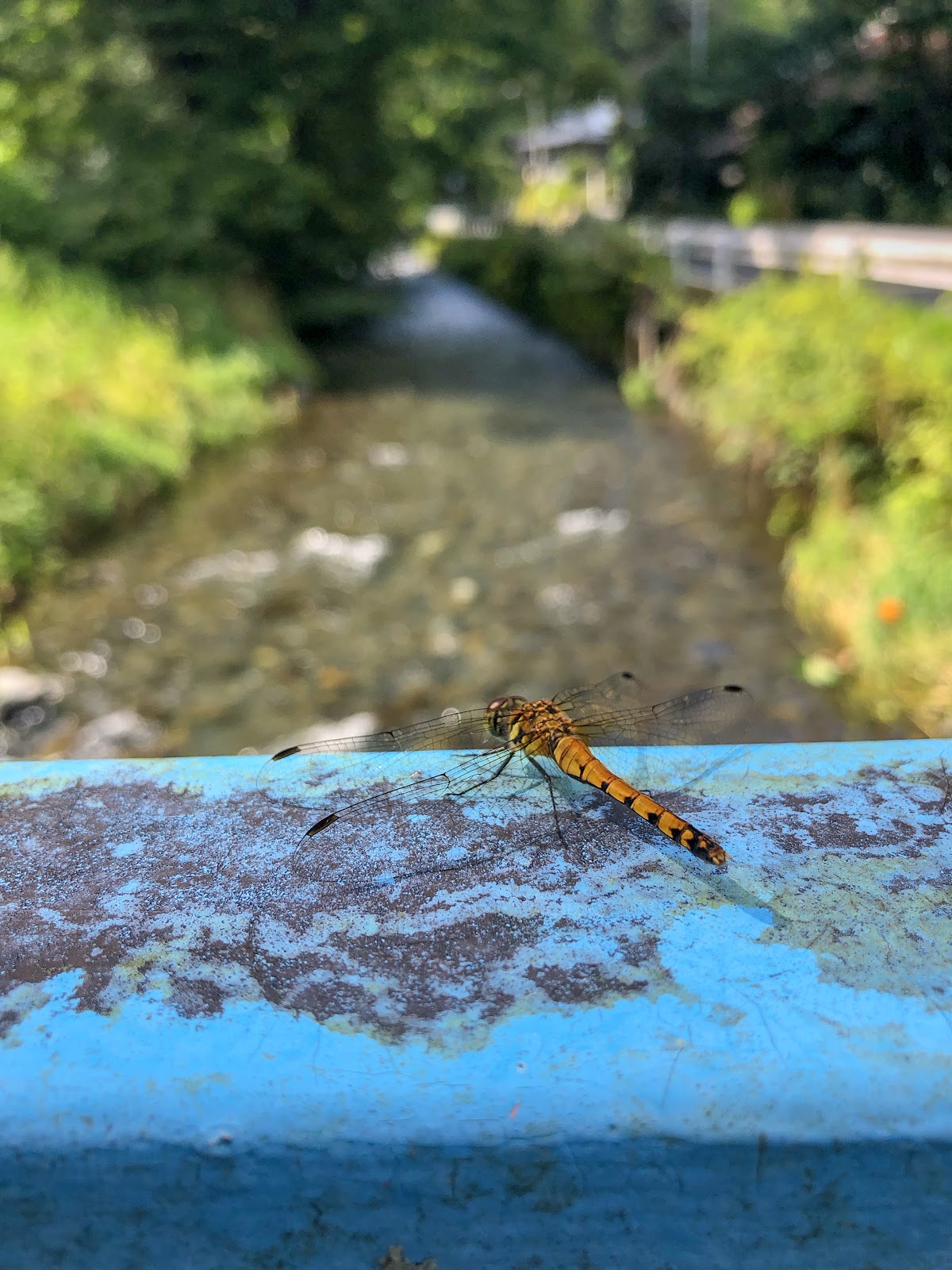
The Yagizo River basin is known as a habitat for Epiophlebia niponica. This dragonfly has primitive characteristics and can only inhabit clear streams, serving as an indicator species. The Yagizo River basin is considered the largest habitat in the Northern Kanto region, and the large number of individuals there demonstrates the excellent water quality.
Other Organisms
- Char and iwana trout inhabiting mountain streams
- Salamanders and other amphibians
- Kingfishers and other waterfowl
- Japanese serow and other mammals
The fact that these organisms can inhabit this environment demonstrates the high quality of water and surrounding environment of the Yagizo River Spring Group.
Use and Conservation of the Yagizo River Spring Group
Water Collection
At the Yagizo River Spring Group, particularly at Kinsei Water, the general public can freely collect water. Many people bring plastic bottles or containers to collect water.
Points to Note When Collecting Water
- Use clean containers
- Take care not to pollute the surroundings
- Do not occupy the area for long periods; respect the spirit of sharing
- Always take trash with you
- Selection as one of the Hundred Fine Waters does not guarantee suitability for drinking; if you drink it, either boil it or do so at your own risk
Conservation Activities
To preserve the water quality and environment of the Yagizo River Spring Group, Daigo Town, Ibaraki Prefecture, environmental protection organizations, and others cooperate in conservation activities.
- Regular water quality testing
- Cleaning activities around the environment
- Protection and proper management of forests
- Educational activities for visitors
Each of us who visits must be environmentally conscious, making efforts to take trash with us and show consideration for nature, which is important for preserving this precious fine water for the future.
Charm of Mount Yagizo and Surrounding Tourist Spots
When visiting the Yagizo River Spring Group, you can also enjoy surrounding tourist spots.
Mount Yagizo Summit
The summit of Mount Yagizo at an elevation of 1,022m has an observation platform from which, on clear days, a vast panorama can be seen stretching from the Kanto Plain to the Nasu mountain range and Nikko mountain range. The Yagizo Ridge Shrine is enshrined at the summit and has been an object of faith since ancient times.
Nichirin-ji Temple
An ancient Buddhist temple of the Tendai sect located on the slopes of Mount Yagizo. It is said to have been founded by Saichō in the 2nd year of Daido (807) and has a history of over 1,200 years. The temple grounds are lined with giant cedar trees hundreds of years old, enveloped in a solemn atmosphere.
Tourist Spots in Daigo Town
Daigo Town, where the Yagizo River Spring Group is located, has many other tourist spots.
Fukuro Falls
Counted as one of Japan’s three famous waterfalls, this large waterfall is 120m high and 73m wide. Because it falls in four stages, it is also called “Yondo Falls” (Four Times Falls), and you can enjoy its beauty through all four seasons. The winter ice waterfall is particularly spectacular.
Kuji River
The Kuji River, where the Yagizo River merges, is known as a mecca for sweetfish fishing. Many anglers visit from early summer through autumn.
Daigo Hot Springs
A hot spring resort surrounded by the nature of Okuokuji, with day-trip bathing facilities well-equipped. It is recommended to relax in the hot springs after climbing Mount Yagizo.
Apple Orchards
Daigo Town is one of Ibaraki Prefecture’s leading apple-producing areas. Apple picking can be enjoyed at many tourist farms in autumn.
Points to Note When Visiting the Yagizo River Spring Group
Seasonal Precautions
Spring (March-May)
- Be careful of remaining snow and freezing
- The season of beautiful fresh greenery, but mornings and evenings are cold
- Peak season for wild plant foraging with many visitors
Summer (June-August)
- The most accessible season
- Insect repellent measures are necessary
- Afternoon thunderstorms are a concern
- Drink plenty of water to prevent heat stroke
Autumn (September-November)
- The most popular season with beautiful autumn foliage
- Days become shorter, so plan with extra time
- After October, temperatures drop and warm clothing is needed
Winter (December-February)
- Access becomes difficult due to snow and frozen road surfaces
- Some forest roads close seasonally in winter
- Proper winter mountaineering equipment is required
- Beginners should avoid solo trips
Safety Precautions
- Carry rain gear in preparation for sudden weather changes
- Cell phone signals are weak in some areas, so inform family etc. of your climbing plan in advance
- Carry something that makes noise like a bell or radio in case of encountering wildlife (bears, wild boar, etc.)
- Use maps or GPS to avoid getting lost
- Avoid solo travel; move in groups
Fine Waters and Water Environment in Ibaraki Prefecture
Besides the Yagizo River Spring Group, there is one other water designated as one of the Hundred Fine Waters in Ibaraki Prefecture.
Izumi Forest Spring (Hitachi City)
The “Izumi Forest Spring and Itoyonosato Izumi Forest Park” in Mizuki Town, Hitachi City, is a historic spring mentioned in the Hitachi Country Chronicles. The rare fish called Itoyо, said to be a survivor of the ice age, inhabits this place and is designated as a National Natural Monument.
Characteristics of Ibaraki Prefecture’s Water Environment
Ibaraki Prefecture is blessed with major rivers including the Tone River, Naka River, and Kuji River, with abundant water resources. There are also many springs from the Yagizo Mountain system and Tsukuba Mountain system, with plentiful high-quality groundwater. On the other hand, water quality improvement is an issue in lakes such as Kasumigaura, and water environment conservation activities continue.
History and Culture of the Yagizo River Spring Group
Tokugawa Mitsukuni and the Yagizo Five Waters
Tokugawa Mitsukuni (1628-1701), the 2nd domain lord of the Mito Domain, is known as a virtuous ruler affectionately remembered as “Mito Komon.” Mitsukuni frequently conducted tours of inspection throughout his domain, prioritizing direct observation of his subjects’ lives.
When visiting Mount Yagizo, Mitsukuni was impressed by the excellence of five clear springs in the mountains and is said to have named each one. Records remain of him particularly appreciating the taste of Kinsei Water and praising its excellent water quality.
Known for compiling the “Great History of Japan,” Mitsukuni was a scholarly lord but was also enthusiastic about protecting the natural environment and cultural properties of his domain. The naming of the Yagizo Five Waters was not merely a naming act but a cultural endeavor to pass on precious water resources to future generations.
Local Residents and Spring Water
The Yagizo River Spring Group has long been used by local residents as a domestic water source. In the era before refrigerators, the water was also utilized for food preservation during summer. The clear water also had deep connections to regional industries, including agriculture using water from these springs and sake production using this water.
Today, local people continue to protect the Yagizo Five Waters as a precious regional resource. Conservation activities conducted community-wide include regular cleaning activities and raising visitor awareness about proper behavior.
Scientific Value of the Yagizo River Spring Group
Geological Features
The Yagizo Mountain system is composed mainly of sedimentary and metamorphic rocks formed from the Paleozoic to Mesozoic eras. The complex layered structure formed over a long geological history serves as a natural filtration system that creates springs.
Designated as a Geosite in the Ibaraki Northern Geopark, this area is geologically precious. Through observation of layers and research of rocks, one can understand the formation history of the Japanese archipelago.
Hydrological Significance
The Yagizo River Spring Group is a prime example of forests’ water source conservation function. Deciduous broadleaf forests of beech and oak, also called “green dams,” have the function of allowing precipitation to permeate the ground and slowly discharge as groundwater.
This natural dam function allows the Yagizo River to maintain a certain water flow even during dry seasons, contributing to stable water volume in the downstream Kuji River. In modern times of increasing urbanization, the value of such natural water circulation systems is extremely high.
Conclusion: The Value of the Yagizo River Spring Group and Inheritance for the Future
The Yagizo River Spring Group is a precious natural heritage of which Ibaraki Prefecture can be proud. It possesses multifaceted value, including the historical background of the Yagizo Five Waters named by Tokugawa Mitsukuni, excellent water quality selected as one of the Hundred Fine Waters, rich natural environment, and conservation activities by local people.
We who visit have the responsibility to enjoy this wonderful natural bounty while passing it on to future generations. Individual efforts such as taking trash with us, showing consideration for nature, and restrained use contribute to the conservation of the Yagizo River Spring Group.
When visiting Ibaraki Prefecture, be sure to visit the Yagizo River Spring Group and experience the blessings of clear water and rich nature firsthand. Combined with forest bathing on Mount Yagizo, it will be a precious experience that refreshes both body and mind.
Confirm the location of the Yagizo River Spring Group on a map, make plans suited to the season and weather, and visit safely. We hope many people learn about this fine water of which Ibaraki Prefecture is proud and share its value.