
Shakui Falls / Takisawa River, Kanagawa Prefecture | Complete Guide to a Spectacular Waterfall Selected for Japan’s Top 100 Waterfalls and Top 100 Waters
Shakui Falls (Shaskui no Taki), located in Yamakita Town, Ashigara Kamiyama District, Kanagawa Prefecture, is a representative waterfall of Kanagawa that can be accessed in approximately 90 minutes from central Tokyo. The sight of water cascading down in three stages from Takisawa River, a tributary of the Sakawa River, is breathtaking, and it was selected for “Japan’s Top 100 Waterfalls” in 1990 and the “Top 100 Waters of Japan” in 1985.
This article comprehensively introduces information you should know before visiting, from the appeal of Shakui Falls to specific access methods, nearby tourist spots, and seasonal highlights.
About Shakui Falls
Overview and Characteristics of Shakui Falls
Shakui Falls is a tiered waterfall on Takisawa River, a Class 2 river in the Sakawa River system, located in Hirayama, Yamakita Town, Ashigara Kamiyama District, Kanagawa Prefecture. It is characterized by its three-tiered structure, with the First Falls having a drop of 69m, the Second Falls 16m, and the Third Falls 29m, for a combined drop exceeding 100m and totaling 115m.
The name “Shakui” derives from esoteric Buddhist terminology, referring to clean sacred water used to purify areas before Buddha. The name is said to be related to the ascetic practices conducted at this site by Mongaku Shonin, a renowned monk of the Kamakura period.
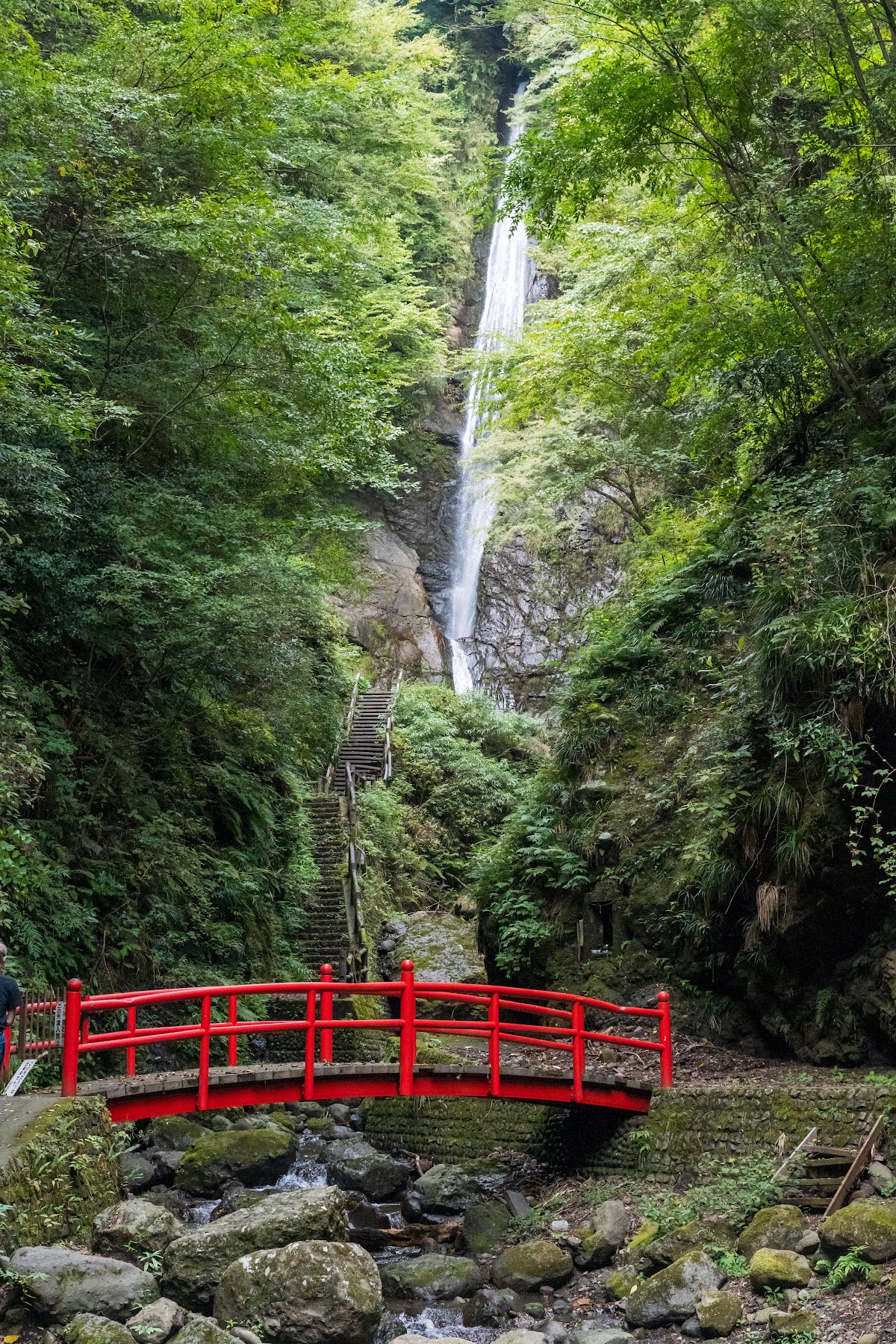
The area around the falls is surrounded by rich nature, and the sight of white water cascading through green trees as if unfurling white cloth captivates all who visit. In particular, the 69m height of the First Falls is among the most impressive in Kanagawa Prefecture.
Takisawa River and the Sakawa River System
Takisawa River, which forms Shakui Falls, flows through the mountainous areas of Yamakita Town as a tributary of the Sakawa River and a clear stream. Located at the headwaters of this Takisawa River is Shakui Falls, from which the flowing water passes through Takisawa River and into the Sakawa River.
The entire Sakawa River system originates in the Tanzawa Mountains and is a rich water system playing an important role in supporting the natural environment of this region. The water quality of Takisawa River is excellent, as evidenced by its selection as one of the Top 100 Waters of Japan.
The natural environment around Takisawa River displays various aspects throughout the year. Spring brings fresh greenery, summer offers cool water sounds, autumn brings fall foliage, and winter presents frozen waterfalls, each season offering different beauty.
Double Selection: Japan’s Top 100 Waterfalls and Top 100 Waters of Japan
Value as One of Japan’s Top 100 Waterfalls
Shakui Falls was selected as one of “Japan’s Top 100 Waterfalls” in 1990. This selection was sponsored by the Environmental Agency (now the Ministry of the Environment), the Green Civilization Institute, and Green Renaissance, earning it an honorable distinction among Japan’s most spectacular waterfalls.
The selection was based on evaluations including the beauty of its three-tiered structure, the impressive drop exceeding 100m, harmony with surrounding natural environment, and accessibility. Shakui Falls is the only waterfall in Kanagawa Prefecture selected for Japan’s Top 100 Waterfalls, making it widely recognized as a waterfall representative of the prefecture.
The waterfall’s beauty lies not merely in water volume or drop height, but in its integration with the surrounding landscape. In particular, the combination of the vermillion-painted bridge and the falls is a spectacular viewpoint popular among photography enthusiasts as an expression of Japanese aesthetic sensibility.
Clear Water Quality as One of Japan’s Top 100 Waters
In 1985, Shakui Falls was also selected as one of the “Top 100 Waters of Japan.” This is a list of nationally excellent spring waters and river waters selected by the Ministry of the Environment, evaluated comprehensively on water quality, water volume, surrounding environment, and preservation status.
Takisawa River water is a clear stream naturally filtered through the rich forests of the Tanzawa Mountains, boasting very high transparency. This clear water is also used as living water and agricultural water for the region, serving as a precious water source supporting the lives of local residents.
As a characteristic of waters selected for the Top 100 Waters list, the mineral balance is excellent with a mellow taste. Around the falls, there are places where visitors can collect this mineral water, and many visitors take water home with them.
Also Selected for Kanagawa’s Top 50 Scenic Spots
Shakui Falls was selected in 1979 as one of “Kanagawa’s Top 50 Scenic Spots,” a selection of areas with excellent landscapes within Kanagawa Prefecture, determined through public voting and other processes.
In this way, Shakui Falls has received multiple selections at both national and prefectural levels, and its landscape and environmental value has been officially recognized. These selections contribute significantly not only as honors but also to conservation activities and tourism promotion.
History and Cultural Background of Shakui Falls
Legend of Mongaku Shonin and Shakui Falls
A legend regarding Mongaku Shonin (Mongaku Shonin), a renowned monk of the Kamakura period, has been passed down concerning Shakui Falls. Mongaku Shonin was a Shingon Buddhist priest who lived from the late Heian period to the early Kamakura period and is also known in history for supporting the uprising of Minamoto no Yoritomo.
According to tradition, Mongaku Shonin conducted severe ascetic practices at this falls, and is said to have enshrined Fudo Myoo (the Immovable One) at that time. Based on this historical account, the “Falls Fudo” is enshrined before the falls, and many worshippers visit to this day.
A Fudo statue is enshrined in the hall, locally called “Anafudo.” This Fudo shrine is associated with the spiritual efficacy of the falls and is believed to have benefits including protection from water-related disasters and household safety.
“Shakui” as Esoteric Buddhist Terminology
“Shakui” (灑水) is a term with significant meaning in esoteric Buddhism. In esoteric Buddhist practice, the clean sacred water used to purify areas before Buddha is called “shakui” and plays an important role in rituals.
The background to naming this falls “Shakui” likely stems from both the ascetic legend of Mongaku Shonin and the connection of the waterfall’s clear water with Buddhist purity. The falls themselves were recognized as a sacred domain within nature.
Even today, a sense of sanctity permeates the area around the falls, making it not merely a tourist destination but also a place where people seek spiritual healing.
Local Faith and the Waterfall
In the Yamakita Town area, mountain ascetic beliefs and Shugendo practices have been influential since ancient times, with Shakui Falls being one of the objects of such faith. Water practices and waterfall training have a history as ascetic practices to purify the body and refine the spirit.
For local people, Shakui Falls was not merely a natural landscape but an existence deeply connected to life and faith. As a source of agricultural water and as a sacred place, it has been carefully preserved for generations.
Today, conservation activities around the falls continue under the auspices of local preservation societies and administration, with ongoing efforts to pass on this valuable natural and cultural heritage to future generations.
Access Methods to Shakui Falls
Access by Train and Bus
Using JR Gotemba Line
- Nearest Station: JR Gotemba Line “Yamakita Station”
- From Yamakita Station to Shakui Falls: Approximately 30 minutes on foot (approximately 2.5km)
- The path from the station to the falls follows a gentle uphill slope
Using Bus
- Fuji Kyuko Shonan Bus: Approximately 5 minutes from Yamakita Station to “Shakui Falls Entrance” bus stop
- From bus stop to falls: Approximately 15 minutes on foot
- As the number of buses is limited, it is recommended to check the schedule in advance
Using Taxi
- Approximately 5 minutes by taxi from Yamakita Station
- Direct access to the parking area is possible
- It is recommended to book a return taxi in advance
Vehicle Access and Parking Information
From the Tokyo Direction
- Approximately 20 minutes (approximately 12km) from “Oizomatsu IC” on the Tomei Expressway
- Follow National Route 246 toward Gotemba, then toward Yamakita Town
From the Shizuoka Direction
- Approximately 30 minutes (approximately 20km) from “Gotemba IC” on the Tomei Expressway
- Follow National Route 246 toward Tokyo
Parking Information
- Dedicated Shakui Falls parking lot: Free, capacity of approximately 30 vehicles
- Located at the entrance to a narrow road leading to the falls
- Public restrooms available
- Early arrival is recommended as the lot fills up during autumn foliage season and holidays
- A walking trail of approximately 10 minutes connects the parking area to the falls
Precautions
- The road from the parking area to the falls becomes narrow in places, making passage difficult for large vehicles
- During winter, there is a possibility of frozen road surfaces; preparation of studless tires or chains is recommended
- For navigation, search for “Shakui Falls” or the address “Hirayama, Yamakita Town, Ashigara Kamiyama District, Kanagawa Prefecture”
Location and Basic Information
Location
Hirayama, Yamakita Town, Ashigara Kamiyama District, Kanagawa Prefecture
Viewing Hours
- Open 24 hours for viewing (though nighttime viewing is not recommended due to safety concerns)
- Safe use hours of walking trails: From sunrise to sunset
Admission
Free
Inquiries
Yamakita Town Office Commerce and Tourism Division
Telephone: 0465-75-3646
Time Required
- Round trip from parking area to falls: Approximately 30 minutes
- Waterfall viewing: 15-30 minutes
- Total: Approximately 1 hour as a guide
Highlights and Ways to Enjoy Shakui Falls
Impressive Landscape of Three-Tiered Structure
The greatest highlight of Shakui Falls is its unique structure of three separate cascades. As you proceed along the walking trail, the grand sight of the First Falls comes into view first.
First Falls (69m)
The largest drop, determining the overall impression of the waterfall. When water volume is abundant, white water rushes down the rocky surface with a tremendous roar, sending up spray.
Second Falls (16m)
Located above the First Falls, displaying a somewhat gentler flow. At this stage, the water flow calms momentarily before continuing to the next tier.
Third Falls (29m)
Located at the uppermost level, somewhat obscured from the walking trail. Viewing the entire waterfall requires observation from a slightly more distant location.
Vermillion Bridge and Falls Scenic Viewpoint
A vermillion-painted bridge spans the walking trail depths, and the spot where this bridge and falls can be photographed together is the representative photography spot of Shakui Falls.
The contrast between the vermillion bridge, white falls, and surrounding greenery embodies Japanese aesthetic sensibility, offering beautiful photographs throughout the seasons. Particularly during new growth in spring and autumn foliage, the harmony of colors becomes even more striking.
From the bridge, you can view the falls closely and feel the sound of flowing water and cool air throughout your body. The environment full of negative ions provides an exceptional refreshing effect.
Seasonal Expressions
Spring (March-May)
Fresh greenery emerges, and snowmelt water from winter increases water volume. This is a vibrant season where alpine wildflowers can also be enjoyed around the falls area.
Summer (June-August)
The busiest season as visitors seek cool relief. The waterfall area is several degrees cooler than surroundings, functioning as a natural air conditioner. During the rainy season, water volume reaches its maximum, providing an impressive waterfall view.
Autumn (September-November)
Known as a fall foliage viewing destination, with peak colors from late October to early November. The contrast between red and yellow trees and the white falls is spectacular, attracting many photography enthusiasts.
Winter (December-February)
The waterfall may partially freeze during severe cold, becoming an ice waterfall. Visitors are fewer, but the waterfall viewed in winter silence possesses a mystical beauty. However, attention to frozen road surfaces is necessary.
Pilgrimage to Falls Fudo Shrine
Along the way to the falls is the Falls Fudo Shrine, a small hall enshrining Fudo Myoo said to have been installed by Mongaku Shonin. Many visitors pray at this shrine together with their waterfall viewing, making it the center of local faith.
Before the hall, incense and candles are offered, creating a quiet space of prayer. Prayer conducted amidst the roar of the waterfall has a calming effect on the mind.
Recommended Tourist Spots Around Shakui Falls
Yamakita Railway Park
Located approximately 5 minutes’ walk from Yamakita Station, this railway park displays a D52-type steam locomotive that once served on the Gotemba Line. Popular with railway enthusiasts and families alike.
Cherry trees are planted throughout the park, allowing spring visitors to enjoy the combination of cherry blossoms and the steam locomotive. It is an ideal location to visit together with Shakui Falls.
Yamakita Town Health and Welfare Center “Sakura no Yu”
A day-use hot spring facility located approximately 10 minutes by car from Shakui Falls. It is ideal for relaxing a body tired from waterfall exploration and is beloved by local residents.
The facility is equipped with a large bath, outdoor bath, and sauna, available at reasonable rates. A dining area offers meals prepared using local ingredients.
Lake Tanzawa
A man-made lake approximately 20 minutes by car from Shakui Falls, surrounded by the natural beauty of the Tanzawa Mountains. A campground and restaurant house are located along the lakeshore, allowing visitors to enjoy scenery throughout the seasons.
Particularly spectacular during autumn foliage season, the foliage reflected on the lake surface is magnificent. Boating and cycling are also available, making it popular as a base for outdoor activities.
Nishi-Tanzawa Nature School
A facility where one can learn about the natural environment of the Tanzawa Mountains, and is also convenient for gathering hiking information. Hiking trails are well-maintained in the surrounding area, allowing for serious mountain walking.
Exhibits provide detailed information about Tanzawa’s flora and fauna, making it ideal for acquiring preliminary knowledge for nature observation.
Yamakita Town Cherry Blossom Lined Street
Approximately 130 Yoshino cherry trees are planted around Yamakita Station, selected as one of “100 Streets of Kanagawa.” A cherry blossom festival is held in spring, attracting many flower-viewing visitors.
Visiting in spring with Shakui Falls allows you to enjoy both the falls and cherry blossoms.
Dining Information Around Shakui Falls
Yamakita Regional Cuisine
The Yamakita Town area offers regional cuisine making use of local ingredients. Mountain vegetable dishes and game meat dishes in particular offer flavors unique to mountainous regions.
Recommended Dishes
- Mountain vegetable buckwheat noodles: Seasonal limited menus featuring abundantly used locally gathered mountain vegetables
- Venison dishes: Cuisine using game captured in the Tanzawa Mountains
- River fish dishes: Salted river fish grilled whole or prepared as sweet simmered dishes
Roadside Station “Yamakita”
Located along National Route 246, this roadside station offers local fresh vegetables and specialty products. A restaurant is also attached, offering set meals, udon, buckwheat noodles and other dishes using local ingredients.
In particular, “Yamakita mandarin orange soft cream” is a popular item, its refreshing sweetness soothing tired bodies.
Cafes and Teahouses
Several teahouses and cafes beloved by local residents are located around Yamakita Station. Stopping by before or after falls exploration to enjoy leisurely time is recommended.
Menus featuring coffee made from locally sourced beans and homemade cakes offer warm comfort.
Precautions and Etiquette When Visiting Shakui Falls
Clothing and Belongings
Recommended Clothing
- Comfortable walking shoes (sneakers or trekking shoes)
- Easy-to-move clothing
- Something to wear over (useful even in summer as the falls area is cool)
- Rain gear (weather changes frequently in mountainous areas)
Items to Bring
- Beverages (vending machines are available only near the parking area)
- Towel (water spray may wet you)
- Camera or smartphone (numerous scenic viewpoints)
- Insect repellent spray (summer season)
- Sunscreen
Safety Precautions
- Walking trails are maintained but become slippery in rain or after rainfall
- Do not approach the falls pool—it is extremely dangerous
- Special caution is required during high water. It is recommended to refrain from visiting after heavy rain
- During winter, pay close attention to frozen road surfaces
- Mobile phone reception is weak in some areas; confirm maps in advance
Etiquette for Environmental Conservation
- Always take trash with you when leaving
- Plant collection is prohibited
- When collecting falls water, be considerate of the surrounding environment
- Speak at appropriate volumes, showing consideration for other visitors and the natural environment
- Avoid entering areas outside designated walking trails
Etiquette During Photography
- When using a tripod, be considerate not to obstruct other visitors’ passage
- Drone usage requires prior confirmation with management
- Commercial photography may require permission
Conservation Activities and Regional Efforts for Shakui Falls
Environmental Conservation Efforts
Yamakita Town undertakes various conservation activities to protect the environment of Shakui Falls and Takisawa River. Local preservation societies, administration, and volunteer groups cooperate in conducting regular cleaning and walking trail maintenance.
To maintain the water quality selected for the Top 100 Waters list, upstream development restrictions and water quality monitoring continue. These efforts enable visitors to enjoy the unchanged beauty of the falls.
Tourism Promotion and Regional Revitalization
Shakui Falls is positioned as an important tourism resource for Yamakita Town and contributes to regional economic activation. The town works to enhance tourism routes centered on the falls and strengthen information dissemination.
With many tourists visiting throughout the year, local restaurants, accommodations, and souvenir shops benefit, creating employment opportunities.
Application to Educational Activities
Local elementary and junior high schools use Shakui Falls as educational materials for environmental studies. Opportunities for children to actually visit the falls as a place to learn the importance of nature, water cycles, and local history and culture are provided.
Through such educational activities, conservation consciousness is cultivated in the next generation, fostering human resources to continue protecting regional treasures.
Accommodations Near Shakui Falls
Accommodations in Yamakita Town
Several privately-run inns and small hotels are located within Yamakita Town, offering accommodation in a homey atmosphere. Many inns serve cuisine prepared with local ingredients, recommended for those wishing to stay leisurely.
Nearby Area Accommodation Options
Odawara Direction
Approximately 30 minutes by car, Odawara City offers diverse accommodations from business hotels to hot spring inns. It can be enjoyed together with Odawara Castle and other tourist spots.
Hakone Direction
Approximately 40 minutes by car, the Hakone area is one of Japan’s premier hot spring resorts. Combining Shakui Falls and Hakone sightseeing in an itinerary is popular.
Gotemba Direction
Approximately 30 minutes by car, Gotemba City has hotels concentrated around Gotemba Premium Outlets. It allows for both shopping and nature sightseeing.
Campgrounds
Multiple campgrounds are located around Lake Tanzawa and in the West Tanzawa area. Recommended for outdoor enthusiasts wishing to enjoy camping in nature while visiting Shakui Falls.
Sightseeing Model Courses Including Shakui Falls
Day Trip Course (Using Vehicle)
Morning
- 9:00 Arrival at Shakui Falls parking area
- 9:10-10:30 Shakui Falls exploration and photography
- 11:00 Shopping and light meal at Roadside Station “Yamakita”
Afternoon
- 12:00 Travel to Lake Tanzawa
- 12:30-14:00 Lake Tanzawa area exploration and lunch
- 14:30 Yamakita Town Health and Welfare Center “Sakura no Yu”
- 15:00-16:30 Relax in hot springs
- 17:00 Return journey
1-Night 2-Day Course
Day 1
- Morning: Odawara Castle sightseeing
- Lunch: Lunch in Odawara
- Afternoon: Visit Shakui Falls
- Evening: Check into accommodation in Hakone
- Night: Enjoy hot springs and dinner
Day 2
- Morning: Hakone sightseeing (Lake Ashi, Owakudani, etc.)
- Lunch: Lunch in Hakone
- Afternoon: Shopping at Gotemba Premium Outlets
- Evening: Return journey
Day Trip Course Using Train
- 9:00 Arrival at JR Yamakita Station
- 9:10-9:40 Yamakita Railway Park viewing
- 10:00-12:00 Shakui Falls exploration (using walking, bus, or taxi)
- 12:30 Lunch near Yamakita Station
- 14:00 Rest at local cafe
- 15:00 Depart from Yamakita Station for return journey
Conclusion: Fully Enjoy the Appeal of Shakui Falls
Shakui Falls is a precious natural heritage selected as one of Japan’s Top 100 Waterfalls and the Top 100 Waters of Japan, representing Kanagawa Prefecture. The 115m falls cascading in three tiers present different faces throughout the seasons, continuing to captivate all who visit.
The excellent accessibility of approximately 90 minutes from central Tokyo is also appealing, allowing for full enjoyment on a day trip. Nearby tourist spots such as Lake Tanzawa and Yamakita Railway Park are scattered throughout, making it possible to fully savor nature and culture throughout the day.
The legend of Mongaku Shonin remaining at the Falls Fudo Shrine, the clear named waters, the healing space full of negative ions, and the spectacular scenery woven by the vermillion bridge and falls—Shakui Falls concentrates the diverse appeals sought by modern people.
On your next day off, please visit Shakui Falls and experience the beautiful nature that Kanagawa Prefecture boasts. The clear flowing water and rich nature will relax you both physically and mentally, providing refreshment from daily fatigue.
By not forgetting consideration for environmental conservation and observing etiquette in your visit, you can help pass on this wonderful nature to the future. Let us share the beauty of Shakui Falls and Takisawa River with many people and continue to treasure it.
.png)