Complete Guide to the Sacred Spring Water of Sengen Shrines in Yamanashi Prefecture | Experience the Blessings of Mount Fuji at Holy Water Source Spots
Yamanashi Prefecture is home to numerous Sengen Shrines, which serve as centers of Mount Fuji worship. Many of these shrines have sacred water sources where groundwater from Mount Fuji springs forth, and since ancient times, these waters have been cherished both as objects of faith and as sources for daily life. This article provides a detailed introduction to the clear waters that spring from Sengen Shrines throughout Yamanashi Prefecture, including their characteristics, access methods, and historical background.
The Relationship Between Mount Fuji Worship and the Spring Water of Sengen Shrines
The Origins of Sengen Shrines and Mount Fuji Worship
Sengen Shrines were built to appease the volcanic eruptions of Mount Fuji. In particular, the great eruption of Mount Fuji in 864 CE caused catastrophic damage, and the following year, in 865 CE, by imperial decree, a shrine was established to enshrine Sengen-Ōkami (Konohana-Sakuya-Hime no Mikoto), the deity of Mount Fuji.
Mount Fuji has been revered since ancient times as a sacred mountain, with the mountain itself considered the object of worship. Water springing from Mount Fuji carries special significance as divine blessing, and the water that wells up within the precincts of Sengen Shrines has become known as “sacred water” and is worshipped as an object of faith.
Mount Fuji’s Groundwater System
Rain and snow that fall on Mount Fuji permeate the ground through the porous geological layers characteristic of volcanoes, and after passing through years of filtration, they emerge at the base. This groundwater is extremely pure while containing abundant minerals, and maintains a constant temperature year-round (around 13°C).
Most Sengen Shrines on the Yamanashi side of Mount Fuji are built at locations where this groundwater springs forth, and the shrines and spring water are inseparable.
Major Sengen Shrines and Spring Water Spots in Yamanashi Prefecture
The Sacred Water of Kitakuchi-Hongu Fuji Sengen Shrine
Located in Fujiyoshida City, Kitakuchi-Hongu Fuji Sengen Shrine is known as both the starting point of the northern Mount Fuji climbing route and as a most powerful power spot.
Water Drawn from Sensuiike (Spring Water)
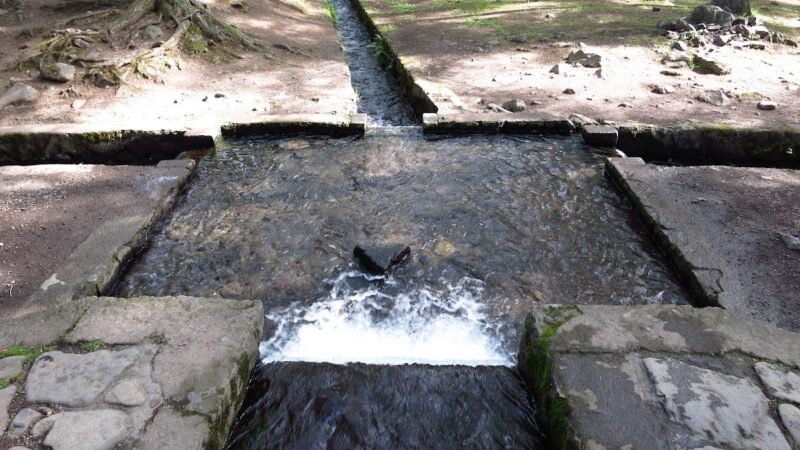
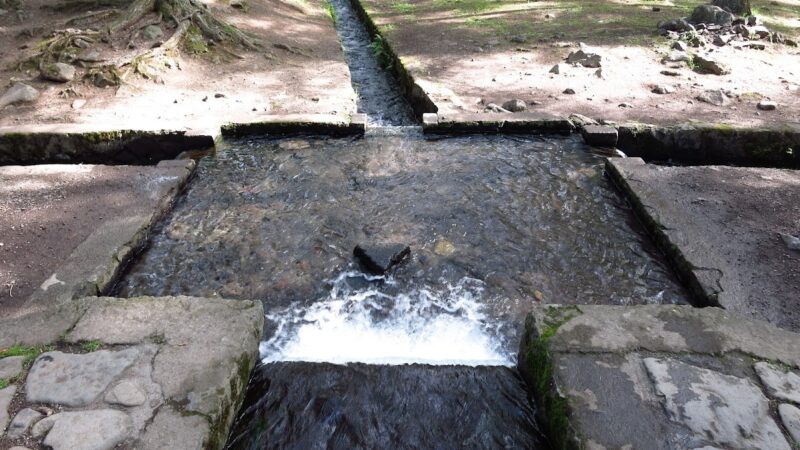
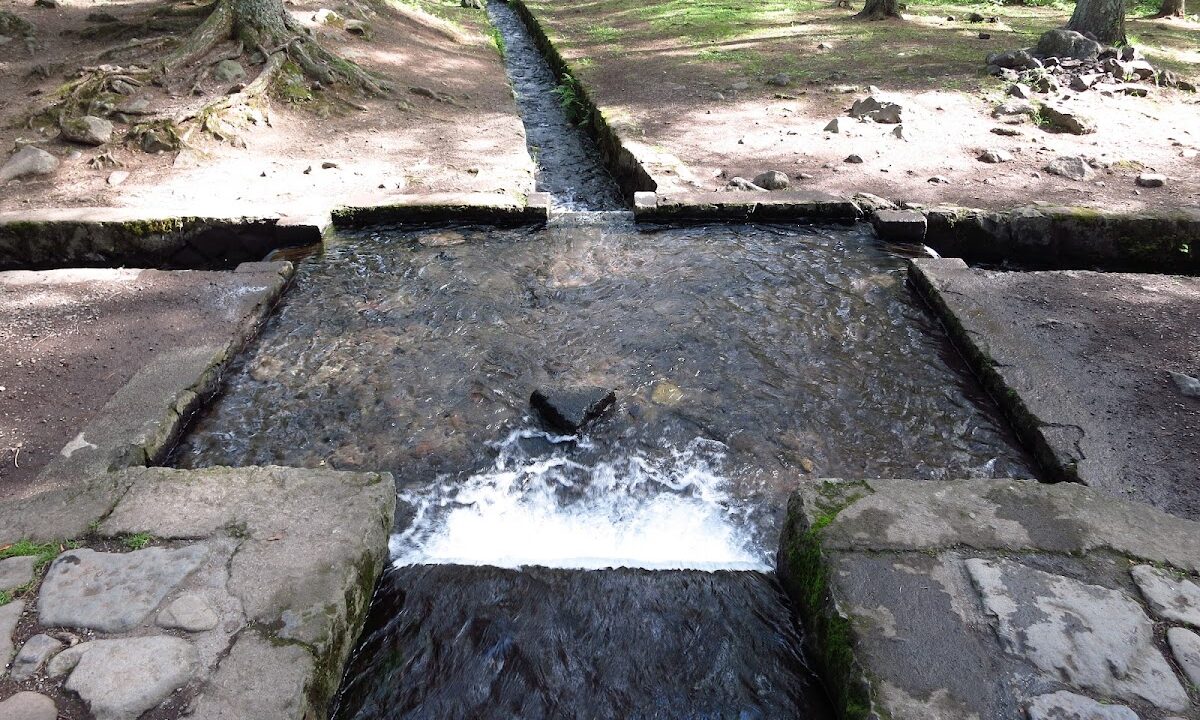
From one of the “Eight Fuji Lakes,” called Sensuiike, sacred water is continuously drawn into the hand-washing basin within the shrine precincts. This water is Mount Fuji’s groundwater, and it is believed that by not only washing their hands but also touching this pure water, visitors can purify their body and mind.
The architecture of the hand-washing basin also holds historical value, and is characterized by its sturdy construction. The sacred water that continues to flow even now speaks to the depth of the shrine’s history and Mount Fuji worship.
Access Information
- Address: 5558 Kamiyoshida, Fujiyoshida City, Yamanashi Prefecture
- About 20 minutes on foot from “Fujisan Station” on the Fujikyu Railway
- About 10 minutes by car from “Kawaguchiko IC” on the Chuo Expressway
- Parking: Available (free)
The Water of Kawaguchi Sengen Shrine
Kawaguchi Sengen Shrine was built in 865 CE to appease Mount Fuji’s volcanic eruptions and is a shrine of historical significance. Located in Kawaguchi, Fujikawaguchiko Town, it is surrounded by the Seven Sacred Cedars, which are over 1,200 years old, creating a sacred space.
The Relationship Between the Seven Sacred Cedars and Spring Water
Within the precincts stands the Seven Sacred Cedars, a natural monument designated by the prefecture. Among them, the pair of cedars known as the “Enmusubi Cedar” (Romance Shrine) is popular as a power spot for love fulfillment. These giant trees have survived for over 1,200 years, which is thought to be due to the existence of abundant groundwater veins from Mount Fuji.
A refreshing atmosphere pervades the entire precinct, and a rich natural environment sustained by the blessings of spring water is maintained.
Access Information
- Address: 1 Kawaguchi, Fujikawaguchiko Town, Minamitsuru District, Yamanashi Prefecture
- About 15 minutes by bus from “Kawaguchiko Station” on the Fujikyu Railway
- About 15 minutes by car from “Kawaguchiko IC” on the Chuo Expressway
The Sacred Water of Komuro Sengen Shrine
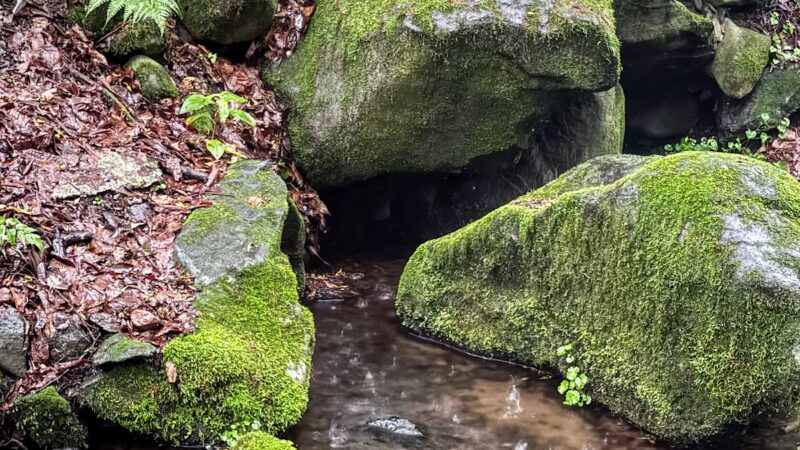
Komuro Sengen Shrine in Fujiyoshida City has sacred water that springs forth within its precincts. This spring water is drawn up from beneath the shrine and is a precious spot where one can directly receive Mount Fuji’s groundwater.
Characteristics and Precautions Regarding the Sacred Water
The sacred water of Komuro Sengen Shrine is tested for compliance with drinking water standards; however, as it has not undergone sterilization, its shelf life is limited to one day. If taking some home, it is recommended to prepare a clean container and drink it the same day.
This is a precious opportunity to directly taste Mount Fuji’s water, and many visitors come to experience it.
Access Information
- Address: 3-32-18 Shimoyoshida, Fujiyoshida City, Yamanashi Prefecture
- About 15 minutes on foot from “Fujisan Station” on the Fujikyu Railway
Yamiya Sengen Shrine (Distant Worship Site) and Surrounding Spring Water
Yamiya Sengen Shrine functioned as a distant worship site for directly worshipping Mount Fuji and has a unique form without a main hall. Numerous spring waters from Mount Fuji exist in the surrounding area and are included in courses for “drinking Mount Fuji’s water and touring spring water sites.”
Comparison with Shizuoka Prefecture Side: Differences from Wakutama Pond
When discussing the spring water of Sengen Shrines in Yamanashi Prefecture, a comparison with “Wakutama Pond” at Fuji Sengen Grand Shrine in Fujinomiya City, Shizuoka Prefecture, is essential.
Characteristics of Wakutama Pond
Wakutama Pond is a spring water pond designated as a national natural monument where groundwater from Mount Fuji springs forth directly. Its spring water volume reaches approximately 300,000 tons per day, and the water temperature remains around 13°C year-round. It has been used as the starting point of the Fujinomiya climbing route and as a place for climbers to purify themselves.
Characteristics of Spring Water on the Yamanashi Side
On the other hand, the spring water of Sengen Shrines on the Yamanashi side rarely has large-scale spring water ponds like Wakutama, but instead exist scattered around the shrine precincts and surrounding areas. They are maintained as hand-washing basins or sacred water for direct contact or consumption by visitors, which is characteristic of this side.
Since the Yamanashi side is located on the northern base of Mount Fuji, the underground residence time and pathways of the groundwater differ from those on the Shizuoka side, giving each location its unique water quality.
Sengen Shrines and Spring Water as World Cultural Heritage
In 2013, Mount Fuji was registered as a World Cultural Heritage site as “Mount Fuji: Sacred Place and Source of Inspiration.” This registration includes not only Mount Fuji itself but also surrounding Sengen Shrines and spring water sites as component assets.
Sengen Shrines in Yamanashi Prefecture Registered as World Heritage
The following Sengen Shrines in Yamanashi Prefecture are component assets of the World Cultural Heritage:
- Kitakuchi-Hongu Fuji Sengen Shrine
- Kawaguchi Sengen Shrine
- Fuji Omuro Sengen Shrine
These shrines and the Mount Fuji groundwater that springs from their precincts and surrounding areas are recognized worldwide as material evidence of Mount Fuji worship.
The Role of Spring Water in Faith
In Mount Fuji worship, spring water has been revered not merely as a water source but as the very blessing of the divine. It has played an important role as a place for “mizugokori” (water purification) before climbing the mountain, and in daily religious life as a place to receive sacred water.
With the World Cultural Heritage designation, the importance of preserving and handing down these spring water sites has come to be recognized even more.
Etiquette and Precautions When Visiting Spring Water Sites
Basic Pilgrimage Manners
When visiting spring water at Sengen Shrines, please observe the following basic etiquette:
- Observe the hand-washing ritual: Hold the ladle with your right hand and wash your left hand, then switch the ladle to your left hand and wash your right hand. Switch again to your right hand, catch water in your left hand, and rinse your mouth. Finally, hold the ladle vertically and rinse the handle.
- When receiving sacred water: Do not draw water from places other than designated areas. Use a clean container and be careful not to dirty the surrounding area.
- Consider for natural environment: Always take trash with you, do not damage plants, and do not enter areas marked as restricted without permission.
Precautions When Drinking Spring Water
Although Mount Fuji’s spring water is extremely pure, the following points require attention:
- Confirm sterilization status: Most sacred waters have not undergone sterilization, so refrain from drinking when you are unwell or your immunity is low.
- Respect expiration date: Water brought home should be consumed promptly, especially during summer months.
- Consider boiling: If concerned, boiling before consumption is one option.
Model Courses for Spring Water Tours
A One-Day Tour of Spring Water Spots at the Foot of Mount Fuji
Here is a model course for efficiently touring the spring water of Sengen Shrines on the Yamanashi side:
Morning
- Kitakuchi-Hongu Fuji Sengen Shrine (time required: 1 hour)
- Purify your hands with sacred water and pay respects at the shrine
- View the sturdy main hall and historic buildings
- Komuro Sengen Shrine (time required: 30 minutes)
- Receive sacred water (bringing your own container is recommended)
- Experience the atmosphere of the precincts
Lunch
- Enjoy “Yoshida udon” noodles in Fujiyoshida City
Afternoon
- Kawaguchi Sengen Shrine (time required: 1 hour)
- View the 1,200-year-old Seven Sacred Cedars
- Make a wish for good relationships at the Enmusubi Cedar
- Feel the refreshing air of the precincts
- Tour of nearby spring water spots (time required: 1-2 hours)
- Oshino Hakkai (World Cultural Heritage component asset)
- Other spring water sites
Highlights by Season
Spring (April-May)
- Beautiful contrast of new foliage and spring water
- Cherry blossoms and flowers at their peak in the precincts
Summer (June-August)
- Cool spring water is pleasant
- Many climbers visit during Mount Fuji’s climbing season
Autumn (September-November)
- Wonderful harmony of autumn colors and spring water
- Clear air provides excellent views of Mount Fuji
Winter (December-March)
- Mystical scenery of snow-covered precincts and spring water
- Even in winter, the stable water temperature may produce visible steam
Scientific Value and Conservation Activities of Spring Water
Mount Fuji’s Groundwater Purification Mechanism
The reason Mount Fuji’s spring water is so pure lies in the geological structure characteristic of volcanoes. Mount Fuji is composed of basaltic lava, characterized by its porous structure and high water permeability.
As water percolates underground, it passes through multiple lava layers, during which physical and chemical filtration processes remove impurities. Moreover, the underground residence time is estimated to span tens to hundreds of years, allowing the natural purification system to function over long periods.
Water Quality Characteristics
Mount Fuji’s spring water has the following characteristics:
- Hardness: Classified as soft water with a smooth taste
- pH value: Weakly alkaline and gentle on the body
- Minerals: Contains trace elements such as vanadium
- Water temperature: Stable at around 13°C year-round
Conservation Efforts
Various conservation activities are being undertaken to pass Mount Fuji’s spring water on to future generations:
- Water quality monitoring: Regular water quality testing to monitor the condition of spring water
- Surrounding environment conservation: Forest management and prevention of illegal dumping
- Awareness activities: Educational outreach to visitors and environmental education
- Management as World Heritage: Appropriate management based on cultural property protection law
Local residents, government, and shrine officials continue to cooperate in protecting this precious water resource.
Spring Water of Sengen Shrines as Power Spots
Spiritual Aspects
The spring water of Sengen Shrines has drawn attention as power spots. As water directly receiving the energy of Mount Fuji, it is said to provide the following blessings:
- Purification effect: Cleansing the impurities of body and mind
- Energy charging: Absorbing the life force of Mount Fuji
- Good fortune: Gaining the power to make a fresh start
- Romantic love: Particularly around the Seven Sacred Cedars of Kawaguchi Sengen Shrine
Visitor Experiences
Many visitors report experiencing a sense of having their hearts washed clean when touching the spring water of Sengen Shrines. In particular, Kitakuchi-Hongu Fuji Sengen Shrine is visited by domestic and international pilgrims as a “most powerful power spot,” and many look forward to touching its sacred water.
Combining with Nearby Tourism Spots
Fuji Five Lakes Area
You can enjoy tourism in the Fuji Five Lakes area along with your spring water tour:
- Lake Kawaguchi: Views of Mount Fuji from the lakeshore, art museum tours
- Lake Yamanaka: Water activities, Flower Capital Park
- Lake Saiko: Quiet atmosphere, lava caves such as Bat Cave
- Lake Shoji: Spectacular view of “baby-holding Fuji”
- Lake Motosu: Scenic spot for the Mount Fuji on the thousand-yen note
Oshino Hakkai
Oshino Hakkai, a World Cultural Heritage component asset, consists of eight ponds where Mount Fuji’s groundwater springs forth. Together with spring water of Sengen Shrines, this is a spot worth visiting. The highly transparent ponds are mystical and charm many tourists.
Historic Townscape of Fujiyoshida
Fujiyoshida City retains historic townscapes with lodging temples of Fuji religious groups. Visiting them together with Sengen Shrine worship allows you to feel the history of Mount Fuji worship firsthand.
Access and Transportation Information
Access by Public Transportation
From Tokyo
- Chuo Expressway Bus: From Shinjuku Station to Kawaguchiko Station in approximately 1 hour 45 minutes
- Train: Take JR Chuo Main Line to Otsuki Station, then transfer to Fujikyu Railway
From Nagoya/Osaka
- Tokaido Shinkansen to Shin-Fuji or Mishima Station, then bus toward Lake Kawaguchi area
Access by Car
From Tokyo
- Chuo Expressway to Kawaguchiko IC in approximately 1 hour 30 minutes
From Nagoya
- Via Tomei and Shin-Tomei Expressways in approximately 3 hours
Rental Cars and Sightseeing Taxis
For efficiently touring multiple Sengen Shrines, rental cars or sightseeing taxis are convenient. Rental car shops are available near Fujisan Station and Kawaguchiko Station, and sightseeing taxis are operated by various companies.
Conclusion: A Journey Through the Holy Waters That Bring You the Blessings of Mount Fuji
The water that springs from Sengen Shrines in Yamanashi Prefecture is not merely natural spring water, but sacred water sources deeply connected to Mount Fuji worship. The shrines, founded in the Jogan period in response to volcanic eruptions, and the pure water that springs within their precincts have been objects of faith for more than a thousand years.
Each shrine—from the sacred water of Kitakuchi-Hongu Fuji Sengen Shrine, to the refreshing environment of Kawaguchi Sengen Shrine, to the sacred water of Komuro Sengen Shrine—possesses its own unique spring water spot and continues to deliver Mount Fuji’s blessings to us. With recognition of its value as a World Cultural Heritage site, the importance of its preservation and transmission has only increased.
When visiting the foothills of Mount Fuji, please be sure to touch the spring water of Sengen Shrines and experience its purity and sacred nature. The spring water, a gift from Mount Fuji, will purify your body and mind and bestow upon you new vitality. With appropriate respect for proper etiquette, savor this precious heritage of nature and culture, and maintain an awareness of passing it on to future generations—this is what is asked of each individual visitor.