Complete Guide to Onuma Yusui Water Source (Yamanashi Prefecture): Clear Water of Mount Fuji Springing from Sengen Shrine Grounds
The Onuma Yusui water source, located in Onuma, Nishizakitown, Minamikasumigun, Yamanashi Prefecture, is a precious water source where groundwater from Mount Fuji emerges to the surface. This spring water is situated within the grounds of Onuma Sengen Shrine (小沼浅間神社), and is known as a historically significant mineral water that has been cherished by local people since ancient times. This article provides a detailed explanation of the characteristics, history, access methods, and surrounding attractions of this spring water.
Basic Information about Onuma Yusui Water Source
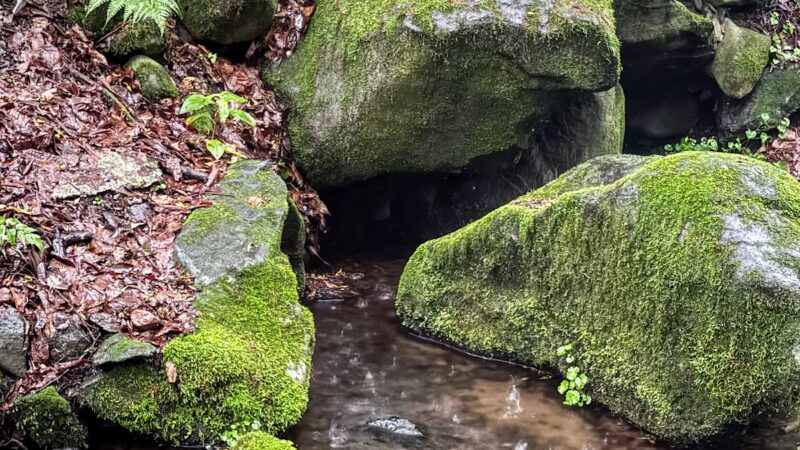
The Onuma Yusui water source is formally known as “Sengen Shrine’s Spring Water” or “Sengen Shrine’s Sacred Water.” Located within the grounds of Onuma Sengen Shrine in Nishizakitown, Yamanashi Prefecture, groundwater from Mount Fuji emerges from between rocks as a gift of nature.
Location and Details
- Location: 2797 Onuma, Nishizakitown, Minamikasumigun, Yamanashi Prefecture
- Name of Spring: Sengen Shrine’s Spring Water (浅間神社の湧水)
- Water Source: Groundwater from Mount Fuji
- Form of Spring: Natural emergence from between rocks
- Water Volume: Abundant (stable throughout the year)
- Access Restrictions: Viewable within shrine visiting hours
- Parking: Parking space available for shrine visitors
History and Origins of Onuma Sengen Shrine
When discussing the Onuma Yusui water source, one cannot overlook the history of Onuma Sengen Shrine. This shrine is said to have been founded in 721 (Yoro 5), making it an ancient shrine with over 1,300 years of history.
Enshrined Deities and Faith
Onuma Sengen Shrine enshrines Konohanasakuyahime no Mikoto (木花開那姫命), the goddess of Mount Fuji, and her husband Amatsu Hiko Hiko Ho no Ninigi no Mikoto (天津彦彦火瓊瓊杵尊). Locally, it is known as “Kamitemiyas an” (上手宮さん), “Watemiyas an” (和手宮さん), or “Umeyashrine,” and serves as the center of faith for local residents.
Connection with Fuji Pilgrims
Historically, this spring water played an important role as purification water for Fuji pilgrims (Fuji-dō-ja) who traveled the mountain paths leading to Mount Fuji (Fuji-dō). Those undertaking Fuji worship are said to have purified their bodies and minds with this clean spring water before heading toward Mount Fuji. From this perspective, the Onuma Yusui water source is not merely a water source but also has historical value as a sacred place deeply connected with Fuji faith.
Characteristics and Attractions of the Spring Water
The greatest appeal of the Onuma Yusui water source lies in the quality of its water and its abundant volume. As groundwater from Mount Fuji passes through the earth over many years and undergoes natural filtration, it emerges as exceptionally clear and pure water.
Scenery of the Spring Water Pool
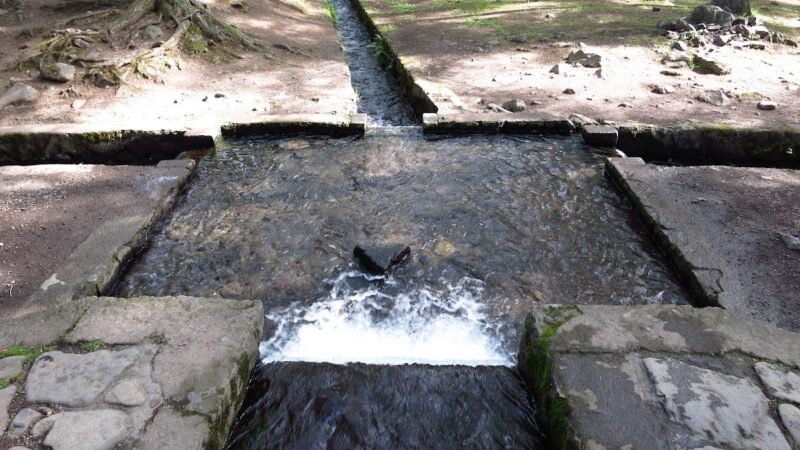
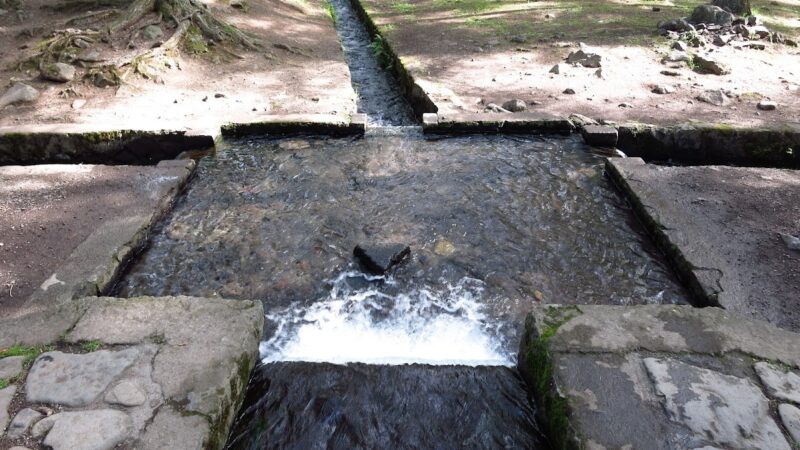
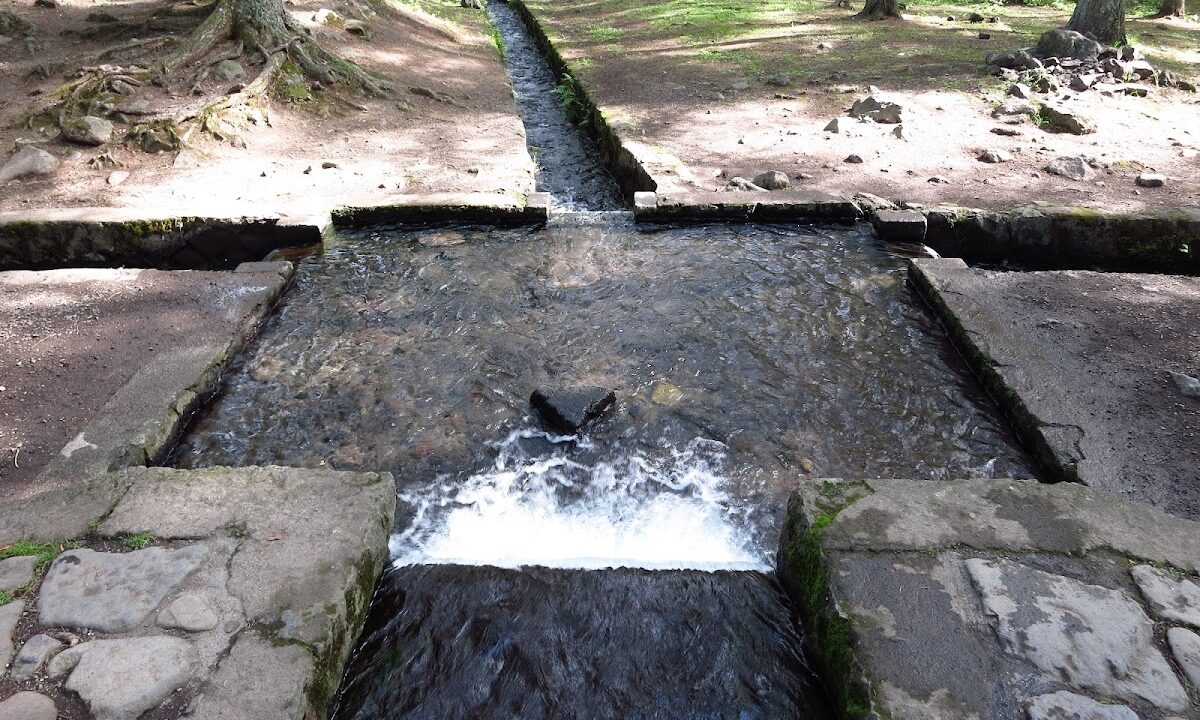
As you pass through the torii gate and proceed along the shrine path, a spring water pool filled with crystal-clear water immediately appears on the left side. The water emerging from between the rocks first forms a pool within the shrine grounds and then flows out as a small stream. The water in this spring pool is remarkably transparent, allowing you to see clearly all the way to the bottom.
The pool positioned alongside the shrine path further enhances the sacred atmosphere of the shrine and creates a serene impression on visitors. On clear days in particular, the reflection of surrounding trees and sky on the water’s surface is beautiful, making it a popular photography spot.
Habitat of Baika-mo (Buttercup Plant)
A notable feature of the Onuma Yusui water source is the presence of Baika-mo (梅花藻), a rare aquatic plant that grows only in clear streams. Baika-mo is a perennial herb of the Ranunculaceae family that can only survive in clean, flowing water with low water temperatures, making it an extremely rare aquatic flower.
Baika-mo blooms small white flowers underwater from early summer through autumn. The flower is named “Baika-mo” because its shape resembles that of a plum blossom. The presence of this plant is evidence that the water quality of the spring is in excellent condition.
Spring water areas where baika-mo can be observed are limited throughout Japan, and the Onuma Yusui water source is a valuable observation spot for baika-mo within Yamanashi Prefecture.
Water Volume and Temperature
The Onuma Yusui water source maintains an abundant water volume throughout the year. As snowmelt from Mount Fuji and rainwater seep deep underground and emerge over extended periods, seasonal fluctuations in water volume are relatively small, resulting in stable discharge.
The water temperature, as characteristic of groundwater, remains stable throughout the year, feeling cold in summer and relatively warm in winter. This stable water temperature enables the growth of aquatic plants such as baika-mo.
Access Methods and Surrounding Information
Access to the Onuma Yusui water source is possible by both public transportation and private vehicle, though access by car is more convenient.
Access by Car
- From Kawaguchiko IC on the Chuo Expressway: Approximately 15 minutes
- From Fujiyoshida IC on the East Fuji Five Lakes Road: Approximately 10 minutes
- Use National Route 139 toward Nishizakitown
- Car navigation setting: “Onuma Sengen Shrine” or address “2797 Onuma, Nishizakitown, Minamikasumigun, Yamanashi Prefecture”
- Parking: Several parking spaces available for shrine visitors
Access by Public Transportation
- Approximately 20 minutes on foot from Mitsumine Station on the Fujikyu Railway
- Approximately 25 minutes on foot from Kotobuki Station on the Fujikyu Railway
- By taxi: Approximately 5 minutes from Mitsumine Station or Kotobuki Station
Nearby Attractions
Nishizakitown is known as “The Town of Weaving” (ハタオリの町) with a deep history of the textile industry. When visiting the Onuma Yusui water source, we recommend exploring the following spots as well.
Textile-Related Facilities in Nishizakitown
Nishizakitown has been a weaving center since the Edo period, with many textile workshops (hatayas) still in operation. The town features facilities where you can experience textile weaving and learn about textile history. The sight of spring water sounds combined with the sounds of weaving looms is a picturesque scene unique to this region.
Mount Fuji Viewpoints
From Nishizakitown, you can enjoy beautiful views of Mount Fuji. Especially on clear winter days, you can enjoy spectacular views of Mount Fuji with its snow-capped peak.
Other Spring Water Spots
Yamanashi Prefecture has many mineral water and spring water spots. The following are nearby springs worth visiting along with the Onuma Yusui water source:
- Oshino Hakkai (Oshino Village, Minamikasumigun): Selected as “Japan’s 100 Best Water Sources” by the Ministry of the Environment
- Spring Water of Kitakuchi Hongu Fuji Sengen Shrine (Fujiyoshida City)
- Izumi Zuizu (Spring Water) (Fujiyoshida City)
Water Usage and Precautions
The Onuma Yusui water source is a sacred place within a shrine’s grounds. Please observe the following points when visiting.
Shrine Etiquette
- Be mindful that you are in a shrine’s sacred grounds and observe quietly
- Offer a respectful bow before passing through the torii gate
- The area around the spring water pool may be slippery; please watch your footing
- Always take any trash with you
Regarding Water Usage
If you wish to drink the spring water, please note the following:
- It is recommended to boil spring water before consuming it
- Water quality tests are conducted regularly, but drinking untreated water is at your own risk
- Avoid collecting large quantities of water
- The water may be used for local residents’ daily needs, so consideration is necessary
Safety Precautions
- Exercise sufficient caution against water-related accidents near water areas
- Particularly when accompanying small children, do not let them out of your sight
- During or after rain, water volume increases and the current becomes faster
- Moss makes surfaces slippery, so wear appropriate footwear
Yamanashi Prefecture’s Water Culture and Onuma Yusui Water Source
Yamanashi Prefecture is also called “the land of water,” and due to its location surrounded by high mountains such as Mount Fuji, the Southern Alps, and Mount Yatsugatake, it is blessed with abundant groundwater and spring water.
Characteristics of Yamanashi Prefecture’s Spring Water
Yamanashi Prefecture contains numerous spring water sites, each deeply connected with the region’s history and culture. These spring waters:
- Enable high-quality agricultural products: Delicious rice and vegetable cultivation
- Support sake brewing: Soft water ideal for sake production
- Contribute to the wine industry: Grape cultivation and wine production
- Provide drinking water: Support the livelihood of local residents since ancient times
These industries and lifestyles are founded upon them.
Ministry of the Environment’s Spring Water Survey
The Ministry of the Environment surveys and selects representative spring waters throughout Japan, with many spring waters in Yamanashi Prefecture being subject to study. The Onuma Yusui water source is recognized as one of Yamanashi Prefecture’s representative spring waters, and its conservation and utilization are considered important.
Onuma Yusui Water Source Through the Seasons
The Onuma Yusui water source displays different characteristics throughout the four seasons.
Spring (March to May)
As the season of fresh greenery arrives, trees within the shrine grounds begin to bud. The area surrounding the spring water pool overflows with vitality, enveloped in a refreshing atmosphere.
Summer (June to August)
This is the season when baika-mo blooms with white flowers. The sight of baika-mo flowers swaying in the highly transparent spring water is a cool landscape that makes you forget the summer heat. The sound of cool spring water also evokes a sense of freshness.
Autumn (September to November)
The trees within the shrine grounds change color, and autumn leaves are beautifully reflected in the water. Against the clear autumn air, the water’s transparency stands out even more distinctly.
Winter (December to February)
Even in the cold of winter, the spring water continues to flow without freezing. On clear days, the contrast between the snowy landscape of Mount Fuji and the spring water is beautiful, and a serene, sacred atmosphere prevails.
Photography Tips
The Onuma Yusui water source is also an excellent spot for photography.
Recommended Photography Points
- Full view of the spring water pool: Composition capturing the entire pool from the shrine path
- Baika-mo underwater: Beautiful when photographed from just above water level
- Water emerging from between rocks: Capturing the moment water springs forth
- Reflection on the water surface: The way surrounding trees and sky are reflected in the water
- Flow of the small stream: Expression of the movement of water flowing from the pool
Photography Precautions
- Be mindful that you are photographing within a shrine’s grounds and avoid disturbing other visitors
- If using a tripod, be careful not to block the path
- Avoid approaching the spring water pool too closely to prevent muddying the water
- If for commercial use, prior permission from the shrine may be necessary
Community Connection and Conservation Activities
The Onuma Yusui water source has been carefully protected by local residents. In Nishizakitown, conservation activities are being conducted to pass this precious natural resource on to future generations.
Cleaning Activities
Regular cleaning activities by local residents maintain the environment surrounding the spring water pool. When visiting, appreciate the efforts of the local community and cooperate with environmental conservation.
Water Quality Protection
To preserve the water quality of the spring, development restrictions and appropriate land usage are implemented in upstream areas. This is closely related to the conservation of Mount Fuji’s natural environment, and broad-based environmental protection efforts are important.
Significance of Visiting Onuma Yusui Water Source
Visiting the Onuma Yusui water source is not merely about viewing beautiful spring water. This location possesses the following multifaceted values:
- Experience the blessings of nature: Witness firsthand the natural circulation system of groundwater from Mount Fuji
- Touch upon history and culture: Learn about the 1,300-year history of the shrine and the history of Fuji faith
- Recognize the importance of environmental conservation: Realize the significance of protecting clean water
- Understand regional industry: Learn about the regional culture that has developed alongside water, such as the textile industry
- Obtain spiritual healing: Calm the mind in the sound of clean water and the serene atmosphere of the shrine
Conclusion
The Onuma Yusui water source (Onuma, Nishizakitown, Minamikasumigun, Yamanashi Prefecture) is a precious water source where groundwater from Mount Fuji emerges and is located at Onuma Sengen Shrine, founded in 721, a place of high historical and cultural value.
This spring water possesses many attractions: a highly transparent pool, baika-mo that grows only in clean streams, abundant water volume, and the history of being a place where Fuji pilgrims purified themselves. When visiting Yamanashi Prefecture, be sure to touch this clean spring water and experience the blessings of nature and the region’s history.
During your visit, maintain appropriate shrine etiquette and cooperate with natural environmental conservation so that this precious water source is passed on to the future. The clean water springing from the base of Mount Fuji is a precious existence that teaches us the magnitude of nature and the importance of protecting it.