A Complete Guide to Okanjichi Springwater Pond (Otawara City, Tochigi Prefecture) | The Charm of Natural Springwater Supporting Itoyos Habitat and Regional Agriculture
Quietly nestled in the Tomike District of Otawara City, Tochigi Prefecture, “Okanjichi Springwater Pond” is both an indispensable agricultural water source for local residents and a valuable natural environment known as a habitat for the rare freshwater fish, the Itoyou. This article provides a detailed explanation of Okanjichi Springwater Pond’s characteristics, history, ecosystem, and access methods—this region’s treasure of springwater.
What is Okanjichi Springwater Pond?
“Okanjichi Springwater Pond” (おかんじちゆうすいち) is a natural springwater site located in the Tomike District of Otawara City, Tochigi Prefecture. The unique name “Okanjichi” is a traditional local name passed down through generations, and while there are various theories regarding its kanji representation, research into the precise characters continues in the community to this day.
Basic Information on the Springwater Site
Location: Tomike, Otawara City, Tochigi Prefecture
Type of Springwater: Natural springwater
Primary Use: Agricultural water, ecosystem conservation
Characteristics: Designated as a municipal natural monument as a habitat for Itoyou
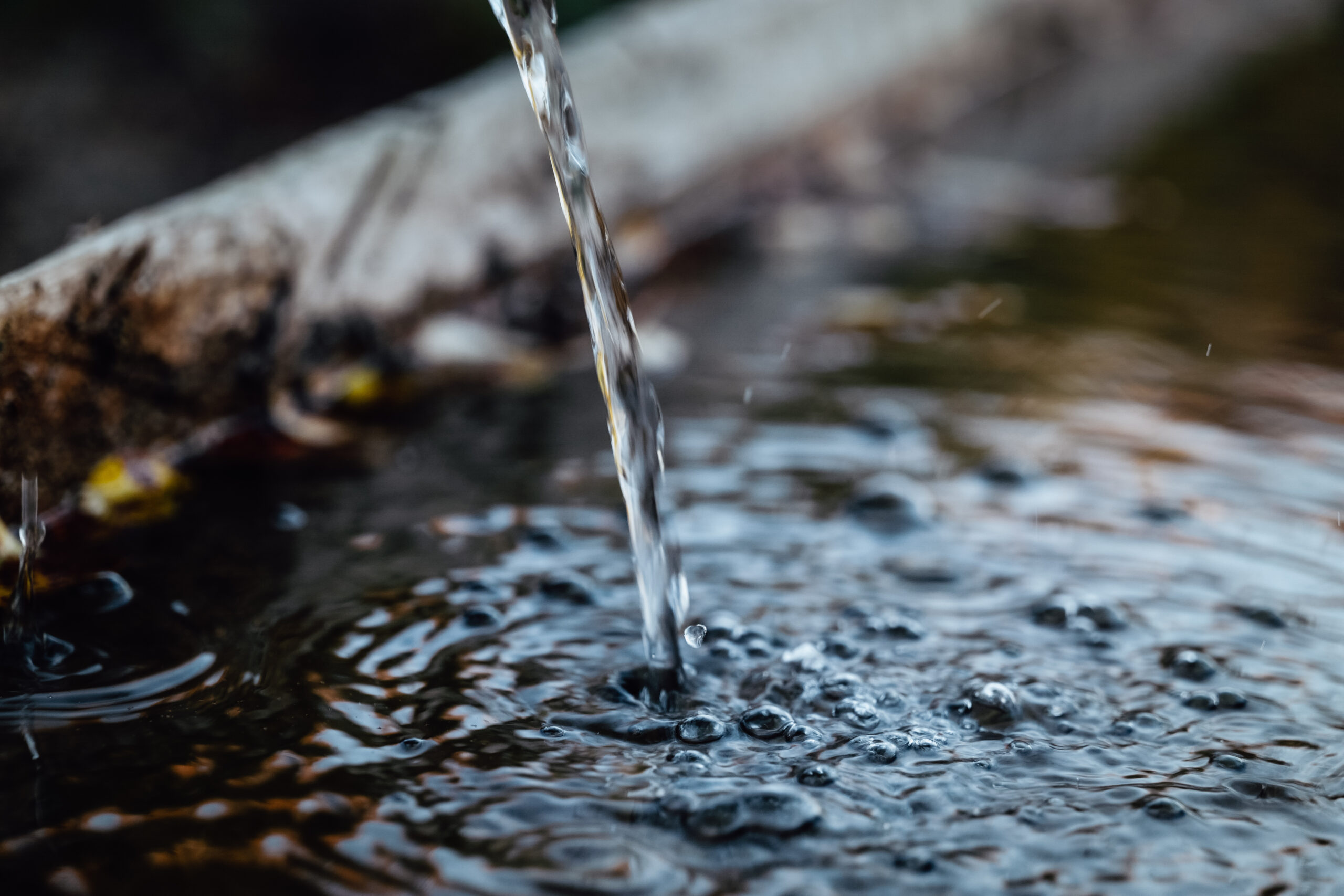
This springwater site boasts abundant water volume and maintains stable water temperatures year-round, making it a precious water source for surrounding farmland and supporting regional agriculture for generations. While Tochigi Prefecture has springwater sites like Shoninzawa Springwater and Derugihara Bentendo Pond that have been selected as Japan’s top 100 waters, Okanjichi Springwater Pond likewise serves as an equally important water resource for the community.
History and Origin of Okanjichi Springwater Pond
The Name’s Origin and Mystery of Character Representation
The origin of the name “Okanjichi” has multiple legends passed down in the region. One theory suggests it derives from a place once called “Okanchi” (御感地), a special land in this area, while another theory claims it comes from “Okanjichi” (御勘地), related to the veneration of a water deity.
Otawara City’s official website represents it as “Okanjidji” with a voiced sound, though some local areas call it “Okanjichi” with an unvoiced sound. This variation in representation also reflects the depth of the region’s history. Research continues on the precise kanji representation through investigation of old documents and interviews with local elders, making it one of interesting themes in local historical research.
History as Agricultural Water Source
The Tomike District of Otawara City has long been an agricultural area, with Okanjichi Springwater Pond functioning as the lifeline supporting that agriculture. The springwater maintains stable temperatures throughout the year and resists freezing even in winter, making it ideal water for cultivating rice paddies and other crops.
Local farmers have managed this springwater carefully across generations, working to maintain water channels and preserve water quality. In modern times, this tradition continues, with regular cleaning activities and environmental conservation efforts carried out by the community.
Importance as a Habitat for Itoyou
Designated as a Municipal Natural Monument of Otawara City
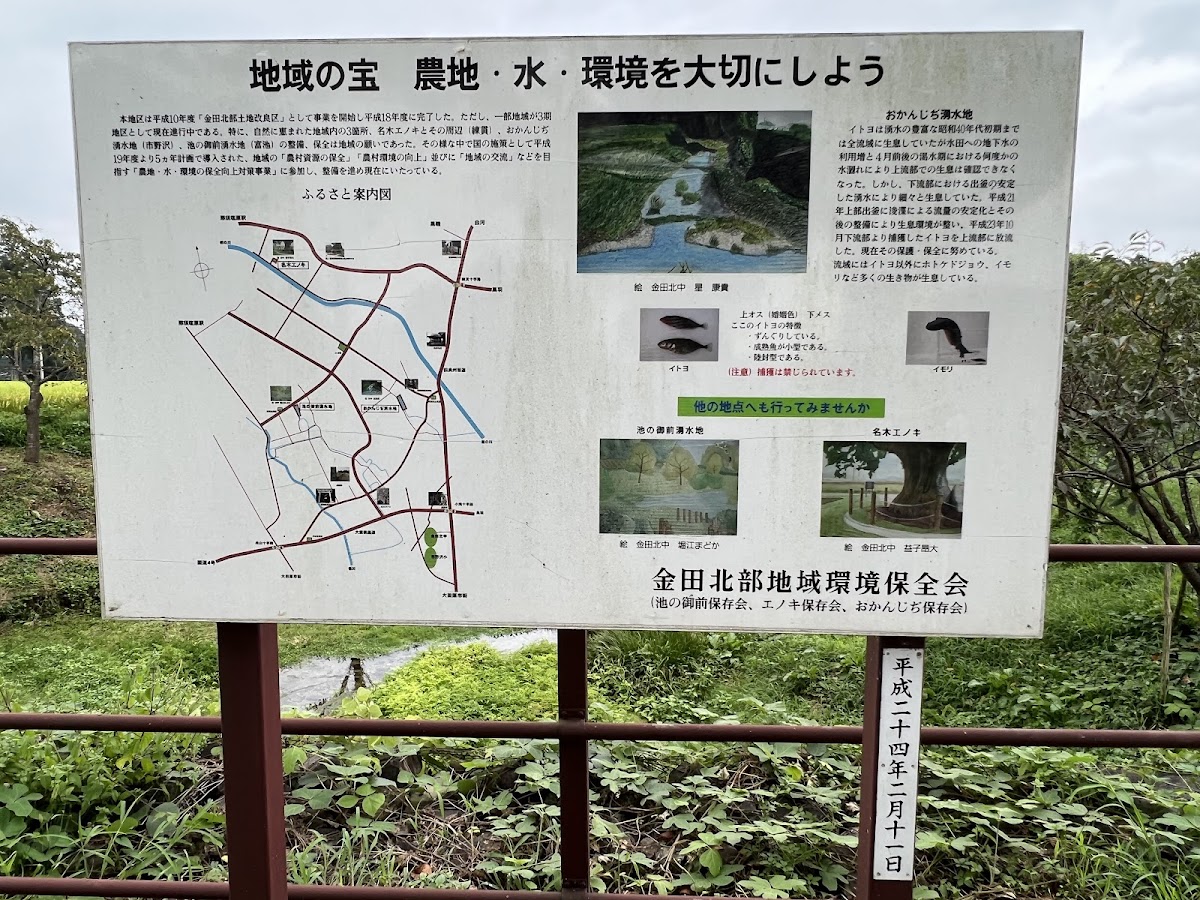
The greatest characteristic of Okanjichi Springwater Pond is that it is home to the rare freshwater fish “Itoyou.” The Itoyou is a fish that prefers cool, clean water, and its habitats are limited. To protect this precious ecosystem, Otawara City has designated the area around Okanjichi Springwater Pond as a natural monument as a habitat for Itoyou.
What is the Itoyou?
The Itoyou (糸魚) is a small freshwater fish belonging to the Gasterosteidae family, typically measuring 5-8 centimeters in length. It is known for possessing multiple spines on its back and displaying vibrant red coloration in males during the breeding season.
The most notable characteristic of the Itoyou is the distinctive reproductive behavior where males build nests using water plants and attract females to spawn. Males dedicatedly guard the eggs until they hatch, continuously creating water currents with their pectoral fins to provide fresh water. This behavior is recognized as particularly advanced parenting behavior among fish.
Conditions of the Living Environment
For Itoyou to inhabit an area, the following stringent environmental conditions are necessary:
- Water Temperature: Cool water temperature of approximately 15-18 degrees Celsius year-round
- Water Quality: High dissolved oxygen levels and clean water quality
- Water Flow: An environment with moderate water currents
- Aquatic Plants: The presence of water plants necessary for nest building
- Substrate: Clean bottom substrate with a mixture of sand and small stones
Okanjichi Springwater Pond provides a precious environment meeting all these conditions, serving as one of the few stable habitats for Itoyou in Tochigi Prefecture.
Water Quality and Characteristics of Okanjichi Springwater Pond
Springwater Mechanism
The water in Okanjichi Springwater Pond comes from rain and snow that fell on the surrounding mountains, seeping underground and being naturally filtered through geological layers over a long time before surfacing. This natural filtration system gives the springwater high transparency and abundant minerals, making it high-quality water.
Otawara City is located at the downstream edge of the Nasuno Plain alluvial fan, with geological conditions ideal for springwater generation. At the downstream edge of an alluvial fan, groundwater flowing through the fan tends to surface, and this region contains multiple springwater sites.
Water Quality Characteristics
Okanjichi Springwater Pond’s water possesses the following characteristics:
- Transparency: Extremely high transparency allowing visibility to the pond bottom
- Water Temperature: Stable at approximately 14-16 degrees Celsius year-round
- pH: Neutral to slightly alkaline
- Hardness: Soft to moderately hard water with appropriate mineral content
- Dissolved Oxygen: Rich in oxygen
This stable water quality enables the inhabitation of aquatic life including Itoyou and other organisms.
Okanjichi River and Surrounding Water Systems
Flow of Okanjichi River
The water flowing from Okanjichi Springwater Pond is called “Okanjichi River,” nourishing surrounding farmland as it flows downstream. This river passes through the Ichino Sawa District and eventually joins the Naka River system.
Along Okanjichi River, traditional waterways and stone-built embankments remain, conveying the history of water use in the region. Walking along the river allows one to observe small fish and aquatic insects inhabiting the clear stream, and it holds value as a site for nature observation.
Role as Agricultural Water Channel
Water diverted from the springwater pond serves as important infrastructure supplying water to surrounding rice paddies and fields. Particularly for rice cultivation, stable water supply is essential from transplanting through harvest, made possible by the abundant water volume of Okanjichi Springwater Pond.
Local farmers jointly maintain water channels and regularly conduct cleaning and fair water distribution through their traditional water management associations. This traditional activity strengthens community bonds.
Surrounding Natural Environment and Ecosystem
Riparian Vegetation
Surrounding Okanjichi Springwater Pond, one can observe rich riparian vegetation. Emergent plants such as reeds and cattails, wetland plants such as skunk cabbage and Japanese parsley grow, creating seasonal landscapes.
In spring, various wildflowers bloom at the water’s edge; in summer, lush vegetation covers the waterside. In autumn, reflected fall foliage creates beautiful scenes, and in winter, the warmth of the springwater creates mist rising into a fantastical snowy landscape.
Diversity of Aquatic Life
Beyond Itoyou, diverse aquatic life inhabits Okanjichi Springwater Pond and its surrounding area:
- Fish: Loaches, crucian carp, bitterling and other freshwater fish
- Amphibians: Frogs and newts
- Aquatic Insects: Dragonfly nymphs (naiads), diving beetles, water scorpions, etc.
- Crustaceans: Crayfish, freshwater shrimp, etc.
- Mollusks: Freshwater snails, Japanese freshwater snails, etc.
These organisms form a food chain, maintaining a healthy riparian ecosystem.
Bird Watching Spot
The rich riparian environment attracts numerous wild birds. Water birds such as kingfishers, herons, and ducks can be observed searching for food or resting. Particularly in winter, ducks migrating from northern regions can be seen overwintering in the springwater pond, making it a hidden gem for birdwatching.
Access and Visiting Information
Location and Basic Information
Address: 〒324-0004 Tomike, Otawara City, Tochigi Prefecture
Access Methods:
- By Car: Approximately 15 minutes from “Nishinasushiobara IC” on the Tohoku Expressway, approximately 20 minutes from “Yaitaita IC”
- Public Transportation: Approximately 15 minutes by taxi from “Nishinasushiobara Station” on the JR Tohoku Main Line
Parking and Facilities
Okanjichi Springwater Pond is a small springwater site with no dedicated parking lot or tourism facilities. When visiting, please avoid roadside parking so as not to disturb neighboring residents, considering instead the use of nearby public parking lots or walking access.
Notes for Visitors
When visiting Okanjichi Springwater Pond, please keep the following points in mind:
- Consideration for Private Property: Much of the surrounding area consists of farmland and private property; do not enter without permission
- Ecosystem Protection: Do not capture Itoyou or other organisms, nor damage the environment
- Trash Disposal: Always take trash with you and do not pollute the natural environment
- Water Quality Preservation: Do not allow detergents or chemicals to enter the springwater
- Safety Management: The waterside is slippery; take care with footing. Particularly when with children, do not take your eyes off them
- Regarding Drinking: It is recommended to boil natural springwater before drinking
Best Seasons for Viewing
Okanjichi Springwater Pond can be visited year-round, with different attractions in each season:
- Spring (April-May): Riparian plants leaf out, and active Itoyou breeding behavior can be observed
- Summer (June-August): A lush environment provides cool respite, though vegetation may make observation difficult
- Autumn (September-November): Beautiful fall foliage and high water transparency. Mild weather makes it ideal for visiting
- Winter (December-March): Mist rising from warm springwater creates a fantastical scene. Suitable for bird observation
Surrounding Tourist Spots
Other Attractions in Otawara City
When visiting Okanjichi Springwater Pond, it is recommended to also tour other sightseeing spots in Otawara City:
Otawara Castle Ruins: A castle site in the city center, now developed as a park. In spring, it is a famous cherry blossom viewing spot drawing many visitors.
Kurogane Basho Museum: A museum in the Kurogane District where poet Matsuo Basho stayed for 14 days during his “Journey to the Deep North” journey. One can learn about Basho’s connection to the region.
Nasu Yoichi Legend Museum: A facility conveying legends of Nasu Yoichi, who was active in the Genpei War. Otawara City is known as a place with historical connections to Nasu Yoichi.
Other Famous Water Spots in Tochigi Prefecture
Tochigi Prefecture has many other attractive springwater sites:
Shoninzawa Springwater (Shioya Town): A premier springwater site in the prefecture selected for the Ministry of Environment’s Japan’s Top 100 Waters. It boasts abundant water volume of 65,000 tons daily.
Derugihara Bentendo Pond (Sano City): Known as the “Kanto version of Monet’s Pond” for its high transparency. Also selected for Japan’s Top 100 Waters.
Atagofukushin Water (Nasu Town): Springwater from the precincts of Nasuonsen Shrine, traditionally revered as sacred water.
Regional Conservation Activities and Future Challenges
Conservation Activities by Local Residents
To preserve the environment of Okanjichi Springwater Pond, local residents engage in various conservation activities. Regular cleaning events, cooperation with water quality surveys, and monitoring of Itoyou populations are ongoing community-wide efforts to protect this precious natural environment.
Otawara City provides legal protection by designating it as a municipal natural monument while also utilizing it as an environmental education site. Local elementary schools visit Okanjichi Springwater Pond to observe Itoyou and conduct water quality surveys, conveying to children the importance of the region’s nature.
Environmental Conservation Challenges
Conversely, challenges exist surrounding Okanjichi Springwater Pond:
- Development Pressure: Potential impacts on springwater volume and quality from residential development and agricultural land conversion in surrounding areas
- Invasive Species: Concerns about invasive species like American crayfish threatening native ecosystems
- Climate Change: Potential reduction in springwater volume from changes in precipitation patterns
- Lack of Successors: Declining number of farming successors due to aging farmers, reducing water channel management personnel
- Low Recognition: Limited external awareness makes it difficult for conservation understanding to spread
To address these challenges, cooperation among government, local residents, researchers, and visitors is necessary to build a sustainable conservation system.
Cultural Value of Okanjichi Springwater Pond
Community Life and Water
Okanjichi Springwater Pond is not merely a natural resource but also a cultural asset deeply connected to the lives of local people. Beyond its practical value as agricultural water, it is an important element forming local identity.
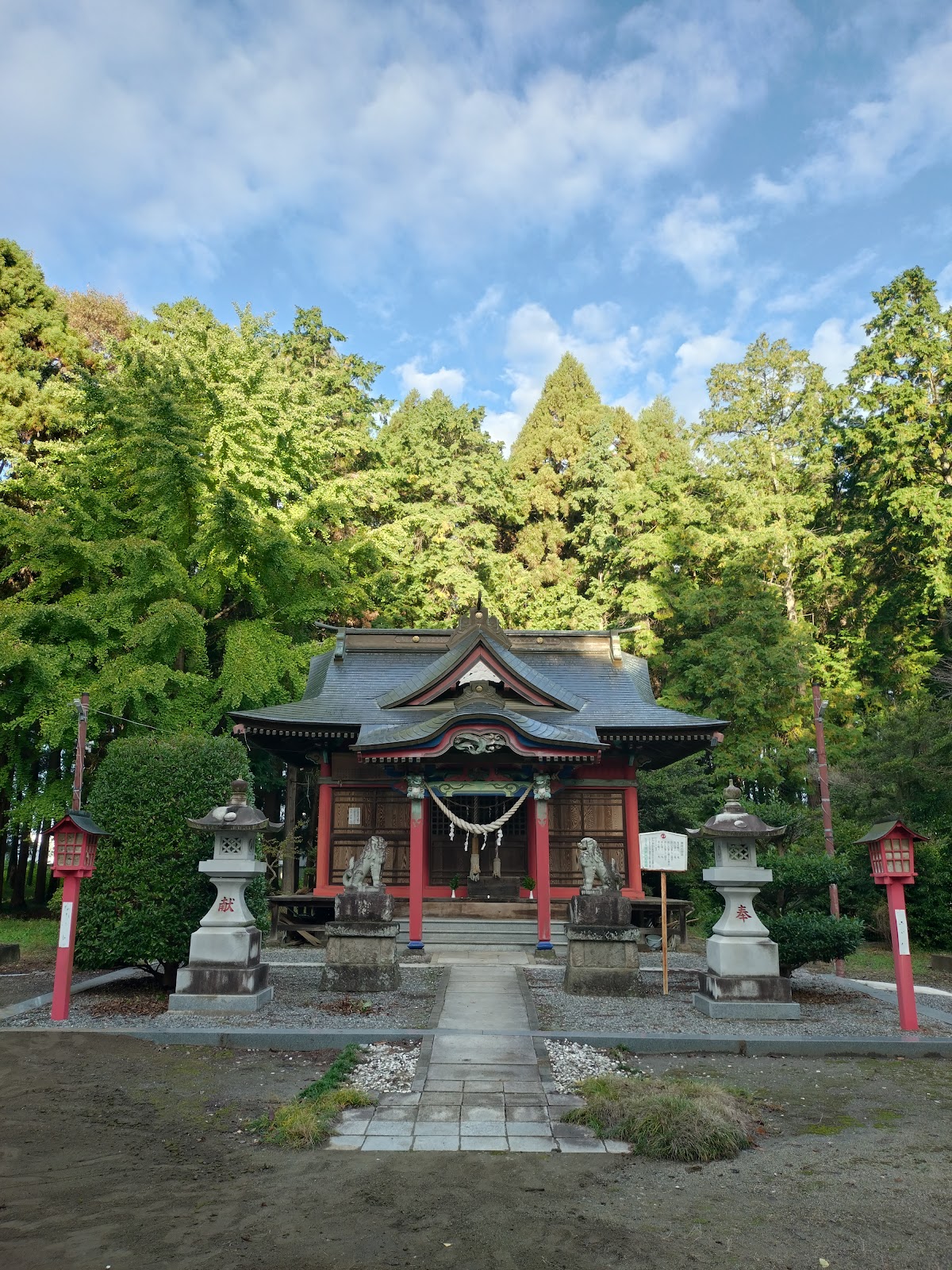
Traditionally, water has been revered as the source of life, with water deity worship seen in many regions. Around Okanjichi Springwater Pond, a culture of gratitude for water and prayer for water’s blessings has been passed down, with traces visible in local festivals and events.
Transmission to Future Generations
It is our responsibility as people living in modern times to pass on such regional treasures as Okanjichi Springwater Pond to the next generation. Through environmental education, conveying the importance of nature to children, seeking sustainable usage methods, and preserving these natural environments together with regional history and culture are essential undertakings.
Otawara City actively utilizes Okanjichi Springwater Pond as educational material for learning about local natural environments. By actually visiting the springwater site, observing Itoyou, and investigating water quality, children gain living knowledge not found in textbooks.
Conclusion: Continuing to Protect a Regional Treasure
Okanjichi Springwater Pond in the Tomike District of Otawara City, Tochigi Prefecture, is a precious natural environment with multifaceted value: abundant springwater volume, a habitat for the rare Itoyou, and a water source supporting regional agriculture. Though not as widely known as springwater sites like Shoninzawa Springwater or Derugihara Bentendo Pond selected for Japan’s Top 100 Waters, it is irreplaceable to the community and has been carefully protected for generations.
The unique name “Okanjichi” and the mystery of its precise character representation speak to the depth of this springwater site’s history. Through the dedicated conservation efforts of local residents, clear water continues to spring forth, and Itoyous quietly make their home.
Should you have the opportunity to visit Okanjichi Springwater Pond, please observe the natural environment and culture with respect and care. You will surely sense the Itoyous swimming in the transparent water, seasonal flowers blooming at the water’s edge, and above all, the feelings of those who have continued to protect this environment.
By understanding the importance of natural environments and cooperating in conservation efforts to the extent we can, we can pass on regional treasures like Okanjichi Springwater Pond to the future. We earnestly hope that this small springwater site in Otawara City, Tochigi Prefecture, will continue to support regional agriculture, nurture a precious ecosystem, and bring refreshment to people’s hearts.
※When visiting, it is safer to boil natural springwater before drinking. Also, take sufficient precautions regarding water-related dangers and hazardous organisms. Respect the region’s natural environment and people’s lives, and enjoy responsibly while following proper etiquette.