Complete Guide to Nakaike Spring (Fukui Prefecture) | Exploring the Wetland Ecosystem and the Mystery of Bag-shaped Buried Valleys
Just 2 kilometers northeast of the city center of Tsuruga, Fukui Prefecture, there is a rare natural environment unparalleled in Japan. This is the “Nakaike Wetland.” This wetland is an approximately 25-hectare inland low-lying wetland formed in a basin-like terrain surrounded by three low mountains—Tentozan, Hachifukusan, and Kinomeyama—and was internationally recognized as a Ramsar Convention wetland in July 2012.
This article provides a comprehensive explanation from all angles, including the geographic and ecological characteristics of Nakaike Wetland, the rich biodiversity that thrives there, and information you should know before visiting.
What is Nakaike Wetland? A Natural Treasure Born from Unique Topography
The Rare Topography of Bag-shaped Buried Valleys
The most distinctive feature of Nakaike Wetland lies in its topography. This wetland is a typical example of a “bag-shaped buried valley (fukuro-jō maisekkoku),” an extremely rare landform in Japan. A bag-shaped buried valley refers to a valley terrain surrounded by mountains where the outlet is blocked by sediment, and thick deposits accumulate inside.
At Nakaike Wetland, a peat layer reaching depths of approximately 40 meters has been confirmed, and within this peat layer, plant remains and pollen spanning approximately 40,000 years are preserved. This is highly valued academically as an extremely valuable “natural archive” for understanding past climate change and vegetation change on the Japan Sea side.
A Miraculous Wetland Adjacent to the City Center
While located just 2 kilometers from JR Tsuruga Station and in proximity to the city center, it is surrounded by mountains, creating a space of silence as if time had stopped. This excellent location is highly valued as a site for environmental education and nature observation, and is widely utilized by local residents and school education.
The fact that such rich nature remains in a place so close to the heart of Tsuruga, a port town facing the Japan Sea, is truly miraculous.
The Rich Biodiversity of Nakaike Wetland
A Paradise of Over 3,000 Species of Flora and Fauna
More than approximately 3,000 species of flora and fauna have been confirmed at Nakaike Wetland. This number is astounding when considering the limited area of just 25 hectares. Many endangered species are included, and the area has attracted attention from home and abroad as a biodiversity hotspot.
The Sacred Land of Dragonflies: Over 70 Species Confirmed
Particularly noteworthy is the diversity of dragonflies. Over 70 species of dragonflies have been confirmed at Nakaike Wetland, a figure equivalent to approximately one-third of all dragonfly species confirmed in Japan. The wetland’s unique environment enables the habitation of various dragonfly species.
From spring to summer, you can observe brightly colored damselflies and clubtails, and in autumn, red dragonflies, with different dragonfly species visible depending on the season. For dragonfly enthusiasts, this is truly a sacred place.
A Treasure Trove of Aquatic Organisms
Small streams and waterways are home to abundant aquatic organisms such as medaka and water beetles, which were once found throughout Japan but have been rapidly disappearing in recent years. These organisms are evidence of good water quality and proper environmental management.
On summer nights, you can witness the fantastical sight of fireflies glowing as they fly about, evoking nostalgic images of traditional Japan.
Plant Communities Unique to Wetlands
Nakaike Wetland is home to numerous rare plants adapted to wetland environments, including skunk cabbage, fringed orchid, and bogbean. In spring, flowers bloom across the wetland, delighting visitors.
Additionally, communities of emergent plants such as reed and cattail serve as habitats for many wild birds and insects, playing an important role in supporting the entire ecosystem.
The Value of Ramsar Convention Wetland Status
Registration in 2012 and Its Significance
Nakaike Wetland was formally registered as a Ramsar Convention wetland on July 3, 2012. The Ramsar Convention is commonly known as the “Convention on Wetlands of International Importance Especially as Waterfowl Habitat,” with the objective of conserving and wisely using globally important wetlands.
There are currently over 50 Ramsar Convention wetlands in Japan, and Nakaike Wetland was registered particularly because of its high biodiversity and the value of paleoclimate research through its peat layer.
International Evaluation Standards
The main reasons Nakaike Wetland was recognized as a Ramsar Convention wetland are as follows:
- High biodiversity: Over 3,000 species of flora and fauna inhabit a limited area
- Habitat for endangered species: Numerous endangered species have been confirmed
- Unique topography: A bag-shaped buried valley, a geologically valuable landform
- Value for paleoenvironmental research: A peat layer spanning 40 meters records environmental changes over the past 40,000 years
- Educational value: Close to the city center and usable as a site for environmental education
As Part of Echizen-Kaga Kaigan Quasi-National Park
Nakaike Wetland was additionally designated as part of Echizen-Kaga Kaigan Quasi-National Park in 2012. This resulted in legal protection based on the Natural Parks Act, ensuring more secure preservation from development.
Echizen-Kaga Kaigan Quasi-National Park extends along the Japan Sea coast from Fukui to Ishikawa Prefecture. The inclusion of an inland wetland such as Nakaike further enhances the ecological diversity of the park as a whole.
The History of Nakaike Wetland and Human Activities
Erstwhile Agricultural Use
Nakaike Wetland was formerly used as paddy fields. Rice cultivation was practiced using abundant water flowing from the surrounding mountains, supporting the livelihoods of local people. Paradoxically, this long-term agricultural use resulted in maintaining the wetland environment and preserving the habitat for diverse organisms.
A History of Conservation Activities
Beginning in the 1990s, the ecological value of the wetland came to be recognized, and local residents, NPOs, and the government began cooperating on conservation efforts. While the site faced development threats at one point, dedicated local conservation efforts bore fruit, and the current protection system was established.
Nakaike-ふれあいの里: Interaction Center Between Humans and Nature
Facility Overview
A “Nakaike Interaction Center Between Humans and Nature” has been developed as the main facility for Nakaike Wetland. This facility functions as a visitor center, offering exhibitions where visitors can learn about the wetland’s nature and history, hosting observation sessions and events, and providing information for nature observation.
The facility features exhibition corners with detailed explanations of how Nakaike Wetland came to be and its ecosystem, peat layer sample displays, and seasonal photographs of fauna and flora, making it ideal for acquiring basic knowledge before visiting the wetland.
Boardwalks and Observation Points
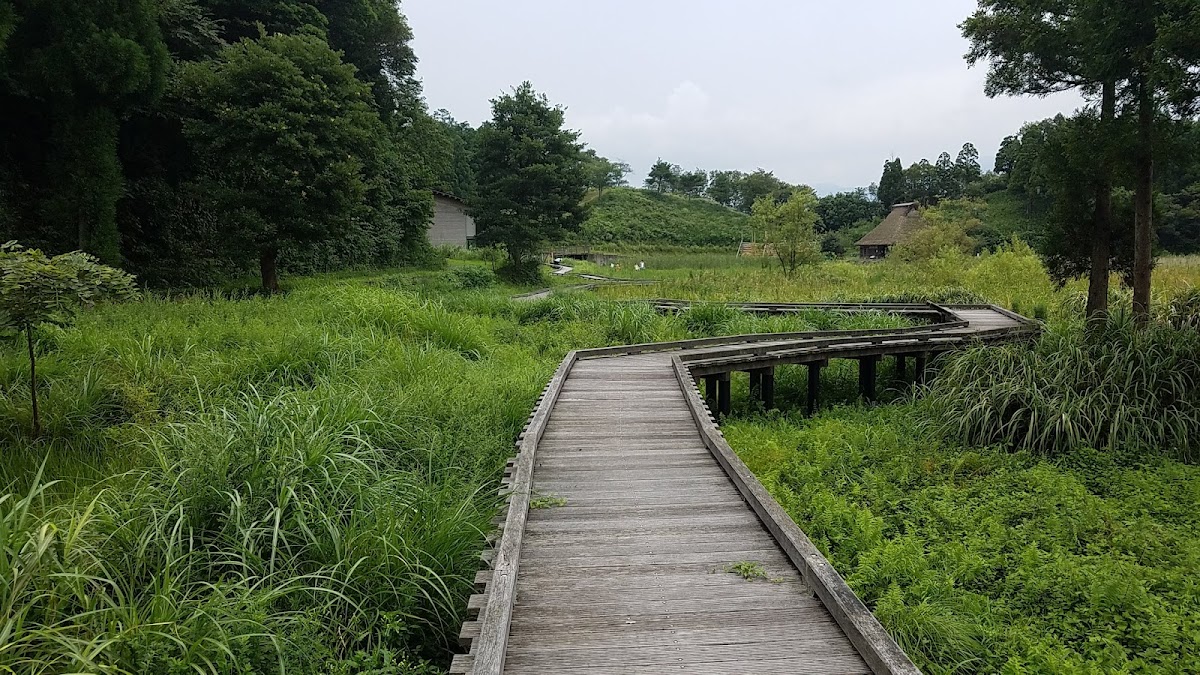
Boardwalks have been constructed within the wetland, allowing nature observation without damaging the wetland environment. Along the boardwalks, explanatory plaques describing animals and plants visible each season have been installed to enable even beginners to enjoy nature observation.
From observation decks, the entire wetland can be viewed, making them ideal for bird watching. Bringing binoculars allows for more detailed observation.
Seasonal Charm
Spring: Season of New Greenery and Flowers
From March to May, Nakaike Wetland is colored with new greenery and flowers. White flowers of skunk cabbage, purple irises, and various wildflowers bloom profusely. Amphibians and insects awakening from winter hibernation also begin their activities, allowing visitors to feel the breath of life.
Summer: Season of Dragonflies and Fireflies
June through August is the ideal season for dragonfly observation. Over 70 dragonfly species appear successively, flying across the wetland. At night, fireflies glow fantastically, allowing visitors to enjoy a summer tradition.
Autumn: Season of Autumn Leaves and Harvest
From September to November, the surrounding mountains are colored by autumn foliage, making this a beautiful season for the landscape surrounding the wetland. Autumn dragonflies such as red dragonflies are also visible, and the wetland functions as a stopover point for migratory birds.
Winter: Season of Silence and Wild Birds
From December to February, winter is the quietest season for the wetland, but it is ideal for observing winter birds. Birds of prey such as northern goshawks and Eurasian sparrowhawks, and waterfowl such as mallards and teals visit, making it a season not to be missed for birdwatchers.
Environmental Conservation Activities and Citizen Participation
The Activities of NPO Nakaike net
The NPO “Nakaike net” plays a central role in the conservation of Nakaike Wetland. This organization conducts wide-ranging activities including wetland conservation, implementation of environmental education programs, support for research surveys, and planning and operation of events.
Volunteer Activities
Regularly held conservation work sessions attract participation from local residents, students, and nature enthusiasts, who engage in activities such as removal of invasive plants, repair of boardwalks, and maintenance of observation paths. Through these activities, many people come to appreciate the value of the wetland and learn the importance of conservation.
Cooperation with Businesses
Companies such as Sumitomo Mitsui Trust Bank also participate in conservation activities at Nakaike Wetland. As part of their corporate social responsibility, companies provide funding and dispatch employee volunteers, drawing attention as a model of public-private collaborative conservation.
Educational Value and Academic Research
As a Site for Environmental Education
Nakaike Wetland is widely utilized for environmental education in elementary and middle schools throughout Tsuruga. Students visit the wetland to conduct nature observation, learning the importance of biodiversity and the necessity of environmental conservation. Its proximity to the city center facilitates educational use.
A Research Field for Universities
Many universities and research institutions use Nakaike Wetland as a field for various research projects. Research themes range widely, including paleoclimate research using peat layers, surveys of biodiversity, and elucidation of wetland ecosystem functions.
These research findings not only serve as scientific basis for wetland conservation but also contribute internationally to climate change research and ecosystem conservation knowledge.
Access and Usage Information
Transportation Access
Public Transportation
- Approximately 2 km from JR Tsuruga Station (about 25 minutes on foot, about 5 minutes by taxi)
- Community bus “Nakaike-guchi” stop, approximately 10 minutes on foot
By Automobile
- About 15 minutes from Tsuruga IC on the Hokuriku Expressway
- Free parking available
Operating Hours and Closed Days
Nakaike Interaction Center Between Humans and Nature
- Operating hours: 9:00–16:30 (varies by season)
- Closed: Mondays (if a holiday, the following day), year-end and New Year’s holidays
- Admission: Free
Observation Etiquette and Requests
When visiting Nakaike Wetland, please note the following:
- Do not leave the boardwalk: To protect the wetland environment, always walk on the boardwalk
- Prohibition of collecting fauna and flora: All plants and animals are protected
- Take your trash with you: Always take your garbage with you
- Observe quietly: Act quietly to avoid surprising wildlife
- Restrictions on bringing pets: Pets are restricted from entry due to ecosystem protection
- Prevention of invasive species introduction: Thoroughly clean mud from your shoes before entering
Nearby Tourist Attractions
When visiting Nakaike Wetland, why not also visit other tourist attractions in Tsuruga?
Kehi Shrine
An ancient shrine known as the guardian shrine of the Hokuriku region, its large torii gate, approximately 11 meters tall, is one of Japan’s three largest wooden torii gates.
Tsuruga Red Brick Warehouse
A tourist facility utilizing a red brick warehouse built in the Meiji period, where visitors can learn about Tsuruga’s history and culture.
Kanegasaki Castle Ruins and Kanegasaki Shrine
Known as a famous cherry blossom viewing spot, it attracts many visitors in spring. It is also a scenic location overlooking Tsuruga Bay.
Ikegochi Wetland
A precious wetland in Tsuruga alongside Nakaike Wetland, also called “the Ozegahara of the West.” If you wish to enjoy visiting multiple wetlands, it is worth visiting as well.
Future Challenges and Perspectives
Response to Climate Change
Global climate change may impact the ecosystem of Nakaike Wetland. Changes in precipitation patterns and temperature rise pose concerns about changes to the wetland environment itself, necessitating long-term monitoring and consideration of adaptation measures.
Countermeasures Against Invasive Species
In recent years, the invasion of invasive plants and animals has become problematic. These cause competition with native species and upset the ecological balance, requiring strengthened systems for early detection and rapid eradication.
Sustainable Conservation Framework
To fulfill international responsibilities as a Ramsar Convention wetland, construction of a long-term sustainable conservation framework is essential. Government, NPOs, corporations, and citizens must cooperate and each fulfill their roles while continuing conservation activities.
Promotion of Ecotourism
To help many people learn about the value of Nakaike Wetland, the promotion of environmentally conscious ecotourism is also important. It is necessary to strike a balance between tourism and conservation while disseminating the appeal of the wetland.
Conclusion: Toward the Future of Nakaike Wetland
Nakaike Wetland, despite its location close to the city center, is a treasure trove of biodiversity where over 3,000 species of fauna and flora thrive. Its unique bag-shaped buried valley topography, a peat layer extending approximately 40 meters, and its value as a Ramsar Convention wetland—all of these make this small wetland globally precious.
Through long-standing conservation efforts by local people, the rich natural environment of today has been preserved. Going forward, to pass this precious natural heritage to future generations, it is important that each of us begins doing what we can.
When visiting Tsuruga, be sure to visit Nakaike Wetland and experience the miraculous nature remaining in proximity to the city. The changing seasonal landscapes of the wetland and encounters with the diverse life that inhabits it will surely become unforgettable memories.
Nakaike Wetland is a place that shows us hope for a future where nature and humanity can coexist. Learning from this small wetland how nature and humans can live together, and putting this into practice, may be what is demanded of us.