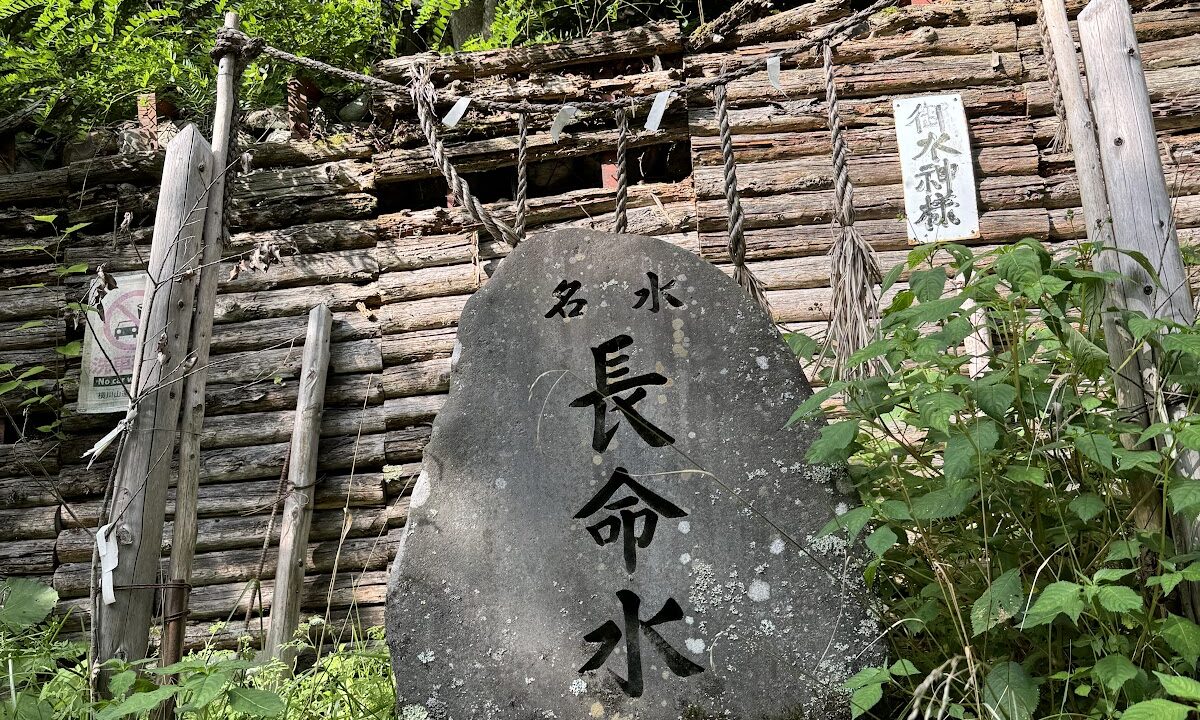
Complete Guide to “Chōmei Water,” the Famous Spring Water of Okaya City, Nagano Prefecture|Thorough Explanation of History, Access, and Water Quality Charm
“Chōmei Water” is a spring that flows from Okaya City in Nagano Prefecture, and as its name suggests, it has long been cherished by local people wishing for longevity. It has also been certified by the Ministry of the Environment as “a representative spring water of Nagano Prefecture,” and is beloved by many as clear water nurtured by the rich nature of Shinshu. In this article, we will comprehensively convey the charm of this famous water, from its historical background to water quality characteristics, access methods, and relationship with the community.
What is Chōmei Water? A Historic Spring Valued by Okaya City
Chōmei Water is a spring located in Okaya City, Nagano Prefecture, and is a water source deeply connected to the lives of local residents. Okaya City is positioned northwest of Lake Suwa and is known as a region rich in nature, surrounded by mountains such as the Yatsugatake mountain range and the Kirigamine Highland. This favorable geography forms the foundation for producing high-quality spring water.
The name “Chōmei Water” derives from the local belief that drinking this water grants longevity. In fact, Nagano Prefecture, including Okaya City, is known as one of Japan’s most longevity-rich prefectures, with clear water, pure air, and a healthy food culture supporting the health of its residents. Chōmei Water can be said to be a symbol of such longevity culture in Shinshu.
Spring Water Recognized by the Ministry of the Environment
Chōmei Water has been officially recognized as one of Nagano Prefecture’s representative spring waters in the survey related to the “Heisei Famous Waters Hundred Selection” conducted by the Ministry of the Environment. This recognition is based on evaluation criteria not only of water quality but also of historical and cultural value in the community and continuity of conservation activities, demonstrating that Chōmei Water meets these conditions as an excellent spring.
Numerous springs exist in Nagano Prefecture, but only a limited number bear names on the Ministry of the Environment’s website. The fact that Chōmei Water is among them speaks to the high value this water source possesses.
History of Chōmei Water and Local Legends
Long-Established Practice of Praying for Longevity
Chōmei Water has been revered as “the water of long life” by local people since the Edo period. At that time, the Okaya region was thriving in the sericulture industry, with many people living in harsh working conditions. In such circumstances, clear spring water was not only a precious domestic water source but also a spiritual support for hoping for health and longevity.
Among local elders, the saying “drinking Chōmei Water every day allows one to live a long life without illness” has been passed down through generations. Before scientific verification advanced, people understood the quality of this water empirically and preserved it carefully.
Water Deity Enshrined and Sacred Pillars
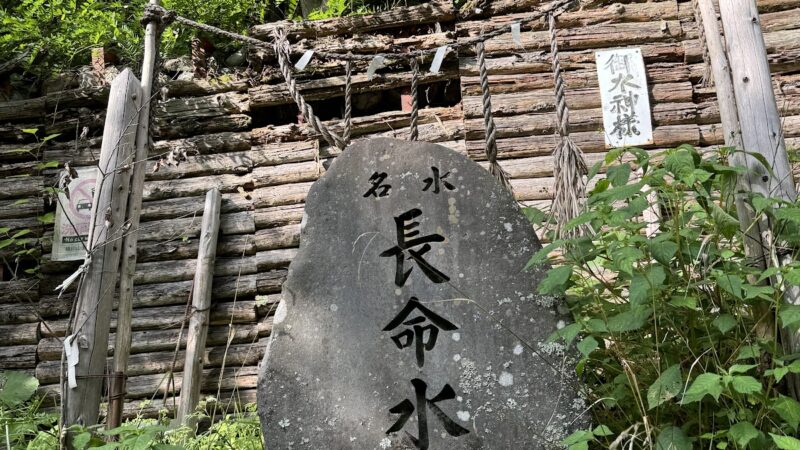
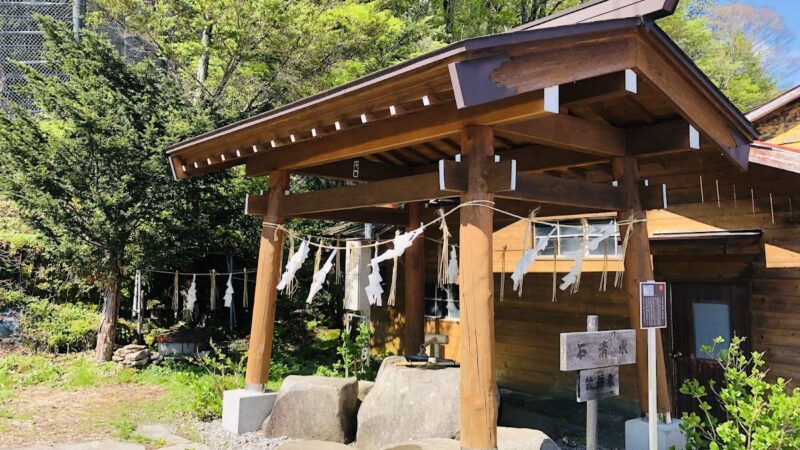
A water deity is enshrined at the water source of Chōmei Water. Water deity beliefs are found in folk religion throughout Japan, but particularly in mountainous regions where water resources are directly connected to life, the practice of venerating water sources and enshrining them with gratitude and reverence remains deeply rooted.
A sacred pillar has also been erected at the Chōmei Water source, reflecting the culture unique to the Suwa region. The Onbashira Festival of Suwa Taisha is held once every seven years (in terms of counting years, every seventh year) and is one of Japan’s three major unique festivals, but in the Suwa region, not only Suwa Taisha but also small local shrines and water sources have the custom of erecting sacred pillars. The sacred pillar at Chōmei Water indicates that this water source is not merely a natural resource but a central element of the region’s faith and culture.
Water Quality and Characteristics of Chōmei Water
Components of Clear Spring Water
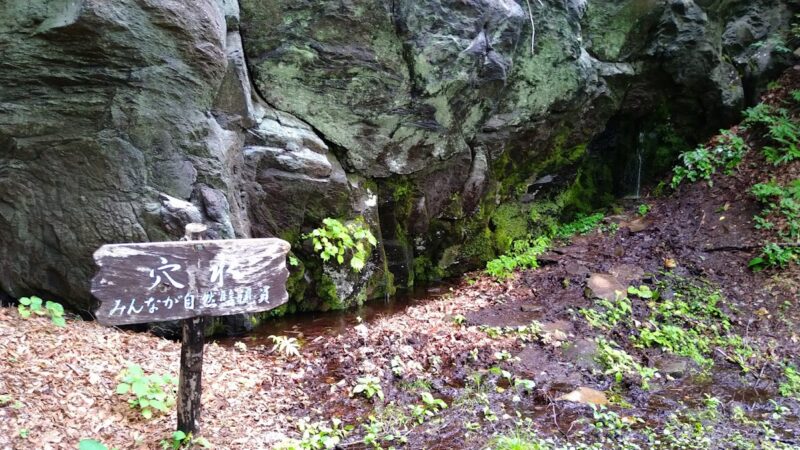
Chōmei Water is groundwater formed by rain and snow that fell on mountains such as Yatsugatake and Kirigamine, percolating deep into the earth over many years and flowing out through nature’s filtration. Through this process, the water becomes purified of impurities while simultaneously absorbing an appropriate amount of mineral content from bedrock and soil.
Most spring waters in Nagano Prefecture are soft water, and Chōmei Water is no exception. Soft water is said to have a mellow mouthfeel that suits Japanese taste. It also has the characteristic of bringing out the flavor of dishes and beverages, and this difference can be realized when used for tea, coffee, and rice cooking.
Stable Water Temperature Throughout the Year
One of the major characteristics of spring water is that its temperature remains stable throughout the year. Chōmei Water maintains a temperature that feels cold in summer and relatively warm in winter. This is because groundwater flows through deep underground and is less affected by external air temperature.
This stable water temperature also plays an important role in maintaining water quality. Without sudden temperature fluctuations, abnormal microbial proliferation is unlikely to occur, and a consistently clean state is easily maintained.
Role as a Water Source for Okaya City’s Water Service
In addition to Chōmei Water, Okaya City has other springs such as Odai water source and Kosaka water source, which have played important roles as the city’s water supply sources. In particular, the Odai water source has been used for water service since 1926 and has a history of supporting citizens’ lives for many years.
In Okaya City’s water service business, these high-quality water sources are utilized to provide safe and reliable tap water. The city’s water supply penetration rate is 99.7%, which is very high, with nearly all citizens enjoying stable water service. Springs like Chōmei Water are precious resources supporting Okaya City’s water infrastructure.
Access to Chōmei Water and Location
Location and Basic Information
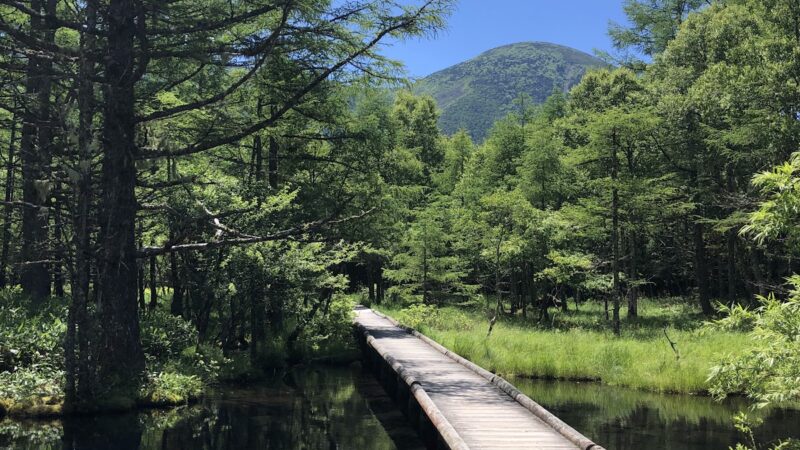
Chōmei Water is located in a mountainous area within Okaya City. Although it is somewhat removed from the city center, it is accessible by well-maintained roads. The area around the water source is a nature-rich environment, offering quiet healing time to visitors.
Basic Information
- Location: Okaya City, Nagano Prefecture
- Access: Approximately 15–20 minutes by car from Okaya city center
- Parking: Parking spaces available nearby
- Hours of Use: No particular restrictions (however, visits at night are not recommended)
- Fee: Free
Access by Car
Car access is the most convenient way to reach Chōmei Water. From the Okaya Interchange on the Chuo Expressway, arrival takes approximately 20 minutes. Searching for “Chōmei Water” on car navigation or map apps will display the exact location.
The route includes sections through mountainous areas, so special caution regarding road freezing is necessary, particularly in winter. It is recommended to install studless tires and check weather information in advance.
Access by Public Transportation
When using public transportation, JR Chuo Main Line’s Okaya Station is the nearest station. From the station, one would need to use route buses or taxis, but as there are limited bus routes that go directly near the water source, it is recommended to check the latest transportation information in advance at Okaya City’s tourism information center or similar facilities.
Nearby Tourist Attractions
By visiting nearby tourist attractions when visiting Chōmei Water, you can experience the charm of Okaya City more deeply.
Lake Suwa
Okaya City faces Lake Suwa, with walking trails and parks developed along the lakeside. Particularly in winter, a natural phenomenon called “Shintatsutai” may be observed, attracting many tourists.
Okaya Silk Museum
Okaya City was once a center of the sericulture industry, called the “Silk Capital.” This museum allows visitors to learn about that history and culture.
Suwa Taisha
A representative shrine of the Suwa region, comprising four shrines: Kamisha Honmiya, Kamisha Maemiya, Shimoshya Harumiya, and Shimoshya Akimiya. This is a historic shrine famous for the Onbashira Festival.
Usage Methods for Chōmei Water and Precautions for Taking It Home
Basic Etiquette for Drawing Water
Chōmei Water is a precious resource of the region, and a public water source used by many people. When visiting to draw water, it is important to observe the following etiquette.
- Use clean containers: Bring a container that has been thoroughly washed beforehand. Dirty containers can contaminate the water source.
- Draw only what is necessary: Avoid drawing excessively large amounts of water. Consideration for other users is also necessary.
- Keep the water source area clean: Always take garbage away and avoid contaminating the water source area.
- Respect the order: During congestion, respect the order and practice a spirit of consideration.
- Show gratitude to the water deity: A water deity is enshrined at the water source. Use it with a sense of gratitude.
Storage Methods for Water Taken Home
After bringing Chōmei Water home, you can preserve its flavor and safety by storing it properly.
Basic Storage
- Place in a clean container and close the lid securely
- Store in a cool, dark place or refrigerator
- Drink soon after opening (within 2–3 days is the guideline)
- Avoid direct sunlight
- Avoid high temperature and humidity
Since spring water is not treated with chlorine disinfectant, the home storage period should be set relatively short. Particularly in summer, it deteriorates easily, so refrigerated storage should be strictly maintained.
Precautions When Drinking
Chōmei Water has a long track record of being consumed locally, but as it is natural spring water, the following points require attention.
- When drinking for the first time: Some people’s body types may not suit it. Start with a small amount first.
- Use for infants: For infants whose immune systems are not fully developed, it is recommended to boil before use.
- During illness: If symptoms such as diarrhea or abdominal pain occur, immediately stop use and consult a medical institution if necessary.
- Regular water quality testing: Regular water quality testing is conducted in the community, but water quality may fluctuate due to changes in the natural environment.
Chōmei Water and Okaya City’s Water Service Business
Okaya City’s Water Source Management System
Okaya City positions spring waters including Chōmei Water as precious water resources and strives for appropriate management and conservation. The city’s water service division has formulated the “Okaya City Water Safety Plan,” implementing consistent water quality management from source to tap.
This plan defines comprehensive measures for safe water supply, including water source conservation, water purification, water distribution management, and water quality testing. Spring waters like Chōmei Water occupy a particularly important position in the city’s water service system and are subject to continuous monitoring and protection.
Division of Roles among Water Sources
Okaya City’s water service business achieves stable water supply by combining multiple water sources.
Main Water Sources
- Hanaoka water source: Utilizing groundwater, planned intake of 2,500 cubic meters per day
- Odai water source: Utilizing spring water, planned intake of 1,700 cubic meters per day
- Kosaka water source: Utilizing spring water, planned intake of 300 cubic meters per day
These water sources support stable water supply to citizens while each making the most of their characteristics. Spring waters including Chōmei Water form the foundation of Okaya City’s water infrastructure.
Efforts in Water Quality Management
In recent years, public interest in the safety and taste of tap water has increased. Okaya City’s water service business conducts detailed water quality testing exceeding legally required test items on a regular basis to respond to this.
Test items include general bacteria, coliform bacteria, pH value, turbidity, odor, taste, and color degree, covering a wide range of items related to the safety and comfort of tap water. These test results are published on the city’s website, creating an environment where residents can use tap water with confidence.
Community Initiatives Utilizing Chōmei Water
Water Source Conservation Activities
To maintain Chōmei Water’s water quality, conservation of the surrounding water source area is essential. Local residents, citizen groups, and government cooperate in conducting regular cleaning activities and environmental improvement.
Particularly important is the protection of water source forests. Forests are also called “green dams,” serving the role of storing rainwater and allowing it to seep slowly underground. If this function is impaired, water source quantity and quality are directly affected, so appropriate forest management is continuously performed.
Application to Environmental Education
Chōmei Water is also utilized as teaching material in environmental education at local elementary and junior high schools. Students actually visit the water source, conduct water quality surveys, and observe surrounding environments, learning about the importance of water resources and the conservation of natural environments through these experiences.
Such experiential learning becomes an important opportunity to foster in the next generation an awareness of protecting the nature of their hometown. Chōmei Water has value not only as a water resource but also as a regional educational resource.
Potential as a Tourism Resource
In recent years, the use of “water” as a tourism resource has spread nationwide. Chōmei Water also holds potential to play an important role in Okaya City’s tourism promotion.
Projects such as “famous water tours” and “spring water excursions” have been gaining popularity alongside increasing health consciousness. The image of “longevity” that Chōmei Water possesses is an attractive element as a tourism product. In the future, development of comprehensive tourism plans combining this with other regional tourist attractions is expected.
Shinshu’s Famous Water Culture and Chōmei Water
Abundant Water Resources Nurtured by Nagano Prefecture
Nagano Prefecture is located in a mountainous region called “the Roof of Japan” and its abundant precipitation and complex terrain create numerous excellent water resources. The prefecture has multiple water sources selected as “Famous Waters Hundred Selection” by the Ministry of the Environment, with Chōmei Water recognized as one of their representative springs.
The characteristic of most water in Nagano Prefecture is that it is soft water. Soft water is well-suited to Japanese cuisine, particularly bringing out the sweetness of cooked rice. Additionally, it preserves the flavor of tea without detriment, and has the effect of reducing the acidity of coffee. These water characteristics have supported Shinshu’s food culture.
Comparison with Other Shinshu Famous Waters
Numerous famous waters besides Chōmei Water exist in Nagano Prefecture.
Kokuyō Water (Nagawa Town)
Super soft water filtered through obsidian with an amazingly clear taste. With exceptionally low hardness, its mellow mouthfeel has become popular.
Tokiwa’s Life Water (Ina City)
Mineral water sourced from deep layers of the Southern Alps, also marketed as a commercial product.
Kiso River Source Water (Kiso Village)
A water source selected as one of the famous waters hundred and positioned at the uppermost part of the Kiso River. Mitsutake Chinese cabbage and Kiso beef raised with this water have become regional specialties.
Each of these famous waters has its own characteristics, with Chōmei Water having unique distinction in possessing the cultural background of “praying for longevity.”
Relationship between Water and Longevity
The factors contributing to Nagano Prefecture being known as a longevity prefecture are multifaceted, with good quality water resources being considered one of them. Clear water supports not only direct consumption but also cultivation of vegetables and grains as well as production of fermented foods such as miso and soy sauce, enhancing overall food culture quality.
The name “Chōmei Water” with its “longevity” meaning is not merely legend but a reflection of empirical wisdom that quality water supports healthy living. Scientific verification remains a future task, but the effects that local people have realized over many years possess undeniable value.
Ways to Enjoy Chōmei Water by Season
Chōmei Water in Spring
Spring is a season of snowmelt, when the water volume of Chōmei Water becomes abundant. New leaves bloom in the surrounding forest, and bird songs resound. The water temperature is still cold, offering a crystalline flavor having overcome winter’s severity.
This season is also mushroom-gathering time. Washing freshly picked wild vegetables in Chōmei Water and tasting them on the spot is particularly special. However, mushroom gathering should follow regional rules, and trespassing on private property without permission should be avoided.
Chōmei Water in Summer
Visiting Chōmei Water on hot summer days provides the cooling sensation of a natural air conditioner. The water source area has abundant shade, with temperatures several degrees lower than the city center, making it ideal as a summer retreat.
Washing your face and hands in the cold spring water refreshes a body tired from heat. Filling a thermos with Chōmei Water and walking nearby hiking courses is also recommended.
Chōmei Water in Autumn
Autumn is the season of autumn colors. The surrounding forest of Chōmei Water also beautifully changes color, and the autumn leaves reflected on the water surface possess painting-like beauty. With the air being clear, the water’s transparency stands out even more.
The water during this season becomes a more drinkable temperature as summer heat subsides. Enjoying Chōmei Water together with autumn’s bounty such as mushrooms and chestnuts has a certain poetic quality.
Chōmei Water in Winter
Winter’s Chōmei Water displays a quiet appearance amidst a snowy landscape. The water source continues to flow without freezing, and sometimes only the surrounding area remains free of snow. This is because groundwater temperature is higher than the outside air.
In winter, road freezing is a possibility, so visiting requires thorough preparation. However, tasting Chōmei Water in the silence covered by snow becomes a special experience unlike other seasons.
Proposals for Living with Chōmei Water
Tea and Coffee
The soft water characteristics of Chōmei Water are ideal for brewing tea and coffee. Green tea allows umami components to be drawn out more easily, resulting in a mellow taste. Its compatibility with delicate-flavored teas such as gyokuro and sencha is particularly exceptional.
Coffee is also improved by brewing with soft water, with acidity suppressed and a better balance of bitterness and richness achieved. Coffee brewed with Chōmei Water allows the bean’s original aroma to stand out.
Cooking and Rice
Using Chōmei Water for cooking rice results in fluffy, naturally sweet rice. Soft water promotes water absorption in rice, allowing heat to pass through evenly to the core.
It is also suitable for simmered dishes and soups, enhancing the flavors of ingredients. Particularly when extracting dashi from kombu and bonito flakes, soft water is said to dissolve umami components more readily.
Beauty and Health
Chōmei Water can be used not only for drinking but also for facial washing and skincare. Soft water is less irritating to the skin, and the tightness felt after washing is reduced.
Additionally, incorporating Chōmei Water into daily hydration can help balance body water. Soft water with good mineral balance is particularly suited for hydration upon waking or after exercise.
The Future of Chōmei Water and Conservation Challenges
Impact of Climate Change
In recent years, changes in precipitation patterns due to climate change are affecting spring waters as well. Extreme heavy rainfall or prolonged drought may disrupt groundwater recharge cycles, potentially causing changes in spring water quantity and quality.
To pass Chōmei Water on to future generations, comprehensive water source management including adaptation strategies to climate change is necessary. Forest conservation, appropriate land use planning, and maintenance of water source recharge functions require multifaceted efforts.
Regional Population Decline and Conservation Activities
Okaya City and other regional cities are experiencing population decline. This also leads to the challenge of insufficient people to conduct water source conservation activities. To continue protecting Chōmei Water, participation from not only regional residents but also people from urban areas and tourists is necessary.
Future challenges will include developing frameworks enabling diverse participants, such as “water source conservation volunteer” and “famous water supporter system.”
Toward Sustainable Use
Chōmei Water is a precious regional resource, but it cannot be used unlimited. The quantity of spring water is subject to natural conditions, so appropriate management and user etiquette are essential for sustainable use.
In the community, regular monitoring of water sources, understanding usage conditions, and where necessary, implementing usage restrictions based on scientific evidence are being advanced. Each individual user’s awareness of using this precious resource carefully leads to protecting Chōmei Water’s future.
Conclusion: The Story of the Community Woven by Chōmei Water
Chōmei Water in Okaya City, Nagano Prefecture, is more than merely a spring. It is an invaluable community resource deeply connected to the region’s history, culture, beliefs, and people’s lives.
As a representative spring water certified by the Ministry of the Environment, its water quality is officially recognized. The history of being cherished locally as “the water of longevity” speaks to the universal truth that quality water supports healthy living. The water source area where the water deity is enshrined and a sacred pillar is erected is part of the cultural landscape of the Suwa region.
Visiting Chōmei Water becomes an experience of encountering Shinshu’s rich nature, touching the region’s history and culture, and realizing the blessings of clear water. When visiting Okaya City, please be sure to stop by Chōmei Water and experience its crystalline taste and the local story dwelling within the water source.
Each of us bears responsibility for cherishing this precious water resource and passing it on to future generations. It is hoped that Chōmei Water will continue to be loved by regional people, provide inspiration to many visitors, and endure forever.