
Kurobe River Alluvial Fan Spring Group Toyama Prefecture | Complete Guide to the Charm and Tourism of Japan’s Top 100 Waters
The Kurobe River Alluvial Fan Spring Group spreading across Kurobe City in Toyama Prefecture is known as one of Japan’s Top 100 Waters selected by the Ministry of the Environment in 1985 (Showa 60). The clear water gushing from one of Japan’s largest alluvial fans, created by the Kurobe River flowing down from the 3,000-meter-class mountains of the Northern Alps, has long supported the lives of local people and nurtured a rich natural environment.
What is the Kurobe River Alluvial Fan Spring Group?
The Kurobe River Alluvial Fan Spring Group is a vast spring water area centered in Kurobe City, Toyama Prefecture, and extending to the adjacent town of Nyuzen. Abundant groundwater springs from the alluvial fan formed by sediment carried over long periods by the Kurobe River, which originates from Mount Washiba and Mount Kurobegoro.
Scale and Characteristics of the Alluvial Fan
The Kurobe River Alluvial Fan boasts the largest size as a typical alluvial fan in Japan, with a distance from apex to toe of approximately 13.5 km and an apex angle of about 60 degrees. With an area of approximately 96 km², it forms a beautiful fan shape with contour lines drawn in an almost circular pattern, which is a major characteristic.
The Kurobe River, which descends rapidly from the steep terrain of the Northern Alps including the Tateyama and Shiokari Ranges, is known as one of the world’s steepest rivers. The massive sediment carried by this rapid current has accumulated over long periods, forming the beautiful alluvial fan of today.
Background of Selection as One of Japan’s Top 100 Waters
Showa Era’s Top 100 Waters
The Kurobe River Alluvial Fan Spring Group was selected as one of Japan’s Top 100 Waters by the Ministry of the Environment (then the Environmental Agency) in March 1985 (Showa 60). This selection aims to introduce clear waters from throughout the country and raise awareness of the importance of water quality conservation.
The selection was highly evaluated for the following reasons:
- The clarity of snowmelt from the Northern Alps naturally filtered through a natural filter for over 100 years
- The scale of the vast spring water area formed at the toe of the alluvial fan
- A history of being used as living water by local residents since ancient times
- The precious natural environment nurtured by spring water (such as the Suwa Sugi of Sugisawa)
Excellent Water as a Tourist Destination
In 2015 (Heisei 27), the Kurobe River Alluvial Fan Spring Group was nominated in the “Excellent Water as a Tourist Destination Category” at the “Top 100 Waters Selection Vote” hosted by the Ministry of the Environment. Its value as a tourism resource has been recognized, not just for water quality alone.
Water Quality and Characteristics of the Kurobe River Alluvial Fan Spring Group
Nature’s Blessings Purified to the Extreme
The water of the Kurobe River Alluvial Fan Spring Group is filtered by a large natural filter made of sand and gravel layers that comprise the alluvial fan, after snow and rain that fell on the Northern Alps seep deep into the ground over 100 years or more.
Through this process, the water becomes a clean state with minimal organic matter while containing appropriate amounts of minerals. Additionally, because it contains much free carbonic acid, it is characterized by a refreshing taste and easy drinkability.
Water Temperature and Spring Discharge Volume
The water temperature of the Kurobe River Alluvial Fan Spring Group remains nearly constant throughout the year, feeling cold in summer and warm in winter. This is due to the characteristics of groundwater, with cold water around 10°C flowing out even in summer, which was once used for supplying steam locomotives.
The spring discharge is also abundant, with the estimated groundwater storage in the entire alluvial fan being massive. Considering that the Kurobe Dam’s storage capacity is approximately 200 million tons, one can understand the enormous scale of groundwater stored in the alluvial fan.
Differences in Water by Location
Interestingly, the water of the Kurobe River Alluvial Fan Spring Group has subtle differences in water temperature and taste depending on where it springs. The spring water in Nyuzen Town is praised for its mellow taste with a hint of sweetness, while the spring water in the Ikuji district is characterized by a crisp flavor.
This is because the water’s dissolved mineral content changes subtly due to differences in the underground path and depth, as well as the geological layers it passes through. Comparing different waters while touring the springs is one of the joys of enjoying the Kurobe River Alluvial Fan Spring Group.
Communal Washing Place Culture in the Ikuji District
Shimizu (Clear Water) and Daily Life
The Ikuji district, located on the left bank of the Kurobe River, is a small port town at the toe of the alluvial fan where the Kurobe River flows into the Japan Sea. In this district, spring water is called “shimizu” (clear water), and has long been used in a manner closely integrated with daily life.
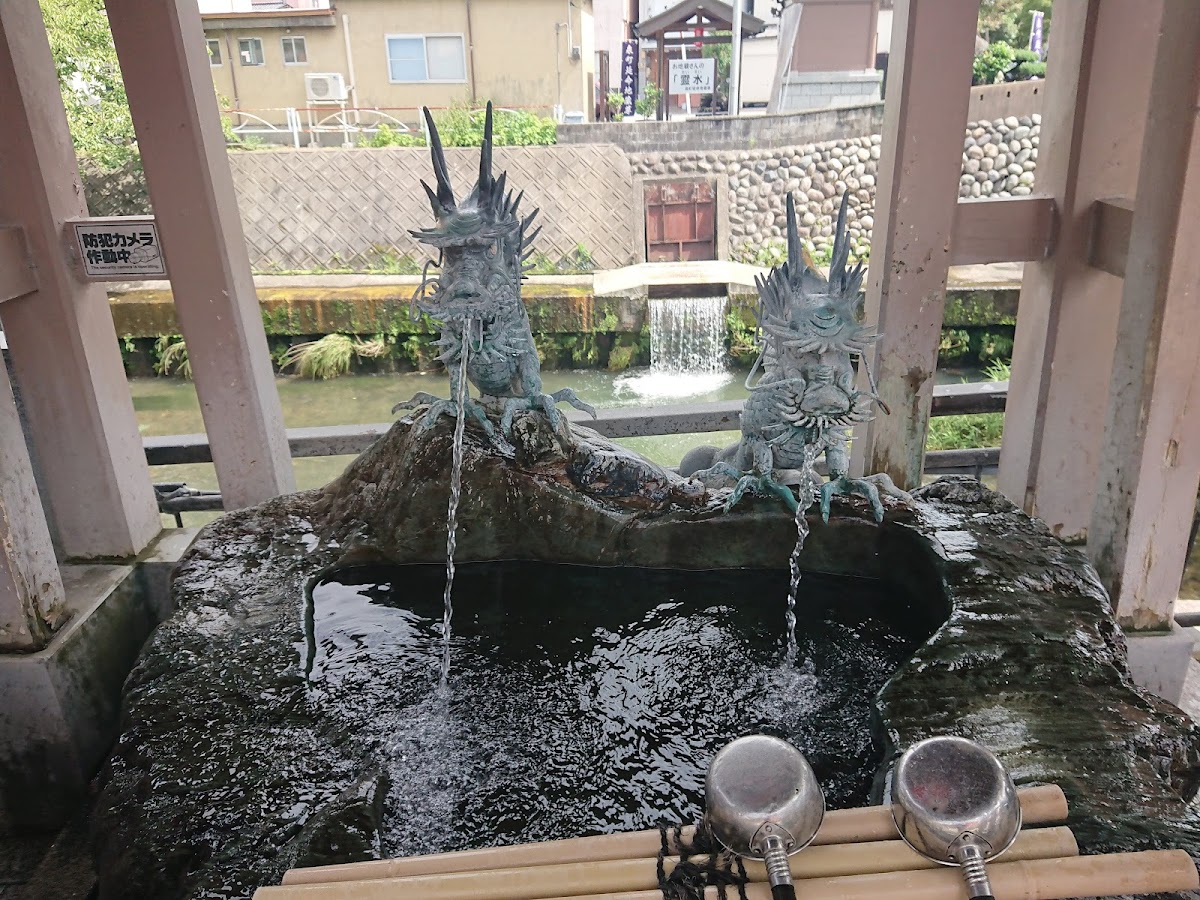
The Ikuji district has more than ten communal washing places set up along roadsides and in alleyways. These washing places are shared facilities for residents to wash vegetables and dishes or use as drinking water, and they continue to be used today.
Major Spring Water Spots
More than 20 spring water spots are scattered throughout the Ikuji district and its surroundings. Here are some representative ones:
Shimizu no Sato (Clear Water Village)
Located in front of Kurobe Station, this is a historic spring water once used for supplying steam locomotives. It is now maintained and easily accessible to tourists.
Iwase Family’s Shimizu
The spring water used by Kaikoku Haruj酒造, known for the local sake “Phantom Waterfall,” in sake brewing. This demonstrates water quality suitable for sake brewing.
Silk Clear Water (Kinu no Shimizu)
Spring water used in tofu making, characterized by a smooth texture like silk as its name suggests.
Ikuji Communal Washing Place Group
Multiple communal washing places scattered throughout the district are carefully maintained by local residents, with beautiful water flowing continuously 24 hours, 365 days a year.
Spring Water and Community
The communal washing places have functioned not merely as water-drawing locations, but also as places for community resident communication. Scenes of people exchanging information while washing and children playing in water remain unchanged today.
To preserve this spring water culture, local residents continue cleaning activities and management, and also call out to tourists about manners such as “drink use at your own risk” and “take your trash with you.”
Sugisawa’s Sawa Sugi and Precious Nature
Natural Environment on the Right Bank
On the right bank of the Kurobe River, in the Sugisawa district of Nyuzen Town, there is a precious natural forest called “Sawa Sugi” (swamp cedar) nurtured by spring water. This is a cedar grove characteristic of spring water environments and is designated as a National Natural Monument.
Sawa Sugi differs from ordinary cedar, featuring a distinctive “kabu-dachi” form where multiple trunks rise from the base. This is the result of a single tree repeatedly regenerating due to abundant moisture and nutrients from spring water.
Ecosystem Nurtured by Spring Water
The area surrounding the Kurobe River Alluvial Fan Spring Group is home to diverse fauna and flora dependent on spring water, in addition to Sawa Sugi. A rich ecosystem is formed, including aquatic insects and freshwater fish that prefer clear water, and plants that prefer wetlands.
Such natural environment is maintained not only because water quality is good, but because stable water temperature and volume are preserved throughout the year. The Kurobe River Alluvial Fan Spring Group is a precious field where one can experience the connection between water and life.
The Kurobe River and Characteristics of Steep Rivers
One of Japan’s Finest Clear Streams
The Kurobe River is a steep river boasting excellent water quality even within Toyama Prefecture. The headwater region is surrounded by 3,000-meter-class Northern Alps mountains, maintaining a pristine environment with almost no human-caused pollution.
The rapid current racing down through Kurobe Gorge constantly agitates the water, maintaining it in a clean state rich in oxygen. As this water seeps underground, the high water quality of the Kurobe River Alluvial Fan Spring Group is maintained.
Mechanism of Alluvial Fan Formation
As a steep river, the Kurobe River carries a large amount of sediment from mountainous areas. At the place where the river emerges from mountainous to flat terrain (the fan apex), the gradient suddenly becomes gentler, causing transported sediment to deposit.
When this deposition repeats over long periods, an alluvial fan forms. In the case of the Kurobe River Alluvial Fan, the geological layers constituting the alluvial fan are mainly sand and gravel, which have properties that allow water to pass through easily.
Therefore, river water and precipitation seep into the ground rather than flowing on the surface. The water that has seeped through reappears on the surface at the toe of the alluvial fan (apron area), which is the Kurobe River Alluvial Fan Spring Group.
The Water Village of Kurobe and Toyama Bay
Water Circulation and Connection to the Sea
The Kurobe River Alluvial Fan Spring Group is part of a water cycle connecting mountain to sea. Snow and rain falling on the Northern Alps become the Kurobe River flowing downstream, with some stored as groundwater in the alluvial fan, appearing again as spring water, and ultimately flowing into Toyama Bay.
As this clear water abundant in nutrients flows into Toyama Bay, Toyama Bay becomes known as a “natural fish tank” and a rich fishing ground. Toyama Bay’s seafood such as firefly squid, yellowtail, and white shrimp are nurtured by the water blessing from the mountains.
Water and Food Culture
The clear water of the Kurobe River Alluvial Fan Spring Group has greatly influenced the region’s food culture. Of course, local sake brewing and tofu making mentioned earlier, but spring water has also been used for rice cultivation and vegetable growing.
In recent years, new initiatives have been undertaken, such as development of “local cider” using this famous water. Creation of specialty products utilizing this local treasure of spring water is gaining attention in both tourism promotion and regional revitalization.
Charm as a Tourist Destination
Access Information
To visit the Kurobe River Alluvial Fan Spring Group, the following access methods are available:
By Train
- Get off at “Kurobe Station” or “Ikuji Station” on the Ai no Kaze Toyama Railway
- The spring water spots in the Ikuji district are within walking distance from Ikuji Station
By Car
- Approximately 10 minutes from “Kurobe IC” on the Hokuriku Expressway
- Parking is scattered around each spring water spot (limited number of spaces)
How to Enjoy Spring Water Tours
When visiting the Kurobe River Alluvial Fan Spring Group, keeping the following points in mind will allow for a more fulfilling experience:
- Tour multiple springs: Since the taste of water differs depending on location, enjoy comparing different waters
- Bring a personal bottle: To be environmentally conscious, bring a reusable container instead of plastic bottles
- Respect local manners: The communal washing places are also living spaces, so observe quietly and take your trash with you
- Visit in different seasons: Enjoy the changing seasonal scenery and water temperature changes
Nearby Tourist Spots
When visiting the Kurobe River Alluvial Fan Spring Group, you can also enjoy nearby tourist spots:
- Kurobe Gorge Railway: Explore the secret valley of Kurobe Gorge by trolley train
- Kurobe Dam: Experience the power of water at one of Japan’s largest dams
- Sawasug Natural History Museum in Nyuzen Town: Learn about the Sawa Sugi of Sugisawa
- Fish Station “Ikuji”: Enjoy fresh local seafood caught in the area
Environmental Conservation and Sustainability
Water Quality Conservation Efforts
To maintain the clear water quality of the Kurobe River Alluvial Fan Spring Group, Toyama Prefecture, Kurobe City, and Nyuzen Town undertake various initiatives.
Through forest conservation activities, the forests of the Northern Alps, which are water sources, are protected to maintain water source conservation functions. Additionally, agriculture on the alluvial fan works to minimize impacts on groundwater by limiting excessive pesticide and fertilizer use.
Role of Local Residents
Voluntary cleaning activities by residents and management of communal washing places are also important activities for protecting the spring water group. With the increase in tourists, activities to raise awareness of manners are being actively conducted.
A pride in being the “water village” and awareness of passing on a beautiful water environment to future generations are permeating throughout the region.
Climate Change and Spring Water
In recent years, climate change has caused variations in snowfall and snowmelt patterns in the Northern Alps. This could potentially affect spring water volume in the long term, making continuous monitoring important.
PR Points and Regional Revitalization
Regional Development Utilizing Famous Water
Kurobe City and Nyuzen Town are working on regional revitalization centered on the Kurobe River Alluvial Fan Spring Group. They are advancing branding as a “water village” and utilizing it for tourism promotion and specialty product development.
The local cider development mentioned earlier is one example, with participation from local high school and university students in product development storytelling, becoming an opportunity for young people in the region to take pride in local resources.
As an Educational and Training Field
The Kurobe River Alluvial Fan Spring Group is also an ideal field for learning about water cycles, topography, and ecosystems. It is utilized in environmental education for elementary and middle schools, as well as in geography and hydrology fieldwork for universities.
By actually touching spring water and learning about its formation, one can experience firsthand the importance of water resources and the significance of environmental conservation.
Conclusion
The Kurobe River Alluvial Fan Spring Group is a representative famous water of Japan, created by the majestic nature of the Northern Alps and the rapid current of the Kurobe River. Clear water naturally filtered through a natural filter over more than 100 years supports the lives of local people, nurtures a rich natural environment, and brings forth the seafood of Toyama Bay.
The spring water culture seen in the communal washing places of the Ikuji district and Sugisawa’s Sawa Sugi exemplify the many blessings water brings. As a tourist destination, it is attractive, and through spring water tours, one can experience the connection between water and people, and between water and nature.
When visiting Toyama Prefecture, be sure to visit the Kurobe River Alluvial Fan Spring Group, taste the clear water of Japan’s Top 100 Waters, and reflect on the grand natural workings behind it. By touching the water culture carefully preserved by local people, you will surely reacquire an appreciation for the preciousness of water resources and the importance of environmental conservation.