
Fungawa, Okinawa Prefecture: A Complete Guide to Yanbarugawa’s Clear Streams and Dams, Natural Blessings
In the northern part of Okinawa Prefecture, the Fungawa River, which flows through the region blessed with abundant nature called Yanbarugawa (Yamabaru), plays an important role as a water resource for the region and as a precious natural environment. This article provides comprehensive information about the Fungawa River, from an overview of the Fungawa River to the Fungawa Dam, surrounding natural environments, and access methods to this clear stream.
Fungawa: An Important Tributary of the Anpa River System
The Fungawa River is a river that flows through Kunigami Village, Kunigami District, Okinawa Prefecture, and belongs to the Anpa River system. It originates in the deep forests of Yanbarugawa and is known as a clear stream that nurtures a rich ecosystem unique to the subtropical region.
Northern Okinawa Main Island experiences high annual precipitation, and this abundant rainwater becomes the water source for the Fungawa River. With a drainage basin area of 8.9 square kilometers, although relatively small in scale, it functions as an important water resource for the region.
Geographical Features of the Fungawa River
Kunigami Village, where the Fungawa River flows, is located at the northernmost tip of Okinawa Main Island, with approximately 95% of its area covered by forest. This abundant forest functions as a natural dam, providing a stable water flow to the Fungawa River.
The river basin is covered by subtropical evergreen broadleaf forest, serving as habitat for rare organisms endemic to Okinawa, such as the Okinawa rail and the Okinawa woodpecker. In 2021, it was registered as a UNESCO World Natural Heritage site as “Amami Oshima, Tokuno Shima, Northern Okinawa Island and Iriomote Island,” and the Fungawa River basin is also recognized internationally as part of this valuable area.
Fungawa Dam: A Multi-Purpose Dam Supporting the Region
In the middle course of the Fungawa River, the Fungawa Dam was constructed, completed in March 1983 (Showa 58). This dam is an important infrastructure facility built for the purpose of securing water resources for the region and controlling flooding.
Specifications of the Fungawa Dam
The main specifications of the Fungawa Dam are as follows:
Basic Information
- Location: Anda Fukuchi-hara, Kunigami Village, Kunigami District, Okinawa Prefecture
- River: Fungawa River, Anpa River System
- Type: Gravity concrete dam
- Administrator: Okinawa General Bureau, Cabinet Office, Northern Dam Management Office, Anpa Dam Management Branch
Dam Specifications
- Dam Height: 41.5 meters
- Crest Length: 210 meters
- Dam Volume: 66,400 cubic meters
- Catchment Area: 8.9 square kilometers
- Reservoir Area: 0.31 square kilometers
- Total Storage Capacity: 3,050,000 cubic meters
- Effective Storage Capacity: 2,550,000 cubic meters
Construction Period
- Start: January 1974 (Showa 49)
- Completion: March 1983 (Showa 58)
Purpose and Functions of the Dam
The Fungawa Dam is a multi-purpose dam with the following four objectives:
- Flood Control (F): Mitigating flood damage in downstream areas during typhoons and heavy rainfall
- Maintenance of Normal River Functions (N): Conservation of river environments and ensuring stable secured water supply
- Water Supply (W): Providing stable tap water supply to local residents
- Industrial Water (I): Supplying industrial water to support industrial activities
Okinawa Prefecture is located on the path of typhoons and can experience heavy rainfall in short periods. The Fungawa Dam plays an important role in regulating these sudden changes in water volume and protecting downstream areas.
Fungar Lake: The Nickname of the Dam Lake
The artificial lake formed by the Fungawa Dam is affectionately known as “Fungar Lake.” “Fungar” is derived from the Okinawan dialect reading of Fungawa, making it a name rooted in the local community.
The area around Fungar Lake is surrounded by abundant nature, and it is a place where you can feel the tranquility of the Yanbarugawa forest. However, due to dam facility management, there may be restrictions on access, so it is recommended to check with the management office before visiting.
Fungawa Falls: A Hidden Natural Attraction
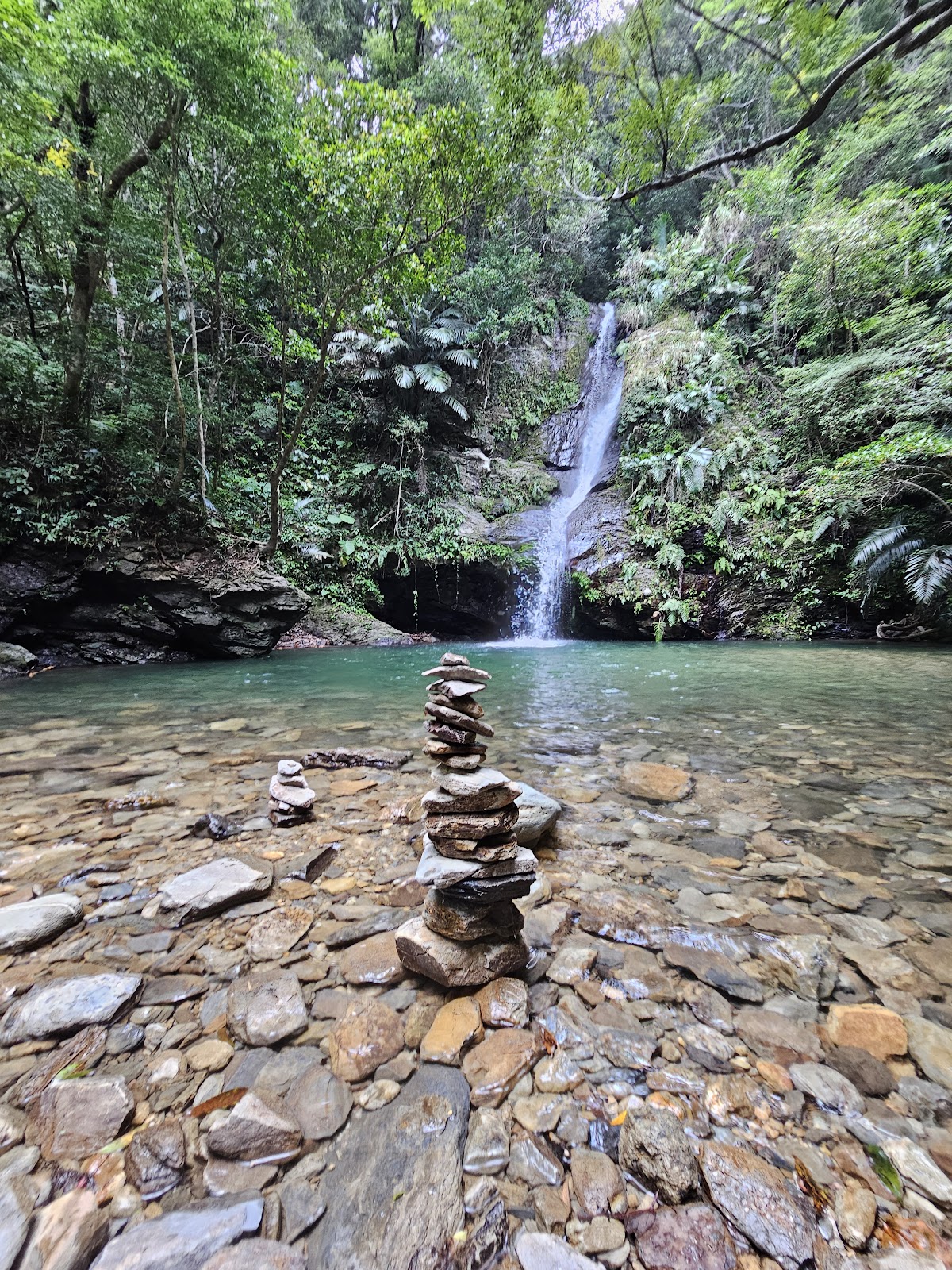
The Fungawa River basin contains several beautiful waterfalls. While Okinawa Main Island has few large-scale waterfalls, falls surrounded by subtropical vegetation have unique charm.
Fungawa Falls
According to some information sources, a waterfall with a drop of 6 meters hanging on the Makiya Ookawa River in Nago City is introduced as “Fungawa Falls.” However, this may be from a different water system than the Fungawa River in Kunigami Village, and care should be taken regarding name confusion.
Fungawa Ni no Taki (Second Fungawa Falls)
Similarly, the “Fungawa Ni no Taki” (Second Fungawa Falls) with a drop of 8 meters hanging on the Fungawa River in Nago City has also been recorded. These waterfalls are known among waterfall enthusiasts as natural formations symbolizing the rich water systems of Yanbarugawa.
Notes for Visiting
When visiting waterfalls in northern Okinawa, please keep the following points in mind:
- Paths are often not well developed, and appropriate equipment is necessary
- In some cases, you may need to pass through private land, so prior confirmation is important
- Water volume can change dramatically depending on weather conditions, creating dangerous situations
- Care must be taken regarding dangerous creatures such as habu snakes
Natural Environment and Ecosystem of the Fungawa River Basin
The Yanbarugawa area where the Fungawa River flows is the region with the most remaining natural environment on Okinawa Main Island and is a treasure trove of endemic and rare species.
Characteristics of Yanbarugawa Forest
The forest covering the Fungawa River basin is subtropical evergreen broadleaf forest centered on itajii trees. This forest has the following characteristics:
- High Biodiversity: Habitat for many endemic and rare species
- Abundant Water Source Conservation Function: Forest retains rainwater and supplies a stable water volume to the river
- Adaptation to Typhoons: Tree forms resistant to strong winds and regenerative capacity
Endemic and Rare Species
The Yanbarugawa area, including the Fungawa River basin, is home to the following precious organisms:
Birds
- Okinawa rail (National Natural Monument, Endangered Species)
- Okinawa woodpecker (Special National Natural Monument, Endangered Species)
- Ryukyu robin
Mammals
- Okinawa spiny rat (Endangered Species)
- Long-haired rat (Endangered Species)
Amphibians and Reptiles
- Ishikawa’s frog (Natural Monument)
- Namie frog
- Okinawa Ishikawa frog
Many of these organisms depend on clear streams and rich forest environments, making the conservation of natural rivers like the Fungawa River important.
Transportation Access: How to Get to Fungawa Dam
The Fungawa Dam is located in a mountainous area in northern Okinawa Main Island, so a car is necessary for access.
Access by Car
From Naha Airport
- Using Okinawa Expressway: Approximately 2 hours to 2 hours 30 minutes
- Distance: Approximately 100 kilometers
Route Example
- From Naha Airport, get on the Okinawa Expressway
- Exit at Kyota IC
- Head north on National Route 58
- Head toward Kunigami Village
- Follow directional signs toward Fungawa Dam
Notes When Accessing
- Road Conditions: Mountain roads are narrow and winding in some sections
- Public Transportation: Bus routes are limited and infrequent, so a car is recommended
- Navigation System: Search for “Fungawa Dam” or “Anda, Kunigami Village”
- Gasoline: Few gas stations in the northern area, so pre-fueling is recommended
- Mobile Phone: Cell phone reception is weak in some mountainous areas
Points of Consideration for Visiting
The Fungawa Dam is a facility managed by the Okinawa General Bureau, Cabinet Office. If you wish to visit, please be aware of the following:
- Prior contact with the Anpa Dam Management Branch is advisable
- There may be restrictions on entering the facility
- There may be areas where photography is prohibited
- Always follow instructions regarding safety management
Contact Information
Okinawa General Bureau, Cabinet Office, Northern Dam Management Office, Anpa Dam Management Branch
Nearby Tourist Attractions and Yanbarugawa Tourism
When visiting Fungawa Dam, you can also enjoy Yanbarugawa tourism in the surrounding areas.
Yanbaru National Park
Designated in 2016, this national park covers the northern Okinawa Main Island, and the Fungawa River basin is part of it. Pristine subtropical evergreen broadleaf forest and a treasure trove of endemic species protect a natural environment that is also valuable worldwide.
Hedo Cape
The northernmost cape of Okinawa Main Island, where on clear days you can see Yoron Island and islands in Kagoshima Prefecture. It is approximately 30 to 40 minutes by car from Fungawa Dam.
Daishekirin-zan
Located in Kunigami Village, this is a place that has been considered sacred since the Ryukyu Kingdom era, offering unique scenery created by 200-million-year-old limestone formations.
Michi-no-Eki Yuiyui Kunigami
A roadside station where you can enjoy local specialties and local cuisine. It is convenient as a base for Yanbarugawa tourism.
Okinawa’s Water Resources and the Role of Fungawa River
Okinawa Prefecture is an island prefecture, and securing water resources is always an important issue. The Fungawa Dam and other dams in the northern region are important infrastructure supporting the prefecture’s overall water demand.
Okinawa’s Water Situation
Characteristics
- Few large rivers and difficulty in securing water sources
- Abundant precipitation from typhoons but quick loss to the sea due to steep terrain
- Increasing water demand due to population growth and development of the tourism industry
Measures
- Construction and management of the northern dam group
- Operation of seawater desalination facilities
- Promotion of water conservation awareness
Northern Dam Integrated Management Project
The Fungawa Dam, along with the Anpa Dam, Shinkawa Dam, and Fukuchi Dam, is managed in an integrated manner by the Northern Dam Management Office, Okinawa General Bureau, Cabinet Office. This enables efficient water resource management and stable supply.
Conservation of Fungawa River and Future Challenges
Various conservation activities are necessary to pass on the rich natural environment of the Fungawa River to future generations.
Environmental Conservation Efforts
Forest Conservation
- Protection and proper management of Yanbarugawa forest
- Invasive species control (mongoose, etc.)
- Forest road improvements for managed forest access
Water Quality Conservation
- Measures against domestic wastewater
- Prevention of soil erosion from agriculture
- Water quality monitoring of dam lakes
Biodiversity Conservation
- Protection activities for rare species
- Roadkill mitigation measures
- Ensuring continuity of habitat
Balancing Tourism and Conservation
The Yanbarugawa area is expected to see an increase in tourists following its World Natural Heritage designation. However, excessive tourism pressure may negatively impact the natural environment.
For Sustainable Tourism
- Promotion of ecotourism
- Introduction of access restrictions or reservation systems
- Enhancement of environmental education programs
- Cooperation with local residents
Conclusion: The Charm and Value of Fungawa River
The Fungawa River is a clear stream symbolizing the abundant nature of Yanbarugawa in northern Okinawa Prefecture. The Fungawa Dam is an important infrastructure supporting the region’s water resources, and at the same time, the surrounding natural environment nurtures an ecosystem of global significance.
Visiting the Fungawa River basin allows you to experience the essence of Okinawa’s nature, including subtropical virgin forests, clear flowing water, and encounters with endemic organisms. However, to protect this precious environment, environmental consideration and understanding from each visitor is essential.
The nature of Yanbarugawa is a treasure not only for Okinawa residents, but for Japan and the world. Our responsibility is to conserve the nature of Fungawa River and its basin while sharing its value with many people.
When visiting Fungawa, please enjoy its beauty in a sustainable manner without forgetting respect for nature. The deep forests and clear flowing waters of Yanbarugawa will surely leave a lasting impression on all who visit.
