Kasahara Water Source (Ibaraki Prefecture) Complete Guide|Japan’s Oldest-Class Aqueduct Heritage Built by Tokugawa Mitsukuni and the Quality Water Continuing to Modern Times
The Kasahara Water Source, located in Kasahara Town, Mito City, Ibaraki Prefecture, is a precious cultural property with over 350 years of history as the water source for the “Kasahara Aqueduct,” a historical water supply facility constructed in the early Edo period. This facility, established by Tokugawa Mitsukuni, known as Mito Komon, to resolve water supply difficulties in Mito Castle town, continues to serve as a beloved recreational spot for citizens and an important venue for history education.
About the Kasahara Water Source|Historical Background and Modern Appearance
Overview of the Kasahara Water Source
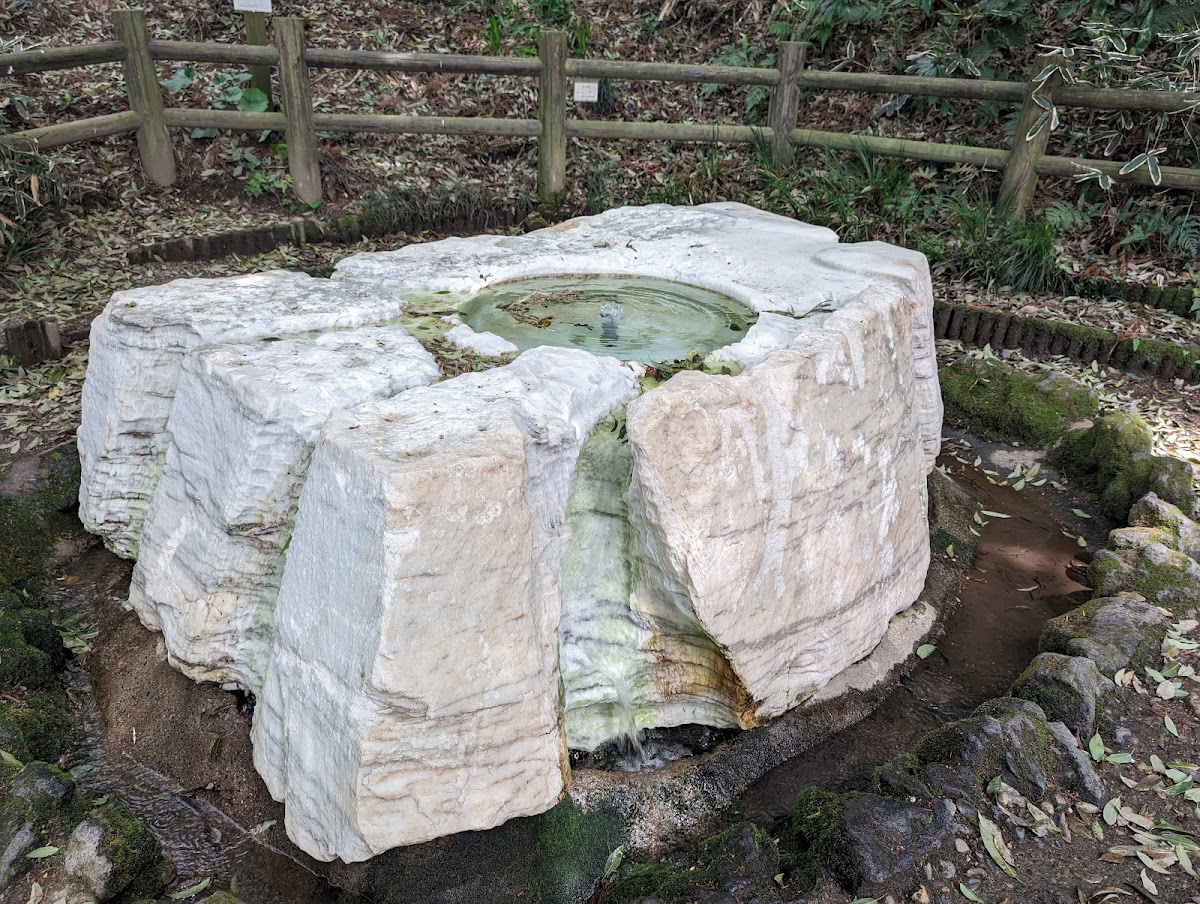
The Kasahara Water Source is a spring water location positioned within the Sakashirogawa Green Space Park in Kasahara Town, Mito City. This place served as the water source for the Kasahara Aqueduct built during the Edo period, and abundant spring water can still be confirmed today. Protected as a Designated Cultural Property of Ibaraki Prefecture, it has become an indispensable heritage in discussing Mito’s history.
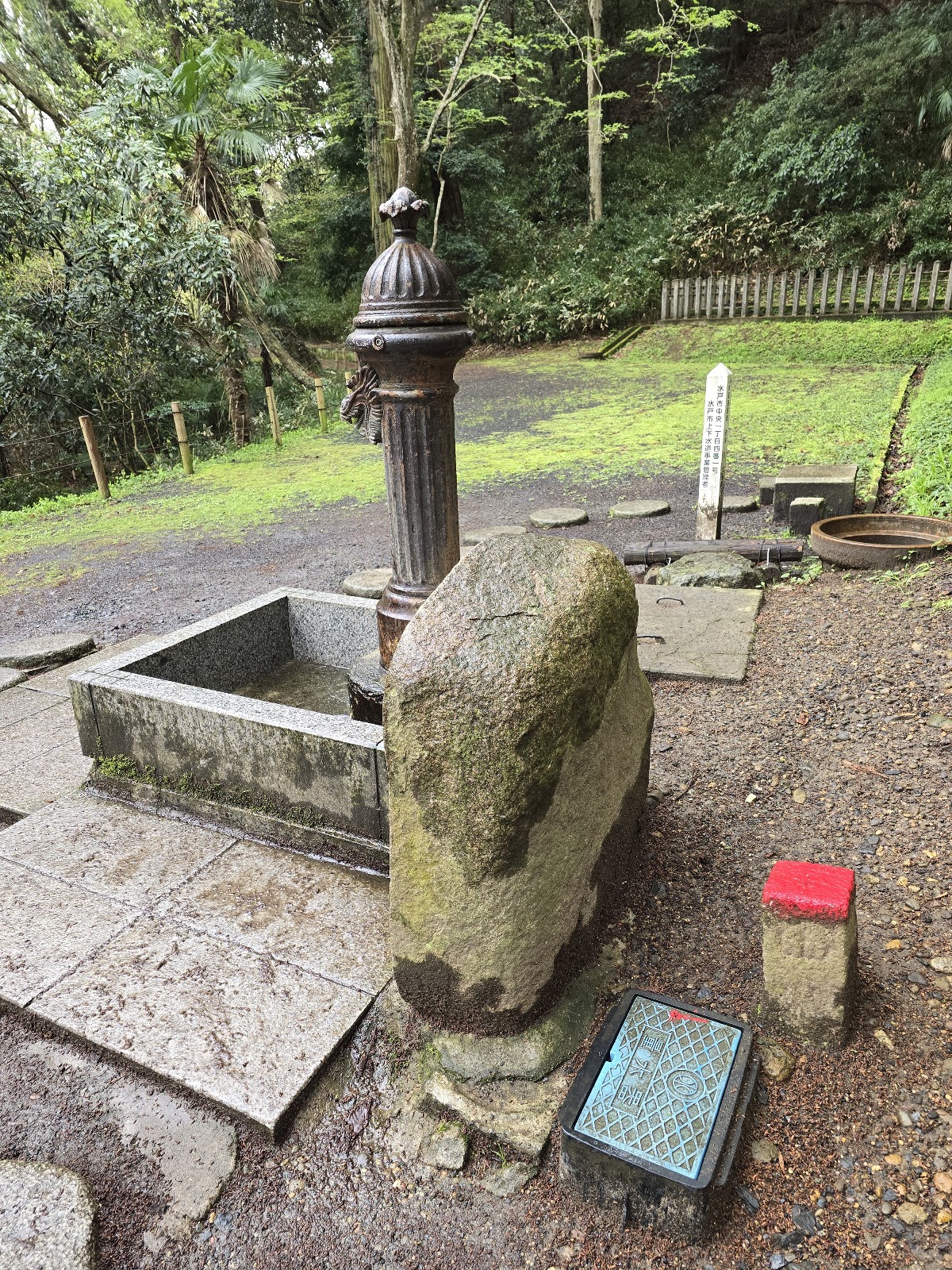
At the water source site, a distinctive water spigot called the “dragon head tap (ryūtōsen)” featuring a dragon’s head design is installed, and the water flowing from it can be safely consumed as chlorinated tap water. The spring water itself continues to surge forth from underground, and its refreshing quality continues to enchant visitors.
Historical Value as Japan’s 18th Water Supply System
The Kasahara Aqueduct occupies an important position in the history of Japanese water supply systems. It is recorded as the 18th aqueduct constructed in Japan and is highly evaluated as an example of advanced urban infrastructure in the early Edo period.
Although water engineering technology was limited at the time, the Kasahara Aqueduct possessed approximately 10 kilometers of distribution channels and supplied drinking water across a wide range of Mito Castle town. This scale and technological level were extremely advanced for a local city at the time, demonstrating the high technological capability and administrative ability of the Mito clan.
Tokugawa Mitsukuni and the Construction of the Kasahara Aqueduct
The Decision of Tokugawa Mitsukuni, Second Daimyo of the Mito Clan
The order to construct the Kasahara Aqueduct was issued by Tokugawa Mitsukuni, the second daimyo of the Mito clan. Upon assuming the position of daimyo in 1661 (Kanbun 1), Mitsukuni immediately focused attention on the water supply problem in the castle town. At that time, particularly in the lower town (present-day Mito Honcho) of Mito Castle town, securing drinking water was a serious challenge.
Continuing the wishes of his father, Tokugawa Yorifusa, the first daimyo, Mitsukuni ordered Mochizuki Tsunetaka, the town magistrate, to establish a water system in 1662 (Kanbun 2). This decision was not merely a matter of solving a technical problem but also a political measure aimed at improving the lives of the people and developing the castle town.
The Progression of Construction and the Path to Completion
Construction of the Kasahara Aqueduct began in 1662 and was completed in the following year, 1663 (Kanbun 3). Completion in just over a year was an astonishing pace for the time, testifying to the high organizational and technological capacity of the Mito clan.
During construction work, a stone conduit (iwadoi) was used to create an underground channel from the Kasahara water source along the Sakashirogawa to Fujiwara Town. Subsequently, crossing the Bizen Canal with bronze pipes and entering the urban area, a water system approximately 10 kilometers in total length was installed extending to Hosoyake. This construction project is believed to have mobilized many artisans and laborers, assembling the finest civil engineering technology of the era.
The Structure and Technology of the Kasahara Aqueduct
The Technology of Stone Conduits (Iwadoi)
The greatest characteristic of the Kasahara Aqueduct lies in its use of stone conduits called “iwadoi.” Stone conduits were water channels carved from stone, buried underground to function as covered channels. This technology was advanced among Japanese civil engineering techniques of the time.
Stone conduits stabilized water flow and prevented contamination from external sources. Additionally, by using stone materials, durability was high, allowing the system to maintain functionality over extended periods. Currently, the Mito Water and Sewerage Bureau displays a model of the stone conduit, conveying this historical technology to the present day.
Bronze Pipes and Water Distribution System
The Kasahara Aqueduct employed bronze pipes for the section crossing the Bizen Canal. Although bronze was an expensive material at the time, it possessed excellent corrosion resistance and played an important role in maintaining water quality. This use of bronze pipes demonstrates the financial power and commitment to technological investment of the Mito clan.
The water distribution system employed gravity flow utilizing natural elevation differences. By taking advantage of the natural slope from the Kasahara Water Source to the castle town, water could be supplied without using mechanical power. This design philosophy resonates with modern water supply systems.
The Approximately 10-Kilometer Distribution Route
The Kasahara Aqueduct’s distribution route extended approximately 10 kilometers from the Kasahara Water Source as its starting point, flowing southward along the Sakashirogawa, passing through Fujiwara Town and the Bizen Canal before reaching the urban area of Mito Castle. This route was designed to efficiently transport water while skillfully utilizing topography.
Multiple branch points were established along the distribution route to supply water to various locations in the castle town. Particularly in the lower town area, where many townspeople resided, water supply facilities were prioritized in their installation.
The Kasahara Water Source Today|Facilities and Environment
The Water Source within Sakashirogawa Green Space Park
The current Kasahara Water Source is developed within Sakashirogawa Green Space Park. This park is located behind the Ibaraki Prefectural Medical Center, and descending a narrow slope reveals a quiet space surrounded by verdant environment.
A footpath has been developed within the park, allowing visitors to enjoy a walk along the Sakashirogawa while experiencing its natural surroundings. The area around the water source is particularly lush with greenery, and rich natural environment is maintained despite being within an urban area. The vegetation displays different characteristics with each season, providing comfort to those who visit.
Water Flowing from the Dragon Head Tap
The water spigot featuring a dragon’s head design, called the “dragon head tap (ryūtōsen),” is symbolic of the Kasahara Water Source. From this spigot flows tap water with chlorine added to spring water, which visitors are free to consume.
The design of the dragon head tap symbolizes the relationship between water and dragons, expressing the dragon as an entity revered since ancient times as the deity governing water. This decorative water spigot serves not merely as functional equipment but also plays the role of visually conveying the historical and cultural value of the Kasahara Water Source.
Water quality is inspected regularly, and safety is assured. Many citizens and tourists visit to experience this historically significant water.
The Mechanism of Spring Water and Water Quality
The spring water at the Kasahara Water Source is produced by the geological structure of the surrounding area. Through geo-tours offered in Mito City, visitors can learn about the mechanism of this spring water and its geological background.
Groundwater emerges through a process in which rainwater falling on surrounding plateaus permeates through geological layers, reaches an impermeable layer, and springs forth at the surface. Through this natural filtration process, the spring water possesses characteristics of clarity and coldness.
Water quality is favorable, and when measured against modern water quality standards, it possesses excellent properties. However, water provided for consumption undergoes chlorine treatment processing to ensure safety.
The Kasahara Aqueduct as a Cultural Property
Its Value as an Ibaraki Prefecture Designated Cultural Property
The Kasahara Aqueduct is formally designated as a cultural property of Ibaraki Prefecture. This designation signifies official recognition of the historical, technical, and cultural value that the Kasahara Aqueduct possesses.
Through protection as a cultural property, the Kasahara Water Source and related structures are appropriately managed and guaranteed to be transmitted to future generations. The Ibaraki Prefecture Board of Education has conducted detailed investigations and documentation of the Kasahara Aqueduct and widely disseminates its value.
History Education and Regional Identity
The Kasahara Water Source serves as important educational material in history education in Mito City. As part of local studies, elementary and middle schools in the area offer opportunities for students to learn the history of the Kasahara Aqueduct and visit the water source itself.
This historical heritage forms an important element in shaping the identity of Mito citizens. As a concrete legacy connected with the historical figure Tokugawa Mitsukuni, it has become a point of civic pride.
Information Disclosure through Digital Archives
The Mito Water and Sewerage Bureau has digitized materials related to the Kasahara Aqueduct and made them available online. Through this digitization, people living far away and researchers can learn in detail about the history and structure of the Kasahara Aqueduct.
The archive includes historical documents, design drawings, photographs, and images of models, providing content that allows multifaceted understanding of the Kasahara Aqueduct. Information regarding the stone conduit model in particular constitutes valuable material for visually comprehending the technology of that era.
Access and Viewing Information
How to Get to the Kasahara Water Source
Access to the Kasahara Water Source is available via public transportation or private vehicle.
When using public transportation:
- From JR Mito Station, utilize Ibaraki Kotsu buses
- Alight at the “Kasahara Water Source” bus stop (specific stops vary depending on bus route; use the Ibaraki Kotsu route search)
- Arrival at the water source location within a few minutes’ walk from the stop
When using a private vehicle:
- Approximately 15 minutes from the Mito IC of the Joban Expressway
- Head toward the vicinity of the Ibaraki Prefectural Medical Center and follow directional signs
- Parking is limited; use of public transportation is recommended
Precautions During Visits
The Kasahara Water Source is a freely accessible public location, but please observe the following:
- To protect cultural properties, take care not to damage facilities or structures
- To preserve the natural environment, carry away all trash
- The water from the dragon head tap is potable, though bringing a personal cup is recommended
- Certain areas are slippery; wearing shoes suitable for walking is advisable
- During summer, insects such as mosquitoes are abundant; insect repellent measures are recommended
Nearby Tourist Attractions
Combining the Kasahara Water Source visit with nearby tourist attractions allows for deeper understanding of Mito’s history and culture.
Ibaraki Prefectural History Museum:
A facility combining museum functions for Ibaraki history with archives. It houses materials related to the Kasahara Aqueduct, allowing for more detailed information acquisition.
Kairaku-en:
One of Japan’s three celebrated gardens, created by Tokugawa Nariaki and renowned for its plum blossoms. A location where the history of the Tokugawa family and Mito can be experienced.
Mito Castle Ruins:
Remains of Mito Castle, the center of the Mito clan, are preserved. Visitors can stroll imagining the condition of the castle town to which the Kasahara Aqueduct supplied water.
The Kasahara Water Source and the Sakashirogawa River Environment
Natural Observation Along the Sakashirogawa
The Sakashirogawa riverside, where the Kasahara Water Source is located, maintains a rich natural environment and is a precious place where aquatic ecosystems can be observed. Mito City regularly hosts geo-tours utilizing the Sakashirogawa Green Space, allowing visitors to learn about the mechanism of water emergence, geology, and ecosystems through expert commentary.
The Sakashirogawa is an important river flowing through Mito City and has been closely connected with residents’ lives since ancient times. A footpath has been developed alongside the river, allowing enjoyment of nature in all four seasons.
Environmental Conservation Activities
To protect the environment of the Kasahara Water Source and Sakashirogawa, residents, the administration, and environmental organizations cooperate in conservation activities. Regular cleaning activities, water quality surveys, and removal of invasive species are implemented to maintain favorable environmental conditions.
These activities involve citizen volunteers, serving to deepen community bonds. The area also functions as a venue for environmental education, providing opportunities for children to learn the importance of nature.
Mito City’s Water Services and the Kasahara Water Source
Relationship with Modern Water Systems
The Kasahara Aqueduct is a historical facility constructed in the Edo period, yet is not disconnected from Mito City’s modern water services. The Mito Water and Sewerage Bureau protects the Kasahara Water Source as a historical heritage while fulfilling its original mission of supplying tap water to citizens.
Mito City’s current water system is composed of multiple water purification facilities and distribution facilities representing modern infrastructure, yet its origins lie in the wisdom and effort of predecessors such as those behind the Kasahara Aqueduct. The Kasahara Water Source is indispensable in conveying the history of water services.
Historical Development of Water Services
Following the completion of the Kasahara Aqueduct, Mito’s water services developed with the times. From the Meiji period onward, modern water supply systems were established, providing safe water to increasing numbers of citizens.
The Kasahara Aqueduct itself remained in use until the Meiji period, but subsequently ceased its role as a primary water supply facility due to development of modern water systems. Nevertheless, its historical value continues to be recognized, and it is currently protected as a cultural property.
The Significance of Visiting the Kasahara Water Source
A Place Connecting History and Modernity
Visiting the Kasahara Water Source is not simply viewing a historical location but an opportunity to experience the relationship between water and people spanning from the Edo period to the present. The fact that a facility constructed over 350 years ago continues to hold spring water and is cherished by citizens speaks to the greatness of the wisdom and technology of our predecessors.
We modern people are accustomed to the convenience of water flowing from taps, but behind that convenience lies a long history and the efforts of many people. The Kasahara Water Source is a precious place that reminds us of this reality.
Educational Value and Experiential Learning for Children
The Kasahara Water Source is an ideal learning venue for children. History learned from textbooks becomes more immediate and tangible when experienced firsthand through seeing and touching the water.
Schools within Mito City provide opportunities for students to visit the Kasahara Water Source as part of social studies field trips or integrated learning programs. Through these visits, children learn about Tokugawa Mitsukuni’s achievements and Edo period technology while deepening their understanding of local history.
As a Recreation Site for Citizens
The Kasahara Water Source and its surrounding Sakashirogawa Green Space Park serve as familiar recreational spaces for Mito citizens. They are utilized in various ways including walking, jogging, and nature observation.
Particularly during summer, many visit to enjoy the refreshing coolness of the spring water. By washing hands or drinking from the dragon head tap, visitors can experience a moment of cooling relief during hot days.
Conclusion|The Value and Future of the Kasahara Water Source
The Kasahara Water Source in Mito City, Ibaraki Prefecture, serves as the water source for the Kasahara Aqueduct constructed by Tokugawa Mitsukuni in 1663 and occupies an important position in the history of Japanese water supply systems as a cultural property. As the 18th aqueduct constructed in Japan, it conveys to the present day an example of advanced urban infrastructure from the Edo period.
The approximately 10-kilometer water distribution system, constructed using advanced technologies such as stone conduits and bronze pipes, demonstrates the high technological capability and administrative ability of the Mito clan of that era. Currently protected as a Designated Cultural Property of Ibaraki Prefecture, the water flowing from the dragon head tap is cherished by citizens and tourists alike.
The Kasahara Water Source possesses multifaceted value as a venue for history education, natural observation, and citizen recreation. Through digital archive dissemination of information and educational programs such as geo-tours, its value continues to be widely communicated.
This location, bearing over 350 years of history, transmits the wisdom and effort of our predecessors to the present while rekindling our awareness of the importance of water resources. When visiting Mito, be sure to visit the Kasahara Water Source and experience this special space where history and nature interweave.
Frequently Asked Questions
Can the water from the Kasahara Water Source be drunk?
Yes, the water flowing from the dragon head tap at the Kasahara Water Source is potable. This water is chlorinated spring water, and its safety is assured. Water quality is inspected regularly, and it can be consumed with confidence. Bringing a personal cup, however, is recommended.
Is admission required to visit the Kasahara Water Source?
The Kasahara Water Source is a public location, and no admission fee is required. It may be freely visited. However, from the perspective of cultural property protection, please treat facilities and structures with care and endeavor to preserve the natural environment.
When was the Kasahara Aqueduct constructed?
The Kasahara Aqueduct was begun in 1662 (Kanbun 2) on the orders of Tokugawa Mitsukuni, the second daimyo of the Mito clan, and completed in the following year, 1663 (Kanbun 3). It is recorded as the 18th aqueduct constructed in Japan.
What is the best season to visit the Kasahara Water Source?
The Kasahara Water Source can be visited throughout the year, with spring through early summer and autumn being particularly recommended. Spring offers beautiful fresh greenery, and autumn provides enjoyable autumn foliage. Summer brings the pleasant coolness of spring water, though insects are numerous and insect repellent measures are necessary. Appropriate cold-weather preparation is needed for winter visits.
Are there parking facilities near the Kasahara Water Source?
Parking spaces in the vicinity of the Kasahara Water Source are limited. Use of public transportation (Ibaraki Kotsu buses) is recommended whenever possible. For those traveling by private vehicle, please utilize nearby paid parking facilities or check the parking regulations of neighboring establishments.
Can one actually see the stone conduits of the Kasahara Aqueduct?
The actual stone conduits of the Kasahara Aqueduct are buried underground, so they cannot be directly observed at the site. However, the Mito Water and Sewerage Bureau has created a model of the stone conduit, and it is also made available through digital archives. Related materials can be viewed at facilities such as the Ibaraki Prefectural History Museum.