Gassanyama Foothills Spring Group Complete Guide | Visiting Japan’s Top 100 Waters in Nishikawa Town, Yamagata Prefecture
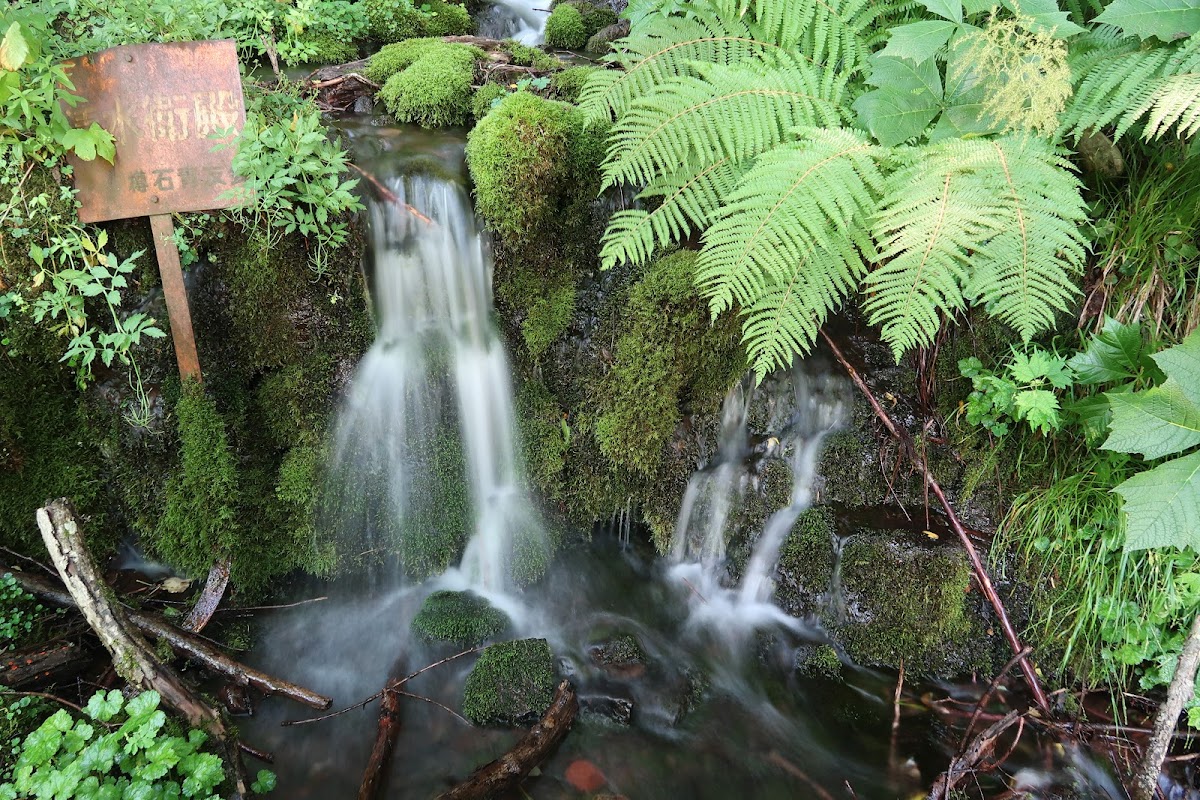
The Gassanyama Foothills Spring Group (gassanyama sanroku yuusuigun), located in Nishikawa Town, Nishi-murayama District, Yamagata Prefecture, is recognized as one of Japan’s Top 100 Waters selected by the Ministry of the Environment in 1985 (Showa 60) as a pristine spring group blessed by the sacred mountain Gassanyama. In a rich natural environment surrounded by beech primeval forests, spring water filtered over many years not only serves as the local water supply but has become a precious water resource that brings refreshment and healing to all who visit.
This article comprehensively introduces information you should know when visiting this renowned water source, including the characteristics of the Gassanyama Foothills Spring Group, water quality, access methods, nearby tourist attractions, and precautions for your visit.
About the Gassanyama Foothills Spring Group
A Natural Water Resource Nurtured by the Sacred Mountain Gassanyama
Gassanyama (elevation 1,984m) is one of the Dewa Sanzan mountains located near the center of Yamagata Prefecture and has long been revered as a sacred mountain in mountain worship traditions. Numerous spring water points are scattered throughout the beech primeval forest area that stretches from the middle slopes to the foothills of Gassanyama, collectively referred to as the “Gassanyama Foothills Spring Group.”
The Gassanyama area is known for abundant snowfall and perennial snow that remains even in summer, and is also famous as a mecca for summer skiing that allows skiing until July. This abundant snow and rainwater seep deep into the ground through the complex geological layers of Gassanyama, undergoing natural filtration over many years before surfacing again.
Crystal Clear Water Emerging After 400 Years
The most distinctive feature of the Gassanyama Foothills Spring Group is the length of time required for its formation. The snow and rain that fall on Gassanyama seep into the ground, pass through complex geological layers undergoing filtration, and resurface is believed to require approximately 300 to 400 years.
Through this long infiltration period, water is purified of impurities as if passing through a natural filter, and is reborn as soft water containing appropriate mineral content. This geologically precious process creates the pristine taste and high water quality of the Gassanyama Foothills Spring Group.
Water Quality Characteristics of the Gassanyama Foothills Spring Group
Consistently 5 Degrees Cold Year-Round
The water temperature of the Gassanyama Foothills Spring Group remains nearly constant at approximately 5 degrees year-round. This is considerably lower compared to the average temperature of typical groundwater, which is around 12 degrees. This coldness results from snowmelt spending a long time passing through deep underground, maintaining cool temperatures even in the height of summer.
This low temperature not only preserves the freshness of the spring water but also enhances the refreshing and invigorating sensation when drinking. Local people describe it as “drinking this water makes you forget the summer heat,” such is the impression of its coldness.
Soft Water Containing Appropriate Minerals
Water quality analysis confirms that the Gassanyama Foothills Spring Group is soft water containing appropriate levels of carbon dioxide, oxygen, and various minerals. With low hardness, it has a smooth mouthfeel and is very well-suited to Japanese palates.
Soft water has the following advantages:
- Suitable for drinking: Smooth mouthfeel and easy to drink
- Optimal for cooking: Enhances the flavor of dashi and cooks rice deliciously
- For tea and coffee: Brings out aromas without compromising the taste of ingredients
- Gentle on skin: Suitable for facial washing and bathing
In Nishikawa Town, this spring water is utilized as a water source for tap water, realizing the luxury of having renowned water flowing from household faucets.
Abundant Water Volume – Approximately 3,000 Tons Per Day
The total water volume of the Gassanyama Foothills Spring Group is estimated to reach a maximum of approximately 3,000 tons per day. This abundant water volume continuously flows from multiple spring points and becomes a clear stream flowing down along the mountainside, eventually merging into the Sagae River system.
This abundant water volume provides the foundation for stable utilization as domestic and agricultural water for the region, supporting the sustainability of Nishikawa Town’s water resources.
Access to the Gassanyama Foothills Spring Group
Basic Information
Location: Shizu, Nishikawa Town, Nishi-murayama District, Yamagata Prefecture
Viewing Season: May to October (difficult to access in winter due to heavy snow)
Admission: Free
Inquiries: Gassanyama Asahi Tourism Association (Nishikawa Town Tourism Association)
Access by Public Transportation
- From JR Yamagata Station:
- Take the Yamakou Bus “Tsuruoka/Sakata line” (approximately 40 minutes)
- Get off at “Nishikawa Bus Stop”
- Transfer to town bus “Ubasawa line” (approximately 33 minutes)
- Get off at “Gassanyama-so Stop” and walk approximately 10 minutes
- From JR Tsuruoka Station:
- Use Shonai Koutsu Bus “Gassanyama direction”
- Travel time approximately 1 hour 30 minutes
As the frequency of public transportation is limited, it is recommended to check the schedule in advance and plan with plenty of time.
Access by Car
- From Yamagata Expressway “Nishikawa IC”: Approximately 30 minutes
- From Yamagata Expressway “Gassanyama IC”: Approximately 20 minutes
- From Yamagata City Center: Via Route 112, approximately 50 minutes
- From Tsuruoka City Center: Via Route 112, approximately 1 hour
Parking areas are equipped around Gassanyama Shizu Hot Spring and the Yamagata Prefectural Museum of Natural History. Particularly during autumn foliage season (late September to mid-October), crowding is expected, so early arrival is recommended.
Reaching the Spring Water Points
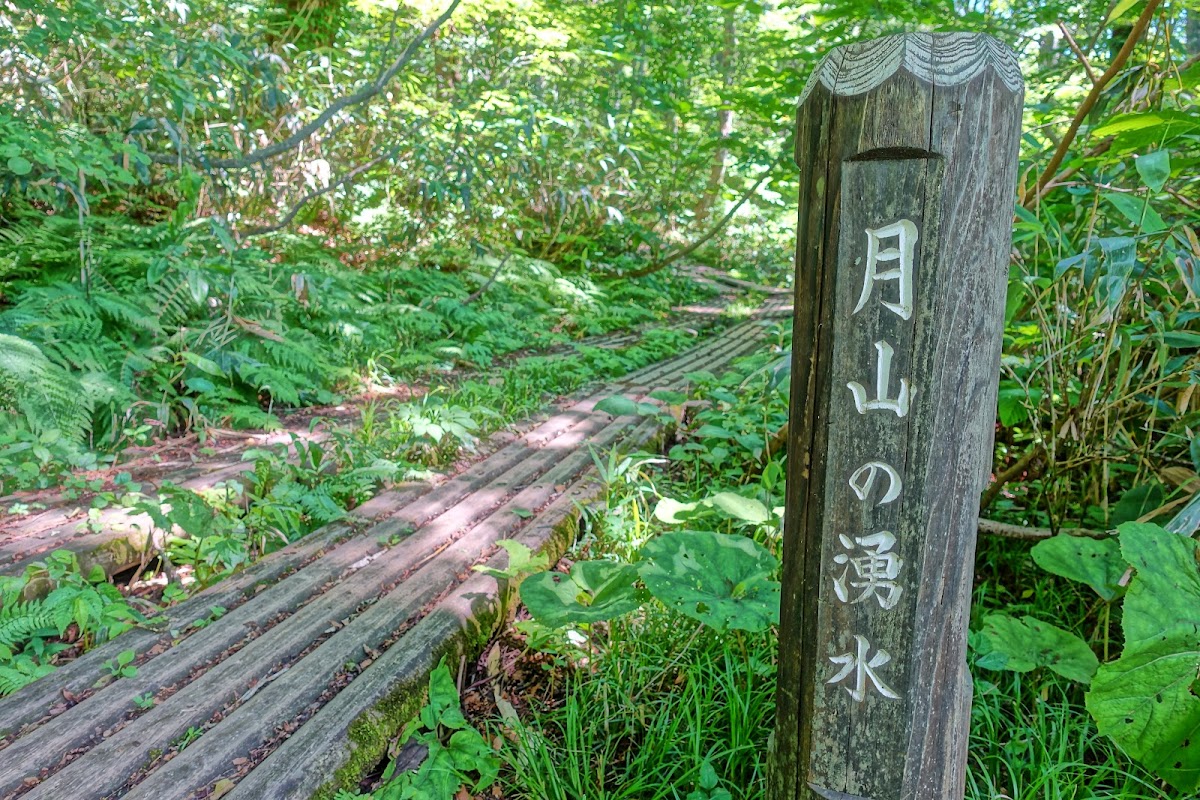
The spring water points of the Gassanyama Foothills Spring Group are scattered throughout the beech primeval forest, and not all are easily accessible to general tourists. Most spring water sites are located away from hiking trails and forestry roads, requiring appropriate equipment and geographical knowledge.
For first-time visitors, the following methods are recommended:
- Use of the Yamagata Prefectural Museum of Natural History: Free guided tours are conducted by staff (prior confirmation required)
- Inquire with Gassanyama Asahi Tourism Association: Obtain information about guided tours
- Around Gassanyama Shizu Hot Spring: Relatively accessible spring water points are available
Nearby Tourist Attractions and Facilities
Yamagata Prefectural Museum of Natural History
A facility where you can learn about the rich nature of the Gassanyama foothills, with exhibitions and explanations about the spring group. Walking trails through the beech primeval forest are well-maintained, and guided tours by staff can include visits to spring water points.
Gassanyama Shizu Hot Spring
A quiet hot spring resort located at the foothills of Gassanyama where you can enjoy high-quality hot springs also blessed by Gassanyama. Several hot spring inns operate here, where you can enjoy cuisine prepared with renowned water and local sake. In winter, known as a heavy snow area, snow-viewing hot spring bathing is popular.
Gassanyama Ski Resort (Summer Skiing)
Famous as one of Japan’s few ski resorts where summer skiing is possible. Operating from April through July, long-season skiing and snowboarding utilize abundant snowfall. Views of the magnificent Gassanyama landscape can be enjoyed from the lifts.
Gassanyama Climbing
Gassanyama is one of Japan’s Top 100 Mountains, attracting many climbers during the hiking season from July to September. The Gassanyama Shrine Main Hall at the summit is located at an elevation of 1,984m with 360-degree panoramic views. Known as a treasure trove of alpine plants, the Nikkoh kisuge flower cluster in July is spectacular.
Oisawa Natural History Museum
Located in the Oisawa district of Nishikawa Town, this museum allows you to learn about the natural environment, history, and culture of the Gassanyama area. Exhibits on the spring water formation process and water quality deepen understanding of the Gassanyama Foothills Spring Group.
History and Cultural Background of the Gassanyama Foothills Spring Group
Long-Established Domestic Water Source
The spring waters of the Gassanyama foothills have long been utilized as domestic water for local residents. The settlements of Nishikawa Town were formed centered around this abundant spring water, with communities developed around water sources.
Particularly during winter’s heavy snow season, as a stable water source that never dries up, the springs became the lifeline of the region. In modern times, they continue to be utilized as water sources for Nishikawa Town’s simple water supply system, remaining an indispensable presence in residents’ daily lives.
Selection for Japan’s Top 100 Waters
When the Environment Agency (now the Ministry of the Environment) selected “Japan’s Top 100 Waters” in 1985 (Showa 60), the Gassanyama Foothills Spring Group was selected as representative water of Yamagata Prefecture. This selection was the result of comprehensive evaluation not only of water quality but also of the richness of the surrounding natural environment, the importance of water to the region, and conservation activities.
With selection as one of Japan’s Top 100 Waters, the fame of the Gassanyama Foothills Spring Group expanded nationwide, and many tourists began visiting. In 2015 (Heisei 27), the Ministry of the Environment held “Top 100 Waters National Election,” with nomination in the “Waters with Beautiful Landscapes” category.
Distribution of Top 100 Waters Cards
Nishikawa Town distributes “Top 100 Waters Cards” as mementos for visitors. These cards feature photographs and basic information about the Gassanyama Foothills Spring Group and are popular as souvenirs of waters tours. For distribution locations and times, please contact Nishikawa Town Hall or the Gassanyama Asahi Tourism Association.
Beech Primeval Forest and Water Source Conservation Function
Beech Forest Comparable to Shirakami Mountains
The beech primeval forest covering the Gassanyama foothills is evaluated as comparable in scale and quality to the beech forest of Shirakami Mountains, registered as a World Natural Heritage Site. Beech forests, also called “green dams,” possess excellent water source conservation functions.
Beech trees:
- Abundant fallen leaves: Form humus layers that store water
- Deep root systems: Increase soil water retention capacity
- Forest soil: Absorb water like a sponge and release it slowly
Through these functions, rain and snow falling on Gassanyama do not flow out rapidly but seep slowly into the ground over long periods. This natural system makes the 400-year filtration process possible.
Biodiversity of the Ecosystem
The beech primeval forest at the Gassanyama foothills is home to diverse flora and fauna. From large animals such as Asian black bears, Japanese serow, and copper pheasants to diverse insects and birds, a rich ecosystem is formed.
From spring through summer, mountain flowers such as dogtooth violet, Japanese fairy bells, and skunk cabbage bloom profusely, while in autumn spectacular autumn foliage captivates visitors. This high biodiversity is an important factor in maintaining the water quality of the springs.
Precautions and Etiquette for Visiting
Clothing and Equipment
When visiting the Gassanyama Foothills Spring Group, prepare the following equipment:
- Hiking boots or trekking shoes: Some areas around spring water points have poor footing
- Long sleeves and long pants: Prevention of insect bites and cuts from branches and grass
- Rain gear: Mountain weather changes quickly
- Hat: Protection from sunlight and branches
- Drinking water: Dehydration prevention
- Bear bell: Recommended as bear countermeasure
Regarding Drinking
While the Gassanyama Foothills Spring Group is selected as one of Japan’s Top 100 Waters, this does not guarantee suitability for drinking. The Ministry of the Environment and local governments caution that drinking should be done at your own risk.
If you wish to drink, consider:
- Confirming water quality conditions in advance with Nishikawa Town Hall or the health center
- Boiling before drinking
- Refraining from drinking if you have health concerns
Environmental Conservation Considerations
To preserve the beautiful environment of the Gassanyama Foothills Spring Group, observe the following etiquette:
- Always take trash with you: Minimize environmental impact
- Do not collect plants: Protect the ecosystem
- Do not pollute spring water points: Strictly prohibit soap and shampoo use
- Do not enter designated routes: Protect vegetation
- Keep noise low: Respect for wildlife
It is important to remember that these are also domestic water sources for local residents and to approach with respect.
The Gassanyama Foothills Spring Group Through the Seasons
Spring (May-June)
Snowmelt progresses and spring water volume reaches its peak. Beech foliage is beautiful and mountain flowers begin to bloom. The contrast between remaining snow and fresh greenery is striking and ideal for photography.
Summer (July-August)
Peak season for Gassanyama climbing with alpine plants in full bloom. The coldness of the spring water is pleasant, making you forget the heat. Summer skiing is also available during this period, attracting many tourists.
Autumn (September-October)
Autumn foliage season when beech forests turn golden. Particularly from late September to mid-October is peak viewing time, with the contrast between clear spring water and autumn colors taking your breath away. As temperatures begin to drop, warm clothing is necessary.
Winter (November-April)
The Gassanyama foothills, a heavy snow region, are covered with deep snow in winter. General tourists find entry difficult, but considering that snow accumulated during this period becomes spring water 400 years later, winter Gassanyama holds special significance.
Community Revitalization Using the Gassanyama Foothills Spring Group
Special Products Utilizing Water
Nishikawa Town produces various specialty products utilizing the pristine water of the Gassanyama Foothills Spring Group:
- Local sake: Sake brewed with renowned water has a crisp taste
- Tofu: Tofu made with spring water showcases the flavor of soybeans
- Buckwheat noodles: Buckwheat cultivated at Gassanyama foothills handmade with renowned water
- Wild vegetable processed goods: Locally harvested wild vegetables processed with renowned water
These specialty products can be purchased at roadside stations and local shops.
Promotion of Eco-tourism
Nishikawa Town promotes eco-tourism centered on the Gassanyama Foothills Spring Group. Nature-guided tours, environmental education programs, and forest therapy are proposed as tourism styles that harmonize with nature.
Through these initiatives, the town aims to achieve both environmental conservation and tourism promotion.
Conclusion
The Gassanyama Foothills Spring Group is truly a miracle of nature, formed over the unfathomably long span of 400 years. The coldness maintained year-round at 5 degrees, soft water containing appropriate minerals, and abundant daily water volume of approximately 3,000 tons are realized only through the rich natural environment of the beech primeval forest.
When visiting Yamagata Prefecture’s Nishikawa Town, experience this precious water resource and feel the blessings of the sacred mountain Gassanyama with all your senses. However, never forget environmental considerations and observe proper etiquette when visiting to ensure these renowned waters are passed on to future generations.
The Gassanyama Foothills Spring Group is not merely a tourist attraction but an irreplaceable place that teaches us about the greatness of nature, the importance of water, and sustainable ways of living.