
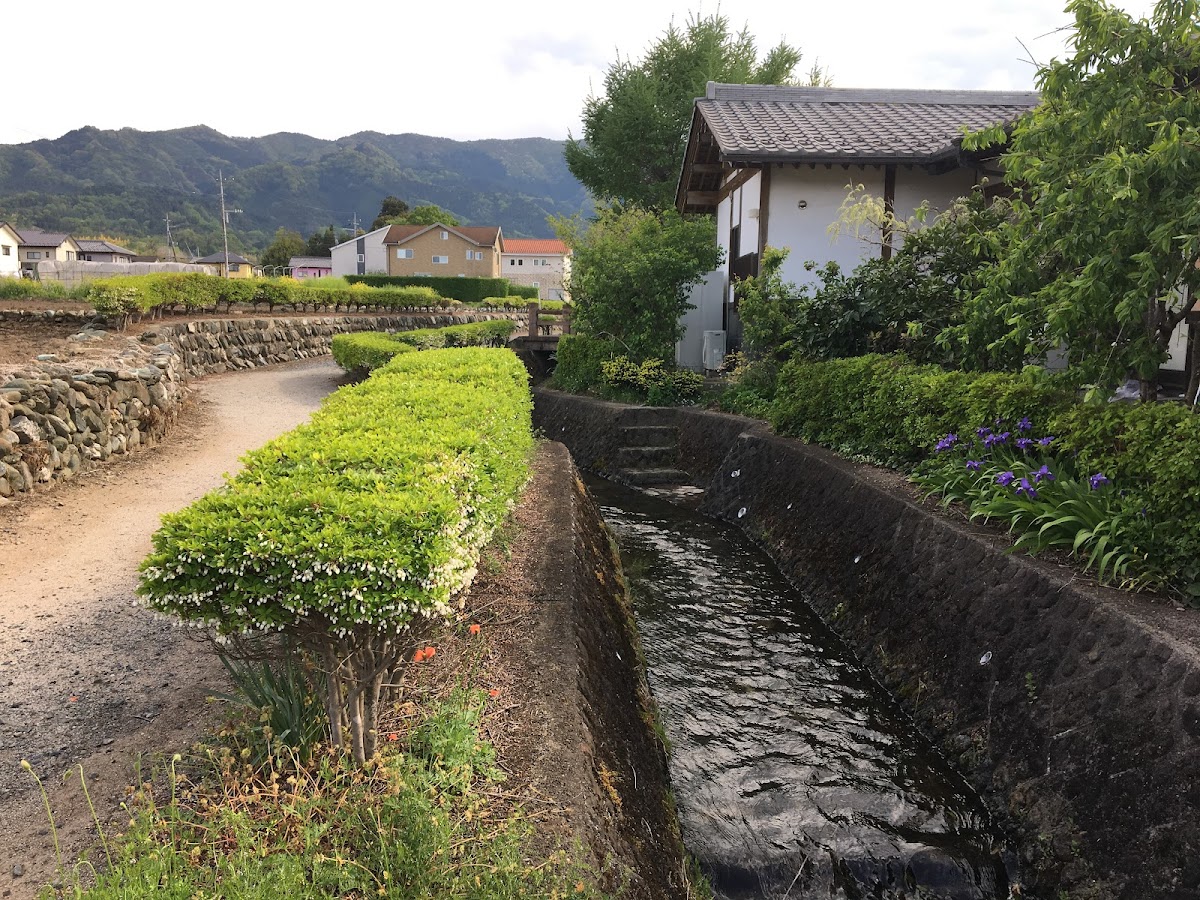
Ogawa Weir, Gunma Prefecture | Complete Guide to 400 Years of History and a Designated Water Quality Site
The Ogawa Weir flowing through Obata, Kanra Town, Kanra District, Gunma Prefecture, is a historical irrigation channel with approximately 400 years of history. This water channel, which has received numerous designations including selection as one of Japan’s 100 Famous Waters, one of Japan’s 100 Historic Water Channels, and a World Irrigation Facility Heritage Site, continues to support the region’s life and culture to this day. This article comprehensively introduces information you should know before visiting, from the history and characteristics of the Ogawa Weir to its points of interest and access methods.
What is the Ogawa Weir | A Historic Irrigation Channel in Kanra Town, Gunma Prefecture
The Ogawa Weir is a historic irrigation channel flowing through the Obata district of Kanra Town, Kanra District, Gunma Prefecture. Drawing water from the Ogawa River, a first-class river, it has been used since the early Edo period to supply water through the castle town of Obata to the rice paddies to the north as an irrigation facility.
Basic Information about the Ogawa Weir
Location: Obata, Kanra Town, Kanra District, Gunma Prefecture
Water Source: The Ogawa River originating from Mount Inafukami (elevation 1,370m)
Water Intake Point: Downstream of Otokihashi Bridge, approximately 3km south of Obata
Weir Height: Approximately 7 meters
Structure: Tamagyoseki structure (dry stacking)
Completion Date: Modified into its current form in Kanei 19 (1642)
The Ogawa Weir had its development advanced during the reign of Oda Nobukatsu, the second son of Oda Nobunaga, and supported the development of the castle town throughout the subsequent Obata Domain period. The current form of the irrigation channel is believed to have been shaped by major renovation work carried out between Kanei 6 (1629) and Kanei 19 (1642).
History of the Ogawa Weir | The Oda Clan and the Development of Obata Castle Town
Development in the Early Edo Period
The exact timing of when the Ogawa Weir was first constructed remains unclear due to the lack of precise historical records. However, it is known that major renovations were undertaken between Kanei 6 (1629), when the Oda clan planned the relocation of its base to Obata, and Kanei 19 (1642), when the work was completed.
When Oda Nobukatsu assumed his position as lord of Obata Domain, there was a need to secure drinking water and daily water for residents in the castle town along with its development. The Ogawa Weir was developed as an important infrastructure supporting the livelihood of residents living in the Obata castle town during this period.
Role During the Daimyo Period
Throughout the Edo period, the Ogawa Weir functioned as a multipurpose water facility. Its main uses were as follows:
- Daily Water Supply: Drinking water and daily life water for castle town residents
- Fire Prevention Water: Emergency water in case of fire
- Irrigation Water: Agricultural water for rice paddies downstream
- Landscape Formation: Creating the appearance of the samurai residence district
The Ogawa Weir, believed to have existed before the daimyo period, developed in tandem with town planning in Obata and became an indispensable part of the regional society.
Changes After the Meiji Period
With the advent of the Meiji period, evaluation and preservation from a modern perspective were undertaken by Ishii Seiichi of the Ministry of Interior Affairs and Dutch engineer Childrool. Subsequently, it has been carefully maintained and managed by local residents and continues to function without losing its role to the present day.
The Multiple Designations and Registrations Received by the Ogawa Weir
The Ogawa Weir has been recognized with multiple national and international designations due to its historical value and the fact that it continues to function today.
Ministry of Environment “100 Famous Waters of Japan”
Selected as one of the “100 Famous Waters of Japan” by the Ministry of Environment in Showa 60 (1985). The crystalline water flowing from Mount Inafukami has sustained the lives of local residents for over 400 years. Water quality remains good at present, and it is recognized as a representative famous water of Japan.
Ministry of Agriculture, Forestry and Fisheries “100 Selected Historic Water Channels”
In Heisei 18 (2006), it was designated as one of the “100 Selected Historic Water Channels” by the Ministry of Agriculture, Forestry and Fisheries. A “suiko” (irrigation channel) refers to an artificially created water course for irrigation or water transport. The Ogawa Weir was evaluated for its historical value and the fact that it continues to function as agricultural irrigation water.
Civil Engineering Society “Selected Civil Engineering Heritage”
In Heisei 22 (2010), it was recognized as a “Selected Civil Engineering Heritage” by the Civil Engineering Society. The fact that a water channel built using traditional dry stacking methods with tamagyoseki continues to function from the Edo period to the present was evaluated as a valuable heritage in the history of civil engineering technology.
World Irrigation Facility Heritage
In Heisei 28 (2016), it was registered as a “World Irrigation Facility Heritage” by the International Commission on Irrigation and Drainage (ICID). This designation recognizes irrigation facilities of historical, technical, and social value worldwide, and the Ogawa Weir has received international recognition as a particularly important facility within Gunma Prefecture.
Through these designations, the Ogawa Weir is positioned not only as a local treasure but as a precious water heritage for Japan and the world.
Structure and Technical Characteristics of the Ogawa Weir
Tamagyoseki (Dry Stacking) Construction Method
The greatest technical feature of the Ogawa Weir is that it was built using the traditional dry stacking (tamagyoseki) method. Dry stacking is a construction technique in which stones are stacked without using mortar or cement as an adhesive between them.
This method has the following advantages:
- Flexibility: It can flexibly respond to earthquakes and ground movement
- Drainage: Water drains through the gaps between stones, preventing damage from water pressure
- Repairability: Even if there is partial damage, it can be relatively easily repaired
- Environmental Consideration: Using only natural materials, it has minimal impact on ecosystems
The fact that the Ogawa Weir, built with Edo-period technology, continues to function for nearly 400 years owes much to this excellent construction method.
Water Intake System
The Ogawa Weir draws water from a weir dam approximately 7 meters high set downstream of Otokihashi Bridge, approximately 3km south of Obata. Utilizing the abundant water volume of the Ogawa River sourced from Mount Inafukami (elevation 1,370m) and gravity flow using elevation differences, it supplies water stably.
The intake water flows through the samurai residence district of Obata and then heads to the rice paddies to the north. This water channel network was designed to skillfully utilize the terrain, achieving maximum effect with minimum effort—a perfect example of Edo-period civil engineering technology.
Points of Interest at the Ogawa Weir | Waterside Landscape in Harmony with Samurai Residences
Obata’s Samurai Residence District
The greatest point of interest of the Ogawa Weir is the section flowing through Obata’s samurai residence district. Edo-period samurai residences line both sides of the stone-walled water channel, conveying the atmosphere of the former castle town to the present day.
Cherry trees are planted along both sides of the water channel, and in spring, visitors can enjoy the beautiful scenery created by cherry blossom avenues and clear streams. In autumn, maple leaves reflect in the water’s surface, presenting different appearances throughout the seasons.
Small Weirs and Stone Bridges
Small-scale weirs called “kozeki” are installed at various points along the Ogawa Weir to regulate water volume. Stone bridges constructed to cross the water channel are also points of interest. These structures were all built using traditional Edo-period construction methods and have become historically valuable civil engineering heritage.
Clear Stream and Ecosystem
The water of the Ogawa Weir is extremely transparent, allowing one to see the stones on the riverbed clearly. This clear stream is inhabited by freshwater fish such as medaka (killifish) and loach, as well as aquatic insects, maintaining a rich ecosystem.
Through regular cleaning activities by local residents, the water channel is kept clean at all times. This resident-led maintenance system is one of the key factors that has kept the Ogawa Weir functioning for 400 years.
Tourist Attractions Around the Ogawa Weir
Rakuyama Garden (National Designated Place of Scenic Beauty)
Rakuyama Garden, located within walking distance of the Ogawa Weir, is a strolling-style landscape garden created as the garden of the Obata Domain lord. It is designated as a National Scenic Beauty and is a valuable cultural property conveying the style of Edo-period daimyo gardens. Visiting it along with the Ogawa Weir deepens your understanding of Obata’s history and culture.
Obata’s Townscape
The Obata district, through which the Ogawa Weir flows, has not been designated as an Important Preservation District for Groups of Historic Buildings, but many samurai residences and merchant houses remain, and the historical townscape is preserved. Strolling along the water channel allows you to experience the atmosphere of an Edo-period castle town.
Kanra Town Historical and Folk Museum
A facility where you can learn about Kanra Town’s history and culture. Materials related to the Ogawa Weir’s history and Obata Domain are displayed, and visiting before your tour deepens your understanding of the Ogawa Weir.
Access Information | How to Reach the Ogawa Weir
Access by Car
From Josanetsu Expressway Tomioka IC
- Travel Time: Approximately 10 minutes (approximately 3km)
- Exit at Tomioka IC and take National Route 254 toward Kanra Town
Parking: Free parking available in the Obata district (such as Rakuyama Garden parking lot)
Access by Public Transportation
Train and Bus
- Get off at Joshin Railway’s “Joshu Fukushima Station”
- Take a bus from the station for approximately 10 minutes, get off at “Obata” bus stop, then walk
From JR Takasaki Station
- Transfer to Joshin Railway from Takasaki Station, approximately 40 minutes to Joshu Fukushima Station
Note: Bus service is limited, so it is recommended to check the schedule in advance. Access by car is more convenient.
Address and Contact Information
Address: Obata, Kanra Town, Kanra District, Gunma Prefecture
Inquiries: Kanra Town Industrial Division Commercial and Tourism Section
Phone Number: 0274-74-3131
Points to Keep in Mind When Visiting the Ogawa Weir
Best Seasons
The Ogawa Weir offers beautiful scenery throughout the year, but particularly recommended times are as follows:
Spring (late March to early April): Cherry blossom avenues are in full bloom, creating a spectacular cherry blossom tunnel along the water channel.
Early Summer (May to June): New greenery is beautiful, and the transparency of the clear stream is high during this period.
Autumn (November): Autumn leaves reflect in the water’s surface, creating a scenic atmosphere.
Time Required for a Stroll
Strolling along the samurai residence district next to the Ogawa Weir takes approximately 30 minutes to 1 hour if you walk leisurely. If you plan to visit Rakuyama Garden and other nearby attractions as well, allow approximately 2 to 3 hours.
Photography Spots
- Samurai Residences and Water Channel: The combination of stone-walled water channel and samurai residences makes for a picturesque scene
- Stone Bridges: Historic stone bridges are popular photography spots
- Reflections in Water: On clear days, the reflections of buildings and trees in the water’s surface are beautiful
- Early Morning: With fewer tourists, you can photograph in a quiet atmosphere
Etiquette and Precautions
- The Ogawa Weir is currently used as daily water supply, so be careful not to pollute the water
- Do not trespass on private property without permission
- Always take your trash with you
- This is also a living space for local residents, so be considerate of noise and other disturbances
Local Residents’ Conservation Activities
Behind the Ogawa Weir’s 400-year continuous function lie the dedicated conservation efforts of local residents.
Regular Cleaning Activities
Local residents regularly clean the water channel, removing garbage and fallen leaves. Through these activities, the Ogawa Weir remains clean at all times, and its water quality as a famous water is maintained.
Maintenance System
Kanra Town serves as the overall manager overseeing maintenance, but day-to-day management is primarily undertaken by local residents. This resident-led management system is key to preserving the Ogawa Weir as a “living heritage.”
Transmission to Future Generations
Local elementary and middle schools provide opportunities to learn about the Ogawa Weir, and educational activities are conducted to convey the region’s history and culture to children. Through such efforts, the value of the Ogawa Weir is transmitted to future generations.
About the Ogawa River
Let us deepen our understanding of the Ogawa River, which is the water source for the Ogawa Weir.
Overview of the Ogawa River
The Ogawa River is a first-class river in the Tone River system flowing through Kanra Town and Tomioka City in Gunma Prefecture. It is positioned as a tertiary tributary of the Karasugawa, a tributary of the Karasugawa.
Water Source: Mount Inafukami (elevation 1,370m)
Basin: Kanra Town, Tomioka City
River System: Tone River system Karasu River tributary Karasugawa tributary
Water Quality of the Ogawa River
Water welling up from the abundant forests of Mount Inafukami is very crystalline while containing an appropriate amount of minerals. This high-quality water is drawn into the Ogawa Weir and maintains water quality selected as one of Japan’s 100 Famous Waters.
Other Water Heritage Sites in Gunma Prefecture
Gunma Prefecture has numerous water facilities with historical value besides the Ogawa Weir.
Nagano Weir (Takasaki City)
The Nagano Weir flowing through Takasaki City, like the Ogawa Weir, is registered as a World Irrigation Facility Heritage Site. It is said to have a history of approximately 1,200 years.
Tengu Rock Water Channel (Midori City)
The Tengu Rock Water Channel in Midori City is an agricultural water channel excavated in the Edo period and has been selected as one of the 100 Selected Historic Water Channels.
Visiting these facilities along with the others allows you to experience Gunma Prefecture’s rich history of water management.
Lodging Facilities and Cuisine Around the Ogawa Weir
Lodging Facilities in the Area
While there are few large hotels near the Ogawa Weir, the following areas have lodging facilities:
Tomioka City: Approximately 15 to 20 minutes by car. Business hotels and hot spring inns are available.
Isobe Hot Spring: Approximately 20 minutes by car. Known as a renowned hot spring in the Joshin region, with a full range of inns and hotels.
Mount Myogi Area: Approximately 30 minutes by car. Lodging facilities where you can enjoy Mount Myogi’s scenery are available.
Local Cuisine
Konnyaku Dishes: Gunma Prefecture, including Kanra Town, is famous for konnyaku. You can enjoy local konnyaku cuisine.
Shimoniita Welsh Onion: Dishes using the Shimoniita Welsh Onion, a specialty of the neighboring Shimoniita Town, are also recommended.
Hormon Fried: Known as a Tomioka City name-brand B-class gourmet food.
Conclusion | The Ogawa Weir is a Living Historical Heritage
The Ogawa Weir in Kanra Town, Gunma Prefecture, is a “living historical heritage” with approximately 400 years of history that continues to support the region’s life and agriculture today. This water channel, which has received numerous designations including selection as one of Japan’s 100 Famous Waters, one of the 100 Selected Historic Water Channels, and a World Irrigation Facility Heritage Site, has been preserved through the excellent civil engineering techniques of the Edo period and the dedicated conservation efforts of local residents.
The Ogawa Weir offers many points of interest: the clear stream flowing through the samurai residence district, the beautiful water channel with its tamagyoseki structure, and landscapes that change with the seasons. When visiting Gunma Prefecture, be sure to visit the town of Obata and experience the charm of the Ogawa Weir with 400 years of history flowing through it.
It is a tourist attraction recommended for a wide range of people: those interested in history, those interested in civil engineering heritage, those seeking beautiful waterside scenery, and those who wish to stroll through Japan’s traditional townscapes. Visiting the Ogawa Weir, which remains rooted in the region’s life, allows you to touch the depth of Japan’s water heritage culture and the endeavors of people who have continued to protect it.
