Kashomai’s Daishomizu (Kanazawa City, Ishikawa Prefecture): Comprehensive Explanation of the Charm and Regional Culture of This Historic Spring Water
“Daishomizu” (literally “Great Clear Water”), which springs forth in the Kashomai district of Kanazawa City, Ishikawa Prefecture, is a historic spring water deeply rooted in the lives of local residents. The abundant water space that suddenly appears in the midst of a residential neighborhood is truly cherished by many people as an oasis within the urban landscape. This article provides a detailed explanation of Kashomai’s Daishomizu, covering its historical background, water quality characteristics, connection to regional culture, and access methods—all concerning this precious named water.
What is Kashomai’s Daishomizu?
Kashomai’s Daishomizu is a spring water spot located in the Kashomai district of Kanazawa City, Ishikawa Prefecture. It is particularly well-known within Kanazawa City and, although not selected for the Ministry of the Environment’s “Heisei Selection of 100 Famous Springs,” continues to be beloved by local residents as a representative spring water of Ishikawa Prefecture.
Basic Information
Location: Kashomai 2-chome, Kanazawa City, Ishikawa Prefecture
Water Source: Groundwater (natural spring water)
Access Restrictions: Allowed (viewing, proximity, touching)
Usage Status: Continued use as domestic water by local residents
The Kashomai district is located slightly southeast of central Kanazawa City, surrounded by residential areas including Kashomai Honmachi, Kikugawa, Jonan, Hondamachi, Ishihiki, and Odarino. This area has been blessed with abundant groundwater since ancient times, and Daishomizu is known as a representative spring water of the region.
The History and Cultural Background of Daishomizu
Water Use Since the Edo Period
Kashomai’s Daishomizu has been used as a valuable water source for local residents since the Edo period. Kanazawa flourished as a castle town of the Kaga domain with one million koku of rice production, and abundant groundwater resources supported its development. Daishomizu also played an important role in sustaining the lives of the people in this region.
A Center of Community
In the past, Daishomizu was not merely a water-drawing place but also a social gathering space for local residents. It was an essential location for daily life—for washing clothes, cleaning vegetables, and securing drinking water—where human interactions and exchanges naturally emerged. Even today, cleaning activities and management by local residents continue, and the spring functions as a place that deepens community bonds.
Connection to the Kantaro River
The water flowing from Kashomai’s Daishomizu forms a small stream called the “Kantaro River.” This river has functioned as a waterway in the region and has been used for agricultural water and domestic water purposes. While there are various theories about the origin of the river’s name, it has become an important element that tells the story of the region’s history.
Water Quality and Characteristics of Daishomizu
The Spring Water Mechanism
The water source of Kashomai’s Daishomizu is rainwater that falls on the hills in the eastern part of Kanazawa City, which permeates underground and, over many years, passes through geological strata before emerging at the surface. During this process, the water is naturally filtered and appears in a clean state.
The geology of Kanazawa City consists mainly of Tertiary and Quaternary layers, with highly permeable sand and gravel layers promoting the storage and flow of groundwater. The Kashomai district has a relatively low elevation and a basin-like topography, with favorable geographical conditions for groundwater flowing from surrounding highlands to accumulate.
Water Temperature and Quality
The water temperature of Daishomizu remains nearly constant throughout the year, feeling cold in summer and relatively warm in winter. This is a characteristic unique to groundwater, as it is less affected by external temperature changes. Generally, groundwater temperature is close to the annual average air temperature, and in Kanazawa’s case, it is stable at approximately 14-16 degrees Celsius.
Regarding water quality, the water tends to be soft to medium-hard water containing an appropriate amount of minerals such as calcium and magnesium. With high transparency and no distinctive odor, it was once used as drinking water.
Fluctuations in Spring Water Volume
The volume of spring water from Daishomizu fluctuates depending on rainfall and seasons. The spring water volume tends to increase after the rainy season and autumn monsoons, while decreasing during dry periods. However, it is also said that as urbanization has progressed and paved surfaces have increased, the amount of rainwater infiltrating underground has decreased, leading to an overall declining trend in spring water volume compared to the past.
The Present State of Daishomizu
A Miraculous Space Appearing in a Residential Neighborhood
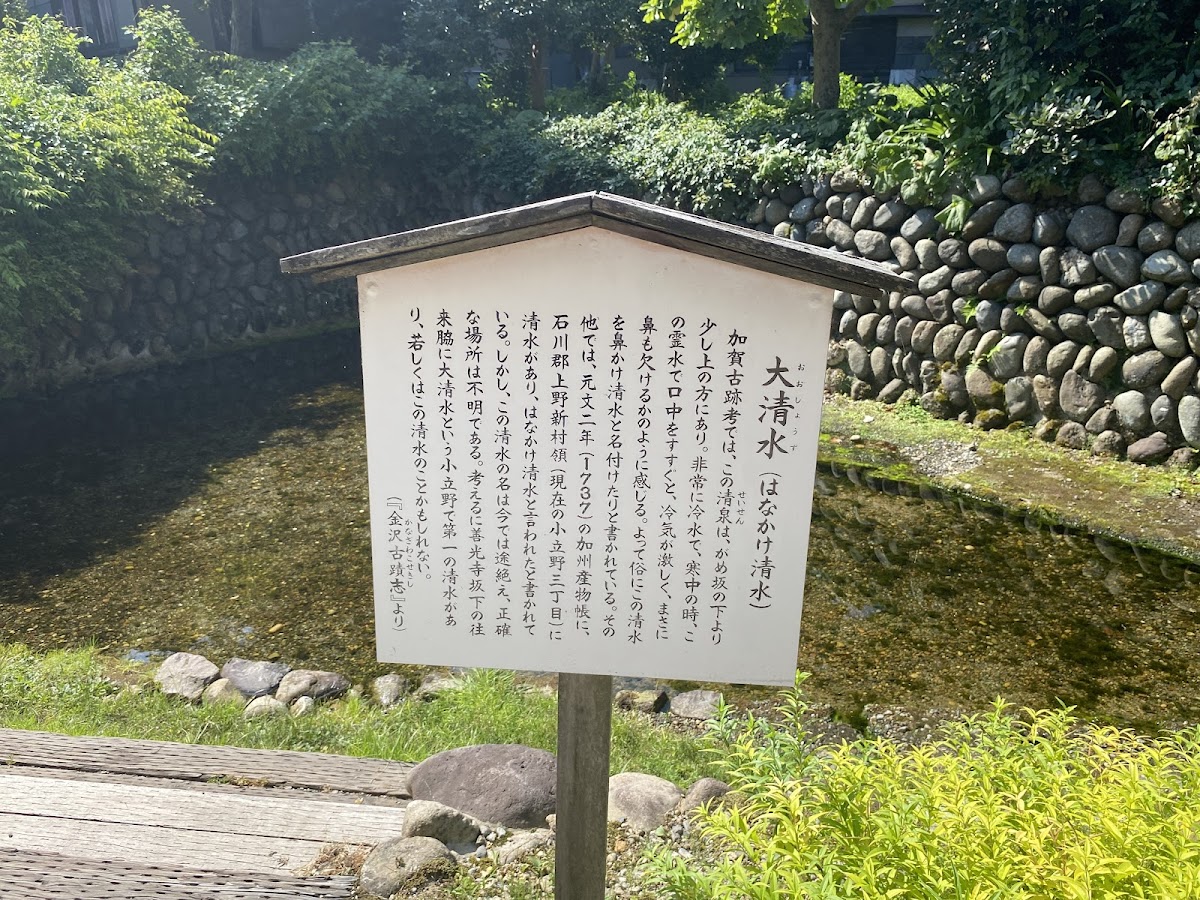
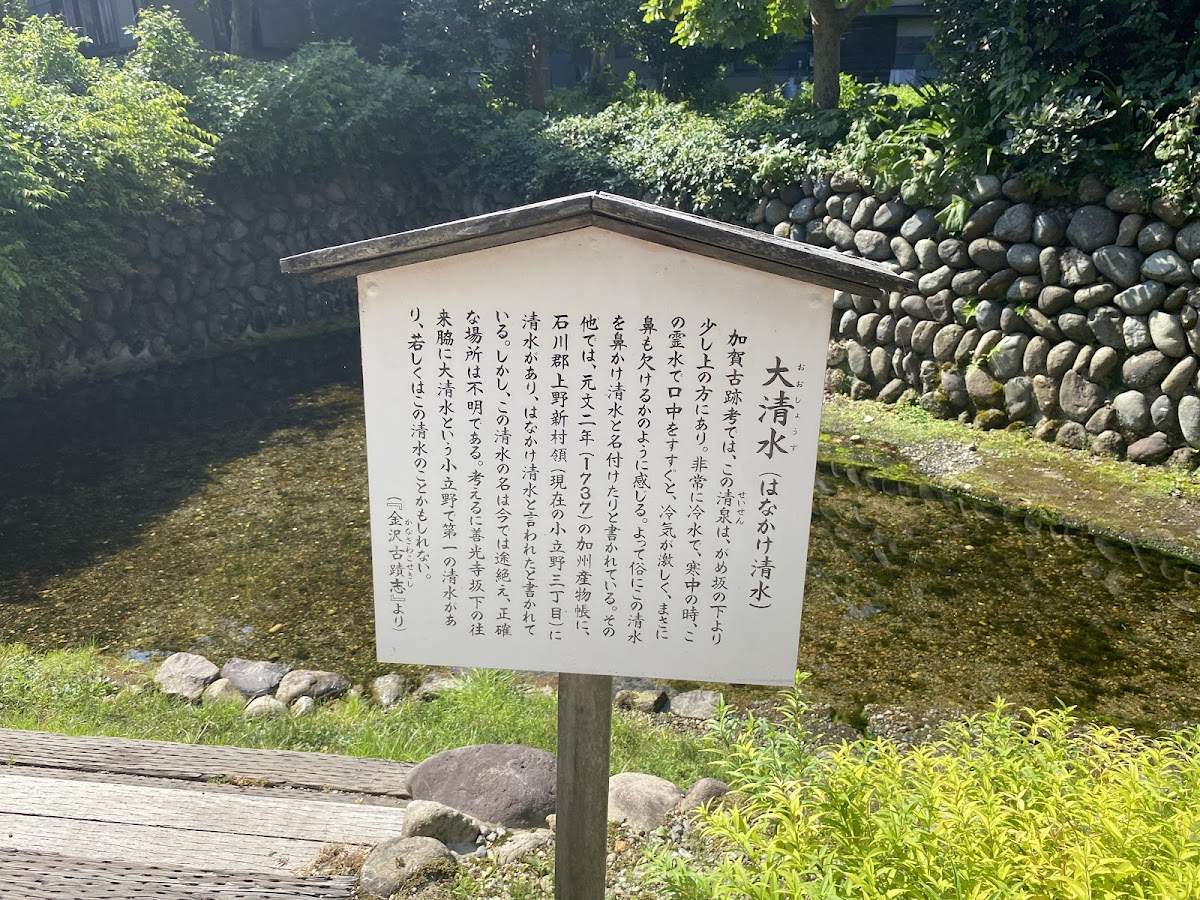
Visitors encountering Kashomai’s Daishomizu for the first time are often astounded by its location. The water place that suddenly appears in a corner of a residential neighborhood is truly a “kill on first sight” kind of miraculous space. Surrounded by residences yet possessing a unique atmosphere, the spring water pool and its surroundings represent a valuable natural space within the city.
Facility Structure
The water place of Daishomizu has a pond-like structure to receive water flowing from the ground. It is equipped with a concrete water tank divided into multiple sections. This design allows for different uses of water, making it possible to use the water separately for drinking, washing clothes, vegetable cleaning, and other purposes.
The water constantly overflows, flowing downstream through drainage channels. This circulation ensures a continuous supply of fresh water.
Management by Local Residents
Even today, Daishomizu is carefully managed by local residents. Regular cleaning activities are conducted to maintain the cleanliness of the water place. Furthermore, during community events and occasions, Daishomizu often becomes the center of conversation, serving as a symbol of local identity.
Usage Methods and Precautions for Daishomizu
Current Usage Status
In modern times, with the establishment of tap water systems, use as drinking water is not recommended. However, some local residents use it for washing, watering plants, and summer sprinkling. Tourists and visitors can enjoy viewing and photography.
Manners When Visiting
When visiting Daishomizu, please observe the following etiquette:
- Be aware this is a residential neighborhood: The surrounding area is a general residential district. Avoid noise and nuisances, and view quietly.
- Do not pollute the water place: Dumping trash is strictly prohibited. To preserve water quality, avoid using detergents.
- Do not trespass on private property: The land and passages around the water place include private property. Be careful not to enter without permission.
- Be considerate of parking: There is no dedicated parking lot. Street parking causes inconvenience to neighbors; use of public transportation is recommended.
Regarding Water Quality
Spring water quality is affected by the natural environment. If consuming the water, it is done at one’s own risk, and treatments such as boiling are recommended. Kanazawa City does not conduct regular water quality testing, so it is best to avoid using it as drinking water.
Access Methods and Surrounding Information
Access by Public Transportation
By Bus:
- Board Hokuriku Railway Bus from JR Kanazawa Station
- Get off at “Kashomai” bus stop, approximately 5 minutes on foot
- Or get off at “Kashomai 2-chome” bus stop, approximately 3 minutes on foot
Travel Time: Approximately 15-20 minutes from Kanazawa Station
Access by Car
The distance from central Kanazawa is approximately 10 minutes by car. However, as mentioned above, there is no dedicated parking lot; use nearby paid parking or public transportation is recommended.
Access from Major Roads:
- From National Route 157 toward the Kashomai direction
- Accessible from Prefectural Road 189 (Kanazawa-Komatsutsu Line)
Nearby Tourist Spots
When visiting Kashomai’s Daishomizu, you can also visit surrounding tourist attractions.
Ishikawa Prefecture Library: Approximately 15 minutes on foot. A library with a rich collection and beautiful architectural design.
Kenroku-en Garden: Approximately 10 minutes by car. Known as one of Japan’s three greatest gardens and a representative tourist destination in Kanazawa.
Kanazawa 21st Century Museum of Art: Approximately 10 minutes by car. A popular museum for enjoying contemporary art.
Omicho Market: Approximately 10 minutes by car. Known as Kanazawa’s kitchen, the market features fresh seafood and local ingredients.
The Spring Water Culture of Ishikawa Prefecture and the Position of Daishomizu
Representative Spring Waters of Ishikawa Prefecture
Ishikawa Prefecture is a region blessed with abundant water resources, and from Kaga to Noto, many named waters exist. The Ministry of the Environment’s “Heisei Selection of 100 Famous Springs” includes “Kobo Pond Water (Hakusan City),” “Kowa Shomizu (Nanao City),” and “Sakura Shomizu (Wajima City)” from Ishikawa Prefecture.
Although Kashomai’s Daishomizu was not selected for the 100 Springs, it is one of the most well-known springs in Kanazawa City and exists as a special “living famous water” closely integrated with local life.
Kanazawa’s Water Culture
Kanazawa is also called the “City of Water,” and its abundant groundwater resources supported the development of the castle town. During the feudal period, irrigation channels were laid throughout the area, and historic waterways such as Tatsumi Aqueduct and Ohno Sho Aqueduct remain today.
Daishomizu plays a role in this water culture of Kanazawa and, even as modernization progresses, has become a precious place preserving traditional forms of water use.
Efforts to Protect Daishomizu
Community Conservation Activities
Residents of the Kashomai district recognize Daishomizu as a precious community resource and work to preserve it. In addition to regular cleaning activities, it is also utilized as a venue for environmental education for children.
Centered on neighborhood associations and community councils, maintenance and management of the water place and surrounding environment are carried out, and these steady efforts preserve the beauty of Daishomizu.
Kanazawa City’s Efforts
From the perspective of natural environment protection, Kanazawa City positions spring waters within the city as important resources. Daishomizu is also introduced on the official Kanazawa City website, helping to disseminate its value widely.
Furthermore, in urban planning, care is taken regarding development around spring water areas, and efforts continue to minimize impacts on groundwater veins.
Future Challenges
There is concern that the groundwater recharge function may decline as urbanization progresses. Increased paved surfaces hinder rainwater infiltration underground, potentially leading to decreased spring water volume in the long term.
In response to these challenges, initiatives are needed to realize sustainable water circulation, such as installing rainwater infiltration facilities and preserving green spaces.
Daishomizu Through the Four Seasons
Daishomizu in Spring
As spring arrives, plants around Daishomizu begin to sprout. The sight of fresh greenery reflected in the clear water surface is beautiful and delights those who visit. During this season, the water temperature is pleasant, and local residents can be seen using the water place frequently.
Daishomizu in Summer
The cold spring water of Daishomizu is particularly pleasant in summer. It is used for sprinkling water and watering plants, and people seeking relief from heat visit to enjoy its coolness. Though located in a residential neighborhood, the sound of water and surrounding greenery offer a precious space that eases the heat.
Daishomizu in Autumn
Autumn is a season of increased rainfall, and the spring water volume becomes relatively abundant. As surrounding trees begin to change color, reflected autumn leaves add aesthetic charm to the water surface. In the clear autumn air, there is something poetic about observing the quiet flow of water.
Daishomizu in Winter
Kanazawa’s winters bring heavy snow, and the area around Daishomizu is blanketed in snow scenery. However, the spring water continues to flow without freezing, conveying warmth even amid the snow. Few people visit during this season, allowing one to enjoy the fantastical atmosphere where only the sound of water resonates in the silence.
Visitors’ Voices and Reputation
Voices of Local Residents
“I’ve been playing at Daishomizu since childhood. Even now, I use it to wash vegetables and water flowers. Having this water makes me feel the connection of the community” (Woman in her 70s)
“To think such a place exists in the middle of the city—how unique to Kanazawa. I want to protect it carefully” (Man in his 40s)
Impressions of Tourists
“I was amazed by the spring water suddenly appearing in a residential neighborhood. It’s a wonderful place where you can feel Kanazawa’s history and culture” (Tourist from Tokyo)
“It’s rarely mentioned in tourist guides, but a local person told me about it. I feel like I experienced authentic Kanazawa untouched by tourism” (Tourist from Osaka)
Conclusion: The Water Culture of Kanazawa Conveyed by Daishomizu
Kashomai’s Daishomizu is a historic named water that springs forth in a residential neighborhood of Kanazawa City, Ishikawa Prefecture. This spring water, which has supported the lives of local residents since the Edo period, continues to exist in modern times as a symbol of the local community and as a precious resource conveying Kanazawa’s water culture.
Even as urbanization progresses, the sight of Daishomizu carefully protected by local residents exemplifies good human-nature coexistence. When visiting Kanazawa, why not turn your attention not only to famous tourist destinations but also to such regionally rooted cultural heritage?
Daishomizu, where clear water quietly springs forth, offers a precious opportunity to pause amid busy daily life and reflect on nature’s blessings and regional history. Kashomai’s Daishomizu is one manifestation of the multi-layered charm that the city of Kanazawa possesses and is a treasure to be passed on to future generations.
When visiting, remember that this place is part of the local residents’ daily lives, observe proper etiquette, and view quietly. Then, reflect on the natural workings that persist within the city and the efforts of those who continue to protect them. The story of Kanazawa’s water culture that Daishomizu tells will surely enrich your journey.