Complete Guide to Geero Pond (Funabashi, Chiba Prefecture) | Exploring the Nature and History of the Katsushika Spring Group
Geero Pond, quietly situated in the Innai district of Funabashi, Chiba Prefecture, is a precious spring-fed pond that preserves rare natural environments in the rapidly urbanizing Greater Tokyo Area. As one of the Katsushika Spring Group, this pond serves as an important link connecting the region’s history and nature to the present day. This article provides comprehensive information about Geero Pond, including its historical background, access methods, and surrounding environment.
What is Geero Pond?
Basic Information
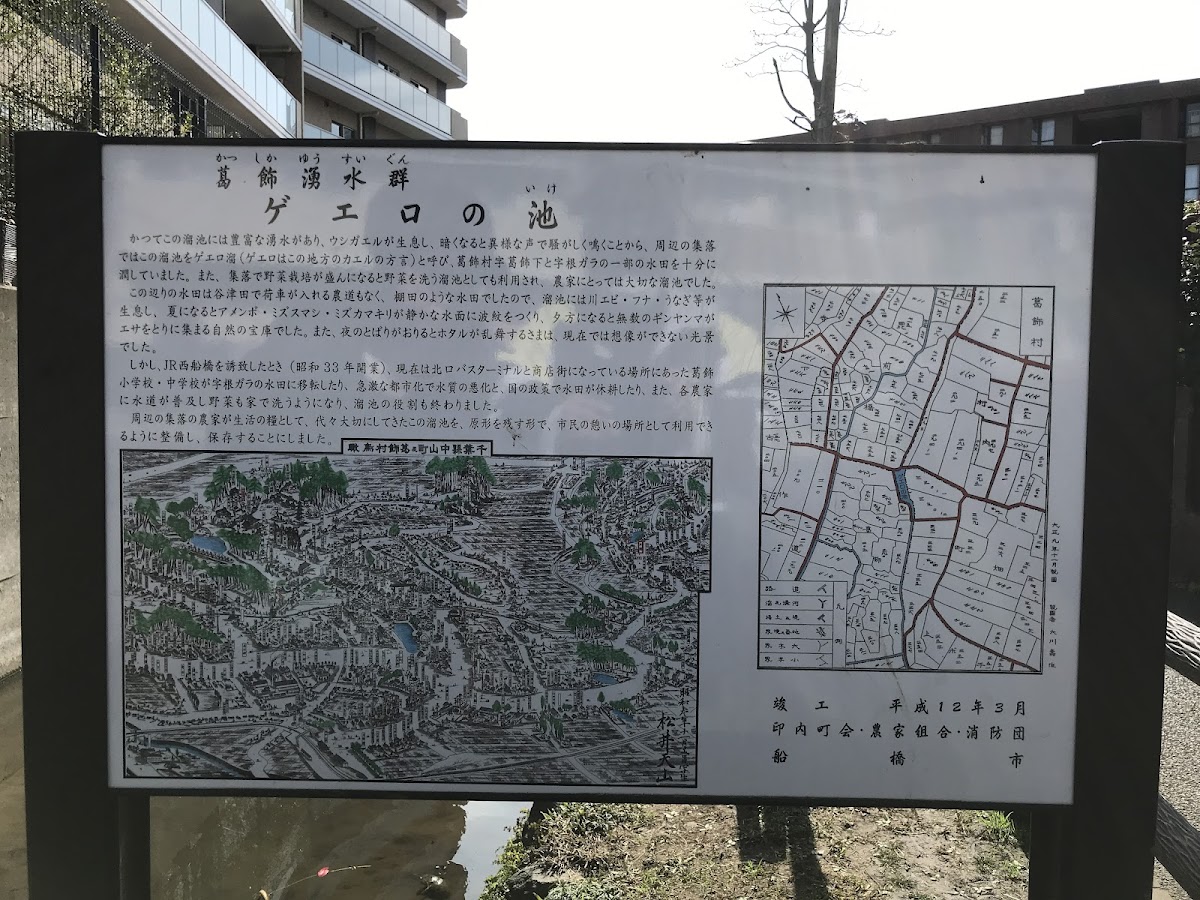
Geero Pond is a spring-fed pond located at 1-9-25 Innai, Funabashi, Chiba Prefecture. As one of the ponds constituting the Katsushika Spring Group, it is maintained and managed by Funabashi City from an environmental conservation perspective as a public natural spot.
Location: 1-9-25 Innai, Funabashi, Chiba Prefecture
Administration: Funabashi City
Classification: Spring-fed pond (Katsushika Spring Group)
Development Year: Fiscal Year 1999 (Heisei 11)
The Unique Origin of Its Name
The somewhat unusual name “Geero” comes from a local dialect word meaning “frog” in this area. In the past, this pond was called “Geero-tame,” and was named by local residents because many frogs, including bullfrogs, inhabited it.
When Funabashi City developed it as a spring-fed pond in fiscal year 1999, the city respected this historical name and officially designated it as “Geero Pond.” The respect for local language and history is reflected in this distinctive name.
About the Katsushika Spring Group
Overview of the Katsushika Spring Group
Geero Pond is part of the “Katsushika Spring Group” scattered throughout the Innai district of Funabashi. The Katsushika Spring Group consists of multiple spring-fed ponds formed by groundwater emerging from the margins of the Shimosa Plateau.
As a model project for environmentally-friendly city development, Funabashi City developed the following spring-fed ponds in fiscal year 1999:
- Geero Pond (Innai 1-chome)
- Katsushika Shrine Pond (Innai 3-chome)
- Other spring-fed ponds
These spring-fed ponds serve important roles as precious natural oases remaining in urban areas and as cultural assets conveying the region’s history.
The Mechanism of Spring Water
The water in the Katsushika Spring Group is formed when rainwater that falls on the Shimosa Plateau infiltrates underground and emerges at the boundary between permeable and impermeable layers. This natural water circulation system maintains relatively stable water levels throughout the year.
Spring water generally maintains stable temperatures, feeling cool in summer and warm in winter. This temperature stability supports the habitat of diverse aquatic organisms.
History of Geero Pond
Its Role as Agricultural Water
Historically, the Innai district was a rural farming area, and Geero Pond and other spring-fed ponds served as important agricultural water sources. The character “tame” (溜) in the former name “Geero-tame” refers to a “reservoir pond” used for water storage, indicating its character as a water management facility for agriculture.
From the Edo period through the Showa period, farmers in this region used the spring water to irrigate rice paddies and fields, sustaining their livelihoods. These spring-fed ponds were not merely natural features but essential infrastructure deeply connected to people’s daily lives.
Urbanization and Environmental Conservation
From the late Showa period through the Heisei era, Funabashi experienced rapid urbanization. With residential development and road construction destroying much of the natural environment, the conservation of spring-fed ponds became an important issue.
In fiscal year 1999, Funabashi City implemented development projects for the Katsushika Spring Group, including Geero Pond, as a model project for environmentally-friendly city development. Through this project, the area surrounding the pond was improved, creating a space where residents could enjoy nature anew.
Natural Environment of Geero Pond
Organisms That Inhabit It
As its name suggests, Geero Pond serves as a habitat for diverse organisms, particularly frogs.
Amphibians and Reptiles
- Bullfrogs (particularly abundant in the past)
- Japanese tree frogs
- Asiatic grass frogs
- Newts, etc.
Insects
- Fireflies (once seen in large numbers)
- Dragonflies (red dragonflies, etc.)
- Water striders
- Aquatic insect larvae
Plants
- Aquatic plants
- Wetland plants
- Surrounding trees (Japanese chinquapin, Japanese oak, etc.)
In the past, many fireflies would light up summer nights, creating a magical spectacle. Today, it remains a valuable biodiversity hotspot in urban areas.
Water Quality and Environment
Spring-fed pond water quality is easily affected by surrounding environments. Funabashi City conducts regular water quality surveys to maintain environmental management.
Spring water generally maintains clean water quality, but urban spring-fed ponds face challenges such as:
- Water quality changes due to rainwater runoff from surrounding areas
- Effects of domestic wastewater
- Accumulation of organic matter such as fallen leaves
Regular cleaning and water quality management are performed to address these challenges.
Access Methods
Access by Public Transportation
Nearest Station: Keiseisaishi Station (Keisei Main Line)
From Keiseisaishi Station to Geero Pond is approximately a 10-minute walk.
Detailed Route:
- Exit Keiseisaishi Station
- Head north
- Proceed toward Innai 1-chome
- Geero Pond is located within the residential area
Other Nearby Stations:
- Approximately 15-20 minutes on foot from JR Nishi-Funabashi Station
- Also within walking distance from Shin-Funabashi Station (Tobu Noda Line/Tobu Urban Park Line)
Access by Automobile
There is no dedicated parking lot, so public transportation is recommended. If visiting by car, you will need to use nearby coin parking or public facility parking areas.
Since it is located in a residential area, street parking disturbs neighbors, so please avoid it completely.
Precautions When Visiting
- Since it is in a residential area, please be mindful of noise
- Please take all trash with you
- Please refrain from collecting organisms
- The water’s edge is slippery, so watch your footing
- If visiting with small children, please be extremely careful of water-related accidents
Nearby Attractions
Katsushika Shrine Pond
“Katsushika Shrine Pond,” which belongs to the same Katsushika Spring Group as Geero Pond, is also a must-visit spot. Located within the grounds of Katsushika Shrine in Innai 3-chome, you can observe spring water in a sacred atmosphere.
Since it is within walking distance from Geero Pond, a walking course visiting both locations is also recommended.
Natural Spots in Funabashi
Funabashi has many natural spots besides Geero Pond:
- Funabashi Sanban-Zatsu Seaside Park: Observe the tidal flats of Tokyo Bay
- Funabashi Prefectural Forest: Vast forest park
- Andersen Park: Comprehensive park rich in nature
By combining these spots, you can enjoy a full day immersed in Funabashi’s nature.
Water Use and Precautions
Regarding Drinking Water
Geero Pond water is not officially recommended for drinking. Even spring water requires caution for drinking purposes due to:
- Possible effects from surrounding environments
- Water quality testing may not follow drinking water standards
- Risk of contamination from wildlife and organisms
Important Precaution: If drinking natural spring water, boiling it thoroughly before consumption is recommended. Since use is at your own risk, please exercise great care.
Safety Measures at Water’s Edge
When visiting water areas, please keep the following safety measures in mind:
- Prevention of Water-Related Accidents
- Never take your eyes off small children
- Do not enter the pond
- Be especially careful during and after rain
- Caution Regarding Dangerous Organisms
- Be aware of bees, snakes, etc.
- Do not enter tall grass carelessly
- Long sleeves and pants are recommended
- Heat Stroke Prevention
- Bring hats and water during summer
- Rest in shaded areas as needed
Conservation Activities at Geero Pond
Funabashi City’s Efforts
Funabashi City actively works to conserve Geero Pond and the Katsushika Spring Group. Main activities include:
- Regular water quality surveys
- Pond cleaning and maintenance
- Surrounding environmental improvement
- Use as an environmental education venue
Possibility of Citizen Participation
To protect local natural environments, cooperation from citizens is as important as administrative efforts. Funabashi City promotes citizen participation in environmental conservation activities.
Those interested can obtain information about volunteer activities by contacting Funabashi City’s environmental departments.
As a Place for Environmental Education
A Learning Space for Children
Geero Pond is an ideal place for children to interact with nature and learn about the environment. It can be utilized for the following learning themes:
- Water Cycle: Learning the mechanism of spring water
- Biodiversity: Observing organisms inhabiting the pond
- Regional History: The relationship between people’s past lives and water
- Environmental Conservation: Understanding the importance of protecting nature
Use in School Education
Some elementary schools in Funabashi utilize spring-fed ponds including Geero Pond as teaching materials in integrated studies and science classes. By actually visiting the site and conducting observations and surveys, students gain living knowledge that textbooks alone cannot provide.
An Oasis in the City
A Space for Healing
Geero Pond serves as a precious space for healing in the urbanized Funabashi. The murmur of spring water, green trees, and the changing face of nature with the seasons provide peace to those who visit.
By stepping away from the busy daily routine and spending quiet time in nature, you can refresh both body and mind.
A Hub for Biodiversity Conservation
In urban areas, much natural environment is lost to development. In such circumstances, spring-fed ponds like Geero Pond become important conservation hubs for biodiversity.
Even a small pond serves as a precious habitat for the organisms living there. Additionally, in coordination with surrounding green spaces, it functions as part of ecological corridors for organism movement.
Seasonal Charm
Spring (March to May)
Spring brings beautiful fresh greenery, and the area around the pond is filled with vitality. It is frog spawning season, and you may observe tadpoles swimming.
Summer (June to August)
Summer is when the waterside feels refreshingly cool. Dragonflies flit about, and aquatic insects become active. During this season when fireflies were once visible, you might be fortunate enough to encounter them today as well.
Autumn (September to November)
Autumn brings colorful foliage to surrounding trees, and falling leaves adorn the pond’s surface. The cooler weather makes this an ideal season for walking.
Winter (December to February)
In winter, organism activity decreases, but you can feel the warmth of the spring water. You may encounter magical landscapes on frosty mornings.
Geero Pond as a Community Asset
Historical Significance
Geero Pond is not merely a natural spot. This pond holds multifaceted value as a community asset:
- Historical Value: A historical heritage conveying people’s past lives
- Environmental Value: Natural environment conserving biodiversity
- Educational Value: Utilization as an environmental education venue
- Cultural Value: Cultural heritage conveying regional dialect and tradition
- Social Value: A place strengthening community bonds
Passing It On to the Future
It is the responsibility of those living today to pass on local natural environments like Geero Pond to future generations. Each person must possess environmental conservation awareness and take action in small ways.
- Take trash with you when visiting
- Do not over-harvest organisms
- Avoid actions that pollute water
- Participate in community conservation activities
These small accumulated actions contribute to protecting Geero Pond’s future.
Summary
Geero Pond in Funabashi, Chiba Prefecture is a precious natural environment remaining in the city and an important presence conveying the region’s history and culture to the present. With its distinctive name rooted in local dialect and history, its environmental value as part of the Katsushika Spring Group, and its role as a place of respite for citizens, it possesses multifaceted appeal.
Its accessibility—approximately a 10-minute walk from Keiseisaishi Station—is also attractive. If you have the opportunity to visit Funabashi, be sure to stop by Geero Pond. You will be able to spend quiet time away from the city’s hustle and bustle, listening to the murmur of spring water while reflecting on nature and history.
Geero Pond is a precious place that teaches us the importance of nature, the significance of regional history, and the meaning of environmental conservation.
Contact Information
For detailed information about Geero Pond and to participate in conservation activities, please contact:
Funabashi City Environmental Policy Division
Address: 2-10-25 Minato-cho, Funabashi, Chiba Prefecture 273-8501
Phone: 047-436-2454 (Main)
※Please confirm the latest information before your visit.
※Please be extremely careful of water-related accidents and dangerous organisms at water’s edge.
※If drinking natural spring water, boiling thoroughly before consumption is recommended.