Rakan-no-i (Ichikawa City, Chiba Prefecture) Complete Guide: A Valuable Spring Water Spot Preserving Kobo Daishi Legend and History
The “Rakan-no-i” (羅漢の井), located on the Kofudai plateau in Ichikawa City, Chiba Prefecture, is a precious spring water site where history and legend intersect. Despite being situated on high ground, this well produces clear water year-round and holds numerous stories, including legends of Kobo Daishi Kukai and connections to the Satomi clan during the Sengoku period. This article provides a comprehensive introduction to the historical background of Rakan-no-i, its current state, and access methods.
What is Rakan-no-i: Historic Spring Water Remaining in Ichikawa City, Chiba
Rakan-no-i is a spring water well located at 3-chome 9-banchi, Kofudai, Ichikawa City, Chiba Prefecture, on the southern slope below Satomi Park. Read as “rakan-no-i,” it is known locally as a precious water source that has been cherished for many years.
Basic Information
- Location: 3-chome 9-banchi, Kofudai, Ichikawa City, Chiba Prefecture
- Operating Hours: 8:00 AM–5:00 PM
- Closed: New Year’s holidays
- Admission: Free
- Management: Ichikawa City (Park and Greenery Division)
- Access: Approximately 20 minutes on foot from Keikyu Line Kofudai Station
The most distinctive feature of Rakan-no-i is that despite being located on high ground, clear water continues to spring forth throughout the year. Typically, high-altitude areas lack water sources, making spring water rare in such locations. This phenomenon is noteworthy from a geological perspective.
The Legend of Kobo Daishi Kukai and Rakan-no-i
Rakan-no-i preserves a legend related to Kobo Daishi (Kukai), which is common to many celebrated springs throughout Japan.
The Tradition of Kukai’s Discovery
According to legend, in the early Heian period, Kobo Daishi Kukai visited this area while traveling throughout the country on a pilgrimage. Witnessing the villagers’ hardship due to scarce water sources on the high plateau, Kukai struck the ground with his staff (shakujo), whereupon clear water sprang forth. It is said that Kukai taught the villagers to use this spring water as their drinking water, thereby assisting their livelihoods. This legend is recorded in “Japanese Legends 6: Legends of Boso” (Kadokawa Shoten) and has been passed down as an important part of the region’s oral culture.
Background of the Kobo Daishi Legend
Numerous legends concerning spring water and wells associated with Kobo Daishi exist throughout Japan. These legends, regardless of whether Kukai actually visited these places, are thought to result from people’s gratitude and respect for water becoming intertwined with the name of this great religious figure. Rakan-no-i, too, represents one form of such folk belief and has become an important presence in transmitting regional history and culture.
The Sengoku Period and the Satomi Clan: Spring Water Source for the Kofudai Battle
Rakan-no-i also played an important role in the significant history of the Sengoku period, particularly with connections to the Satomi clan, a warring daimyo who ruled the Boso region (present-day Chiba Prefecture).
Kofudai Castle and the Satomi Clan
In the 16th century, Kofudai Castle was built in this area. When the Satomi clan took positions at this castle, Rakan-no-i is said to have served as a precious drinking water source. During the Sengoku period, securing water sources at castles and military camps was a matter of life and death. Particularly at Kofudai Castle, positioned on high ground, Rakan-no-i, with its stable supply of clear water, is thought to have been an extremely important strategic stronghold militarily.
The Kofudai Battle and Rakan-no-i
Kofudai witnessed two fierce battles between the Satomi and Hojo clans: in 1538 (Tenbun 7) and 1564 (Eiroku 7). These battles are recorded in history as the “Kofudai Battles,” and Rakan-no-i quietly witnessed this tumultuous era. Imagining soldiers quenching their thirst with water from this well, washing their wounds, and sustaining their lives makes it clear that Rakan-no-i is not merely a spring, but an embodiment of the region’s very history.
Rakan-no-i in the Edo Period: Depicted in the Edo Meisho Zue
Rakan-no-i was widely known as a notable site during the Edo period, with evidence of its depiction in the famous geographical work, “Edo Meisho Zue” (Famous Views of Edo).
Record in Edo Meisho Zue
In the “Edo Meisho Zue,” illustrated by ukiyo-e artists Hasegawa Settan and his son Settei, a picture titled “Sonenji Rakan-i” (Sonenji Rakan Well) is included. This illustration depicts many people gathered around the well, revealing that Rakan-no-i was an important water source for local residents and a place where people congregated.
Connection to Sonenji Temple
The name “Sonenji Rakan-i” indicates that Rakan-no-i had deep connections with a nearby temple called Sonenji. It is not uncommon for religious facilities to be associated with spring water sources, representing one traditional aspect of Japan’s landscape where temples and water sources are linked.
During the Edo period, this area was also known as a recreational destination near Edo, and it is presumed that many people visited Rakan-no-i. The clear spring water likely served as a precious rest stop where travelers could refresh themselves.
Geological Features of Rakan-no-i: The Mystery of Water Springs from High Ground
The most intriguing aspect of Rakan-no-i is that it produces spring water steadily despite being located on high ground.
The Mechanism of High-Altitude Spring Water
Ordinarily, spring water appears in locations where groundwater naturally emerges on the surface, such as valley bottoms or slopes. However, Rakan-no-i is situated on the Kofudai plateau, at a relatively high elevation.
This phenomenon can be explained by the following geological conditions:
- Layer Structure: The Kofudai area is part of the Shimosa Plateau and possesses a complex geological structure. The alternation of highly permeable sand and gravel layers with impermeable clay layers facilitates the accumulation of groundwater in specific locations.
- Confined Groundwater: Groundwater under pressure from deep layers may rise through gaps in geological strata and emerge on the surface.
- Extensive Recharge Area: Rainwater that has seeped into the ground across a wider surrounding region may be collected underground and concentrated at the Rakan-no-i location.
Water Quality and Spring Discharge
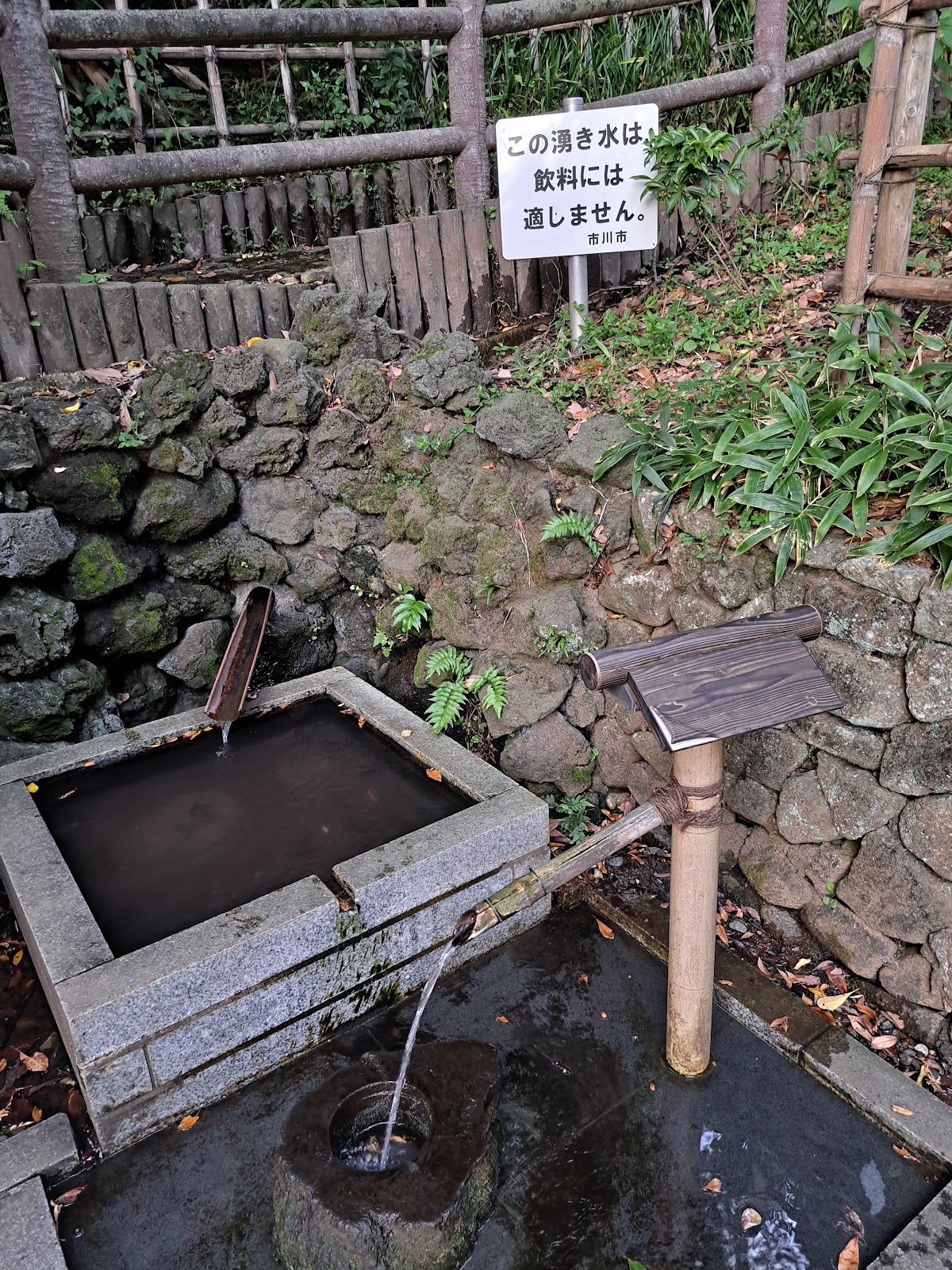
The water from Rakan-no-i is recorded as never drying up throughout the year, indicating the presence of a stable groundwater vein. However, current official information from Ichikawa City explicitly states: “This spring water is not suitable for drinking purposes.” Viewing and historical study are recommended instead.
Rakan-no-i Today: A Historical Spot Within Satomi Park
Currently, Rakan-no-i is developed as part of Satomi Park and has become a historical spot freely accessible to citizens and tourists.
About Satomi Park
Satomi Park, located on the Kofudai plateau, is a representative park in Ichikawa City. Named after the Satomi clan of the Sengoku period, this park is cherished as a place of leisure combining historical significance with natural beauty.
Within the park, in addition to Rakan-no-i, there are the following attractions:
- Kofudai Castle Ruins: Ruins from the Sengoku period
- Akedo Kofun Stone Coffin: Remains from the Kofun period
- Edogawa River Panorama: Views of the Edogawa River and the opposite shore can be observed from the park
- Cherry Blossom Viewing Site: Known as a cherry blossom spot in spring
Current Status of Rakan-no-i
Rakan-no-i is situated on the southern slope below Satomi Park in a somewhat inconspicuous location. Somewhat removed from the main park area, it attracts primarily history enthusiasts and spring water lovers.
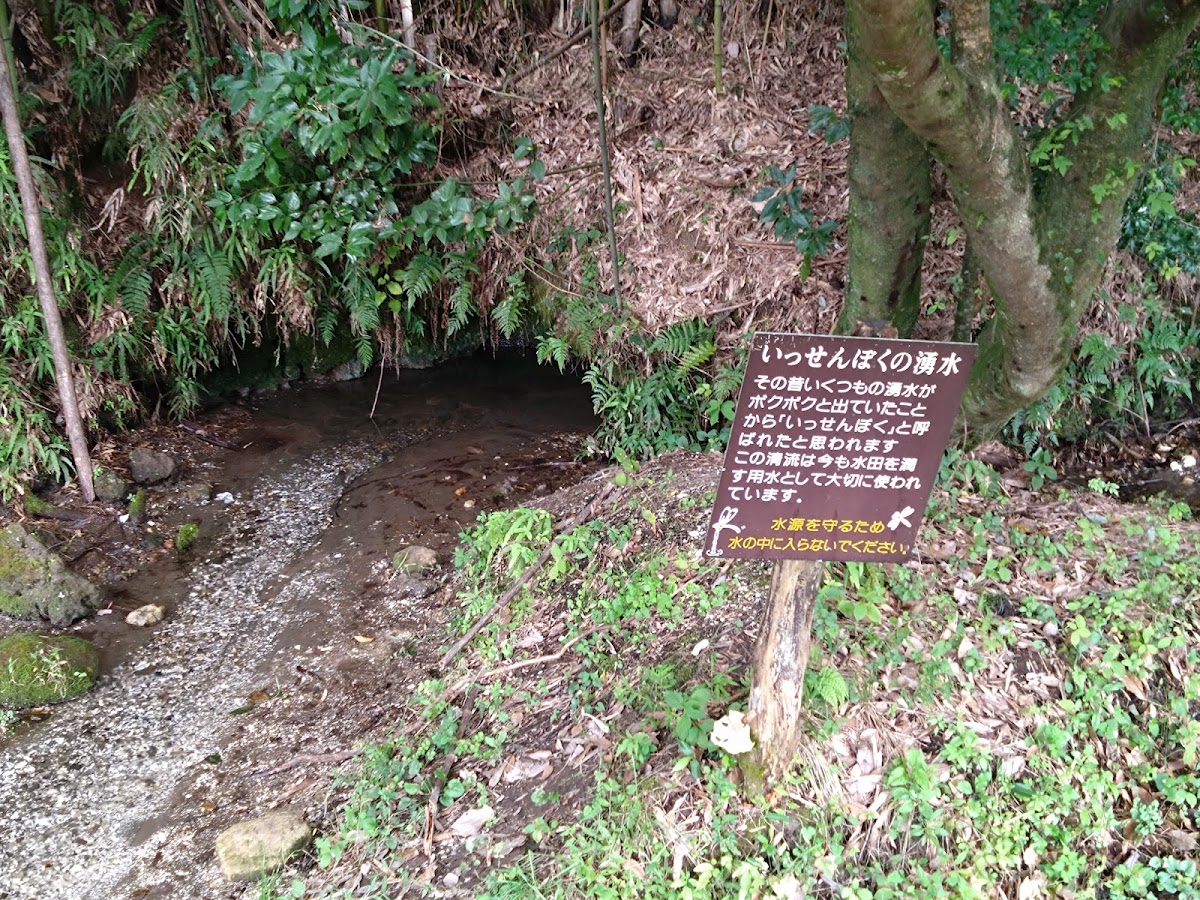
The area surrounding the well is organized with stone walls, and an informational sign has been installed. This sign provides explanations about the history and legends of Rakan-no-i, allowing visitors to understand the historical background.
Spring water continues to flow, and clear water can be seen emerging from the stone-constructed well. However, as mentioned previously, the water is unsuitable for drinking, so visits are limited to observation.
Access Methods to Rakan-no-i
Here are the access methods for visiting Rakan-no-i.
Access by Public Transportation
Using Keikyu Electric Railway
- Get off at “Kofudai Station” on the Keikyu Main Line, approximately 20 minutes on foot
- Head toward Satomi Park from the station and proceed south below the slope within the park
Using JR
- From “Ichikawa Station” on the JR Sobu Line, take a bus to “Kofudai Hospital,” approximately 10 minutes on foot
- Or approximately 30 minutes on foot from “Ichikawa Station”
Access by Automobile
Satomi Park has a dedicated parking lot (with limited spaces).
- Address: 3-9, Kofudai, Ichikawa City, Chiba Prefecture
- Navigation Setting: Search for “Satomi Park” or the above address
The location is easily accessible from the Metropolitan Expressway or National Route 14.
Tips for Finding Rakan-no-i in Satomi Park
To locate Rakan-no-i within Satomi Park, refer to the following points:
- From the main park area, proceed south (toward the Edogawa River)
- It is located below the road in front of the park on the Edogawa River side
- Since it is somewhat difficult to locate, proceed while searching for informational signs
- If uncertain, asking the park management office or local residents is also a good approach
Attractions Around Rakan-no-i
When visiting Rakan-no-i, it is recommended to explore nearby historical and cultural sites as well.
Historic Sites Within Satomi Park
Kofudai Castle Ruins
The ruins of a castle from the Sengoku period, the site of the Kofudai Battles between the Satomi and Hojo clans. Currently developed as a park, remnants of earthen walls and moats remain.
Akedo Kofun Stone Coffin
A stone coffin from the Kofun period is displayed, providing insight into the ancient history of this region.
Nearby Historical Sites
Shimosa Kokubunji Ruins
Ruins of a national temple (kokubunji) established during the Nara period, representing one of Ichikawa City’s major ancient archaeological sites. Approximately 10 minutes by car from Rakan-no-i.
Mama-yama Kobo-ji Temple
An ancient temple reportedly founded by the Buddhist monk Gyoki during the Nara period, with deep connections to Kobo Daishi Kukai. Visiting this temple together with Rakan-no-i’s Kobo Daishi legend provides deeper understanding.
Tekonai Rei Shindo
A site associated with the Tekonai legend, which is mentioned in the Man’yoshu, representing one of Ichikawa City’s characteristic legendary spots.
Precautions When Visiting Rakan-no-i
Please note the following points when visiting Rakan-no-i.
Regarding Drinking Water
The water from Rakan-no-i is not suitable for drinking purposes. Ichikawa City’s official information explicitly states this, so visits should be limited to observation only. Water quality testing has confirmed that the water does not meet drinking water standards.
Operating Hours
- Operating Hours: 8:00 AM–5:00 PM
- Closed: New Year’s holidays
Entry may not be permitted outside these hours, so pay attention to visiting times.
Safety of Footing
Rakan-no-i is located on a slope below, requiring walking on stone steps and uneven ground. Particularly during rainy weather or in winter, footing becomes slippery; comfortable shoes are recommended.
Photography
Photographs of Rakan-no-i and surrounding scenery may be taken freely, but be considerate of other visitors’ privacy. When posting on SNS and similar platforms, exercise caution regarding location information.
Cultural Value and Significance of Rakan-no-i’s Preservation
Rakan-no-i is not merely a spring water spot but an important regional resource with multifaceted cultural value.
Historical Value
Rakan-no-i is a precious historic site narrating various eras’ histories: the Kobo Daishi legend, connections to the Satomi clan during the Sengoku period, and its record as a notable site during the Edo period. In particular, its relation to the Kofudai Battles, an important historical event, is indispensable for understanding the Sengoku period in the Boso region.
Folklore Value
The legend associated with Kobo Daishi is a typical example of folk belief seen throughout Japan. Rakan-no-i’s legend demonstrates people’s gratitude and reverence toward water as the source of life, and the cultural practice of transmitting such gratitude as the achievements of a great religious figure.
Geological Value
The geological characteristic of stable spring water on high ground is an important case study for understanding the groundwater system of the Shimosa Plateau. This phenomenon has the potential to contribute to regional hydrogeological research.
Landscape Value
As depicted in the Edo Meisho Zue, Rakan-no-i serves as a historical landscape resource. Even today, the scenery created by clear water emerging from the stone-constructed well and surrounding nature provides precious restorative space in our increasingly urbanized modern era.
Issues of Preservation and Utilization
The following efforts are important for transmitting historic spring water sites like Rakan-no-i to future generations:
- Regular Maintenance and Cleaning: Maintaining the spring water’s condition and organizing surrounding environment
- Awareness of Historical Value: Enhancing informational signs and implementing educational programs
- Water Quality Monitoring: Scientifically understanding the spring water’s state and responding to environmental changes
- Community Cooperation: Preservation activities conducted in collaboration with local residents and history enthusiasts
Ichikawa City positions Satomi Park, including Rakan-no-i, as a historical park and is proceeding with appropriate management and utilization.
Rakan-no-i and Japanese Spring Water Culture
Understanding Rakan-no-i requires positioning it within the context of spring water culture in Japan.
Japanese People and Spring Water
Japan’s abundant precipitation and complex topography result in numerous spring waters throughout the country. Since ancient times, Japanese people have utilized spring water not only as drinking water but also revered it as sacred places. The fact that numerous Shinto shrines and Buddhist temples have been established near spring water sources demonstrates the deep connection between water and faith. Rakan-no-i represents one example of this traditional reverence for water.
The Spread of the Kobo Daishi Legend
Legends concerning spring water associated with Kobo Daishi Kukai are said to exist at hundreds of locations throughout Japan. These legends are not necessarily limited to places Kukai actually visited; rather, they result from people’s gratitude for water becoming connected with the name of this great religious figure. Understanding Rakan-no-i’s legend as part of Japan’s spring water culture imparts deeper meaning to it.
Contemporary Value of Spring Water
In an increasingly urbanized modern era, historic spring water sites like Rakan-no-i hold multifaceted value:
- Environmental Education Venue: Opportunity to learn about water cycles and groundwater
- History Learning Venue: A place to experientially learn regional history
- Space of Comfort: Providing peace of mind through natural elements amid urbanization
- Community Hub: A place where regional people gather and interact
Voices of Those Who Visited Rakan-no-i
Various impressions have been shared by people who have actually visited Rakan-no-i.
From History Enthusiasts
“When you visit after learning about the Kofudai Battles, you come to realize that this well was not merely a spring but an important location supporting the lives of Sengoku period soldiers. For those interested in Satomi clan history, this is definitely a must-visit spot.”
From Spring Water Enthusiasts
“High-altitude spring water is rare and geologically fascinating. The fact that it never dries year-round is astonishing, demonstrating the presence of a stable groundwater vein. This is a famous spring water spot featured in magazines.”
From Local Residents
“This is a place I’ve known since childhood. I’ve heard that people used to come here to collect water long ago. While we can’t drink it now, it remains an important place transmitting the region’s history, which we hope to preserve.”
From Tourists
“I stopped by when visiting Satomi Park. Although it is somewhat difficult to locate, it is a quiet, peaceful spot where one can feel history. It was nice to be able to learn the history through the informational sign.”
Conclusion: What Rakan-no-i Tells of Ichikawa’s History and Culture
Rakan-no-i in Ichikawa City, Chiba Prefecture, is a precious spring water site with multilayered history encompassing the Kobo Daishi Kukai legend, connections to the Satomi clan during the Sengoku period, and records as a notable site during the Edo period.
The geological characteristic of producing clear water year-round despite being on high ground speaks to this place’s mysterious nature. While no longer suitable for drinking, it continues to provide value as a venue for observation and historical study.
Located conveniently within Satomi Park while maintaining a quiet, peaceful atmosphere for experiencing history, Rakan-no-i deserves a visit when traveling to Ichikawa. Gazing at clear water emerging from the stone-constructed well allows one to feel the passage of time recorded in this place.
Rakan-no-i is not merely a tourism destination but an irreplaceable regional resource conveying the area’s history and culture, along with people’s gratitude toward water, to the present day.