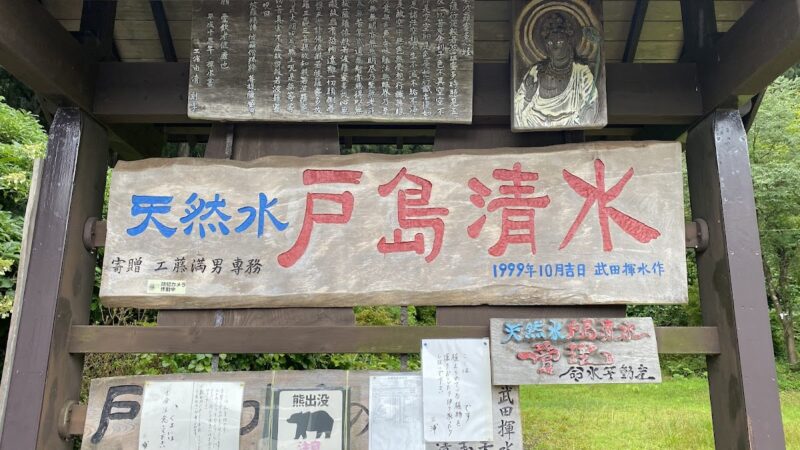
Sugisawa Kumano Shrine’s Clear Water (Akita Prefecture): The Charm and History of Sacred Water Named by Sakanoue no Tamuramaro
In the mountains of Noshiro City, Akita Prefecture, stands Sugisawa Kumano Shrine (Izumi Shrine), which possesses clear spring water that has been cherished by local people since ancient times. This spring water, said to have been named “sacred water” by Sakanoue no Tamuramaro in 803 AD (the 22nd year of Enryaku), is a famous water of Noshiro representing the region, praised even by Meisho Sugae, a noted travel writer of the Edo period.
This article provides detailed information about the historical background, water quality characteristics, access methods, and origins of Sugisawa Kumano Shrine’s clear water, based on local traditions and historical records.
Sugisawa Kumano Shrine’s Clear Water
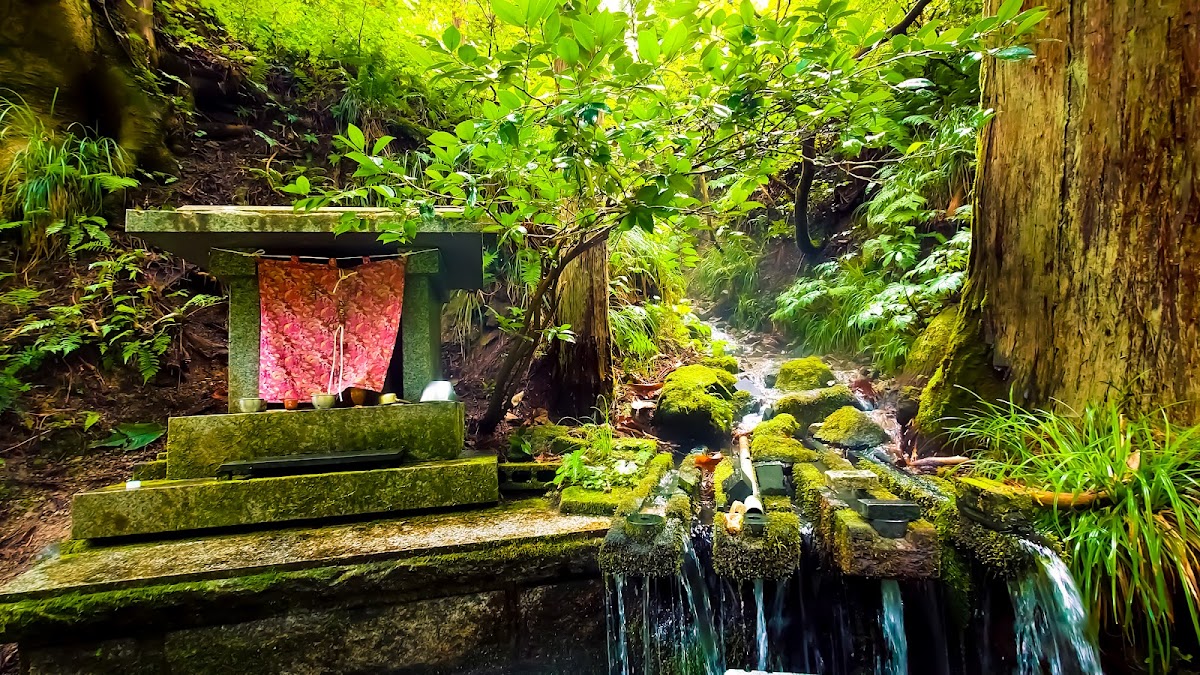
Sugisawa Kumano Shrine’s clear water is a spring located in Iwasugisawano, Noshiro City, Akita Prefecture, flowing from beneath the roots of a large cedar tree within the shrine grounds. This spring water, true to the name “Izumi” (spring), boasts abundant water volume and flows continuously throughout the year without ever drying up.
Even today, one can see local residents arriving with plastic bottles to draw water. While it serves as practical water for daily use, it simultaneously exists as a special entity of faith, revered as the shrine’s sacred water.
Water Quality Characteristics
Sugisawa Kumano Shrine’s clear water is known for its clarity and pleasant taste. Groundwater naturally filtered by the surrounding cedar forest flows forth, a soft water with excellent mineral balance.
The water temperature remains stable year-round, cold in summer and relatively warm in winter, possessing properties characteristic of spring water. This stable water quality is one reason it has been beloved by many people since ancient times.
History and Origins: The Legend of Sakanoue no Tamuramaro
Naming in 803 AD (22nd Year of Enryaku)
The history of Sugisawa Kumano Shrine’s clear water dates back to the early Heian period. According to tradition, in 803 AD (the 22nd year of Enryaku), when General Sakanoue no Tamuramaro, who was engaged in subjugating the Emishi, passed through this region while visiting northeastern Japan, he discovered this clear spring water.
Impressed by the clarity of the water, Tamuramaro named it “sacred water,” comparing it to the water from the sacred waterfall at Kumano Sanzan in Kii Province (present-day Wakayama Prefecture). This anecdote later became the origin of the shrine being called “Kumano Shrine.”
Establishment of Izumi Shrine
Following Sakanoue no Tamuramaro’s naming, a shrine was built to protect this sacred water. In 1616 (the 2nd year of Genwa), it is formally documented with the shrine name “Izumi Shrine,” indicating that belief in viewing the flowing spring as sacred had become established.
During the Edo period, it gathered people’s faith as a tutelary deity of the region and as a water deity, playing an important role as agricultural water.
Records and Evaluation by Meisho Sugae
Praise from an Edo Period Travel Writer
Meisho Sugae (1754-1829), a renowned travel writer and folklore scholar of the late Edo period, is known for traveling widely throughout northeastern Japan and leaving detailed travel accounts. Sugae visited various locations in Akita Prefecture, recording their geography and culture.
Meisho Sugae wrote the following about Sugisawa Kumano Shrine’s clear water:
“The clarity of this water would surpass the Goan clear water of Hiyama and the water of the Kotoba marsh of Tsurugata. This would surely be the finest water in the Noshiro area.”
Comparison with Other Famous Waters
The “Goan clear water of Hiyama” and “water of the Kotoba marsh of Tsurugata” that Meisho Sugae cited as comparison were famous waters in Akita Prefecture at the time. His evaluation that Sugisawa Kumano Shrine’s clear water surpassed these illustrates how excellent the water quality was.
The evaluation as “the finest water in the Noshiro area” is not merely personal opinion but rather an objective comparative assessment based on Sugae’s extensive travel experience, making it an historically important record.
The Enshrined Deities and Faith of Sugisawa Kumano Shrine
Enshrined Deities
The enshrined deities of Sugisawa Kumano Shrine are believed to have been invited from Kumano Sanzan. Kumano worship spread throughout Japan from the Heian period through the medieval period, and many Kumano shrines were established in northeastern Japan as well.
Generally, Kumano shrines enshrine the following deities:
- Izanagi no Mikoto
- Izanami no Mikoto
- Ketsumikonoōkami
These deities are said to possess divine virtues of national creation, matchmaking, family safety, and abundant harvests.
Faith as a Water Deity
Sugisawa Kumano Shrine, also called “Izumi Shrine,” possesses a strong character as a water deity. In times when agriculture was a primary industry, abundant and clear water was the source of life and was considered sacred.
The continuous flow of water without ever drying up was believed to be proof of divine blessing and was revered as such. It is said that prayers for rain were performed during droughts.
Location and Access Information
Address
Address: Iwasugisawano, Noshiro City, Akita Prefecture
The shrine is located east of Noshiro City’s downtown area in a mountainous region, surrounded by a quiet cedar forest.
Transportation Access
By Train:
- Approximately 15 minutes by car from JR Oku-Ou Main Line “Kita-Noshiro Station”
- Approximately 20 minutes by car from JR Gono Line “Higashi-Noshiro Station”
By Car:
- Approximately 15 minutes from “Noshiro South IC” on the Akita Expressway
- Accessible via prefectural roads from National Route 7
Notes:
- The road to the shrine is a narrow mountain road
- Search your navigation system for “Sugisawa Kumano Shrine” or “Iwasugisawano, Noshiro City”
- During winter, snow accumulation requires studless tire installation
Parking
There is a small parking space within the shrine grounds. Several vehicles can park, but cooperation is necessary during busy times.
Etiquette and Manners for Drawing Water
How to Draw Water
The clear water of Sugisawa Kumano Shrine can be drawn not only by local residents but also by visitors from afar. However, it is important to remember that it is a shrine’s sacred water and to treat it with respect.
Steps for drawing water:
- First, pay respects at the shrine and express gratitude for being able to draw water
- Prepare a clean container (such as a plastic bottle)
- Draw directly from the spring outlet
- Be careful not to soil the surrounding area
- After drawing water, bow again with feelings of gratitude
Manners to Observe
- Refrain from drawing large quantities: Be considerate of other visitors and local residents’ use
- Take all trash with you: Always take empty plastic bottles and other garbage with you
- Do not enter private property: Do not enter areas outside the shrine grounds
- Maintain quiet: Be conscious of this being a sacred place and refrain from loud conversation
Nearby Tourist Attractions
Points of Interest in Noshiro City
When visiting Sugisawa Kumano Shrine, we recommend also visiting other tourist spots in Noshiro City.
Noshiro Energy Museum Park:
A science museum adjacent to Noshiro Thermal Power Station where you can enjoyably learn about energy.
Kaze no Matsubara (Pine Forest of the Wind):
One of Japan’s largest pine forests along the Japan Sea coast, with approximately 7 million black pine trees planted. Well-maintained walking paths allow you to enjoy nature in all four seasons.
Kimimachi-zaka Prefectural Natural Park:
A scenic area where you can enjoy the ravine beauty of the Yoneshiro River, also known as a famous autumn foliage spot.
Local Cuisine of Noshiro
When visiting Noshiro City, be sure to sample the local cuisine.
- Hiyama Natto: Traditional natto from the Hiyama district of Noshiro City, with large beans and distinctive flavor
- Shottsuru Nabe: A hot pot dish using “shottsuru,” one of Akita’s three major fish sauces
- Noshiro Udon: Local udon noodles characterized by a smooth, slippery texture
Festivals and Events (2025 Onwards)
Sugisawa Kumano Shrine holds various religious ceremonies throughout the year. However, specific dates may change depending on the year, so it is recommended to confirm with the local tourism association or Noshiro City Hall before visiting.
Major Annual Events
Grand Festival:
Held in autumn (around September) each year, this is the most important religious ceremony of the shrine. Local residents gather to pray for abundant harvests and regional safety.
New Year’s Visits:
Local people visit for New Year’s prayers. There is a custom of purifying oneself with sacred water and praying for health and safety in the new year.
Water Deity Festival:
A religious ceremony expressing gratitude to the spring water, giving thanks for the water’s blessings and praying that the clear water continues to flow without ceasing.
Comparison with Other Famous Waters in Akita Prefecture
Besides Sugisawa Kumano Shrine’s clear water, many other famous waters exist throughout Akita Prefecture.
Rokugō Spring Group (Misato Town)
A spring group selected as one of the “Hundred Famous Springs of the Heisei Era,” with over 60 springs throughout the town. With abundant water volume, it is widely used as a water source for daily life.
Chikaramizu (Senboku City)
A spring near Lake Tazawa, known since ancient times as sacred water. There is a legend that samurai drank it to gain strength.
Mototaki Fushūryū (Nikaho City)
Spring water from Mount Chokai’s subsurface flow gushes from a cliff face, creating a beautiful landscape. It is also selected among the “One Hundred Waterfalls of Japan.”
Sugisawa Kumano Shrine’s clear water possesses unique value compared to these famous waters in terms of the depth of its historical background and evaluation by Meisho Sugae.
Significance of Sugisawa Kumano Shrine’s Clear Water in Modern Times
Hub of Community
Even in modern times, Sugisawa Kumano Shrine’s clear water remains deeply connected to local residents’ lives. It serves as a place of exchange for those who visit daily to draw water, strengthening community bonds.
Importance of Environmental Conservation
For clear spring water to be maintained, conservation of the surrounding forest environment is essential. Sugisawa Kumano Shrine’s clear water makes us reconsider the importance of the natural environment.
Environmental conservation activities continue to be conducted by local residents and government, with efforts being made to pass this valuable water resource to future generations.
Value as a Tourist Resource
As historic sacred water and as a famous spring praised by Meisho Sugae, Sugisawa Kumano Shrine’s clear water has become a valuable tourist resource for Noshiro City. It also attracts attention as a power spot, with increasing visitors from both within and outside the prefecture.
Recommended Clothing and Belongings for Visits
Recommended Attire
- Comfortable, easy-to-move clothing: The path to the shrine has unpaved sections, so wear clothes that allow easy movement
- Well-worn shoes: Choose shoes that are unlikely to slip, such as sneakers or hiking boots
- Season-appropriate clothing: Since the shrine is in a mountainous area, temperatures are lower than in lowland areas. Especially in spring and autumn, bring a jacket
Useful Items to Bring
- Container for drawing water: Prepare a clean container such as a plastic bottle or water tank
- Towel: You may get wet when drawing water
- Insect repellent spray: Summer has many insects such as mosquitoes, so insect protection is necessary
- Camera: You can record the beautiful natural environment and shrine scenery
- Garbage bag: Always take your trash with you
Conclusion: The Value of Sacred Water Passed Down for Over a Thousand Years
Sugisawa Kumano Shrine’s clear water in Noshiro City, Akita Prefecture, has been beloved by people for over 1,200 years since Sakanoue no Tamuramaro named it “sacred water” in 803 AD (the 22nd year of Enryaku).
The water quality praised by Edo period travel writer Meisho Sugae as “the finest water in the Noshiro area” remains as clear today, continuing to support the lives of local residents.
The spring water that flows in the shrine grounds holds meaning beyond being merely a water resource. It symbolizes the history and culture of the region, serves as an object of people’s faith, and is a place that deepens community bonds.
When visiting Noshiro City, be sure to visit this historic sacred water. By touching the clear water flowing from beneath the roots of the large cedar tree, you will be able to feel the blessings of nature passed down through over a thousand years and the thoughts of the people who have carefully preserved it.
In modern society, Sugisawa Kumano Shrine’s clear water quietly yet powerfully tells us of the importance of passing such natural blessings on to future generations.