Rokuhyakuyama Spring Water (Aizuwakamatsu City, Fukushima Prefecture) Complete Guide|Thorough Explanation of Access, Water Quality, and History
Rokuhyakuyama spring water located at Rokuhyakuyama, Yawata, Ikko Town, Aizuwakamatsu City, Fukushima Prefecture, is cherished by local residents as clear spring water nurtured by the rich nature of the Aizu region. This article provides detailed information about this precious water resource, including its characteristics, access methods, historical background, and surrounding tourist information.
What is Rokuhyakuyama Spring Water?
Rokuhyakuyama spring water is natural spring water that flows out in the Rokuhyakuyama district of Yawata, Ikko Town, Aizuwakamatsu City, Fukushima Prefecture. It is groundwater flowing from the mountains surrounding the Aizu basin that appears on the surface and has been used as a precious water source for the region since ancient times.
Characteristics of the Spring Water
The greatest characteristic of Rokuhyakuyama spring water lies in its clarity and abundant water volume. Due to the geological structure unique to the Aizu region, water naturally filtered over many years possesses a taste with an appropriate mineral content while lacking any off-flavors.
The water temperature remains relatively stable throughout the year, feeling cold in summer and relatively warm in winter, which is characteristic of spring water. This temperature stability is a property unique to water flowing from deep underground.
Location and Access to Rokuhyakuyama Spring Water
Detailed Location
Address: Rokuhyakuyama, Yawata, Ikko Town, Aizuwakamatsu City, Fukushima Prefecture
Ikko Town is located in the northeastern part of Aizuwakamatsu City and is a historically important area. The place name “Rokuhyakuyama” is believed to be derived from the topography and history of this region.
Access Methods
Access by Car
- From Aizuwakamatsu IC on the Banetsu Expressway: Approximately 15 minutes
- Proceed via National Route 49 toward the city center area
- Follow directional signs toward Ikko Town
- It is recommended to confirm the availability of parking spaces in advance
Access by Public Transportation
- From JR Banetsu West Line Aizuwakamatsu Station: Approximately 15 minutes by taxi
- If using the bus, take the bus heading toward Ikko Town
- Since the number of buses is limited, advance confirmation of the bus schedule is necessary
Precautions When Accessing
Since Rokuhyakuyama spring water is located near a residential area or mountainous region, please note the following when visiting:
- There may be places with narrow roads
- It is also a residential road for local residents, so please be considerate of noise and unauthorized parking
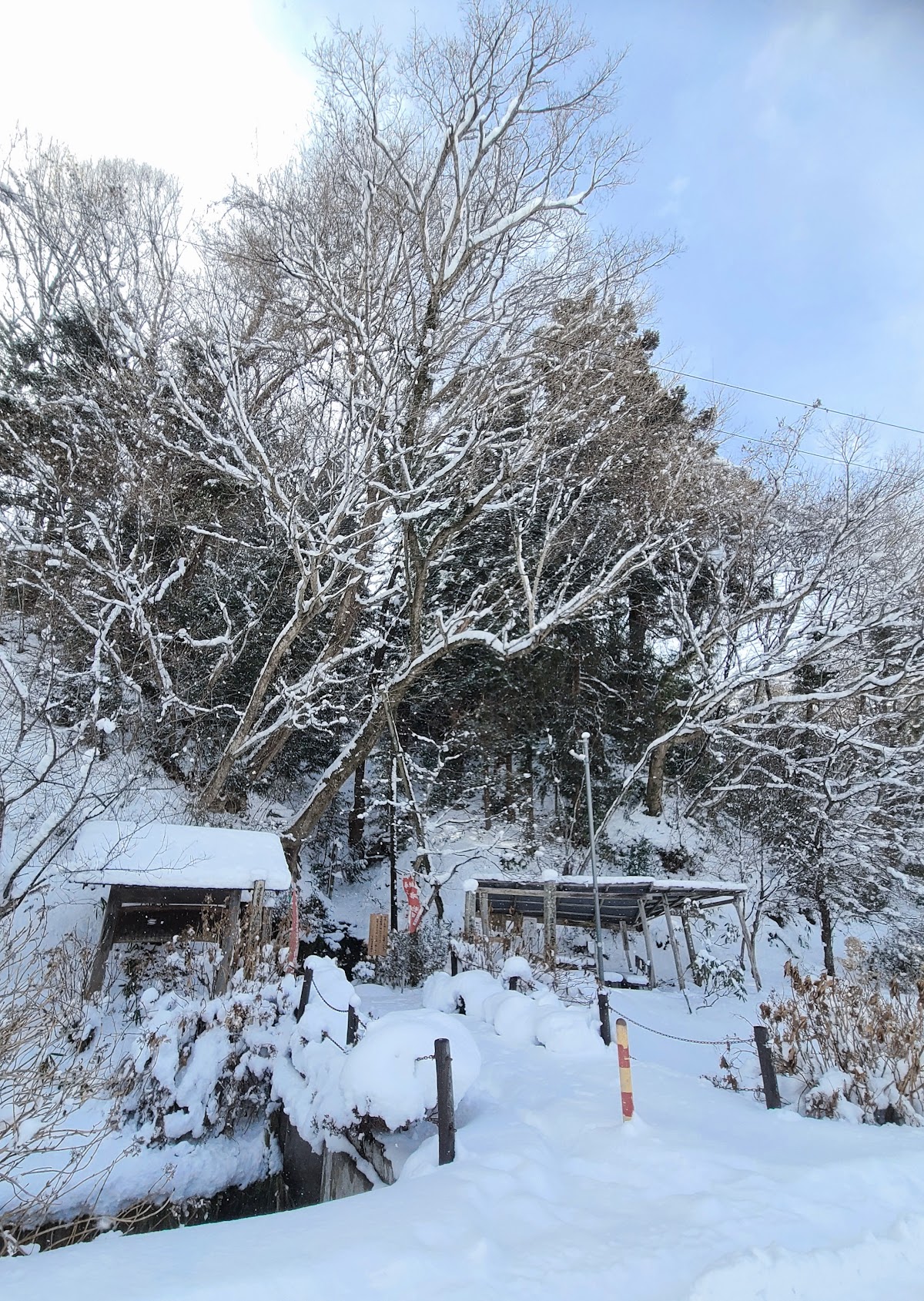
- In winter, there is a possibility of snow accumulation and icy road surfaces, so appropriate equipment is necessary
Water Quality and Components of Rokuhyakuyama Spring Water
Characteristics of Water Quality
Spring water in the Aizu region is characterized by the geology of surrounding mountains. Rokuhyakuyama spring water is no exception and possesses water quality that reflects the characteristics of the Aizu basin where volcanic and non-volcanic geology are mixed.
Generally, spring water in the Aizu region has the following characteristics:
- Hardness: In the range of soft to moderately hard water
- pH: In the range of slightly acidic to neutral
- Minerals: Contains calcium, magnesium, sodium, and others
Regarding Drinking
When drinking spring water, please be sure to pay attention to the following points:
- Confirmation of water quality tests: Check if regular water quality tests are being conducted
- Recommendation to boil: Drinking unboiled water carries risks, so it is strongly recommended to boil before drinking
- Self-responsibility: Drinking spring water must be done at your own risk
- Seasonal variation: Water quality may change after heavy rain and similar events
Methods of Water Use
Among local residents, spring water is used for the following purposes:
- As drinking water (after boiling)
- As cooking water: Cooking rice, brewing tea, and the like
- As domestic water: Washing vegetables, watering plants, and so on
Historical Background of Rokuhyakuyama and Ikko Town
History of Ikko Town
Ikko Town is a historically important area within Aizuwakamatsu City. Particularly during the Boshin War, fierce battles were fought in this region.
Connection to the Byakkotai (White Tiger Corps)
Ikko Town is home to Iimori Mountain, known as the place where the Byakkotai committed suicide. The area where Rokuhyakuyama spring water is located is also near this historically significant place, and can be said to be a place where one can feel the history of Aizu directly.
Origins of the Place Name Rokuhyakuyama
Regarding the origins of the place name “Rokuhyakuyama,” there are various theories, but the following possibilities can be considered:
- Naming related to elevation or topography
- Naming related to historical events or figures
- Naming related to land division or land units in the region
In the field of place name research, it is said that place names containing numerals like this were often given when land was surveyed or reorganized.
Spring Water and Local Society
In the Aizu region, spring water has been closely connected to people’s lives since ancient times. Rokuhyakuyama spring water is thought to have played an important role throughout history as agricultural water and domestic water for the region.
Spring Water Culture of Aizuwakamatsu City
Water Environment of Aizu
Aizuwakamatsu City is also called the “City of Water,” with spring water and wells dotting various locations throughout the city. This is a natural blessing created by the topography and geology of the Aizu basin.
Major Spring Water and Water Spots
In addition to Rokuhyakuyama spring water, there are many other springs throughout Aizuwakamatsu City:
- Kowarasshimizu (Strongly Clear Water): One of the most famous springs in the city
- Kanzashi Clear Water: A historic spring in Kanzashi Town
- Other Regional Springs: Small springs scattered throughout the city
Aizu Water and Sake
The Aizu region is also known as a production area for Japanese sake. Good quality water is an essential element in sake brewing, and Aizu’s clear water forms the basis for producing renowned sake.
Tourist Spots Around Rokuhyakuyama Spring Water
Iimori Mountain
Iimori Mountain, located near Rokuhyakuyama spring water, is a must-see spot for Aizuwakamatsu sightseeing.
- Byakkotai Suicide Site: A historic place conveying the tragedy of the Boshin War
- Sazaedo: A unique building designated as a National Important Cultural Property
- Observation Deck: A scenic viewpoint overlooking Aizuwakamatsu City
Aizuwakamatsu Castle (Tsuruga Castle)
The symbol of Aizu located approximately 10 minutes by car from Ikko Town.
- A famous castle that endured a month-long siege during the Boshin War
- Currently functioning as a museum displaying Aizu’s history
- Also famous as a scenic spot for spring cherry blossoms and autumn foliage
Oyakuen Garden
A garden of the Aizu Matsudaira clan designated as a National Scenic Spot.
- A historic garden that began as a medicinal herb garden
- Beautiful scenery changing with the four seasons
- Matcha tea experience in the tea house is also possible
Manners and Rules When Visiting Rokuhyakuyama Spring Water
Basic Etiquette
When visiting spring water, please observe the following etiquette:
- Always take trash with you: To protect the natural environment
- Do not contaminate the water source: Use of soap and shampoo is strictly prohibited
- Be mindful of private land: If the spring water area is on private land, do not enter without permission
- Consider noise: Exercise special caution if near residential areas
- Parking etiquette: Avoid roadside parking and unauthorized parking
Precautions When Collecting Water
- Use clean containers: To maintain water quality
- Avoid prolonged occupation: Consideration for other users
- Refrain from large-scale collection: Recognize that it is also domestic water for local residents
- Self-confirmation of water quality: Check for cloudiness and strange odors
Cooperation in Environmental Protection
Spring water is a precious natural resource for the region. Please cooperate with the following:
- Do not damage surrounding vegetation
- Do not disturb the ecosystem
- Consider participating if there are community cleaning activities
Climate of the Aizu Region and Suitable Seasons for Visiting
Four Seasons of Aizu
The Aizu region has distinct seasons, each with different attractions.
Spring (March to May)
- Snow melting season with abundant water volume
- Cherry blossom season is also optimal for tourism
- Fluctuating temperatures require careful clothing choices
Summer (June to August)
- A season when cool spring water is pleasant
- Water quality may change during the rainy season
- Heat measures and insect repellent measures are necessary
Autumn (September to November)
- A season when water quality tends to stabilize
- Autumn foliage season allows enjoyment of surrounding sightseeing as well
- Be mindful of temperature drops in early morning and evening
Winter (December to February)
- Snow accumulation may make access difficult
- Exercise extreme caution regarding icy road surfaces
- Cold protection measures are essential
Recommended Visiting Time
The most suitable time to visit Rokuhyakuyama spring water is from spring through autumn (April to November). During this period:
- Access is relatively easy
- Water quality is stable
- Surrounding sightseeing can be enjoyed
- The climate is mild
Accommodation Facilities and Food Culture in Aizuwakamatsu City
Accommodation Facilities
Aizuwakamatsu City has various types of accommodation facilities:
- Higashiyama Onsen: A hot spring area approximately 15 minutes by car from the city
- Ashinomaki Onsen: A quiet hot spring area along a gorge
- City Center Hotels: From business hotels to luxury hotels
- Minshuku and Guest Houses: Affordable accommodation options
Food Culture of Aizu
When visiting Aizuwakamatsu, enjoy local food culture as well:
Local Cuisine
- Kozuyu: A representative soup dish of Aizu
- Horse meat sashimi: Eaten regularly in Aizu
- Sauce Katsudon: B-level gourmet of Aizuwakamatsu
- Aizu Ramen: Characterized by light soy sauce flavor
Local Sake
Aizu is a production area for Japanese sake:
- Suehiro Sake Brewery
- Tsurune Sake Brewery
- Harusake Sake Brewery
- Many other breweries
Aizu sake produced with clear water receives high evaluation nationwide.
Scientific Aspects of Spring Water
Mechanism of Spring Water Formation
Spring water appears on the surface through the following process:
- Precipitation: Rain or snow falls on mountains
- Infiltration: Water seeps into the ground
- Filtration: Natural filtration occurs while passing through geological layers
- Storage: Stored as groundwater
- Emergence: Appears on the surface due to geological structure
This process can take several years to several decades, making spring water a precious resource created over a long time.
Geology of the Aizu Basin
The Aizu basin has the following geological characteristics:
- Quaternary sedimentary layers
- Mixture of volcanic and non-volcanic geology
- Abundant groundwater veins
These geological conditions bring many springs to the Aizu region.
Sustainable Use of Water Resources
Importance of Spring Water Protection
Spring water is a renewable resource but not infinite. For sustainable use:
- Avoid excessive extraction: Prevent water source depletion
- Water quality preservation: Protection of surrounding environment
- Coexistence with the community: Understanding and cooperation of local people
Climate Change and Spring Water
In recent years, climate change has altered precipitation patterns. This has potential impacts on spring water as well:
- Fluctuations in precipitation volume
- Changes in snowfall
- Variations in groundwater levels
For the sake of future generations, it is important to recognize the importance of water resources and use them appropriately.
Summary: Charm of Rokuhyakuyama Spring Water
Rokuhyakuyama spring water in Yawata, Ikko Town, Aizuwakamatsu City, Fukushima Prefecture, is a precious water resource nurtured by Aizu’s abundant nature. With clear water quality, a historically rich region, and surrounding tourist attractions, this place is one of the must-see spots when visiting Aizu.
When visiting, respect local etiquette and be considerate of environmental protection while experiencing the blessings of Aizu’s nature. Through the spring water, you will be able to feel the history and culture of this region as well as the importance of nature.
Aizuwakamatsu City has many other attractions besides Rokuhyakuyama spring water. Be sure to explore the Aizu region slowly with various ways to enjoy it, including historical exploration, hot springs, and gourmet experiences. The culture and nature of Aizu, nurtured by clear water, are sure to leave a deep impression on visitors.