
Takanosahashimizu: The Deep Connection Between the Historical Spring Water in Miyagi Prefecture Where the Legend of Minamoto no Yoshiie Remains and the Hawk Feather Crest
What is Takanosahashimizu?
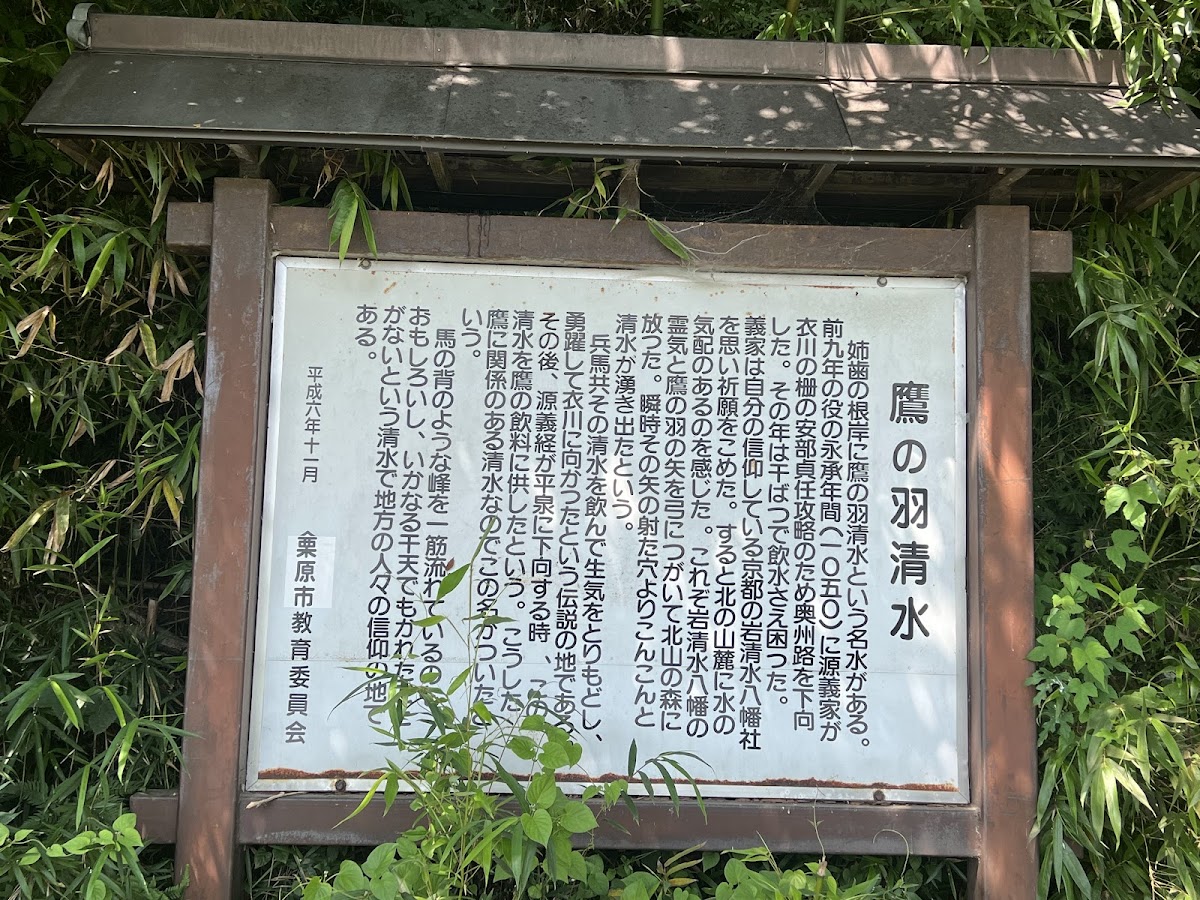
Takanosahashimizu (hawk feather clear water) is a historical spring water located in Miyagi Prefecture, and it is a famous water associated with a legend of Minamoto no Yoshiie (Hachiman Tarō Yoshiie), a military commander from the Heian period. This clear water is said to have been discovered during Minamoto no Yoshiie’s eastern expedition in the Earlier Nine Years’ War (1051-1062), and it is known as a historic site with deep connections to Japanese samurai culture.
The name “hawk feather” derives from a legend in which Minamoto no Yoshiie made a prayer at Iwashimizu Hachiman Shrine, shot an arrow with arrow fletching made from hawk feathers, and clear water sprang forth from that location. This legend becomes an important narrative demonstrating the spiritual and religious aspects of the samurai, as well as the symbolic nature of martial valor represented by the hawk, a bird of prey.
The Legend of Minamoto no Yoshiie and Takanosahashimizu
The Earlier Nine Years’ War and Minamoto no Yoshiie’s Eastern Expedition
The Earlier Nine Years’ War was a large-scale conflict that occurred in Mutsu Province (present-day Tōhoku region), in which Minamoto no Yoriyoshi and his son Yoshiie, acting on imperial command, subdued the Abe clan, powerful lords of Ōshū. In this war campaign, the young military commander Minamoto no Yoshiie followed his father Yoriyoshi and achieved numerous military exploits.
As Yoshiie’s forces advanced toward the Koromo River region, both soldiers and horses became exhausted, particularly suffering from a shortage of water. In this critical situation, Yoshiie offered a prayer to Iwashimizu Hachiman Shrine in Kyoto, in which he held deep faith.
The Hawk Feather Arrow and the Discovery of Clear Water
As if in response to Yoshiie’s prayer, sensing the presence of water from the mountain foothills to the north, Yoshiie became convinced that this was the guidance of the god of Iwashimizu Hachiman. There, Yoshiie nocked an arrow with arrow fletching made from hawk feathers to his bow and released it into the forest of the northern mountains, guided by its spiritual essence.
It is said that clear water sprang forth abundantly from the point where the arrow struck. The soldiers drank this clear water, recovered their vigor, and were able to advance enthusiastically toward the Koromo River. Through this miraculous occurrence, this spring water came to be called “Takanosahashimizu.”
The Historical Significance of the Legend
This legend holds not merely folk narrative significance, but several important historical meanings. First, it demonstrates that samurai held deep faith in Hachiman worship. The Minamoto clan in particular revered Hachiman as their clan deity, and Yoshiie himself was called “Hachiman Tarō.”
Second, it tells of the special meaning hawk feathers held for samurai. The hawk, as a valiant bird of prey, embodied the ideals of the samurai. Arrow fletching made from its feathers played an important role as a symbol of the samurai.
Hawk Feathers and Samurai Culture
The Use of Hawk Feathers as Arrow Fletching
Hawk feathers have long been valued as material for arrow fletching (yabane) in Japanese traditional archery. Arrow fletching is an important component that stabilizes the flight of an arrow, and specific bird feathers were used as its material.
The reason hawk feathers were superior as arrow fletching lies in their strength and flexibility. As a bird of prey that captures prey during high-speed flight through the air, the hawk’s feathers are resistant to air resistance and possess appropriate elasticity. These characteristics made them ideal for improving arrow flight performance.
Samurai favored hawk feathers not only for practical reasons but also for the symbolic meaning the hawk carried. The hawk’s image of surely striking down its prey overlapped with the samurai’s ideal form, and by using hawk feathers, they wished for martial fortune.
Falconry and Its Relationship to Samurai
Falconry was an important form of training and recreation for the samurai class from the Heian period through the Edo period. The skill of training hawks and having them hunt prey was valued as samurai education, and many military commanders were fond of falconry.
Tokugawa Ieyasu also enjoyed falconry, and in the Edo period it became institutionalized as an important event of the shōgunal family. “O-Taka no Michi” (The Hawk’s Path) in Kokubunji City, Tokyo, was developed as a path leading to the shōgunal falconry grounds, and today it is recognized along with the “Masugata no Ike Spring Water Group,” selected as one of Japan’s 100 Famous Waters by the Ministry of the Environment, as a historically significant landscape.
The History and Types of Hawk Feather Crests
The Establishment of Hawk Feather Crests as Family Crests
The hawk feather crest (takanoshamonmon) is a type of Japanese family crest in which hawk feathers are stylized. Used by many warrior families as a symbol of the samurai and as a heraldic emblem with connotations of martial valor, it became widely adopted.
The first historical appearance of the hawk feather crest is seen in the “Mōko Shūrai Ekotoba” (Pictorial Account of the Mongol Invasions). In this picture scroll, the retainers of Kikuchi Takefusa, a gokenin from Higo, are depicted raising the “aligned hawk feathers” crest. The Kikuchi clan was an influential warrior family based in Higo Province (present-day Kumamoto Prefecture), and it is believed that they were granted the aligned hawk feathers, the sacred crest of Aso Shrine, as their clan crest.
Main Types of Hawk Feather Crests
The hawk feather crest includes diverse designs, with more than 178 types. The main types include the following:
Aligned Hawk Feathers (Narabi Takanosaha): A design of two hawk feathers arranged side by side, commonly seen among warrior families from Kyushu, including the Kikuchi clan. Known as the sacred crest of Aso Shrine, it was used by dozens of family lines, including descendants of the Kikuchi clan: the Saigō, Kojima, Hyōzu, Yamaga, and Murata families.
Crossed Hawk Feathers (Chigai Takanosaha): A design of two hawk feathers crossed, one of the most common hawk feather crests. It is famous for being used by the Asano clan, known through the Tale of the 47 Rōnin, the Abe clan, a prestigious hereditary daimyo house of the Tokugawa, and Saigō Takamori, one of the three great men of the Restoration.
Circled Crossed Hawk Feathers (Maru ni Chigai Takanosaha): A design of crossed hawk feathers enclosed in a circle, known as the representative family crest of the Asano clan. Through the story of the Akō rōnin, this crest has become widely familiar to the Japanese people.
Asano Hawk Feathers (Asano Takanosaha): A hawk feather crest unique to the Asano clan, with distinctive design characteristics differing from other hawk feather crests.
Distinguished Warrior Families Using the Hawk Feather Crest
The hawk feather crest was widely used by warrior families throughout Japan, but the following family lines are particularly notable:
The Asano Clan: Known as lords of Akō Domain, they are the center of the Tale of the 47 Rōnin, with Asano Naganori, the protagonist of the story, as a representative figure. They used the circled crossed hawk feathers as their family crest.
The Abe Clan: A prestigious hereditary daimyo family of the Tokugawa, which produced numerous regents. They used the crossed hawk feathers crest.
The Kikuchi Clan: An influential warrior family of Higo Province, granted the aligned hawk feathers by Aso Shrine. During the Northern and Southern Courts period, they were active as prominent commanders of the Southern Court faction.
The Saigō Clan: A family of lower-ranking samurai from Satsuma Domain, which produced Saigō Takamori, one of the three great men of the Restoration. As descendants of the Kikuchi clan, they used the hawk feather crest.
The Meaning and Symbolism of the Hawk Feather Crest
The Hawk as a Symbol of Martial Valor
The hawk has long been treated as a “symbol of martial valor.” Its fierce and valiant pursuit of prey, high intelligence, superior vision, and excellent flying ability embodied the ideal form the samurai should aspire to.
The hawk’s characteristic ability to “surely strike down its prey” meant victory in battle for the samurai. Additionally, the image of a hawk soaring high in the sky overlapped with the wishes of samurai for advancement and the prosperity of their household names.
The Hawk as a Symbol of Authority
The hawk was also a “symbol of authority.” Falconry was a privileged leisure activity of the aristocracy and samurai classes, and the possession and training of hawks demonstrated high social status.
In the Edo period, the shōgunal family and daimyo families monopolized the right to engage in falconry, and the management of falconry grounds was conducted strictly. For this reason, the use of the hawk feather crest also carried the meaning of demonstrating the status and authority of a warrior family.
Connection with Religious Belief
As the legend of Takanosahashimizu demonstrates, hawk feathers were deeply connected with samurai religious beliefs. The story of Minamoto no Yoshiie offering prayers to Iwashimizu Hachiman Shrine and releasing an arrow with hawk feathers expresses the spirituality of samurai who believed in the protection of gods and Buddhas and sought to overcome difficulties through divine guidance.
The connection between Hachiman worship and hawk feathers was inherited by many warrior families beginning with the Minamoto, and it became one factor in the spread of the hawk feather crest among samurai.
The Distribution and Regional Characteristics of Hawk Feather Crests
Hawk Feather Crests in the Kyushu Region
The use of hawk feather crests is particularly prevalent in the Kyushu region. This was greatly influenced by the aligned hawk feathers, the sacred crest of Aso Shrine, spreading through the Kikuchi clan, which was made up of shrine parishioners.
The Kikuchi clan prospered based in Higo Province, and its descendants and retainers were distributed throughout Kyushu. As these family lines inherited the hawk feather crest, families using hawk feather crests became numerous in the Kyushu region.
Hawk Feather Crests in Eastern Japan
In eastern Japan, the hawk feather crest was used mainly by hereditary daimyo families of the Tokugawa. Through the use of hawk feather crests by powerful daimyo such as the Abe and Asano clans, the crest also spread to their retainers and related family lines.
Particularly in the Kantō region, influenced by the falconry culture of the Tokugawa shōgunal family, interest in hawks was high, and families adopting the hawk feather crest increased.
Takanosahashimizu Today
Preservation as a Historic Site
Takanosahashimizu is carefully preserved by local people as a historical spring water associated with the legend of Minamoto no Yoshiie. Recognized as a historic site in Miyagi Prefecture, it has become an important place for transmitting regional history.
The area surrounding the spring has been developed so that visitors can reflect upon the legend. The spring water continues to flow to this day, maintaining clear water unchanged from the Heian period.
Cultural Significance in the Community
Takanosahashimizu plays an important role in regional history education and cultural heritage transmission. As a concrete historic site demonstrating the relationship between the famous military commander Minamoto no Yoshiie in Japanese history and the region, it is utilized as teaching material for local history research and history education.
The legend of Takanosahashimizu is passed down in regional festivals and events, and contributes to the formation of regional identity.
Spring Water and the Samurai
Spring Waters and Wells Associated with Military Commanders Throughout Japan
Like Takanosahashimizu, numerous spring waters and wells associated with military commanders remain throughout Japan. These have value not merely as water sources but as cultural properties intertwined with historical narratives and legends.
For example, the “Masugata no Ike Spring Water Group” in Kokubunji City, Tokyo, is selected as one of Japan’s 100 Famous Waters by the Ministry of the Environment, and together with “O-Taka no Michi,” it transmits the falconry culture of the Edo period to the present day. In this way, springs and spring water become important elements in understanding Japanese history and culture.
Water and the Spirituality of the Samurai
For samurai, clear water was an important element for purifying the body and composing the spirit. Whether in rituals to purify oneself before battle or in ablutions when making prayers to gods and Buddhas, water was deeply connected with the spirituality of the samurai.
In the legend of Takanosahashimizu, the narrative in which Minamoto no Yoshiie obtains clear water through prayer to Hachiman Shrine expresses a spirituality in which samurai received pure water as divine blessing and gained strength from it.
The Use of Hawk Feather Crests in Modern Times
Inheritance as a Family Crest
In modern times, the hawk feather crest continues to be used as a family crest in many family lines. Particularly among descendants of the Asano, Abe, and Kikuchi clans, it is carefully inherited as the ancestral family crest.
In ceremonial occasions and family commemorative events, the use of garments and articles bearing the family crest serves to confirm the history and traditions of the family line and transmit them to the next generation.
Application as Design
The design of the hawk feather crest, through its refined design quality, has also been applied to modern graphic design and logo marks. The hawk feather design, which is simple yet conveys a powerful impression, has sometimes been adopted as corporate symbols and sports team emblems.
As an attempt to apply traditional Japanese aesthetics to the modern age, the design of the hawk feather crest continues to create new value.
Conclusion
Takanosahashimizu is a precious historic site that, through the legend of Minamoto no Yoshiie, conveys to the present day the deep relationship between Japanese samurai culture and hawk feathers. From this legend, we can discern that hawk feathers were not only practically used as material for arrow fletching but also held important meaning as symbols of samurai ideals, faith, and authority.
The hawk feather crest, as a family crest stylizing the valor and intelligence of the hawk, a bird of prey, was used by renowned warrior families throughout Japan, including the Kikuchi, Asano, Abe, and Saigō clans. Its varieties exceeded 178 types, giving rise to diverse designs such as aligned hawk feathers, crossed hawk feathers, and circled crossed hawk feathers.
From its first historical appearance in the “Mōko Shūrai Ekotoba” to the present day, the hawk feather crest has been passed down as an important heraldic emblem symbolizing Japanese history and culture. Regional characteristics are evident, including distribution centered in Kyushu through the influence of Aso Shrine’s sacred crest and use by Tokugawa hereditary daimyo in eastern Japan.
The legend carried by a single spring water like Takanosahashimizu is a precious narrative connecting multiple important elements for understanding Japanese history: the spirituality of the samurai, Hachiman worship, the symbolic nature of the hawk, and family crest culture. In modern times, this legend and the hawk feather crest continue to serve as sources for inheriting Japanese traditional culture and creating new value.
.png)
