Complete Guide to Igami no Shimizu (Aomori Prefecture, Hirakawa City) | The Sacred Spring of Japan’s Hundred Famous Waters and the Legend of Sakanoue no Tamuramaro
“Igami no Shimizu (いがみのしつこ)” is a precious spring water that gushes forth in the mountains of Hirakawa City, Aomori Prefecture, and is known as one of Japan’s “Hundred Famous Waters” selected by the Ministry of the Environment in 1985 (Showa 60). In this region where the local Tsugaru dialect calls spring water “shitsuко,” legends related to Sakanoue no Tamuramaro, a general who conquered the Emishi during the Heian period, continue to live on.
This article provides comprehensive explanations of everything you should know before visiting, from the historical background of Igami no Shimizu to detailed local information, water quality characteristics, access methods, and nearby tourist attractions.
What is Igami no Shimizu? A Sacred Spring Selected for Japan’s Hundred Famous Waters
Basic Information and the Origin of Its Name
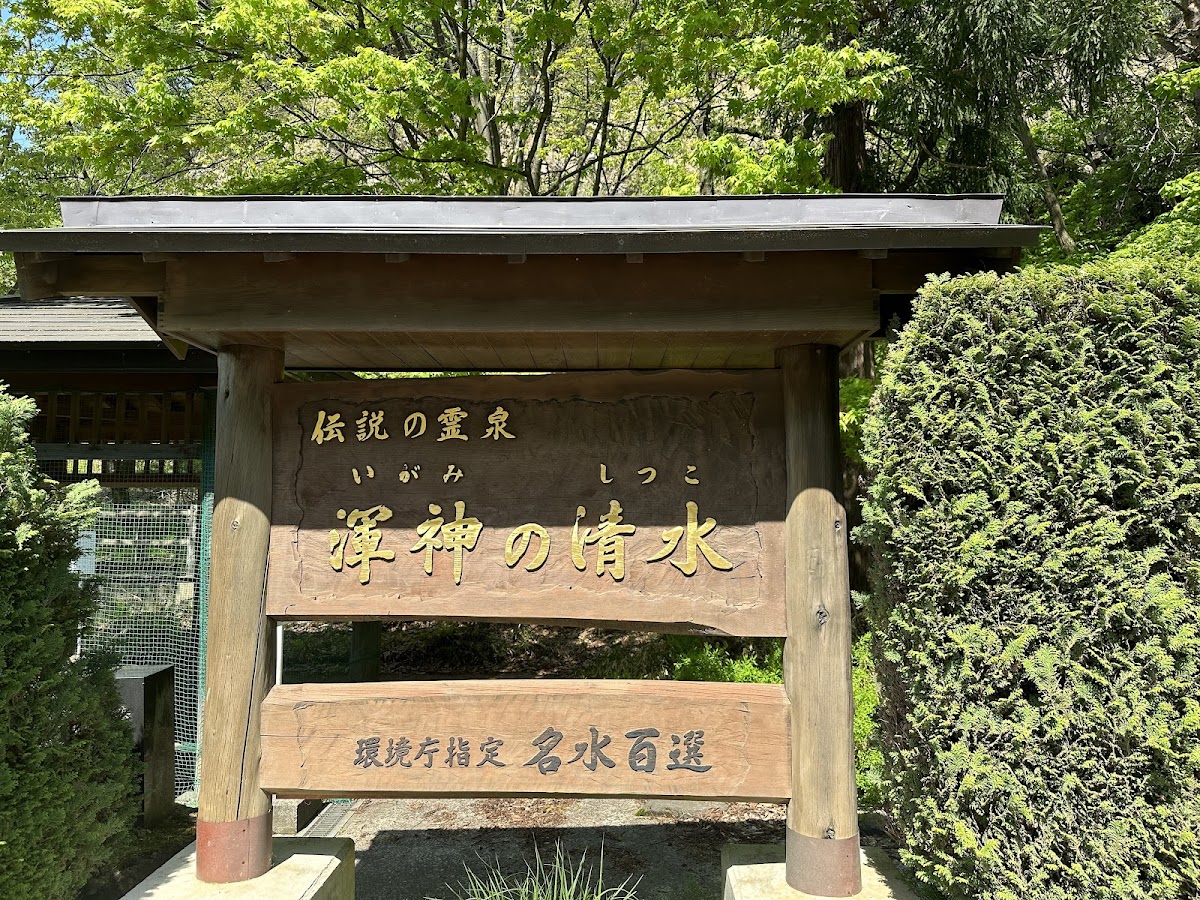
Igami no Shimizu is spring water located in the Karatake Falls Ravine of Hirakawa City, Aomori Prefecture, and is also called “Imagami no Shimizu.” The name “Igami (渾神)” is said to be a phonetic transformation of “Menokami (眼の神)” meaning “eye god,” and it has long been venerated as water with miraculous efficacy for eye diseases.
In the Tsugaru region, spring water is called “shitsuко” (or “shinchiko”), and the formal name is read as “igami no shitsuко.” This unique way of calling it has become rooted in the region as a word symbolizing Tsugaru’s rich water culture.
Background of the Hundred Famous Waters Selection
In March 1985 (Showa 60), Igami no Shimizu was selected as one of Japan’s “Hundred Famous Waters” by the Environmental Agency (now the Ministry of the Environment). The Hundred Famous Waters selection evaluates not only water quality but also water usage situations in the region, preservation activity results, and historical and cultural value in a comprehensive manner.
Igami no Shimizu is the only Hundred Famous Waters selection site in Aomori Prefecture, and it is positioned as a precious water resource representing the prefecture. This spring water, gushing from the foot of Mount Yashuteyama, has a history of being carefully protected by local residents over many years and has also been utilized as agricultural water.
The Legend of Sakanoue no Tamuramaro and Eye Disease Healing
Emishi Subjugation and Igami no Shimizu
The most famous legend associated with Igami no Shimizu concerns Sakanoue no Tamuramaro, a general who conquered the Emishi during the early Heian period. The village history of Taketate Village (竹館村), which once existed in this area, contains episodes from Tamuramaro’s subjugation of the Emishi (the indigenous people of northeastern Japan).
During the Enryaku era (782-806), Sakanoue no Tamuramaro, dispatched by Emperor Kanmu to subjugate the Emishi in the northeastern region, suffered from an eye disease in this area. According to legend, one night a deity appeared to him in a dream and told him, “If you wash your eyes in the spring water ahead, your condition will be cured immediately.”
The Beginning of Veneration as a Sacred Spring
When Tamuramaro followed the divine message in his dream and washed his eyes in this spring water, his eye disease was reportedly cured immediately. From this legend of eye disease healing, the spring water came to be enshrined as a “sacred spring.” The origin of the name—how “menokami” (eye god) transformed into “igami”—is also based on this legend of eye disease healing.
Today, a monument inscribed with “Sacred Spring” stands beside the spring water, and a small shrine and torii gate have been erected. Local people continue to revere this water as something sacred, and they regularly perform cleaning and environmental maintenance to preserve it.
Historical Background and Water Worship in the Tohoku Region
Sakanoue no Tamuramaro’s eastern expedition is an important event in ancient Japanese history, and numerous legends related to him remain throughout the Tohoku region. The legend of Igami no Shimizu was born within this historical context and has been passed down to the present day, intertwined with the region’s faith.
Throughout the Tohoku region, there has long been a strong faith in water, and sacred waters and springs believed to be effective for eye diseases, skin conditions, and other ailments exist in various locations. Igami no Shimizu is also a precious cultural heritage that transmits the water worship culture of the Tohoku region to the present day.
Water Quality and Characteristics of Igami no Shimizu
Water Quality Characteristics of the Spring
Igami no Shimizu is natural spring water that gushes forth from the mountainous area of Mount Yashuteyama. Currently, a stone-built water outlet has been developed, from which clear water flows. The water temperature is relatively stable throughout the year, and the water is characterized by its cool temperature.
Water filtered through geological layers in the forested area contains an appropriate amount of mineral content while maintaining high transparency, and it has long been used as a precious water resource for the region. The surrounding area is surrounded by apple orchards in a natural environment that provides ideal conditions for water source conservation.
Use as Agricultural Water
Igami no Shimizu has been used not only as a sacred spring worthy of faith but also as practical agricultural water for many years. Hirakawa City is known as one of Aomori Prefecture’s leading apple production regions, and this spring water serves as a precious water source for the surrounding apple orchards and farmland.
Given its location along a mountain road where it gushes forth, the fact that it is easily accessible to local residents and can be efficiently utilized as agricultural water is one reason why this spring water is such an important resource for the region.
Precautions Regarding Drinking Water
Even if spring water has been selected for the Ministry of the Environment’s Hundred Famous Waters, the selection itself does not guarantee its suitability for drinking. If you wish to drink from Igami no Shimizu, the following points require attention:
- Always confirm the water quality situation with the local municipality such as Hirakawa City Hall before drinking
- Raw water drinking should be avoided; boiling is recommended before use
- Water quality may fluctuate depending on weather and season
- If bringing a container, use a clean one
Natural spring water is susceptible to the effects of weather and surrounding environment, so proper handling is important to ensure safety.
Access to Igami no Shimizu
Location and Basic Information
Address: 2-1 Karatake Falls Ravine, Hirakawa City, Aomori Prefecture
Management/Inquiries: Hirakawa City Hall (Phone: 0172-44-3001)
Parking: Available (Free)
Viewing Hours: No particular restrictions (however, caution is advised during nighttime and winter)
Car Access
Car access is the most convenient way to reach Igami no Shimizu.
When using the Tohoku Expressway:
- Approximately 15-20 minutes from the Owani-Hirosaki Interchange
- Approximately 20-25 minutes from the Kuroishi Interchange
Travel Time from Major Cities:
- From central Hirosaki City: Approximately 30 minutes
- From central Aomori City: Approximately 1 hour
- From central Hachinohe City: Approximately 1 hour 30 minutes
It is located along a road that runs from the center of Hirakawa City’s Hiragas district along National Route 282 toward the Gunba Plateau. As it is a mountain road, special caution against road surface freezing and snowfall is necessary, especially in winter.
Public Transportation Access
Public transportation access is limited, and there is considerable distance from the nearest station.
Nearest Station: “Hiraka Station” on the Konan Line of Konan Railway
From the station, either a taxi or rental car is recommended. Bus routes do not operate near the spring water, so it is advisable to plan your visit assuming car access.
Best Season to Visit
Igami no Shimizu can be visited throughout the year, with different charms in each season.
Spring (April-June): The season of fresh greenery, when the surrounding mountains are blanketed in beautiful green. Water volume is abundant due to snowmelt.
Summer (July-August): The cool spring water is pleasant, and it is ideal for summer retreats. You can observe the growth of fruit in the surrounding apple orchards.
Autumn (September-November): The fall foliage season is particularly beautiful, and it is also the apple harvest season. The surrounding scenery becomes most vibrant during this season.
Winter (December-March): Heavy snowfall can make access difficult. If visiting in winter, check road conditions in advance, and winter tires or chains are essential equipment.
Nearby Tourist Attractions and Points of Interest
Tourist Resources of Hirakawa City
Hirakawa City, where Igami no Shimizu is located, is situated in the southern part of the Tsugaru region of Aomori Prefecture and has scattered natural beauty, hot springs, and historical attractions.
Seibien Garden: A Japanese garden built during the Meiji period and designated as a National Place of Scenic Beauty. The beauty of the borrowed landscape garden is remarkable, and especially during the autumn foliage season, a spectacular view unfolds.
Saruga Shrine: An ancient shrine said to have been visited by Sakanoue no Tamuramaro during his eastern expedition to pray for victory in battle, and it is closely related to the legend of Igami no Shimizu.
Ikarigaseki Hot Spring District: Located in the southern part of Hirakawa City, this hot spring area is ideal for a visit after exploring Igami no Shimizu.
Apple Orchard Agritourism
Hirakawa City is known as one of Aomori Prefecture’s leading apple production areas. Apple orchards surround Igami no Shimizu, and some farms offer apple picking experiences in autumn.
Aomori Prefecture apples are nationally famous for their high quality, with varieties such as “Fuji,” “Orin,” and “Tsugaru” being particularly cultivated. During the harvest season, many direct sales shops selling freshly picked apples operate.
Day Trip Tourism to Hirosaki City
Hirosaki City, located about 30 minutes by car from Igami no Shimizu, is a representative tourist city of Aomori Prefecture.
Hirosaki Castle: A valuable castle with an existing main tower, and especially the spring cherry blossom festival is known as one of Japan’s most famous cherry blossom viewing spots.
Tsugaru Neputa Village: A facility where you can experience the culture of “Neputa,” a traditional event that colors the Aomori summer.
Hirosaki City Apple Park: A park where you can learn about apple history and cultivation, with various apple tree varieties planted.
Gunba Plateau and Nature Walks
Continuing further along National Route 282 from Igami no Shimizu leads to the Gunba Plateau. This area is suitable for nature walks and hiking, offering beautiful highland scenery from spring through autumn.
Local Conservation Activities and Environmental Protection
Conservation Efforts by Local Residents
Since its selection for the Hundred Famous Waters, Igami no Shimizu has been subject to active conservation activities by local residents. Regular cleaning activities, environmental maintenance of surrounding areas, water quality monitoring, and other efforts are being conducted with the local community working together to protect this precious water resource.
Maintenance of the small shrine, torii gate, and the monument inscribed with “Sacred Spring” is also carried out by local people, and activities to transmit historical and cultural value to future generations are an important part of these efforts.
Sustainable Water Resource Management
Hirakawa City is advancing initiatives to sustainably manage the region’s water resources, including Igami no Shimizu. The goal is to balance agricultural water use with environmental conservation while preserving a rich water environment for future generations.
As the selection site for the Hundred Famous Waters increases its value as a tourism resource, tourism development is being conducted while avoiding excessive development and respecting the natural environment.
Requests for Visitors
When visiting Igami no Shimizu, your cooperation in the following matters will help preserve this precious natural environment:
- Always take garbage with you and do not leave it at the site
- Be careful not to soil the water outlet or surrounding facilities
- Respect facilities that are objects of faith, such as the shrine and torii gate
- Enjoy nature quietly without loud voices or noise
- Do not trespass on private land or farmland without permission
- Keep water collection to a minimum if you wish to collect water
Cultural Value of Igami no Shimizu
Water Culture of the Tsugaru Region
In the Tsugaru region, a rich water culture rooted in the local dialect calling spring water “shitsuко” and other water-related traditions thrives. The clear spring water brought by the snowy climate and abundant mountain forests has long supported people’s lives and become an object of faith.
Igami no Shimizu is a symbol of Tsugaru’s water culture and has become an important element in forming the region’s identity.
Aspects as a Power Spot
In recent years, Igami no Shimizu has gained attention as a “power spot.” Based on the legend of Sakanoue no Tamuramaro’s eye disease healing and its history as a sacred spring, it has become a place visited by people seeking health and healing in particular.
The quiet mountain setting is ideal for stepping away from urban bustle to refresh body and mind, and it has become a place beloved by many people who wish to feel the energy of nature.
Positioning in Regional History
Igami no Shimizu has always held an important position in the legend recorded in Taketate Village’s village history and in the history of Hirakawa City (formerly Hiraka Town). As time has progressed from the Showa through Heisei to the Reiwa era, this spring water continues to be treasured as a point of regional pride.
Nearly 40 years after its selection for the Hundred Famous Waters, its value has not diminished; rather, as environmental conservation becomes increasingly important, its significance has grown even greater.
Conclusion: The Value of Visiting Igami no Shimizu
Igami no Shimizu in Hirakawa City, Aomori Prefecture, is not only a precious spring water selected for the Hundred Famous Waters but also a place of high historical and cultural value where the legend of Sakanoue no Tamuramaro lives on. Called “shitsuко” in the dialect unique to the Tsugaru region, this spring water has been carefully protected by local people, utilized as agricultural water, and continues to gush forth clear water to this day.
Listening to the sound of water quietly flowing in a natural environment surrounded by apple orchards at the foot of Mount Yashuteyama will provide precious time away from the busy modern daily life. By incorporating it into a tourism route combined with Hirosaki City and nearby hot springs, you can experience the charm of the Tsugaru region of Aomori Prefecture more deeply.
Igami no Shimizu shows different faces throughout the seasons—spring greenery, cool summer, autumn foliage and apple harvest, and winter silence. Visiting this place where history and nature harmonize will help you appreciate the depth of Japan’s famous water culture and the importance of environmental conservation that local people have maintained over time.
When visiting Aomori Prefecture, be sure to visit Igami no Shimizu and experience the clear water of a sacred spring with over a thousand years of history and the rich nature that surrounds it.