Tomita no Shimizu (Shitsuko) Complete Guide | Aomori Prefecture Hirosakaski’s Nationally Selected Spring Water and Historical/Access Information
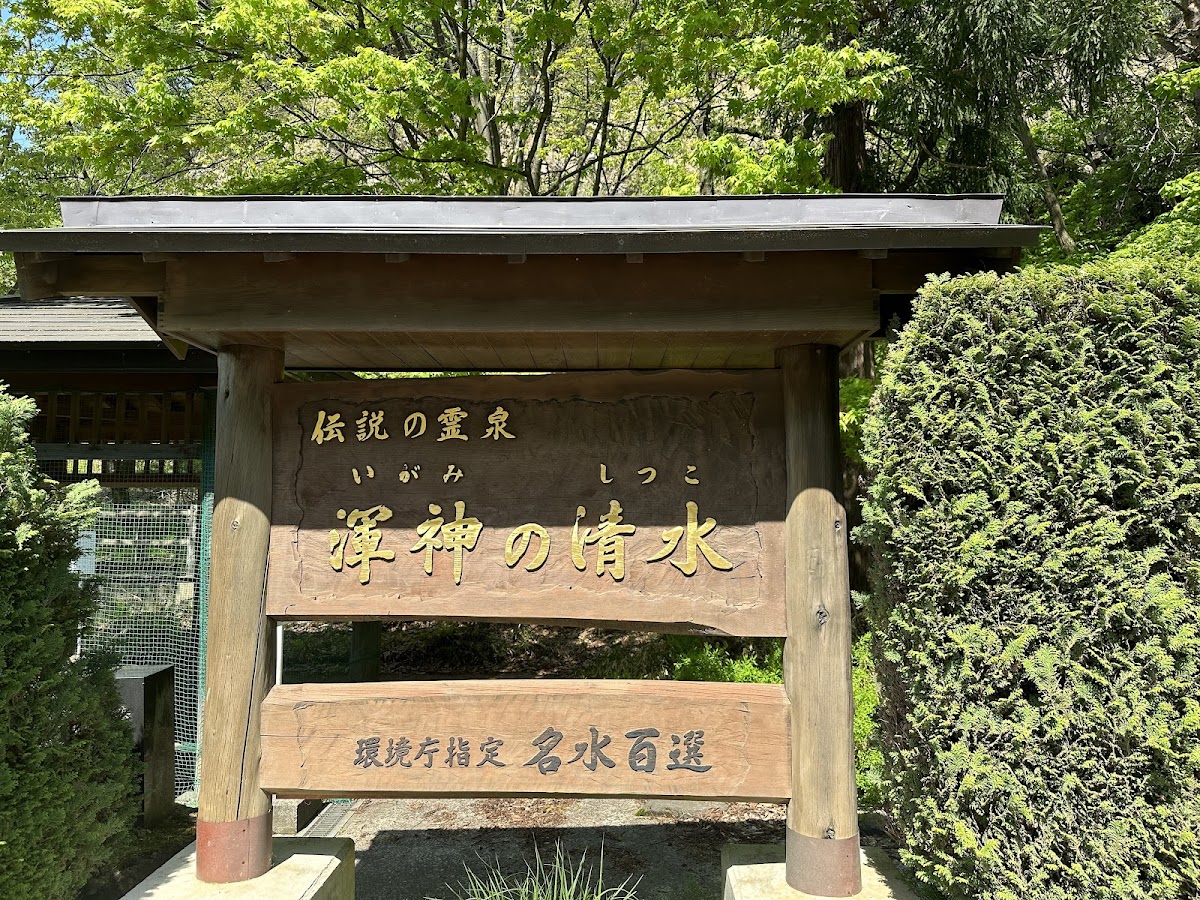
“Tomita no Shimizu (Tomita no Shitsuko),” located in Kamisu-machi, Hirosaki City, Aomori Prefecture, is a historic spring water that was selected as one of Japan’s 100 finest waters by the Ministry of the Environment (then the Environmental Agency) in 1985 (Showa 60). It is characterized by its deep connection to the papermaking industry that has continued since the Edo period, and its high practicality as it is still used as daily water by local residents. This article comprehensively explains the historical background of Tomita no Shimizu, its current usage, access methods, and information about nearby spots—everything you should know before visiting.
What is Tomita no Shimizu | Spring Water in Hirosaki, Aomori Prefecture, Selected as One of Japan’s 100 Finest Waters
Tomita no Shimizu (Tomita no Shitsuko) is spring water located at 5-2 Oaza Kamisuki-machi, Hirosaki City, Aomori Prefecture, and is recognized by the Ministry of the Environment as one of Japan’s 100 finest waters. “Shitsuko” is a Tsugaru dialect word meaning spring water, and has become an affectionate local name rooted in the community.
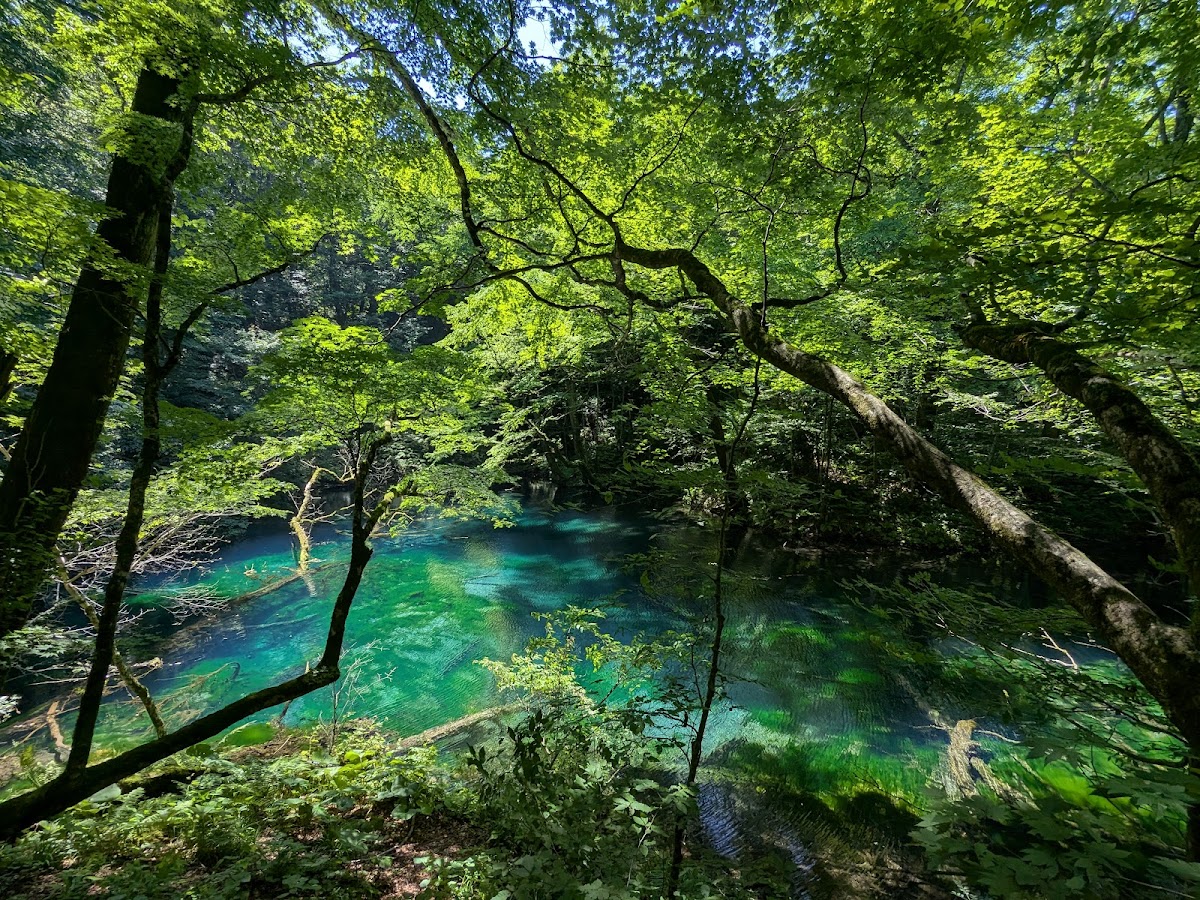
Hirosaki City is located in the southern part of the Tsugaru Plain and is known as a region where abundant subterranean water from Mount Iwaki springs forth. Tomita no Shimizu is one of its representative springs, maintaining stable water temperature year-round with good water quality. It continues to be used by local residents as their daily water source and holds value not only as a tourist spot but as a practical water resource as well.
Japan’s 100 Finest Waters is a selection of clear water sources throughout Japan made by the then-Environmental Agency (now the Ministry of the Environment) in 1985 (Showa 60). Tomita no Shimizu is the only water source selected in Aomori Prefecture, a precious distinction. Through this selection, Tomita no Shimizu gained nationwide recognition while conservation activities are being promoted to protect this valuable water resource in the region.
History of Tomita no Shimizu | Deep Connection to Edo Period Papermaking Industry
Introduction of Papermaking Techniques During the Jokyo Era and Tomita no Shimizu
The history of Tomita no Shimizu traces back to the Jokyo era (1684-1688, late 17th century) of the Edo period. During this time, Tsugaru Nobutoshi, the fourth feudal lord of the Tsugaru Domain, introduced Japanese papermaking techniques (papermaking methods) to the Tsugaru region as part of his domain’s industrial promotion policy.
Papermaking requires a large amount of clean, clear water. The Tsugaru Domain searched for water sources suitable for papermaking and discovered that the spring water flowing from Tomita Village (present-day areas around Kamisuki-machi, Hirosaki City) was ideal for this purpose. The feudal lord had papermakers including Kumagai Kichibe begin full-scale Japanese paper production using this water, marking the beginning of Tomita no Shimizu’s utilization.
The Origin of the Place Name “Kamisuki-machi” (Papermaking Town)
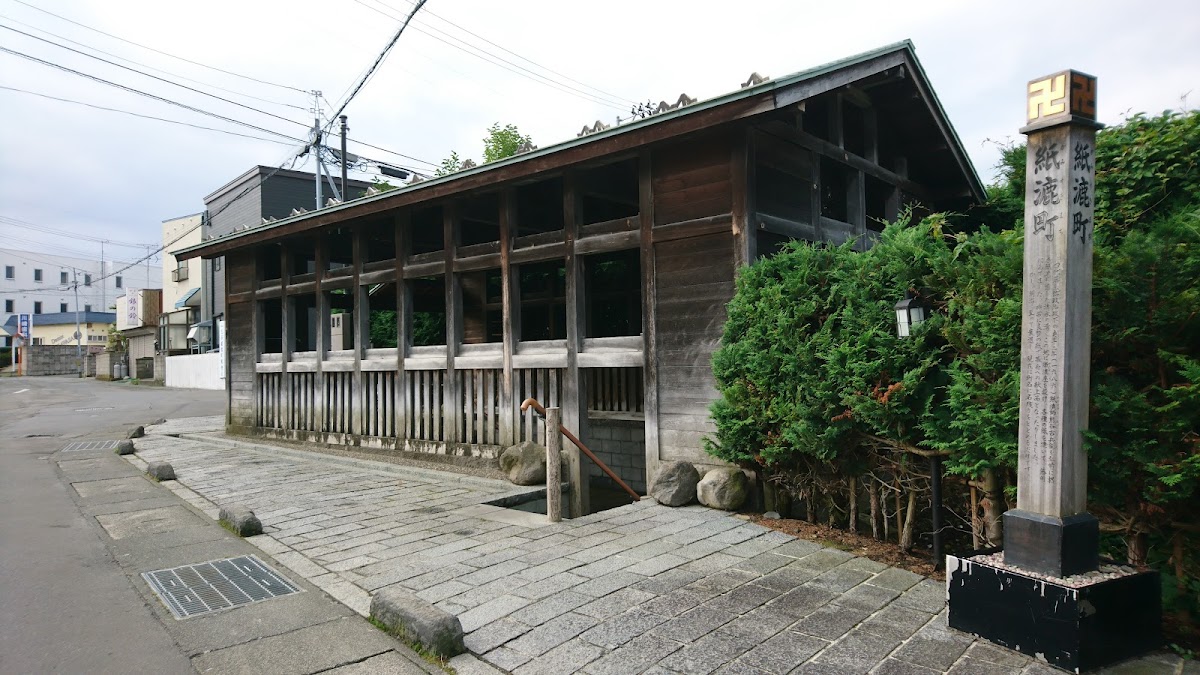
The area where Tomita no Shimizu is located is now called “Kamisuki-machi” (Papermaking Town), a name that itself speaks to the flourishing of papermaking (Japanese paper production) in this region since the Edo period. The papermaking industry using Tomita no Shimizu developed as an important industry of the Tsugaru Domain and became the foundation supporting the regional economy.
During the height of the papermaking industry, multiple papermakers gathered in this region, jointly using Tomita no Shimizu to produce high-quality Japanese paper. Known as Tsugaru washi (Japanese paper), these products were distributed not only within the domain but to other regions as well, earning high acclaim according to historical records.
Transitions After the Early Meiji Period and Current Usage
Following the Meiji Restoration, the traditional papermaking industry gradually declined with the wave of modernization. By the early Showa period, full-scale papermaking operations around Tomita no Shimizu had largely ceased, but the spring water itself continued to be used by local residents as their precious daily water source.
Today, it is cherished by local residents as daily water for washing clothes, cleaning vegetables, and drinking water. Water tanks have been installed, and it is maintained as a public water source available for anyone to use freely. Since its selection as one of Japan’s 100 finest waters in 1985 (Showa 60), it has become a tourist destination as well, taking on the role of conveying the region’s history and culture.
Water Quality and Characteristics of Tomita no Shimizu | Clear, Crisp Water with Stable Temperature Year-Round
Water Quality and Temperature of Spring Water
Tomita no Shimizu is thought to be subterranean water flowing from the foothills of Mount Iwaki that surfaces as a spring. As it passes through volcanic rock formations, it is naturally filtered, resulting in clear water with a pleasant taste. Year-round water temperature remains stable at approximately 10 degrees Celsius, feeling cold in summer and relatively warm in winter.
Water quality testing has confirmed the water is of high quality suitable for drinking, with minerals balanced appropriately. This stable water quality and abundant water volume were the reasons it was chosen as water for papermaking in the Edo period and continue to be the reason it is used as daily water today.
Spring Water Volume and Sustainability of Water Sources
The water volume of Tomita no Shimizu varies somewhat with the seasons but maintains stable volume throughout the year. This is supported by the abundant underground water sources of the Mount Iwaki system in the background. The area surrounding Hirosaki is known since ancient times as a region with abundant water, and multiple springs exist besides Tomita no Shimizu.
Since the selection by the Ministry of the Environment as one of the 100 finest waters, conservation activities by local residents and Hirosaki City have continued continuously, maintaining both water quality and volume in good condition. However, considering the impact of recent climate change and urban development, sustainable water resource management is receiving increased emphasis.
Current Usage Situation of Tomita no Shimizu | Daily Water Supporting Community Life
Daily Use by Local Residents
Currently, Tomita no Shimizu is primarily used by local residents as their daily water source. At the installed water tanks, it is used for various purposes including washing vegetables and dishes, rinsing laundry, and drawing drinking water. Particularly among older residents, many continue to use this water as they always have, and it also functions as an important gathering place for community interaction.
Multiple water tanks are installed at the water source to allow for different uses. During morning and evening hours, you can see local residents drawing water, demonstrating that it continues to live as a spring water deeply connected to daily life.
Value as a Tourist Resource
After its selection as one of the 100 finest waters, Tomita no Shimizu became recognized as one of Hirosaki City’s tourist destinations. More tourists are visiting it in combination with Hirosaki Castle and Mount Iwaki sightseeing, and it attracts attention as a place where one can experience Japan’s traditional water culture.
Tourists are free to draw water, and many bring bottles to take the finest water with them. However, since local residents’ daily usage takes priority, visitors are expected to follow community rules and use the water with restraint.
Access to Tomita no Shimizu | How to Get There from Hirosaki City
Basic Information
Location: 5-2 Oaza Kamisuki-machi, Hirosaki City, Aomori Prefecture
Hours: Open year-round (24-hour availability)
Fee: Free
Parking: No dedicated parking lot (be careful not to park on the street where it inconveniences local residents)
Access by Train and Walking
From JR Hirosaki Station to Tomita no Shimizu is approximately 15-20 minutes on foot. Exit Hirosaki Station and head southwest, passing through central Hirosaki toward Kamisuki-machi. Since the route passes through residential areas, use of map apps and navigation is recommended.
Hirosaki is a relatively compact city, so exploring on foot is entirely feasible. A popular walking route combines Tomita no Shimizu with other attractions like Hirosaki Castle and the Fujita Memorial Garden.
Access by Scheduled Bus
It is also possible to use Konan Bus from in front of Hirosaki Station. Using a bus route heading toward Kamisuki-machi and walking a few minutes from the nearest bus stop will get you there. Since bus frequency is limited, it is recommended to check the timetable in advance.
Access by Automobile
It is approximately 15 minutes from the Tawaramizusakaki-Hirosaki IC on the Tohoku Expressway, and about 10 minutes from central Hirosaki. However, there is no dedicated parking lot near Tomita no Shimizu, and it faces narrow roads in a residential area, so caution is necessary when visiting by car.
It is more practical to park at a nearby public parking lot and walk, or to visit on foot while touring other tourist spots in Hirosaki. Street parking obstructs the lives of local residents and must be avoided.
Tourist Spots Around Tomita no Shimizu | Highlights of Hirosaki City
Hirosaki Castle and Hirosaki Park
Approximately 1.5 km north of Tomita no Shimizu is Hirosaki Castle, one of Aomori Prefecture’s premier tourist destinations. As one of Japan’s 12 remaining original castles, it is designated as a National Important Cultural Property. Hirosaki Park contains approximately 2,600 cherry blossom trees and is famous nationwide for its spring cherry blossom festival.
Visiting Tomita no Shimizu together allows you to experience both Hirosaki’s history and nature simultaneously. The area around Hirosaki Castle contains many historic structures including samurai residences and Western-style buildings, making it an ideal place to stroll.
Fujita Memorial Garden
Adjacent to Hirosaki Park, the Fujita Memorial Garden is a Japanese garden built in 1919 (Taisho 8), designated as a Registered National Heritage Site. This garden tour consists of highland and lowland sections, and offers scenery for every season. The garden contains Western and Japanese buildings within it, allowing visitors to feel Hirosaki’s modern history.
It is recommended as a route for experiencing Hirosaki’s water and green culture in combination with a visit to Tomita no Shimizu.
Mount Iwaki Shrine and Mount Iwaki
Mount Iwaki (elevation 1,625 meters), which towers in the southwest of Hirosaki City, is also called “Tsugaru Fuji” and is a symbolic presence in Aomori Prefecture. At its base is Mount Iwaki Shrine, popular as a power spot. The subterranean water that becomes the water source for Tomita no Shimizu is thought to flow from this Mount Iwaki system.
Mount Iwaki Shrine is approximately 30 minutes by car from central Hirosaki, and you can arrange a sightseeing route that combines visiting it with Tomita no Shimizu to feel the “benefits of water.”
Gozensui (Ceremonial Water)
This is another spring water in Hirosaki City that, like Tomita no Shimizu, has a history of having been used as the ceremonial water of the Tsugaru feudal lord. It is located approximately 1 km from Tomita no Shimizu, and many tourists visit both as part of a water pilgrimage through Hirosaki.
Hirosaki is sometimes called the “City of Water” due to its abundance of springs, and visiting these fine waters allows one to more deeply understand Hirosaki’s water culture and history.
Precautions and Etiquette When Visiting Tomita no Shimizu
Consideration for Local Residents
Before being a tourist spot, Tomita no Shimizu is the precious daily water source for local residents. When visiting, please note the following:
- Prioritize local residents’ usage when drawing water
- Avoid loud conversations and noise
- Do not dirty the water source area; bring all trash with you
- When taking photographs, be considerate of residents’ privacy
- Never park on the street
About Water Usage
The water from Tomita no Shimizu is said to be safe for drinking, but drinking untreated water is at your own risk. If concerned, it is recommended to boil it before drinking or to take it home for use. Bringing a container such as a plastic bottle allows you to take the fine water with you.
When drawing water, avoid monopolizing the tanks for long periods so as not to inconvenience other users. Also, it is strictly prohibited to place containers directly into tanks or to use detergents.
Best Times and Seasons for Visiting
Tomita no Shimizu is open year-round and available 24 hours, but for tourism purposes, daytime with good lighting is appropriate. Early morning and evening are peak times for local residents’ usage, so visiting around 10 a.m. to 3 p.m. is recommended.
During winter (December-March), there may be snow and the water source area may freeze. Those visiting in winter should prepare warm clothing and non-slip shoes. Spring through autumn are the most comfortable seasons to visit.
Conservation Activities of Tomita no Shimizu and Future Challenges
Conservation Activities by the Community
Following its selection as one of the 100 finest waters, continuous conservation activities for Tomita no Shimizu are being conducted by Hirosaki City and local residents. Regular water quality testing, cleaning of the water source area, and maintenance of informational signage are carried out to maintain its value as fine water.
The local neighborhood association implements environmental education programs for elementary school students as part of efforts to pass Tomita no Shimizu on to future generations. By having community children learn about the history and value of Tomita no Shimizu, improved conservation awareness for the future is anticipated.
Response to Environmental Changes
In recent years, spring water volume reduction and water quality degradation have become problems nationwide due to climate change and urban development. Tomita no Shimizu is no exception, and long-term water source conservation has become an issue.
Hirosaki City is working on forest conservation in the Mount Iwaki foothills and protection of groundwater recharge areas, undertaking environmental conservation of the entire water source area. In addition, awareness activities to avoid excessive groundwater use are being conducted, with the goal of achieving sustainable water resource usage.
Balance Between Tourist Resource Utilization and Conservation
With increased recognition as one of the 100 finest waters, tourist visitors to Tomita no Shimizu are on an upward trend. While this is positive from a regional revitalization perspective, there are concerns about environmental burden from increased tourists and impact on local residents’ lives.
Hirosaki City maintains a policy of appropriately managing Tomita no Shimizu while balancing tourist use with residents’ daily use. Efforts toward sustainable tourism are underway, including setting informational signs about proper manners and providing appropriate information through tourist guides.
Cultural Value of Tomita no Shimizu | Conveying Tsugaru’s Water Culture
Spring Water Culture of the Tsugaru Region
The Tsugaru region is blessed with abundant subterranean water from the Mount Iwaki system, and historically many springs have supported people’s lives. Tomita no Shimizu is a representative example, a precious presence conveying Tsugaru’s water culture to the present day.
During the Edo period, industries such as papermaking, sake brewing, and dyeing utilizing spring water developed and supported the Tsugaru Domain’s economy. The papermaking industry at Tomita no Shimizu played an important role in the region’s industrial history.
Cultural Meaning of the Word “Shitsuko”
“Shitsuko,” a Tsugaru dialect term, means not only spring water but also carries respect for clear water that nurtures life. In the Tsugaru region, spring water has been cherished as sacred and was a central element of community life.
By being called “Tomita no Shitsuko,” the region’s language and culture are inherited, forming one element of Tsugaru’s identity. Such region-specific names have value from a cultural diversity perspective.
Summary | Tomita no Shimizu, Fine Water Connecting History and Present
Tomita no Shimizu (Tomita no Shitsuko) in Hirosaki City, Aomori Prefecture, is a precious spring water that combines the history of papermaking continuing from the Edo period with current practicality as a daily water source. While it gained nationwide recognition through its selection as one of the Ministry of the Environment’s 100 finest waters in 1985 (Showa 60), its essential nature is that of “living fine water” rooted in the community.
When visiting Hirosaki City, be sure to stop by Tomita no Shimizu along with famous tourist destinations like Hirosaki Castle and Mount Iwaki. By experiencing the historic water source and touching the lives of community people, you will discover Hirosaki’s charm not found in tourist guidebooks.
When visiting, remember that this is the daily water source for local residents and use it respectfully following community rules. It is important that each person shows care so that Tomita no Shimizu will be passed on to future generations.
Tomita no Shimizu, symbolic of Hirosaki’s water culture, will continue to be cherished by many people as a precious spot where one can experience Japan’s fine water culture.