Fushimi’s Sacred Water Gokounomiya – Kyoto Prefecture | History and Charm of the Sacred Water of Gokounomiya Shrine Selected as One of Japan’s Top 100 Waters
The “Fushimi no Gokousuimi (Fushimi’s Sacred Water)” that springs from the grounds of Gokounomiya Shrine located in Fushimi Ward, Kyoto City, is known as one of Japan’s most representative fine waters. Selected by the Ministry of the Environment as one of Japan’s Top 100 Waters and cherished by local residents as the foremost of the Fushimi Seven Fine Waters, this sacred water has a history spanning over a thousand years and has been deeply connected to the development of sake brewing in Fushimi. This article provides detailed information about the historical background of Fushimi’s Sacred Water, its water quality characteristics, its current state, and visiting information.
What is Fushimi’s Sacred Water?
Fushimi’s Sacred Water is fine water that springs from the grounds of Gokounomiya Shrine (Gokounomiya Jinja) located at Gokounomiya Monzencho, Fushimi Ward, Kyoto City. Gokounomiya Shrine, listed in the Engishiki Divine Register (Engi Shiki Jinmeicho) from the Heian period as a shrine of the official list (Shikinaisha), is a venerable shrine with Empress Jingū as its primary enshrined deity. The sacred water that springs from within its grounds has long been revered as water with miraculous spiritual efficacy.
Value as One of Japan’s Top 100 Waters
In Showa 60 (1985), it was designated as one of the “Top 100 Fine Waters of Japan” by the Ministry of the Environment (then the Environmental Agency). It is the only top 100 fine water in Kyoto City, and one of only a few designated sites throughout Kyoto Prefecture. This designation resulted from a comprehensive evaluation not only of water quality but also of historical and cultural value, as well as the importance of water to the region.
Relationship with the Fushimi Seven Fine Waters
Fushimi’s Sacred Water is also known as the foremost of the “Fushimi Seven Fine Waters.” The Fushimi Seven Fine Waters is a collective name for seven fine waters that once existed in the Fushimi region, and currently only the sacred water continues to flow. The other six waters have either dried up or been lost to urban development, but the sacred water continues to boast abundant volume and remains beloved by many people.
History and Origins of the Sacred Water
The Miracle of Jogan 4
The history of Fushimi’s Sacred Water traces back to Jogan 4 (862). According to shrine tradition, in that year, water with an extraordinarily pleasant fragrance suddenly sprang forth from the grounds of Gokounomiya Shrine. It is said that a miracle occurred when a sick person who drank this water recovered immediately, and word of this spread far to the imperial capital.
Learning of this event, Emperor Seiwa was impressed by the manifestation of its spiritual efficacy and the fragrant quality of the water, and bestowed upon it the name “Gokousuimi (Sacred Water).” This is the origin of the name “Gokousuimi,” and it is said that the shrine’s name was also changed to “Gokounomiya” at the same time. This historical episode demonstrates that the sacred water was not merely a source of fine water but also held significance as an object of religious faith.
Deep Connection with the Tokugawa Family
The relationship between the sacred water and the Tokugawa family is particularly noteworthy. During the Keicho era (1596-1615), when Tokugawa Ieyasu was advancing the construction of Fushimi Castle, Gokounomiya Shrine was considered important as a guardian shrine of the castle. Ieyasu donated the main gate of Fushimi Castle to Gokounomiya Shrine, which has become the current front gate (designated as an Important Cultural Property).
More significantly, the sacred water was used as the childbirth water (ubuyuzu) for the children of the Tokugawa Gosanke (the three cadet branches of the Tokugawa family: the Owari Tokugawa, the Kii Tokugawa, and the Mito Tokugawa). It is said that when children were born to the shogun’s family, the sacred water was specially transported from Fushimi to Edo and used as childbirth water. This testifies to the high evaluation placed on the sacred water’s spiritual efficacy and water quality by the shogunal family.
Changes Since the Meiji Era
With the arrival of the Meiji era, as urbanization progressed and underground water veins changed, the sacred water temporarily ran dry. The loss of this symbolic fine water of Fushimi was a significant loss for local residents. However, in Showa 57 (1982), local volunteers succeeded in drawing up the sacred water again by drilling a deep well.
To commemorate this restoration of the fine water, the “Gokousuimi Preservation Society” was established with the aim of regional revitalization. The preservation society has developed regional activation activities utilizing the sacred water and has promoted its charm through events such as tea ceremonies. The designation as one of Japan’s Top 100 Waters in Showa 60 can be said to be the fruition of such regional efforts.
Water Quality and Characteristics of the Sacred Water
Characteristics of Fushimi’s Groundwater
The superior water quality of Fushimi’s Sacred Water derives from the geological characteristics of this region. The Fushimi area is located at the foot of the Momoyama Hills and is blessed with abundant underground water veins. The sacred water is drawn from approximately 100 meters below ground and is clean water that has been filtered through geological strata over many years.
A major characteristic of Fushimi’s groundwater is that it tends to be soft water. With low hardness and appropriately contained mineral content, it has a mellow taste and such pleasant smoothness on the throat that one can sense a sweetness. This soft water characteristic greatly contributed to the development of Fushimi’s sake brewing, which is discussed later.
Water Quality Analysis Data
The water quality of the sacred water is regularly inspected and confirmed to be safe water suitable for drinking. The main characteristics are as follows:
- pH Value: Weakly alkaline, gentle water quality for the human body
- Hardness: Soft water (hardness around 50 mg/L)
- Minerals: Calcium, magnesium, and other minerals appropriately contained
- Water Temperature: Stable at approximately 15 degrees Celsius year-round
- Transparency: Extremely high, colorless and transparent
This stable water quality is one of the reasons it has been beloved by people for over a thousand years.
Taste and Uses
Fushimi’s Sacred Water, true to its name, imparts a subtle fragrance and sweetness. It has the mellowness characteristic of soft water, and tastes pleasant even when drunk straight. It also enhances the flavor of beverages when used to brew tea or coffee.
Currently, many people visit to draw the sacred water, and it is used not only for drinking water but also for cooking, brewing tea, and as an offering to family altars. Among local residents, some visit daily to draw the water.
Fushimi’s Sake Brewing and the Sacred Water
Development as a Sake-Brewing Region
Fushimi is known as one of Japan’s most representative sake-brewing regions alongside Nada. The foundation for this development was fine groundwater in Fushimi, represented by the sacred water. Large-scale sake brewing began in the early Edo period, and today renowned breweries such as “Gekkeikan,” “Kizakura,” and “Kinshi Masamune” are lined up throughout the area.
Water Quality Suitable for Sake Brewing
The reason Fushimi’s groundwater is suitable for sake brewing lies in its soft water characteristics. Japanese sake brewed with soft water generally exhibits the following features:
- Mellow Taste: Due to less mineral content, a smooth flavor without off-tastes
- Abundant Fragrance: Yeast activity is gentle, producing delicate aromas
- Gentle Sweetness: A soft sweetness characteristic of soft water is perceptible
These characteristics are also called “female sake,” contrasted with Nada’s “male sake” brewed with hard water. Fushimi’s sake, with its refined and delicate flavor, has captivated many sake enthusiasts.
The Sacred Water as the Life-Blood of Sake Brewing
Fushimi’s Sacred Water is also referred to as “the life-blood of Fushimi sake brewing.” While the water actually used in sake breweries comes from wells independently drilled by each brewery, its water quality is supplied from the same underground water vein as the sacred water, so the basic characteristics are shared.
Fushimi’s sake breweries use this fine groundwater not only for brewing water but in every process, from washing rice to bottling and even cleaning within the brewery. Water is one of the most important elements in sake brewing, and the quality of Fushimi’s sake is supported by precisely this blessed water resource.
About Gokounomiya Shrine
History and Heritage of the Shrine
Gokounomiya Shrine enshrines Empress Jingū as its primary deity, along with Emperor Chūai, Emperor Ōjin, and six other deities. While the founding date is unclear, it is recorded as “Gomoro Shrine” in the Engishiki Divine Register (compiled in 927) from the early Heian period, confirming it has a history of at least over a thousand years.
Empress Jingū is revered as a deity for safe childbirth and child-rearing, and Gokounomiya Shrine attracts many worshippers as a shrine for safe-childbirth prayers. Within the precincts stands a stone called the “Safe Childbirth Stone,” and it is said that pregnant women who touch it will have safe deliveries.
Important Cultural Properties and Points of Interest
Gokounomiya Shrine preserves numerous cultural properties:
Front Gate (Important Cultural Property)
Constructed in Keicho 10 (1605), this was the main gate of Fushimi Castle relocated by Tokugawa Ieyasu, and conveys the majestic architectural style of the Momoyama period to the present day.
Main Hall (Important Cultural Property)
Built by Tokugawa Ieyasu in Keicho 10, this shrine building is a splendidly decorated structure with polychrome carvings.
Carvings on the Hall of Worship
The hall of worship, with its strong retention of Momoyama period characteristics, features magnificent carvings.
Annual Events
Gokounomiya Shrine holds various religious rites throughout the year. Particularly famous is the “Gokounomiya Shinkō Matsuri” (commonly called “Fushimi Festival”) held in early October each year. This festival is the largest ritual of the Fushimi district, with elaborate portable shrines and floats parading through the town, drawing many spectators. As a traditional event continuing since the Edo period, it is designated as an Intangible Folk Cultural Property of Kyoto City.
The Current State of Fushimi’s Sacred Water
Water-Drawing Facility Setup
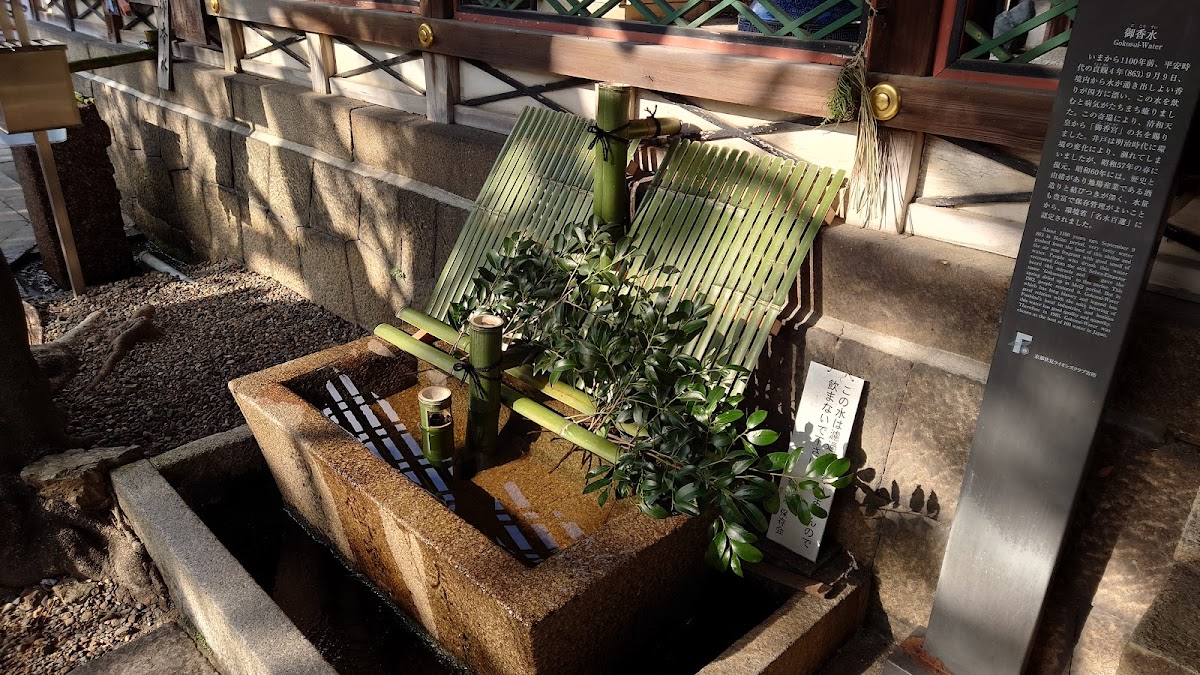
Currently, the sacred water can be freely drawn from a water-drawing station set up to the left of the main hall of Gokounomiya Shrine. Water constantly flows at the water-drawing station, and one can see visitors and local residents coming to draw water in their own containers.
The shrine also sells water bottles exclusive to the sacred water, allowing those without containers to easily take the water home. These bottles are decorated with the design of Gokounomiya Shrine and are popular as souvenirs.
Water Fortune-Telling Fortunes
Within the precincts, there are also unique fortune-telling fortunes called “water fortune-telling.” One purchases a seemingly blank white paper fortune, immerses it in the sacred water, and characters appear revealing one’s fortune. As a form of divination receiving the spiritual benefits of the sacred water, it is particularly popular with young worshippers.
Visitors
The people who visit to draw the sacred water are very diverse. Elderly local residents who come daily, nearby families who visit on weekends, fine water enthusiasts who come from afar by car, and travelers who drop by while sightseeing all visit the shrine seeking the sacred water.
Particularly in early morning and evening, one can see people carrying multiple large water containers drawing large quantities of the sacred water. Some carry away more than 20 liters, demonstrating how deeply rooted the sacred water is in daily life.
Access and Visiting Information
Location and Basic Information
Name: Gokounomiya Shrine (Gokounomiya Jinja)
Location: 174 Gokounomiya Monzencho, Fushimi Ward, Kyoto City, Kyoto Prefecture
Visiting Hours: Precincts open freely (Shrine office: 9:00 AM – 4:00 PM)
Admission Fee: Free (Garden requires fee)
Parking: Available (free, limited spaces)
Access by Public Transportation
Keihan Electric Railway
Take the Keihan Main Line to Fushimi Momoyama Station, then about 5 minutes on foot
Kintetsu Electric Railway
Take the Kintetsu Kyoto Line to Momoyama Goryō-mae Station, then about 5 minutes on foot
JR
Take the JR Nara Line to Momoyama Station, then about 10 minutes on foot
Kyoto City Bus
Get off at “Gokounomiya-mae” bus stop
From Kyoto Station, it is approximately 15 minutes by Kintetsu Railway and approximately 10 minutes by JR, with excellent accessibility. Being close to Fushimi Inari Taisha, a major Fushimi tourist attraction, it is easy to include in sightseeing routes.
Access by Automobile
Approximately 15 minutes from the Meishin Expressway “Kyoto-Minami IC” or approximately 10 minutes from the Hanshin Expressway “Kamitobird Outlet.” The shrine has a free parking lot for worshippers, but spaces are limited and it may be full on weekends and during festivals. There are also several coin parking lots nearby.
Precautions When Drawing Water
When drawing the sacred water, please note the following:
- Container Preparation: Please bring a clean container. The shrine also sells plastic bottles.
- Spirit of Consideration: As many people visit, avoid monopolizing space for long periods and respect the order.
- Storage Method: Store the water you draw in a refrigerator and use it as soon as possible.
- Regarding Drinking: While water quality inspections are conducted regularly, those with health concerns may wish to boil it before use.
Nearby Tourist Attractions
Sake Brewery Tours in Fushimi
Within walking distance of Gokounomiya Shrine, numerous sake breweries are scattered. At places like the Gekkeikan Okura Memorial Museum and the Kizakura Memorial Museum, you can learn about the history of Fushimi’s sake brewing and enjoy tastings. The picturesque streetscape of breweries, known as the “Fushimi Brewery Town Streetscape,” is also popular as a walking course.
Fushimi Inari Taisha
Located approximately 2 kilometers from Gokounomiya Shrine, Fushimi Inari Taisha is a major Kyoto tourist attraction famous for its thousand torii gates. Popular with international tourists as well, the tunnel of red torii gates offers an overwhelming scenic view.
Teradaya
Famous as a stage of late Edo period history, Teradaya is located approximately 10 minutes on foot from Gokounomiya Shrine. It is known as the site of the “Teradaya Incident” where Sakamoto Ryōma was attacked, and the building from that time (reconstructed) can be viewed.
Fushimi Momoyama Castle
The Fushimi Momoyama Castle (replica keep) within Fushimi Momoyama Castle Athletic Park reproduces the appearance of Fushimi Castle, which was once built by Toyotomi Hideyoshi. While the interior of the keep is currently closed to the public, the exterior is popular as a photography spot.
How to Enjoy Fushimi’s Sacred Water
Recommended Visiting Seasons
The sacred water can be drawn year-round, but there are particularly recommended times:
Spring (late March – early April)
The cherry blossoms in the precincts bloom beautifully. You can enjoy drawing the sacred water together with flower viewing.
Autumn (early October)
The time of the Gokounomiya Shinkō Matsuri (Fushimi Festival), when you can enjoy the sacred water amid the festive atmosphere.
New Year’s Visits (January 1-3)
During New Year’s prayers, many people draw the sacred water and pray for health and safety throughout the year.
Ways to Use the Sacred Water
The sacred water can be utilized in various ways:
- Drinking Water: Drink it straight or use it when brewing tea or coffee
- Cooking Water: Use it to cook rice, make dashi broth, and other cooking purposes
- Offering to Household Altars: As water to offer at household altars
- Watering Plants: Water plants while hoping for their growth
Model Sightseeing Course in Fushimi
Here is an example of a Fushimi sightseeing itinerary that includes the sacred water:
Morning
- Visit Fushimi Inari Taisha (tour the thousand torii gates)
- Visit Gokounomiya Shrine and draw the sacred water
Lunch
- Lunch in the Ōtemachi shopping district area (enjoy Fushimi local sake and cuisine)
Afternoon
- Brewery tours (Gekkeikan Okura Memorial Museum, etc.)
- View Teradaya
- Enjoy a boat ride on the Ten-Ishi Boat (available during spring and autumn seasons)
With this course, you can fully appreciate Fushimi’s history, culture, and the charm of its fine water in a single day.
Conclusion
Fushimi’s Sacred Water is a representative fine water of Kyoto with a history spanning over a thousand years. Since being named “Gokousuimi” by Emperor Seiwa in Jogan 4, it has been revered as water with miraculous spiritual efficacy, was used as childbirth water for the Tokugawa family, and as the life-blood supporting Fushimi’s sake brewing, it has been deeply involved in the history and culture of this region.
Designated in Showa 60 as one of Japan’s Top 100 Waters by the Ministry of the Environment, it currently remains as Kyoto City’s only top 100 fine water, cherished by many people. The sacred water that can be freely drawn from the grounds of Gokounomiya Shrine is not only rooted in the daily lives of local residents but continues to captivate people who visit from afar.
When visiting Fushimi, be sure to stop by Gokounomiya Shrine and taste the sacred water with its thousand-year history. This clear water will surely convey to you Fushimi’s history and culture and the depth of people’s faith. Bringing a container to draw the sacred water and slowly savoring it at home will become a wonderful memory of your Fushimi sightseeing experience.