Hōdaji Temple’s Gokuraku Water (Akita Prefecture): Everything About History and a Sacred Spring with Miraculous Powers
Hōdaji Temple (補陀寺), located in Yamanaichi Matsubara in Akita City, Akita Prefecture, is known as an ancient temple of the Sōtō Zen school, and the “Gokuraku Water” (Paradise Water) that springs from within its grounds has long been revered by visitors as a sacred spring that heals body and mind. This article provides detailed information about the origins and history of Gokuraku Water, the cultural properties of Hōdaji Temple, and directions for visiting—everything you should know before your visit.
Gokuraku Water: Overview of the Sacred Spring at Hōdaji Temple
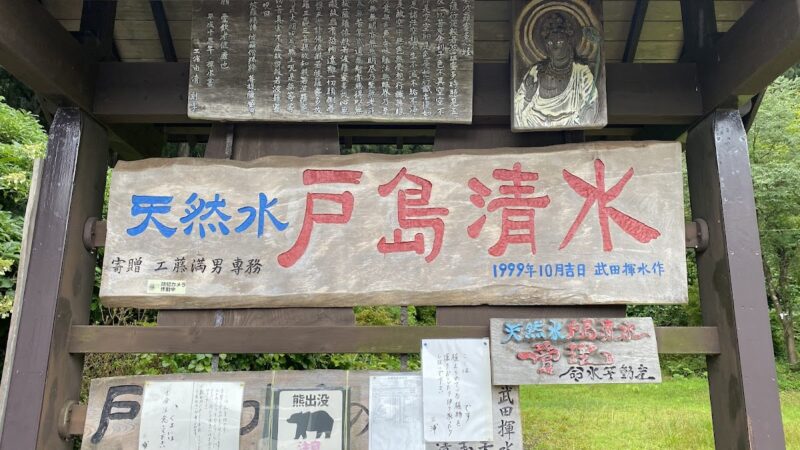
Gokuraku Water is a clear spring water that continuously flows from the ground in front of Hōdaji Temple’s main hall. True to its name bearing the designation “Paradise,” this water is not merely a spring but has become an object of faith deeply connected to legends of miraculous power associated with the temple’s founding.
Even today, visitors are free to drink this water, and many people come to quench their thirst while seeking spiritual purification. The water quality is crystalline, believed to be groundwater nurtured by Akita’s abundant natural environment.
Characteristics of Gokuraku Water
- Location of Spring: Temple grounds in front of Hōdaji’s main hall
- Water Quality: Clear spring water safe for drinking
- Religious Significance: Sacred spring derived from miracles at the time of the temple’s founding
- Usage: Visitors are free to drink it
The Legend of Gokuraku Water’s Birth: Zen Master Getsusen Ryōin and the Great Kami of the Turtle Statue
The origins of Gokuraku Water trace back to the founding of Hōdaji Temple. This legend is inseparably connected to the temple’s history.
The Founding of Hōdaji and Zen Master Getsusen Ryōin
Hōdaji Temple is said to have been founded in 1349 (Shōhei 4/Teiwā 5). At that time, Zen Master Getsusen Ryōin, invited by Andō Morisue, established this temple in Hinai-shō Matsubara (present-day Ōdate City). Zen Master Getsusen Ryōin is known as a high priest of the Sōtō Zen school and played a major role in propagating Zen Buddhism throughout the Tōhoku region.
The Appearance of the Great Kami of the Turtle Statue and the Flowing of Gokuraku Water
According to tradition, when Zen Master Getsusen Ryōin founded Hōdaji Temple, the local tutelary kami known as the Great Kami of the Turtle Statue (Kizō Daigongen) appeared before the master. The Great Kami of the Turtle Statue is said to have granted the master the precepts and, as a sign of his emotion, caused clear water to spring forth.
The water that flowed forth through this miraculous power came to be called “Gokuraku Water,” and since then it has been cherished as a sacred spring that quenches visitors’ thirst and purifies body and mind. The Great Kami of the Turtle Statue became the central figure in Hōdaji’s faith as a protective tutelary kami of this land.
Meaning Embodied in Gokuraku Water
The name “Gokuraku” (Paradise) derives from Gokuraku Jōdo (the Pure Land Paradise) in Buddhism, the ideal world in Buddhist thought. The belief associated with drinking this water is that it washes away the afflictions of the secular world and purifies the heart. Furthermore, as water blessed by the protection of the Great Kami of the Turtle Statue, a local tutelary kami, it is believed to possess various miraculous powers.
The History of Hōdaji Temple: From the Medieval Period to the Present Day
To understand Gokuraku Water, it is important to know the history of Hōdaji Temple itself.
From Founding to Relocation
As mentioned above, Hōdaji was founded in 1349 in Hinai-shō Matsubara (present Ōdate City). Subsequently, the temple experienced relocation as history unfolded. The temple’s move to its present location in Yamanaichi Matsubara, Akita City, is believed to have occurred during the Edo period of Akita Domain administration.
Receiving patronage from the Akita domain lords, the Satake clan, Hōdaji developed as a Sōtō Zen temple. Throughout the Edo period, it functioned as a temple that gathered the faith of local people.
The 23rd Sacred Site of the Akita Thirty-Three Kannon Pilgrimage Route
Hōdaji is known as the 23rd sacred site of the Akita Thirty-Three Kannon Pilgrimage Route. Its principal image is the Kannon Bodhisattva of Holy Compassion, and it has played an important role as a center of Kannon faith. The temple’s name “Hōda” itself derives from “Fudarakusen” (Mt. Potalaka), the Pure Land where Kannon Bodhisattva resides, demonstrating its deep connection to Kannon faith.
Pilgrims have quenched their thirst with Gokuraku Water while offering prayers to Kannon and seeking peace of mind.
Connection with Fujiwara no Fujifusa
Hōdaji is also known for having a grave of Fujiwara no Fujifusa (Noriuji Māri-kōji Fujifusa), an important historical figure. Fujiwara no Fujifusa was a court noble from the late Kamakura period through the Northern and Southern Courts period and was active as a close advisor to Emperor Go-Daigo.
After the Kenmu Restoration failed, Fujifusa is said to have become a monk and wandered throughout various provinces, with Akita being the place where his life ended according to tradition. The existence of Fujifusa’s grave at Hōdaji indicates that this temple was not merely a provincial temple but was deeply connected to the history of the capital.
Cultural Properties: The Temple Gate and Main Hall Designated as Tangible Cultural Properties of Akita City
The value of Hōdaji can be found not only in Gokuraku Water but also in its buildings. The temple’s two-story gate (rōmon) and main hall (hon-dō) have been designated as tangible cultural properties of Akita City and possess high historical and artistic value.
The Temple Gate (Rōmon)
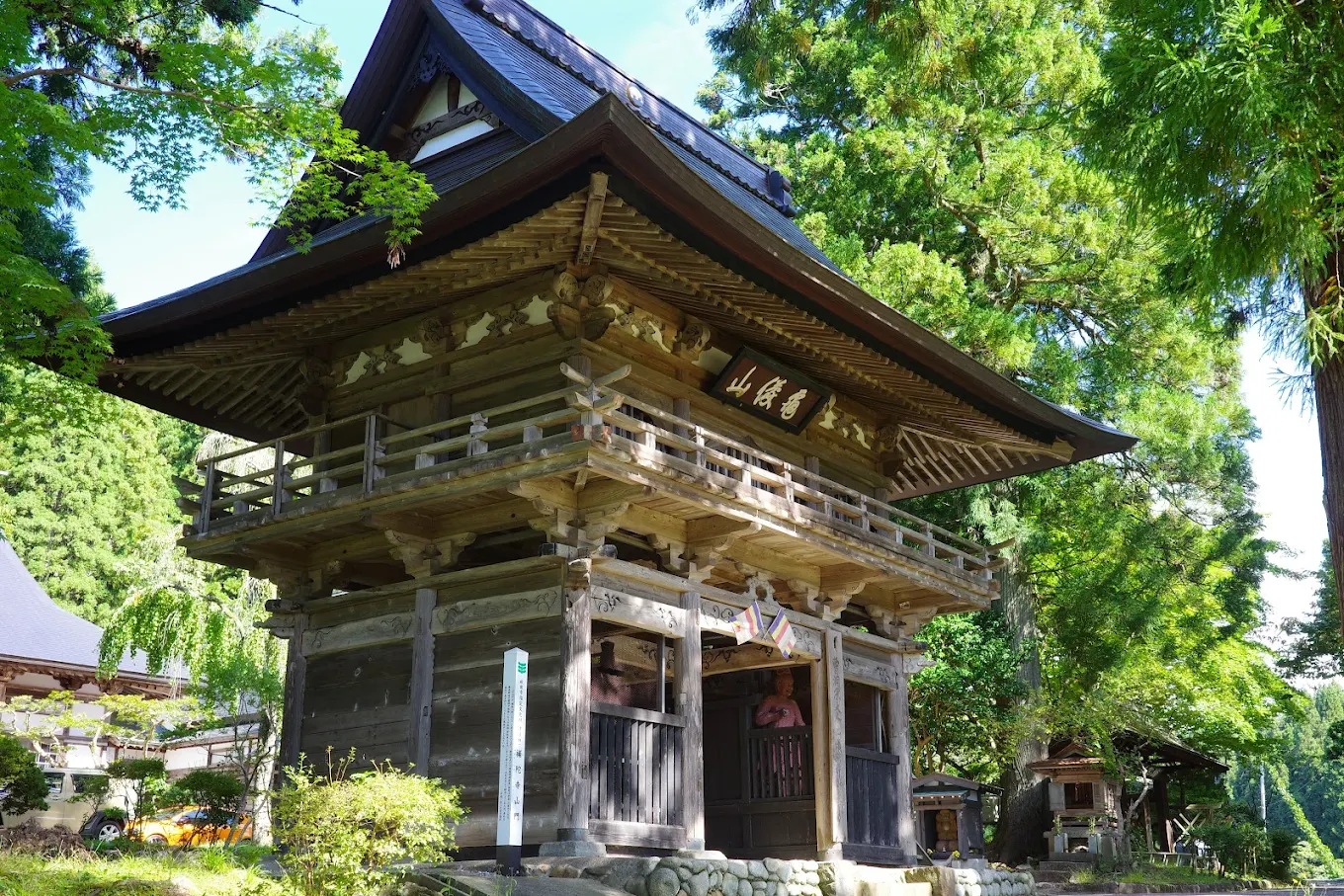
Hōdaji’s gate stands majestically with a two-story structure beyond the cedar tree-lined approach. It retains strong architectural features from the Edo period, characterized by the heavy construction distinctive of Sōtō Zen temples.
Passing through the gate, visitors enter grounds enveloped in silence, led from the hustle and bustle of everyday life into a sacred realm. The existence of this gate is a crucial element in creating the solemn atmosphere of Hōdaji as a whole.
The Main Hall
The main hall is also designated as a tangible cultural property of Akita City and conveys the beauty of traditional temple architecture to the present day. The principal image of Kannon Bodhisattva of Holy Compassion is enshrined within the main hall, receiving the prayers of visitors.
Gokuraku Water, which springs forth in front of the main hall, forms the spiritual center of Hōdaji together with this building. The space, where architecture, nature, and faith are in harmony, imparts deep emotion to all who visit.
Other Points of Interest
While not designated as cultural properties, the grounds display various Buddhist statues and stone structures, including a statue of Daikoku, that serve as objects of faith. The cedar tree-lined approach is also spectacular, allowing visitors to enjoy the beauty of nature through the four seasons.
Spiritual Benefits and Power Spot Aspects of Hōdaji Temple and Gokuraku Water
In recent years, Hōdaji has attracted attention as a power spot. Centered on Gokuraku Water, various spiritual benefits are believed to be present.
Primary Spiritual Benefits
- Purification of Body and Mind: The cleansing effect of Gokuraku Water
- Romantic Fulfillment and Love: Benefits based on Kannon faith
- Prosperity in Business: Benefits from Daikoku faith
- Warding Off Misfortune and Good Fortune: Protection of the Great Kami of the Turtle Statue
- Health and Wellness: Health promotion through the sacred spring water
Spiritual Charm
The serene atmosphere of the temple grounds, the environment surrounded by ancient trees, and the presence of clear spring water function as a place of “healing” and “purification” sought by modern people. In particular, Gokuraku Water is cherished by many visitors not merely as physical sustenance for thirst but as something that soothes spiritual longing.
Access and Transportation Information: How to Visit Hōdaji Temple
Here is information on how to access Hōdaji Temple and Gokuraku Water.
Basic Information
- Location: 26 Yamanaichi Matsubara, Akita City, Akita Prefecture
- School: Sōtō Zen
- Temple Name: Kizō Mountain
- Principal Image: Kannon Bodhisattva of Holy Compassion
- Sacred Site: 23rd Station of the Akita Thirty-Three Kannon Pilgrimage Route
Access by Car
It is approximately 20 minutes by car from Akita Station. It is also close to the Akita Chuo Interchange and is conveniently accessed by car. The temple has a parking lot for visitors.
Main Routes:
- From Akita Station area: Via National Route 13
- From the Akita Expressway: Approximately 15 minutes from Akita Chuo Interchange
Access by Public Transportation
You can also travel by bus from Akita Station. Use a route bus that runs through Akita City and get off at a bus stop in the direction of “Yamanaichi Matsubara.” However, bus service is limited, so it is recommended to check the schedule in advance.
Duration and Time for Visit
Visiting the temple grounds itself takes about 30 minutes, but allowing time to calm one’s mind with Gokuraku Water and to savor the atmosphere of the grounds, a stay of about one hour is recommended.
Information about Visiting:
- Admission Fee: Free
- Visiting Hours: Grounds open freely (daytime visits recommended)
- Gokuraku Water: Free to drink
Calligraphy Seal Information: Receiving Seals at Hōdaji Temple
At Hōdaji Temple, visitors can receive the calligraphy seal (goshuin) for the Akita Thirty-Three Kannon Pilgrimage Route.
Characteristics of the Seal
Hōdaji’s seal includes the sacred site number “23rd,” the calligraphic inscription “Kannon of Holy Compassion,” and the temple’s seal stamp. For those on Kannon pilgrimages, this becomes an important stop on their spiritual journey.
About the Seal Booklet
A seal booklet dedicated to the Akita Thirty-Three Kannon Pilgrimage Route is also available for purchase as a memento of the pilgrimage. It is recommended for those beginning their pilgrimage at Hōdaji.
Time and Place for Receiving Seals
The seal is given at the temple office. However, there may be times when the office is unattended, so if you wish to receive a seal with certainty, it is recommended to call ahead to confirm. This is especially important for those on the Kannon pilgrimage.
Precautions and Etiquette When Visiting Gokuraku Water
Gokuraku Water is both an object of faith and a precious resource of the temple. When visiting, please observe the following precautions.
Visiting Etiquette
- Keep Silence: The grounds are a place of prayer. Refrain from loud conversation.
- Keep Clean: Be careful not to contaminate the area around Gokuraku Water.
- Act with Restraint: When drinking the water, be mindful of those who will come after you and drink only a reasonable amount.
- Photography: Exercise consideration so as not to disturb other visitors.
Items Useful to Bring
- Water Bottle or Plastic Bottle: If you wish to take Gokuraku Water home (avoid excessive collection)
- Towel: For wiping hands and mouth
- Seal Booklet: For those on the Akita Thirty-Three Kannon Pilgrimage
Seasonal Attractions
Hōdaji presents a different appearance in each of the four seasons.
- Spring: Fresh green cedar-lined approach and mild weather
- Summer: Cool grounds surrounded by deep green foliage
- Autumn: Autumn leaves and Gokuraku Water in beautiful contrast
- Winter: Serene surroundings in a snowy landscape
The autumn foliage season in particular is especially beautiful, with the grounds gorgeously colored and the harmony with Gokuraku Water remarkable.
Nearby Sightseeing Spots: Points of Interest in Akita City
After visiting Hōdaji and Gokuraku Water, you might consider exploring other sightseeing destinations in Akita City.
Major Tourist Attractions in Akita City
- Senshū Park: A park developed from the former castle site of Satake, the Akita domain lords
- Akita Prefectural Museum of Art: Houses numerous works by Fujita Tsuguharu
- Akita City Folk Performing Arts Transmission Hall (Neburi-nagashi Hall): Exhibits related to the Tanabata Festival
- Red Brick Hometown Hall: A museum where you can learn about Akita’s history
Akita Cuisine
Within Akita City, you can enjoy authentic Akita specialties such as kiritanpo, inaniwa udon, and Hihiai chicken. Sampling local flavors before or after visiting Hōdaji is also recommended.
Conclusion: The Faith and History Woven by Gokuraku Water
Gokuraku Water at Hōdaji is not merely a spring but a sacred spring deeply connected to the legends of the temple’s founding, which has a history spanning more than 600 years. The traditions of Zen Master Getsusen Ryōin and the Great Kami of the Turtle Statue, its role as the 23rd sacred site of the Akita Thirty-Three Kannon Pilgrimage, and the harmony with the two-story gate and main hall designated as tangible cultural properties of Akita City—all of these together form the special space that is Hōdaji.
Even in modern times, Gokuraku Water continues to heal the body and mind of many visitors. When visiting Akita, be sure to experience this sacred spring and, along with its clear water, directly experience the world of faith woven throughout long history. The time spent tasting Gokuraku Water in the serene grounds will be a precious moment that allows you to forget the noise of everyday life.
Frequently Asked Questions (FAQ)
Q1: Is it really safe to drink Gokuraku Water?
A1: Yes, Gokuraku Water is spring water, and many visitors drink it. However, since it is natural spring water, those with health concerns or worries about hygiene need not feel obligated to drink it. If concerned, you can use it for other purposes such as hand purification.
Q2: Can you take Gokuraku Water home with you?
A2: It is possible to take a small amount home, but Gokuraku Water is a precious resource of the temple, and other visitors use it as well. Avoid collecting large quantities and use it with restraint. Filling a water bottle or small plastic bottle with a modest amount is appropriate.
Q3: Does Hōdaji Temple have a parking lot?
A3: Yes, Hōdaji has a parking lot for visitors. Access by car from Akita Station is good at approximately 20 minutes. However, during major holidays or special events, it may become crowded, so it is recommended to allow extra time for your visit.
Q4: Can you always receive the seal?
A4: The seal is given at the temple office, but there may be times when the head priest or office staff are absent. If you wish to receive the seal with certainty, it is recommended to call ahead to confirm. This is especially important for those on the Akita Thirty-Three Kannon Pilgrimage.
Q5: Is there an admission fee to visit Hōdaji Temple?
A5: No, visiting the temple grounds is free. Gokuraku Water is also free to use. However, if you receive seals or amulets, a donation fee is required for each.
Q6: What is the Akita Thirty-Three Kannon Pilgrimage Route?
A6: The Akita Thirty-Three Kannon Pilgrimage Route is a pilgrimage course visiting 33 Kannon sacred sites throughout Akita Prefecture. Hōdaji is the 23rd sacred site, with Kannon Bodhisattva of Holy Compassion as its principal image. Similar to the Saigoku Thirty-Three Sites and Bandō Thirty-Three Sites, it is based on Kannon faith, and visiting each site is believed to grant the blessings of Kannon.
Q7: Does Gokuraku Water flow even in winter?
A7: Yes, Gokuraku Water flows continuously throughout the year. Although Akita experiences heavy snow in winter, Gokuraku Water flows without freezing. However, as the temple grounds are covered with snow during winter, please take careful note of your footing. Winter clothing and non-slip shoes are recommended.
Q8: Can you request rituals or prayers at Hōdaji Temple?
A8: Yes, Hōdaji performs various rituals and prayers. For details, please contact the temple directly. As a Sōtō Zen temple, it also conducts funerals and memorial services.